Boundary Wire vs RTK vs Vision vs LiDAR: Which Navigation Actually Works in Your Yard
There are now five ways a robot mower can know where it is, and the marketing for each one describes the yard it works best in. The useful way to compare them is by what makes each one fail. A boundary wire fails when something cuts it. RTK fails under trees. Cameras fail in the dark and on dead grass. LiDAR fails on nothing much yet but costs more and is younger. Match the failure mode to your yard and the decision makes itself.
Boundary wire: the wire is the feature and the chore
A perimeter wire pinned to the ground (or buried an inch or two) around the lawn and every bed carries a low-voltage signal from the base station. The mower senses the field and turns before it crosses; a guide wire leads it back to the dock. Because nothing depends on satellites, cameras, or daylight, wire mowers work under dense canopy, along two-story walls, and through narrow side passages that defeat every other class, and they mow at night.
The chore is the wire. Laying it around a complex yard takes an afternoon on your knees or a few hundred dollars for an installer, and it has to go around every bed and tree ring. Aerators, edgers, dogs, and frost heave cut it, and the app's 'wire break' alert sends you hunting with a detector. Landscaping changes mean re-laying a section. Most wire mowers run a random bounce pattern, which produces a uniformly cut lawn within a couple of weeks but never the ballpark stripes. The wire class also starts hundreds below wire-free and has the longest reliability record of anything in the catalog.
RTK GPS: centimeter accuracy, if it can see the sky
Consumer GPS is accurate to a few meters, which is useless for a mower. RTK (real-time kinematic) fixes that with a reference antenna at a fixed point on your property that measures the satellite error in real time and sends a correction to the mower, bringing accuracy to a couple of centimeters. You set up the mower by driving it around the perimeter with your phone as a remote; the map lives in the app, and changing it takes minutes. RTK mowers cut in parallel passes, so the lawn looks mowed rather than nibbled.
The failure mode is geometry. Both the antenna and the mower need a wide, unobstructed slice of sky; tree canopy, tall fences, the strip along a house wall, and even a dense hedge degrade the fix. Every RTK mower tolerates brief dropouts with dead reckoning from its wheels and IMU, and the current generation adds cameras to stretch that, but a lawn that is mostly shaded is the wrong yard for this class. The tell in owner threads is the phrase 'RTK signal lost' appearing in the first week.
Vision: no wire, no antenna, and no night mowing
Camera-only mowers look at the ground, decide what is grass, and refuse to drive onto anything else. Setup is the shortest in the category: unbox, charge, press go. There is no antenna to mount, no wire to lay, and no signal to lose. For a small, sunny, clearly edged lawn they are the least fuss you can buy.
The failure modes follow from navigating by sight. They need daylight, so no dawn or night schedules. They can be fooled by dead patches, mulch borders, and a lawn that runs seamlessly into the neighbor's, and they can't respect an invisible line across a continuous lawn without a physical edge or a magnetic strip. Complex yards with beds cut into the grass are hard for them. The hybrids that pair cameras with RTK get the best of both, which is why the flagship class has moved that way.
LiDAR and UWB: positioning without satellites
LiDAR mowers spin a laser to build a 3D map of the yard and position against it, the same principle as a high-end robot vacuum. They work under trees, along walls, and at night, need no antenna, and see obstacles in three dimensions rather than guessing from a bumper. The class is young, so expect firmware updates that change behavior, and the sensor adds cost and a spinning part to keep clean. If your yard is shaded enough to rule out RTK and you don't want to lay wire, this is where to look first.
UWB beacons are the other satellite-free answer: small posts at the corners of the lawn that give the mower a local positioning grid, paired with cameras for edges and obstacles. It works in shade, but the beacons need line of sight and batteries and cap the covered area, and the main proponent has since moved its newer models to RTK and LiDAR. Treat it as a niche fit rather than the market's direction.
Which one, in one table
| System | Breaks when | Setup | Best yard |
|---|---|---|---|
| Boundary Wire | The wire is cut | Afternoon or installer | Shaded, complex, budget |
| RTK GPS | Sky is blocked | 30-60 min with the app | Open, simple, 1/4 to 1 acre |
| RTK + Vision | Heavy canopy | 30-60 min | Open with some shade; large; sloped |
| Vision Only | Dark, dead grass, no edge | Minutes | Small, sunny, clearly edged |
| LiDAR | Not much yet; young class | 30-60 min | Shaded, no wire wanted |
| UWB Beacon | Line of sight lost | Place beacons + map | Small shaded lawn |
The honest summary: an open yard with a simple shape is an RTK yard, and the mainstream RTK tier is where most people should shop. A shaded or complex yard is a wire or LiDAR yard, and wire is the cheaper, more proven of the two. A small sunny lawn can go camera-only. A big open property with a hill wants RTK + vision and AWD. And a yard with a lot of shade and a lot of slope is the one yard where the wire's tolerance for trees and an AWD wire mower's slope rating make the oldest technology the best answer.
Mowers mentioned in this guide
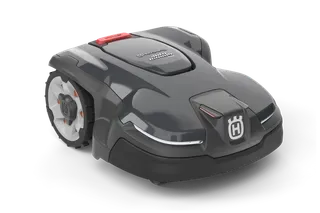
Husqvarna
Husqvarna Automower 415X
The 415X was Husqvarna's small-yard X-line mower before the iQ series, and it is still sold through the Husqvarna shop and dealers at $2,000 even though the product page says discontinued. You get the premium X-line touches - LED headlights, app-adjusted electric cut height, GPS theft tracking and built-in cellular - in a 21-pound body rated for 0.37 acres and 40 percent slopes. The cut range of 0.8 to 2 inches suits warm-season grasses and tidy, short lawns, not tall fescue. It runs on a boundary wire with guide wires and a systematic passage mode, and the 50-minute runtime with a 60-minute charge means it cycles often. Owners say it just works once the wire is in, and that install takes about half a day if you watch the videos first; the complaints are about durability, with a warped cutting disk, wheels lost to surfacing rocks, and mowers that would not wake up after winter, plus customer service that punts to dealers. At 62 dB it is noticeably louder than a Navimow i110N, and a Segway or Mammotion at this price is wire-free with cameras. Choose it for a small, wire-friendly yard where you want Husqvarna dealer support and a short, even cut.
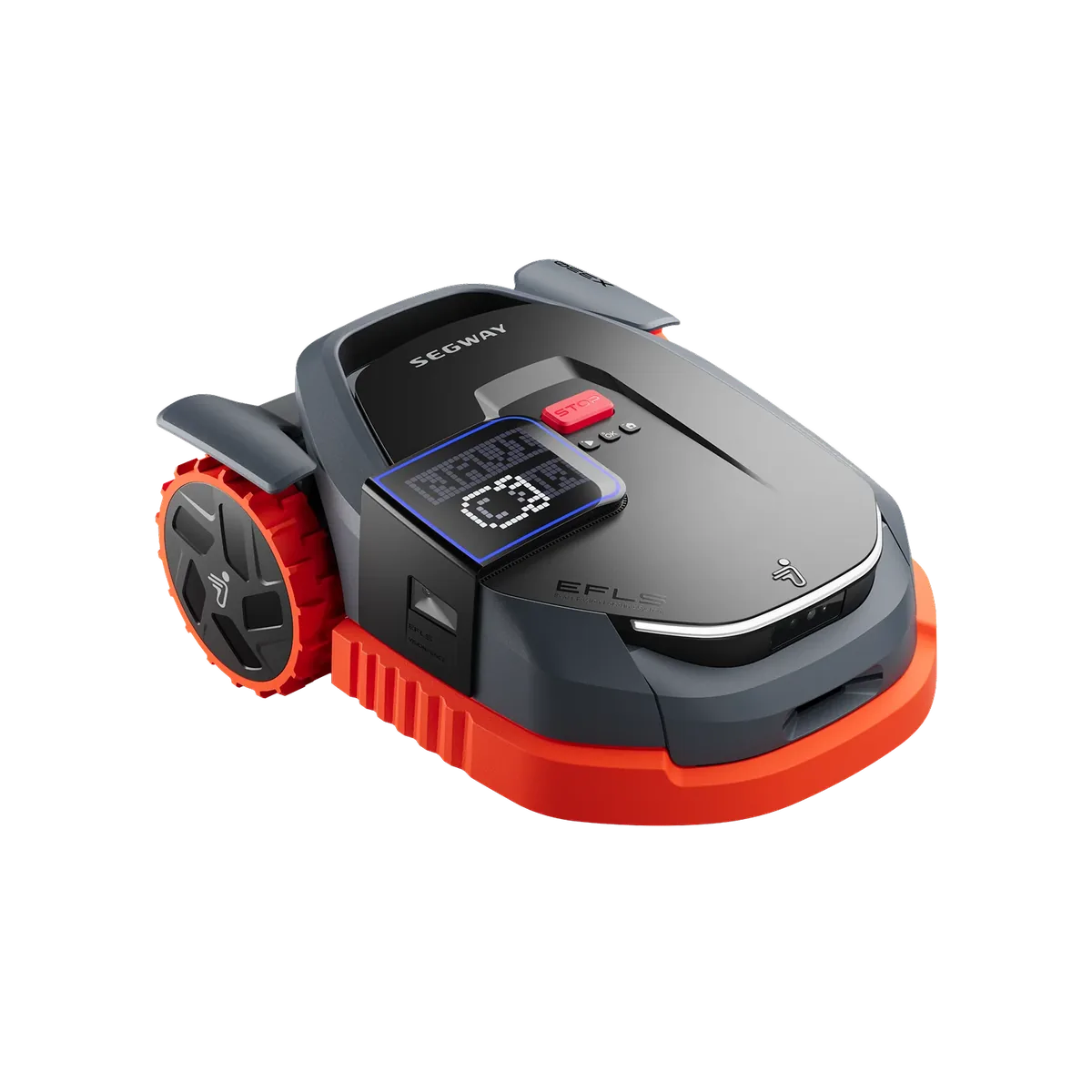
Segway
Segway Navimow X330
The X330 is the X3 model most people should look at: a one-acre rating, 8Ah battery for about 160 minutes of mowing with a 65 minute recharge, and it sits at $2,299 on Segway's site after a $500 cut from launch pricing. Like the rest of the X3 line it runs EFLS 3.0 - RTK fused with three cameras doing visual SLAM - so it holds position under tree canopy where the older H series and most budget RTK mowers lose lock, and its 300-degree camera plus ToF array recognizes 200+ obstacles with night vision. It mows fast (about 3.3 ft/s) in tidy parallel stripes, cuts 2 to 4 inches, runs at 60 dB, and includes two years of 4G with GPS tracking before the roughly $33 a year Connect+ renewal. Pro Tool Reviews and Robot Review Desk both call the X3 the most polished wire-free mower for flat-to-moderate suburban lots. Where it falls short: two-wheel drive makes the 50% slope rating shaky on side-hills, there is no physical rain sensor (it relies on forecasts), the centered 9.3 in disc leaves a few inches uncut along walls unless you buy the Trimmer accessory, and 43.7 lb is a lot to lift over a curb. Against the Mammotion Luba 2 AWD 3000, the X330 is quicker and gentler on turf but the Luba climbs 80% grades. For a one-acre yard with trees and gentle slopes, this is the sweet spot of the range.
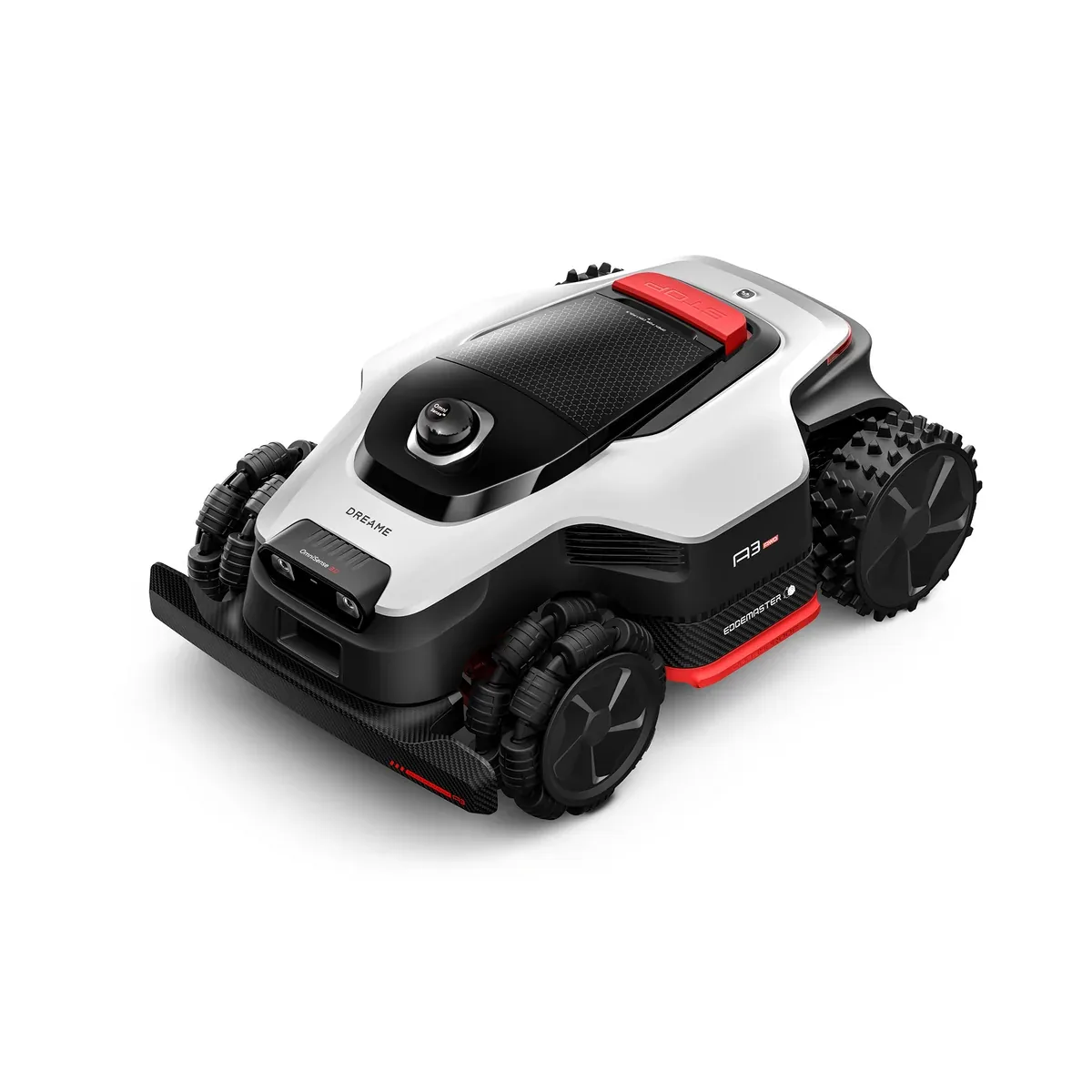
Dreame
Dreame A3 AWD
The A3 AWD is Dreame's real entry into the US market after the A1, A1 Pro and A2 stayed in Europe, and it is the cheapest all-wheel-drive, no-RTK mower you can buy from a major brand. It shares the OmniSense 3.0 stack with the A3 AWD Pro: a 360-degree 3D LiDAR on the hood plus binocular AI cameras that map the yard on their own and recognize about 300 obstacle types. Four hub motors and knobby rear tires give it an 80% (38.7-degree) slope rating that leaves rear-drive rivals like the Ecovacs GOAT O1000 LiDAR Pro and Segway Navimow i110N far behind. It comes as a 1000 (0.25 acre, $1,599.99 on sale from $1,999.99) or 2000 (0.5 acre, $1,899.99) that differ only in battery and coverage. The trade-off versus the Pro is a single 7.9-inch disc rather than dual 15.8-inch discs, so it covers ground slowly, and the EdgeMaster sliding disc leaves under 1.9 inches at borders instead of 1.2. Reviews on Dreame's store are strong (4.3 stars) and owners praise the AWD for not getting stuck in bumpy yards, but Amazon owners are harsher: a weed a few inches tall can register as an obstacle, mapping takes several tries, the dock tower can pop apart, and support has been slow. Built-in 4G with three free years, an AirTag slot and a 3-year warranty sweeten it. Best for hilly or lumpy lots under half an acre where slope matters more than speed.
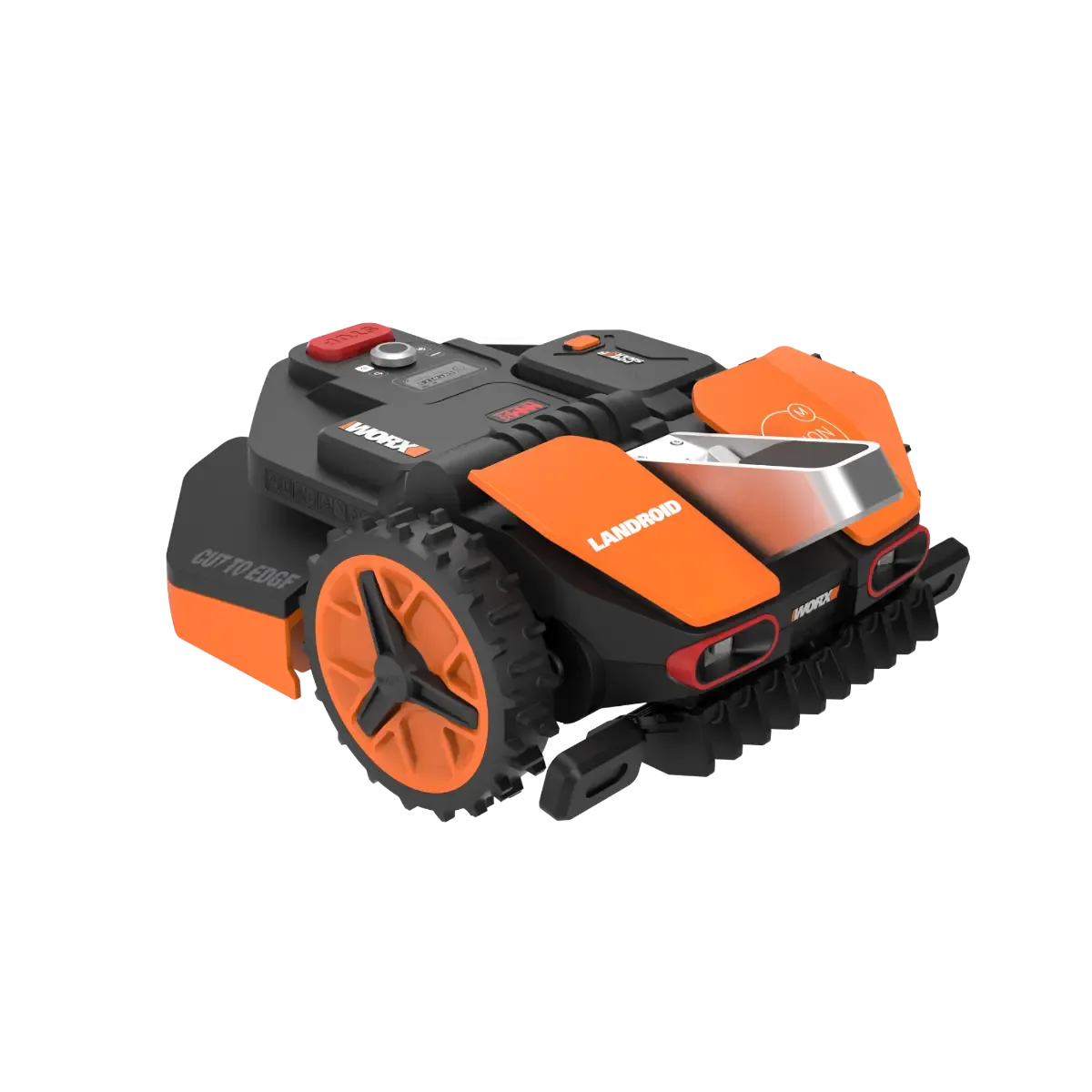
Landroid Vision is Worx's answer to the boundary-wire chore: no wire, no RTK antenna, no mapping drive. You set the dock on the grass, press go, and a 140-degree HDR camera with an onboard neural net decides what is lawn and what is not, treating the edge of the grass as the boundary. The 1/5-acre WR208 is the entry model; the WR210 is the same 33 lb machine rated for a quarter acre at $1,999.99 list. Pricing is all over the place: Worx lists the WR208 at $1,599.99, Amazon has it around $1,350, and Target and Worx have run it at $799.99. In use it is quiet at 59 dB, cuts to the edge with an offset blade, and will stop for pets, toys and hoses lying on the ground. Reviewers found the downward-pointing camera misses things above its sightline (a parked trailer, a playground slide) and that it needs a visible edge: where lawn meets mulch or a neighbor's grass without a curb, you stake down the included magnetic strip. Separate lawns need RFID tags and usually a carry between them. Versus an Eufy E15 or Segway Navimow i105 at similar money this is simpler to install but less precise and it mows in a random pattern; versus Worx's newer Landroid Vision Cloud (RTK plus camera, $1,799.99) it gives up mapping and systematic rows. Best for small, well-defined lawns where nobody wants to bury wire or plant an antenna.