Worx Robot Mowers
Worx has 4 mowers on MowerRanker, priced from $902 to $2,499. The Worx rated for the largest lawn is the Worx Landroid Vision AI WR220 at 1 acre. Compare the full lineup below.
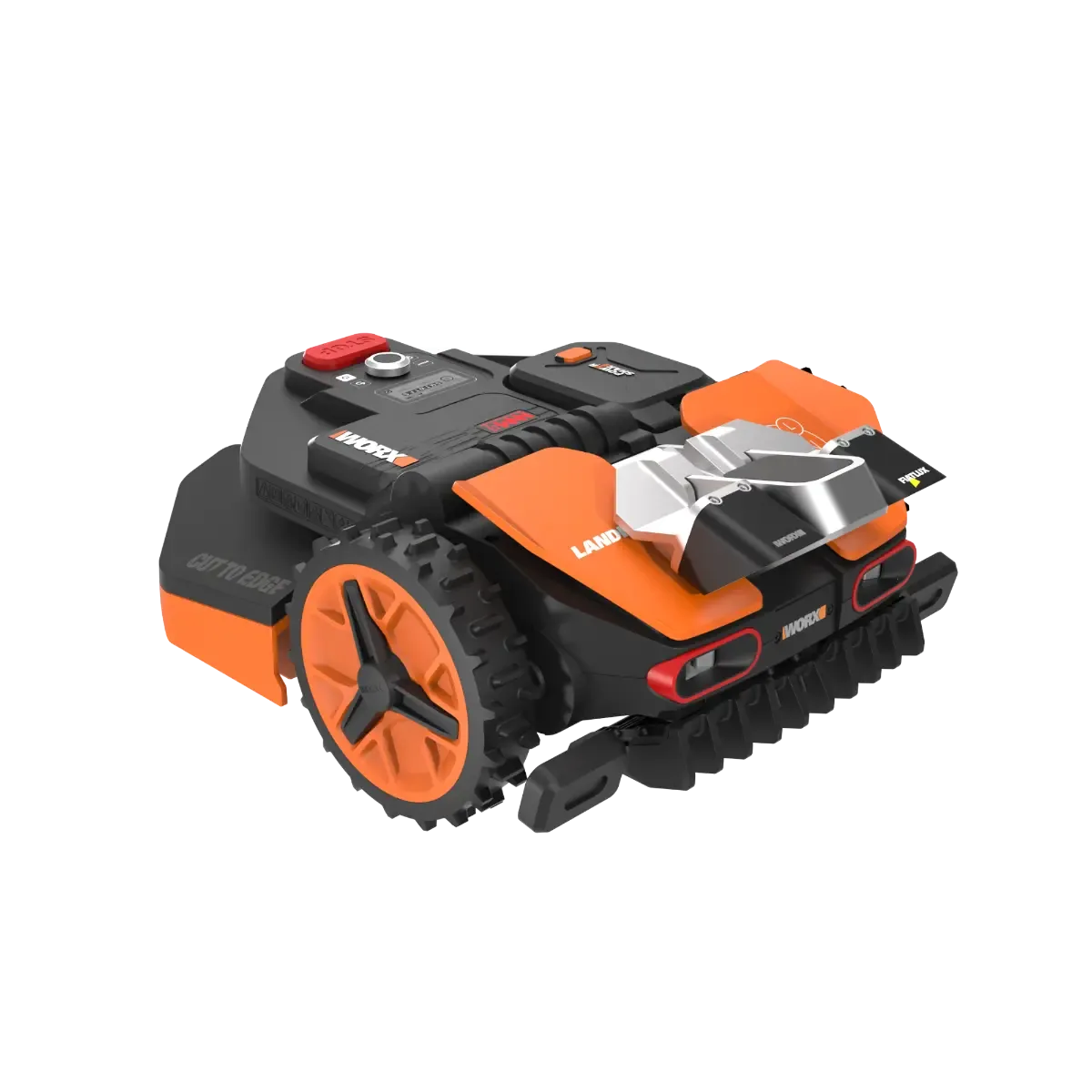
This is the bigger-lawn Vision, sold as the WR220 for half an acre with 3/4-acre (WR230) and 1-acre (WR235) siblings that share the same 33 lb body and 20V 4.0Ah pack and simply get longer daily schedules. List is a steep $2,499.99 to $3,499.99, and Worx has run the WR220 as low as about $1,100 during clearance, so watch for promos before paying full price. The pitch is identical to the smaller WR208: no wire, no RTK base station, no mapping session; the 140-degree HDR camera reads grass versus not-grass and treats that line as the boundary, while the same camera recognizes people, pets and objects on the ground and steers around them. It cuts to the edge with an off-center blade, has a rain sensor, and the optional Find My Landroid module adds 4G tracking. The compromises grow with the lawn: random-pattern mowing means it needs many more hours per week than an RTK mower to cover the same ground, split lawns still need RFID tags and a carry, and the camera struggles wherever there is no clear visual edge. For a half acre and up, a Mammotion Luba Mini AWD or Segway Navimow X3 will finish faster and mow in rows, and Worx's own Vision Cloud WR320.1 ($1,799.99) adds RTK for less money. Best for large, simple lawns with obvious edges where zero installation matters more than mowing speed.
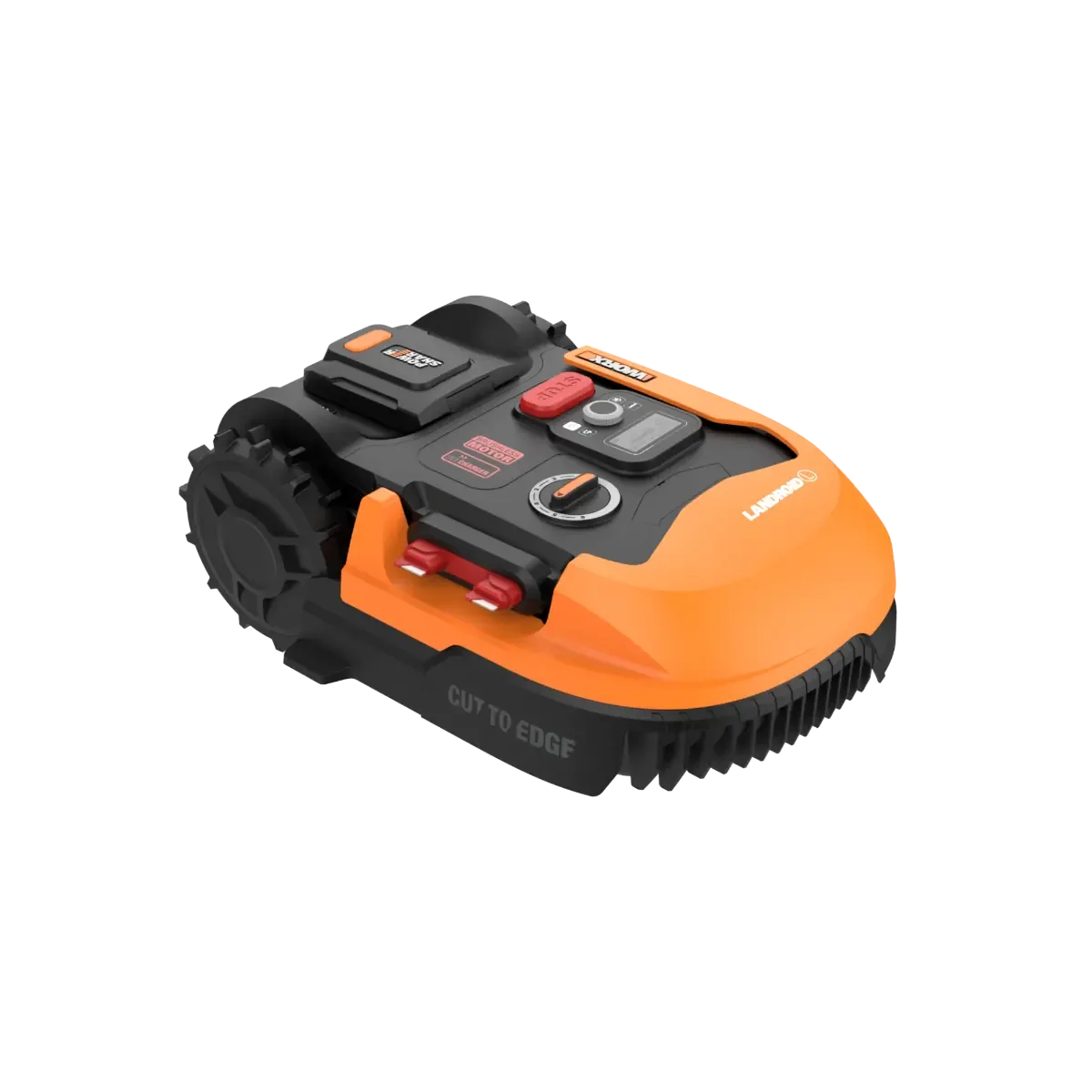
The Landroid L is the half-acre version of the Worx wired platform: same chassis logic as the M, a wider 8 in blade disc and a bigger 5.0Ah (some kits ship 6.0Ah) 20V Power Share pack that swaps into any Worx tool. Worx lists it at $1,499.99 but it has been sitting near $1,000 on Amazon and under $750 at Walmart, which makes it the cheapest half-acre robot from a brand with a US support line. Expect four to six hours laying the 820 ft of included wire. In use it is a bump-and-turn random mower with Cut to Edge, a floating blade disc that copes with lumpy ground, a rain delay, and a 30% slope rating that reviewers flag as the lowest in its class, so skip it on rolling terrain. Reviewers report roughly an hour of mowing per charge, so a full half acre means several dock trips a day and a schedule that runs most days. Obstacle avoidance is a bumper unless you add the ACS ultrasonic kit. Compared with a Husqvarna Automower 415X you give up polish and dealer support for roughly half the price; compared with a Segway Navimow at similar coverage you keep the wire but keep $700 in your pocket. Best for budget-minded owners of flat, open half-acre lawns who would rather spend a Saturday pegging wire than pay for RTK.
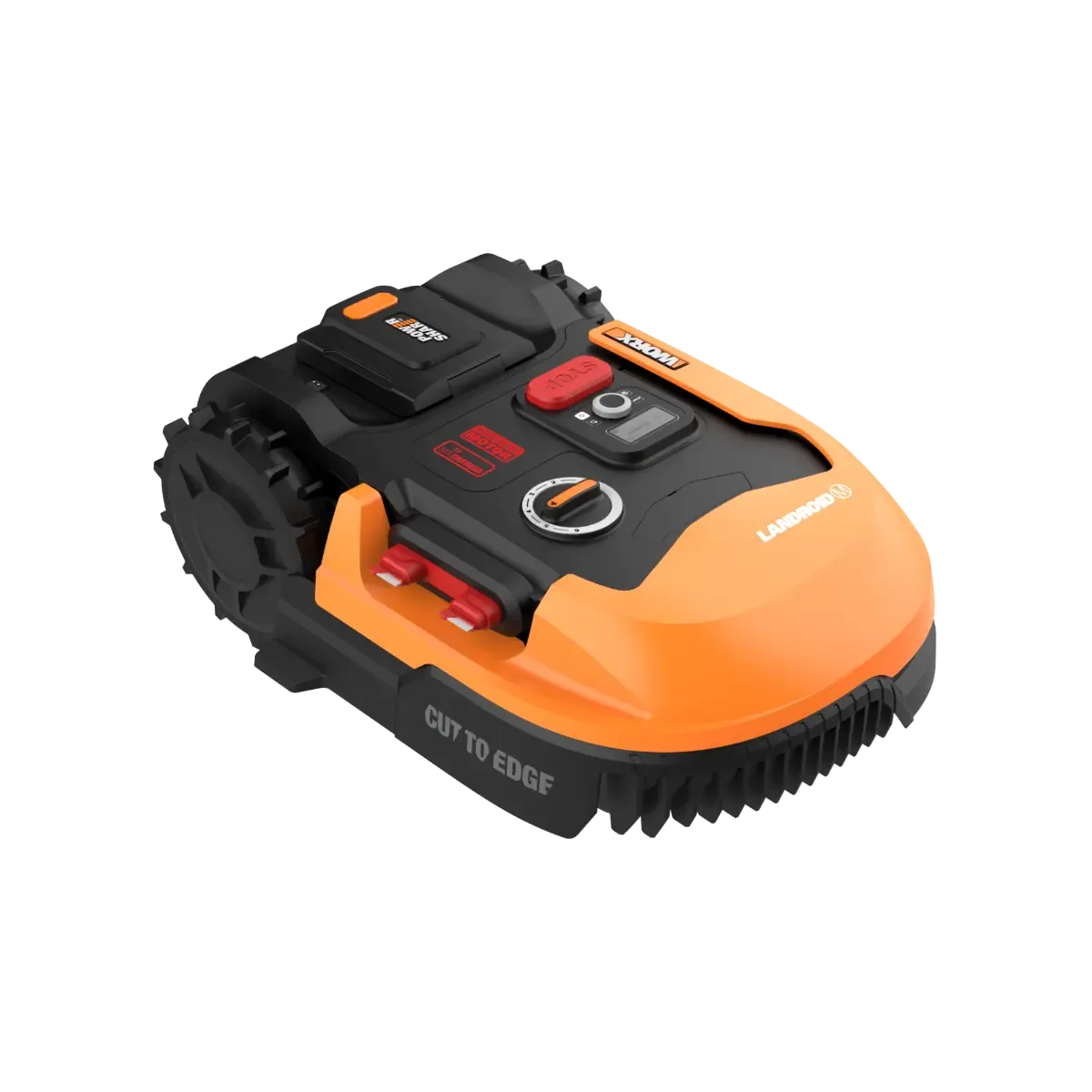
The Landroid M is Worx's quarter-acre boundary-wire mower and, thanks to the 20V Power Share battery it shares with every other Worx tool, it is usually one of the cheapest ways into robot mowing that still comes with a real app. Worx lists it at $1,199.99, but it sells for around $900 on Amazon and Walmart has been clearing it below $800, so shop around. Setup is the classic wire job: 820 feet of wire and 340 pegs are in the box, and plan on an afternoon of pegging. Once running, the AIA algorithm handles narrow passages without a guide wire, the off-center blade genuinely cuts to the edge, the floating blade disc lifts over bumps, and at 59 dB it is quiet enough to run at night. The catch is what it lacks: no camera or ultrasonic sensor in the box, so it bumps into anything the wire does not exclude, and there is no GPS tracking unless you buy the Find My Landroid module. Against the Gardena SILENO flex at $599 you pay more for a 3.5 in top cut height and Wi-Fi control; against the wire-free Landroid Vision you save several hundred dollars but do the wire work yourself. Best for flat, fairly open yards under a quarter acre owned by someone who already has Worx batteries in the garage.
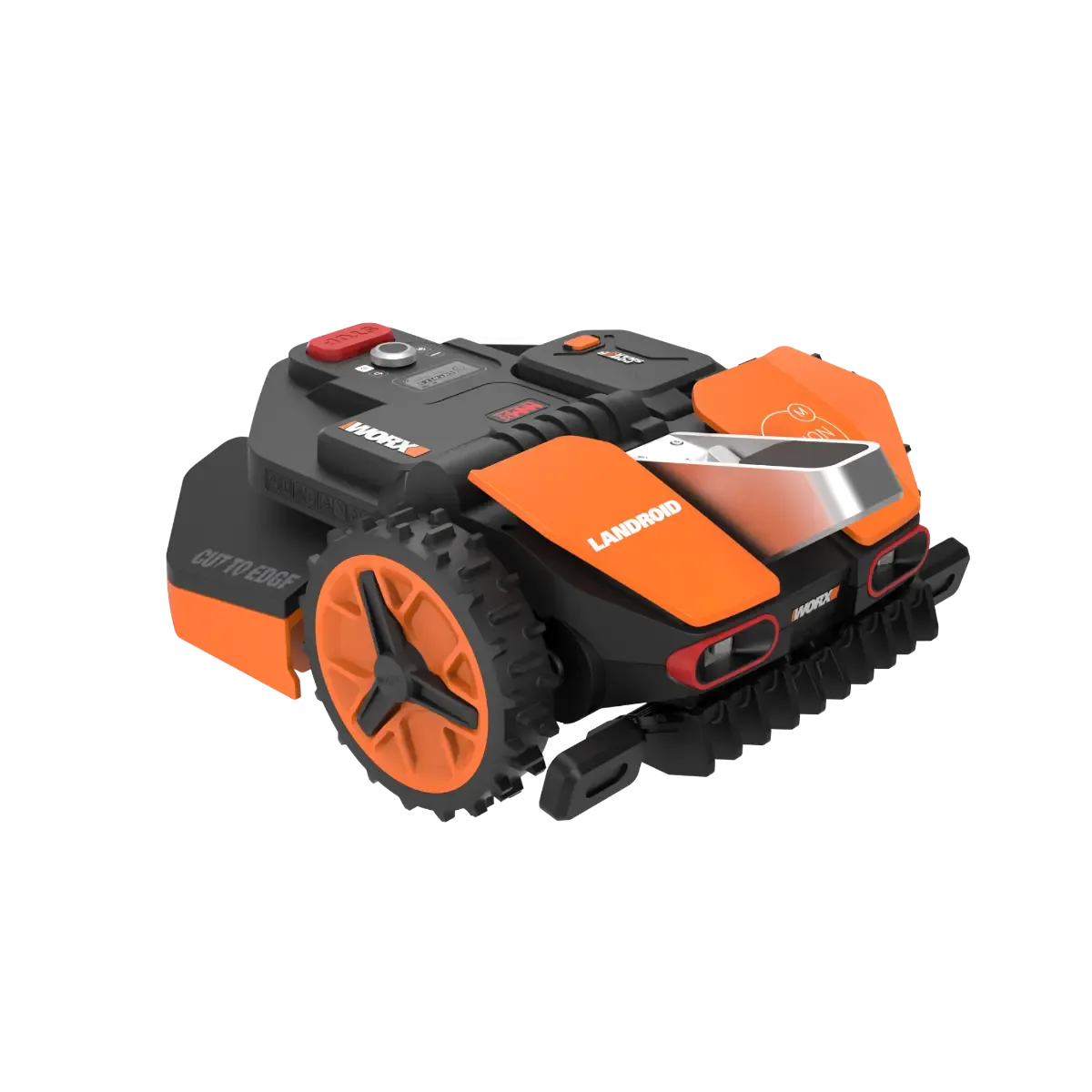
Landroid Vision is Worx's answer to the boundary-wire chore: no wire, no RTK antenna, no mapping drive. You set the dock on the grass, press go, and a 140-degree HDR camera with an onboard neural net decides what is lawn and what is not, treating the edge of the grass as the boundary. The 1/5-acre WR208 is the entry model; the WR210 is the same 33 lb machine rated for a quarter acre at $1,999.99 list. Pricing is all over the place: Worx lists the WR208 at $1,599.99, Amazon has it around $1,350, and Target and Worx have run it at $799.99. In use it is quiet at 59 dB, cuts to the edge with an offset blade, and will stop for pets, toys and hoses lying on the ground. Reviewers found the downward-pointing camera misses things above its sightline (a parked trailer, a playground slide) and that it needs a visible edge: where lawn meets mulch or a neighbor's grass without a curb, you stake down the included magnetic strip. Separate lawns need RFID tags and usually a carry between them. Versus an Eufy E15 or Segway Navimow i105 at similar money this is simpler to install but less precise and it mows in a random pattern; versus Worx's newer Landroid Vision Cloud (RTK plus camera, $1,799.99) it gives up mapping and systematic rows. Best for small, well-defined lawns where nobody wants to bury wire or plant an antenna.