Roborock Robot Mowers
Roborock has 3 mowers on MowerRanker, priced from $800 to $3,199. The Roborock rated for the largest lawn is the Roborock RockMow X1 at 1 acre. Compare the full lineup below.
Roborock
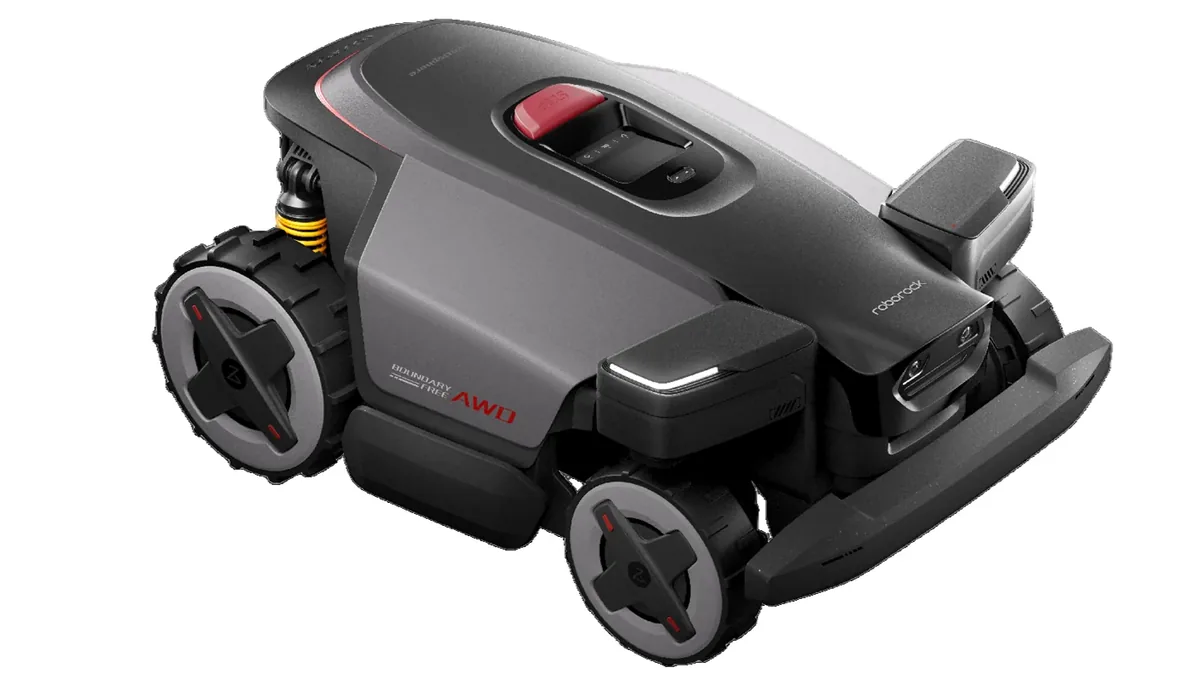
Roborock RockMow X1
Roborock's first lawn mower landed in the US in March 2026 as the RockMow X1 (it is the Z1 everywhere else), and it is built like the robot vacuums that made the brand: overbuilt, quiet and very good at driving. Four hub motors, active front steering and dynamic suspension let it climb 80 percent grades and roll over 3 inch bumps without tearing turf, and owners say the first thing they notice is how silent it is. Positioning is full-band RTK from an included antenna plus four cameras, with a headlight so it can finish after dark. The X115H covers 0.37 acres and the X130H is rated to an acre per charge; both share a 9.5 inch deck and a 1.6 to 3.5 inch app-set height. Early owners like the mapping and app but call the software a work in progress: obstacle avoidance detours widely, zone passages need more room than the stated 2.6 feet, and the PreciEdge module that gets within 1.2 inches of borders is a $150 add-on. Amazon is the main US retailer, and the X115H has already dipped to $1,500 from $2,299. Against the Mammotion Luba 3 you trade a wider deck and LiDAR for a heavier chassis with better steering; against the Navimow X3 you gain AWD. Best for hilly, rutted yards up to an acre where traction matters more than edge precision.
Roborock
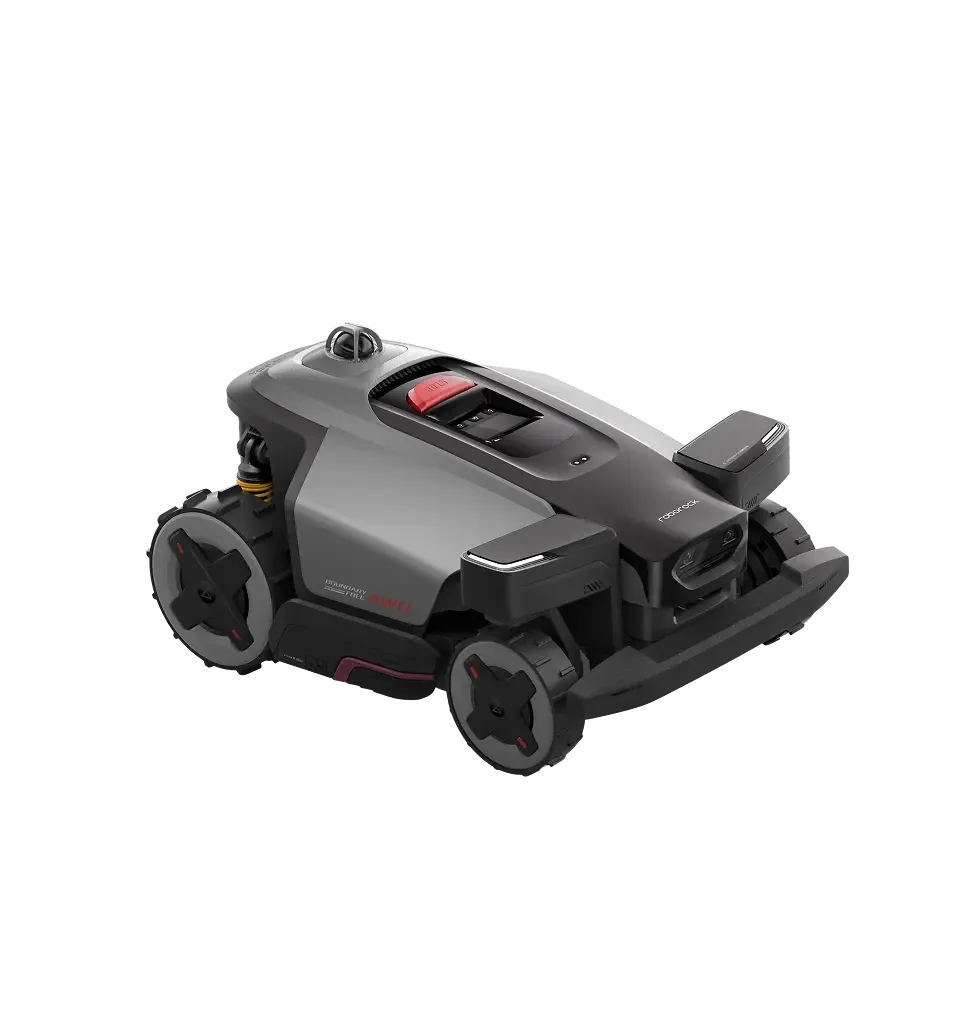
Roborock RockMow X1 LiDAR
The RockMow X1 LiDAR (model X120H) is the RockMow X1's AWD chassis with a spinning LiDAR dome on top and no RTK antenna in the box. That is the whole pitch: if your lawn is hemmed in by trees, fences and a two-story house, satellite RTK mowers spend half their time hunting for a fix, whereas this one builds a 3D map of the yard and mows in straight, systematic lines regardless of sky. It launched in the US in July 2026 at $3,199 list, with a $2,499 opening deal that has since ended, and it is rated for 0.49 acres, 80 percent slopes and 3.1 inch obstacles with the same 9.5 inch six-blade deck and 1.6 to 3.5 inch app-set height as its siblings. Lab reviewers praised the navigation, the quiet motor and a clean cut, but found the obstacle avoidance weak (it drove straight over hoses and balls that cheaper mowers dodged), the AI auto-mapping non-functional at launch, and edge results disappointing even with the $150 PreciEdge module because the software keeps a wide margin. It costs more than a Mammotion Luba 3 AWD 3000, which has LiDAR, NetRTK and a wider deck, and about the same as a Dreame A2 with far less edge precision. Best for half-acre lawns with terrible sky view and real slopes, for buyers who trust Roborock to finish the software.
Roborock
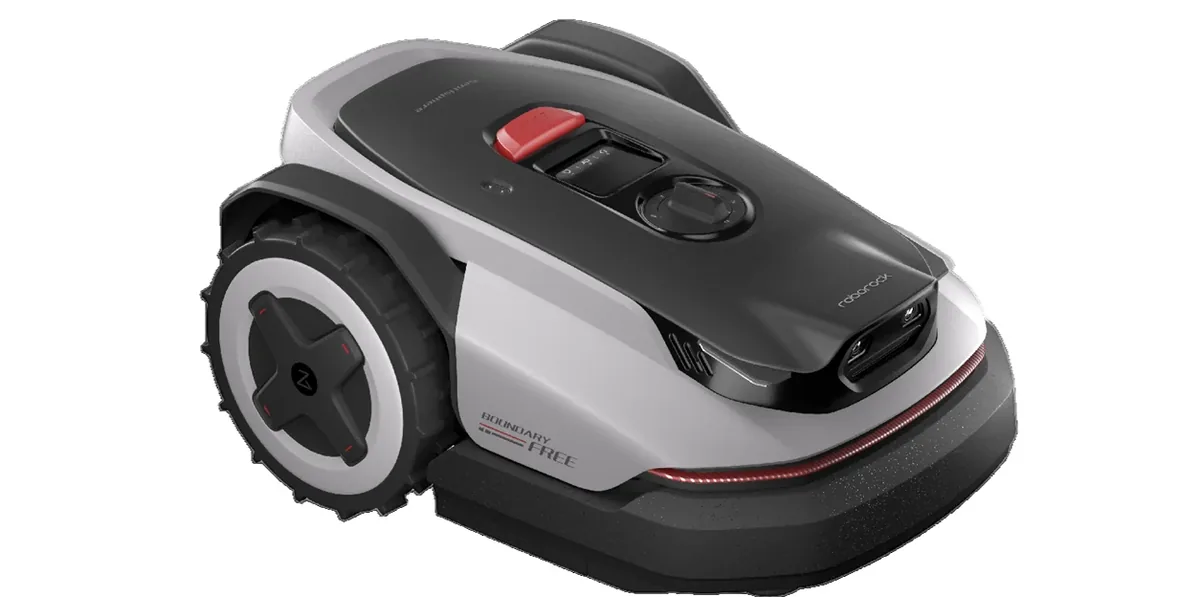
Roborock RockNeo Q1
The RockNeo Q1 (Q110H in the US) is Roborock's entry mower: a 27 pound, rear-wheel-drive machine for quarter-acre lawns that lists at $1,299 but has been selling on Amazon for $800 to $1,000 most of the summer. It uses the same full-band RTK antenna plus camera VSLAM as the RockMow, and Roborock later pushed a network RTK mode so you can skip the antenna if you have decent cell coverage. Owners describe it as whisper quiet, good at systematic back-and-forth mowing of open lawn, and nicer to map than Segway's app, and they like the headlights for evening runs. They are also blunt that it is for simple, flat, easy yards: the plain wheels get stuck if it wanders onto rock beds or sand, it struggles on real slopes despite the 45 percent rating, and it needs a wide-open view of the sky to hold position. Cutting height is a manual dial from 1.6 to 3.1 inches, edge cutting needs the $90 PreciEdge module, and even with it the software keeps a cautious margin around anything hanging over the lawn. Compared with a Navimow i105 it is quieter and maps better; compared with a Mammotion Yuka mini it needs an antenna but climbs about the same. Best for flat, open quarter-acre lots where price and quiet matter most.