How to Choose a Robot Lawn Mower: Lawn Size, Navigation, Slope, Budget
Robot mower shopping fails when it starts from a brand or a spec sheet instead of your yard. The right machine depends on how much sky the lawn can see, how many square feet of grass there actually are, whether the ground is flat or a wet hillside, and how much patience you have for installation. Answer those in order and most of the catalog eliminates itself before you look at a price.
Start with the sky, not the mower
Every wire-free mower that has made robot mowing mainstream since 2023 positions itself with RTK GPS, and RTK needs a wide, clean view of the sky for both the mower and its reference antenna. Stand in each part of your lawn and look up. Open sky with a few small trees: RTK works, and the whole wire-free catalog is open to you. A yard ringed by mature oaks, a narrow side yard between two-story houses, a lawn that runs under a deck: the fix drops out, the mower stops or wanders, and the app fills with signal warnings.
That single observation sorts you into a class. Open yards go RTK (or RTK + vision, which bridges short shaded stretches). Yards that are mostly shaded go boundary wire or LiDAR, both of which position without satellites. Camera-only mowers sit in between: no signal to lose, but they need daylight and a clear grass edge. Decide the class first; the brand argument comes after.
Measure the grass, then add margin
A lot size is not a lawn size. A quarter-acre lot with a house, driveway, patio, and beds on it might have 5,000 square feet of actual grass. Walk it off, or trace it in a satellite-map area tool, and get a real number. Then read the mower's rated area for what it is: the maker's figure for a simple, open lawn with the mower running most of the day, most days. Islands, narrow passages, slopes, and the time the mower spends waiting for a signal or a charge all eat into it.
The standing advice from long-term owners is to buy a rating 30-50% above your measured grass. A 10,000 sq ft lawn wants a mower rated for 13,000-15,000. Undersizing shows up as a mower that runs all day and still leaves the far corner shaggy; oversizing costs money but nothing else. Use the lawn-size filter on the catalog with your number plus margin and let it hide everything that can't keep up.
Slope, wet grass, and the drive question
Slope ratings are quoted in percent, and the number to remember is that rear-wheel-drive mowers are typically rated 20-35% and all-wheel-drive machines 45-80%. Percent is rise over run: a 30% slope climbs 3 feet for every 10 forward, about 17 degrees, which is steeper than it sounds and is roughly where a walk-behind mower gets tiring. Most suburban lawns are under 15%. If yours has a real hill, a swale, or a bank down to the street, the slope rating is the spec that decides the purchase.
Two things the rating hides. The limit at the boundary is lower than the limit in the middle, because the mower has to turn there without sliding out of bounds; makers publish a separate perimeter figure and it's often half the headline. And wet grass, clay soil, and a freshly aerated lawn cut every rating. Owners on damp hillsides consistently report that RWD mowers spin their wheels well under their rated slope, and that AWD is the difference between a mower that works and one that needs rescuing.
Cut height: the spec that catches American buyers
Robot mowing grew up in Europe on short, cool-season lawns, and a lot of the catalog still cuts between roughly 0.8 and 2.4 inches. That is fine for a bluegrass or ryegrass lawn kept short. It is too low for tall fescue, which wants 3 to 4 inches, and for warm-season St. Augustine and Zoysia across the South. Scalping a fescue lawn to 2.4 inches every day is a good way to end up with a brown one.
Check the cut-height range on every shortlisted mower against what your grass type actually wants. Several makers now sell high-cut versions (Mammotion's H variants, Segway's X3 series, Husqvarna's NERA line with the right blade disc), and the catalog lists the min and max for each model so the filter is a two-second check rather than a return.
What a budget buys, in tiers
| Your yard | Shop this class | Why |
|---|---|---|
| Open sky, under 1/2 acre, flat | RTK GPS | Half-hour setup, straight passes, the mainstream price tier |
| Open sky, 1/2 acre+, some slope | RTK + Vision, AWD | Coverage rating and traction for the size; cameras bridge shade |
| Mostly under trees or along walls | Boundary Wire or LiDAR | Neither needs satellites; wire is cheaper, LiDAR skips the install |
| Small, sunny, clearly edged lawn | Vision Only | Unbox and mow; no antenna, no wire |
| Real hill or wet clay bank | AWD, 45%+ rating | RWD spins out on damp slopes well under its rating |
| Tall fescue or warm-season grass | Anything with 3"+ max cut | Most of the catalog tops out at 2.4" |
Under $1,000 is boundary-wire territory plus the small camera-only machines: real mowers that work on small, simple lawns, at the cost of laying wire or accepting daylight-only camera navigation. $1,000-$2,000 is the mainstream RTK tier, where the Segway Navimow i-series and Ecovacs GOATs live, and where most first-time buyers with an open quarter-acre should shop. $2,000-$3,500 buys AWD, larger rated areas, camera fusion, and cellular; above that you are into multi-acre flagships and tracked machines.
Then budget the running costs before you commit: blades every month or two in season, a battery in year three to six, and possibly a cellular subscription after year one. The cost guide breaks it down. The rational strategy is to buy the class your yard needs, one coverage tier above your measured grass, and stop reading reviews of the flagship you don't need.
Mowers mentioned in this guide
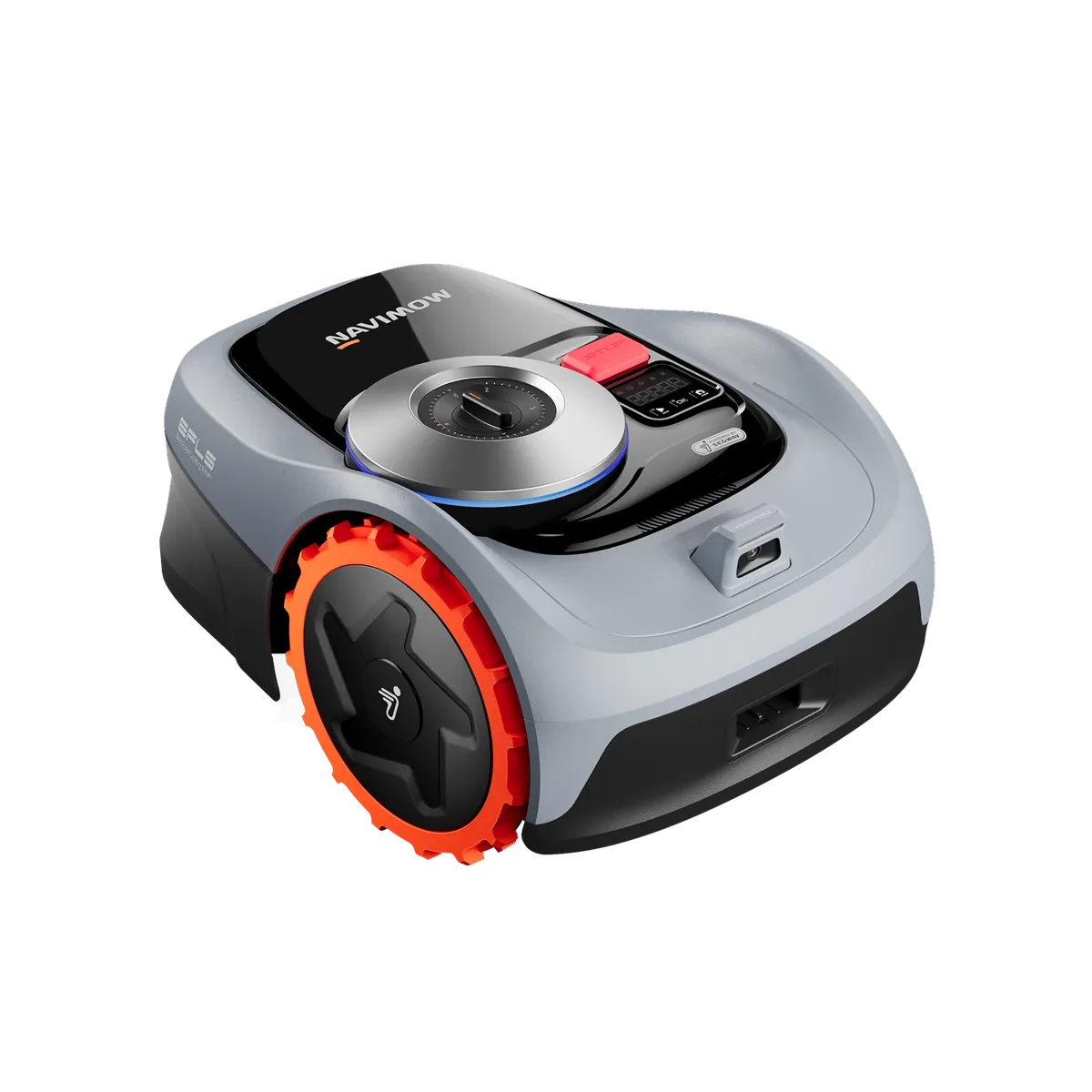
Segway
Segway Navimow i105N
The i105N is the mower that made wire-free RTK cheap. Segway cut it from $999 to $799 in 2026 and it regularly dips to $669-699, which puts it in Worx Landroid Vision territory while still using a proper RTK antenna for centimeter-level positioning. It is small - 7.1 in cutting width, 24 lb, a 2.55Ah battery good for about an hour - so the rated 1/8 acre is honest; Amazon owners with a typical city lot say a full cut takes around 2.5 hours across two or three charge cycles. Setup is genuinely DIY: mount the antenna somewhere with open sky, drive the mower around the perimeter with your phone, and let AI Assist Mapping snap to the lawn edges. Owners like the quiet 58 dB motor, the straight-line stripes, and that it pays for itself in a season versus a lawn service. The knocks are consistent too: getting stuck on flat ground and in dips, mapping frustration when trees hang over the antenna, a manual cutting-height dial, and a few units dying after a few months with slow email-only support. The 30% slope limit and front-wheel drive rule out anything hilly. Compared with the Mammotion Yuka Mini, the i105N is cheaper and simpler but has no vision-only mode when RTK is hopeless; step up to the i110N if you have more than about 5,000 sq ft.
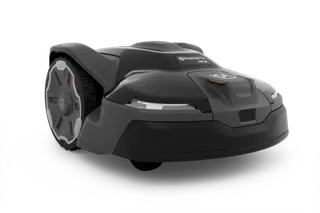
Husqvarna
Husqvarna Automower 420 iQ
If you are going to buy an iQ, this is probably the one. The 420 iQ is the same 9.4-inch, 1-to-4-inch cut body as the 410 iQ with a faster 54-minute charge and a one-acre rating, and Husqvarna and Amazon have both sold it for well under list for most of 2026. Setup is wire-free: you mount the RS1 reference station, walk the boundary with the mower in the app, and draw stay-out zones and transport paths on the map. A long-time 450X owner who upgraded reported it cut his half-acre Michigan lawn faster and more systematically than his wired mower, in stripes or a checkerboard if you want to show off. The weak spots are the same as the rest of the family: EPOS needs sky, so narrow side yards between houses can drop signal and stop the mower cold, and while radar slows it for large objects it does not dodge sticks. Compared with a Mammotion Luba 2 AWD 3000 at similar money you give up all-wheel drive and a wider deck; compared with a Segway Navimow X3 you give up camera vision. What you get instead is a dealer who will actually service it and a four-year warranty. Best for a flat to moderately sloped acre where you want set-and-forget reliability and someone local to call.
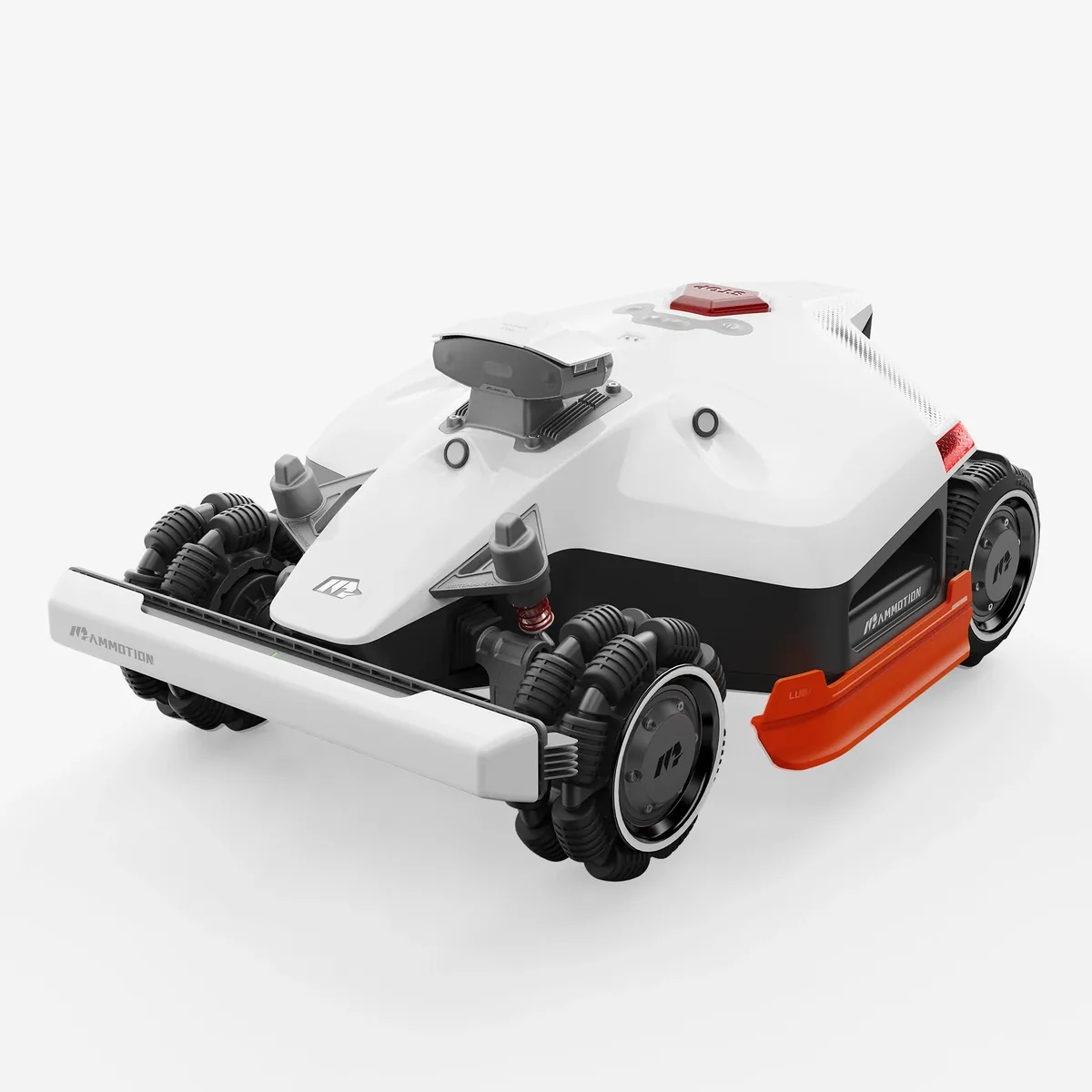
Mammotion
Mammotion Luba 2 AWD X
The Luba 2 AWD X is the mower that made Mammotion a household name in the US, and in fall 2026 it is a clearance buy: Mammotion's own store shows every trim out of stock with a banner pointing at the Luba 3, but Home Depot and Best Buy still have units, with the 3000X down from $2,599 to about $1,999. What you get is the same all-wheel-drive body that climbs 80 percent grades, a 15.7 inch dual-disc deck that clears a big yard fast, and a 2025 X refresh that added the UltraSense AI camera so it keeps its bearings when the RTK station loses sky. The catch is that RTK station: it must be mounted high with an open view, and most owner complaints trace back to a poorly placed antenna. The X version cuts 1.0 to 2.7 inches, so northern cool-season lawns should look for the HX (2.2 to 4.0 inches) instead. Versus the newer Luba 3 you give up LiDAR and free NetRTK, which matters if your lawn is ringed by trees; versus a Segway Navimow X3 you gain real AWD and a wider deck. Best for hilly half-acre to 2.5 acre properties with decent sky, bought on discount.