eufy
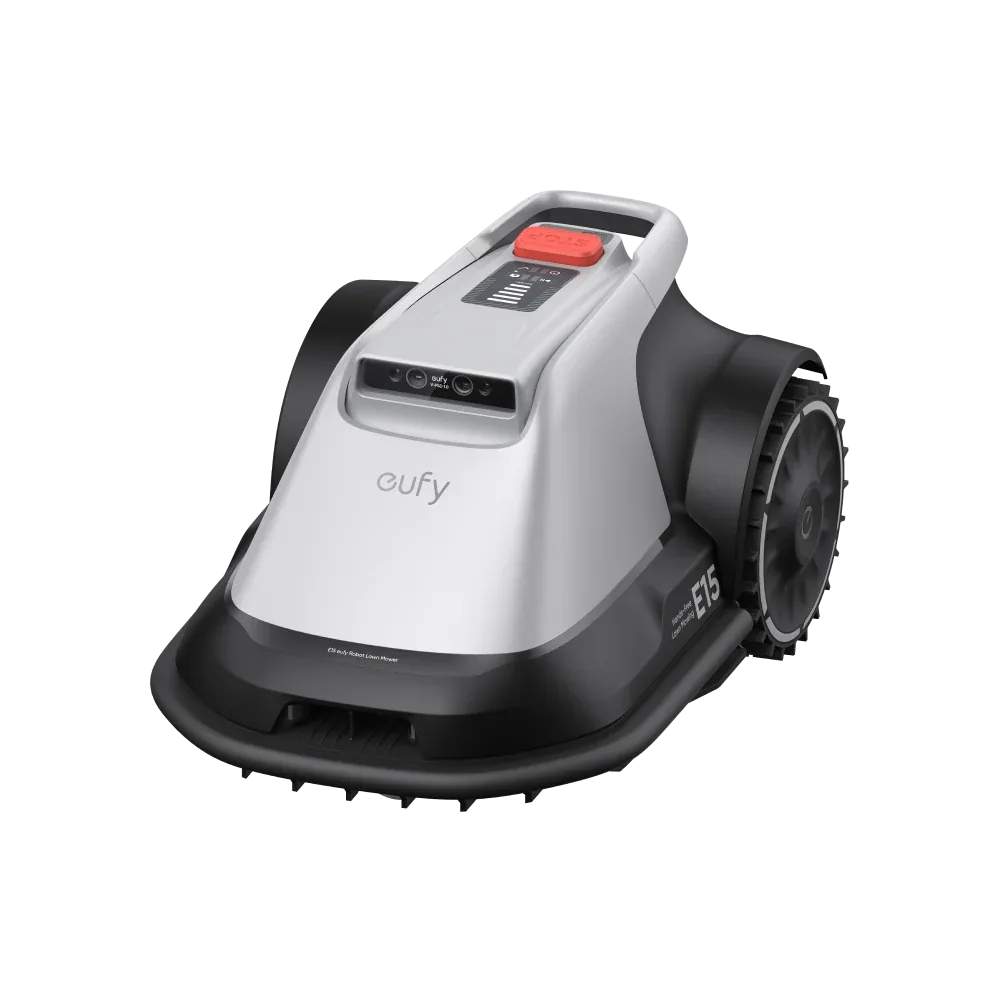
eufy E15
The eufy E15 is the robot mower for people who already own a robot vacuum and want the lawn version: unbox it, plug in the roofed base station, and its twin stereo cameras auto-map a 0.2-acre yard in 10 to 25 minutes with no wire, no RTK antenna and no perimeter drive. TechRadar, How-To Geek and Amazon owners all rave about how painless that first day is, and the 56 dB cut from three razor blades on an 8-inch disc leaves tidy stripes. The camera-only approach has real limits, though. It cannot mow after dark, it is rated for only 18-degree (about 32%) slopes, its rear-drive plastic wheels slip on dewy grass, it wants lawn edges that look different from the lawn, and Tom's Guide watched it misread longer grass and skip patches. Grass within about 4 inches of walls still needs a trimmer. It is an Anker product underneath (the mower is a rebadged TerraMow), so the app is polished, build quality is high, and you get built-in 4G, GPS anti-theft alerts, an AirTag slot and a 2-year warranty. eufy lists it at $1,799.99 but it has sold at $1,299.99 or less for most of 2026, which puts it against the Ecovacs GOAT O1000 RTK and Segway Navimow i110N; the E15 is easier to set up than either, while those two handle shade, slopes and night mowing better. Best for flat, fenced suburban lawns under 8,700 sq ft where setup simplicity matters most.
We may earn a commission.
Price and availability on Amazon’s site may differ.
Specifications
How it navigates
V-FSD 1.0 pure vision: twin stereo cameras auto-map the lawn by telling grass from borders, no wire or RTK. Roofed base station; zones, paths and no-go areas edited in the eufy app. Daylight only.
Highlights
Pros
- ✓Easiest setup in the category: no wire, no antenna, no perimeter drive
- ✓Roofed base station shades the battery, a rarity at this price
- ✓Whisper-quiet 56 dB with a clean striped finish
- ✓Polished Anker app with zones, paths, no-go areas and live camera view
- ✓Built-in 4G, GPS geofence alerts and AirTag slot included
- ✓Often $1,299.99 or less against a $1,799.99 list
Cons
- ✗Camera navigation means no mowing after dark or in low light
- ✗Only 18-degree (32%) slopes and rear-drive wheels that slip on damp grass
- ✗Misreads tall grass and uneven patches, leaving spots uncut
- ✗Leaves about 4 inches uncut along walls despite the edge mode
- ✗Not suited to St. Augustine or dense Zoysia turf per eufy
Compare the eufy E15
Related robot mowers
More from eufy →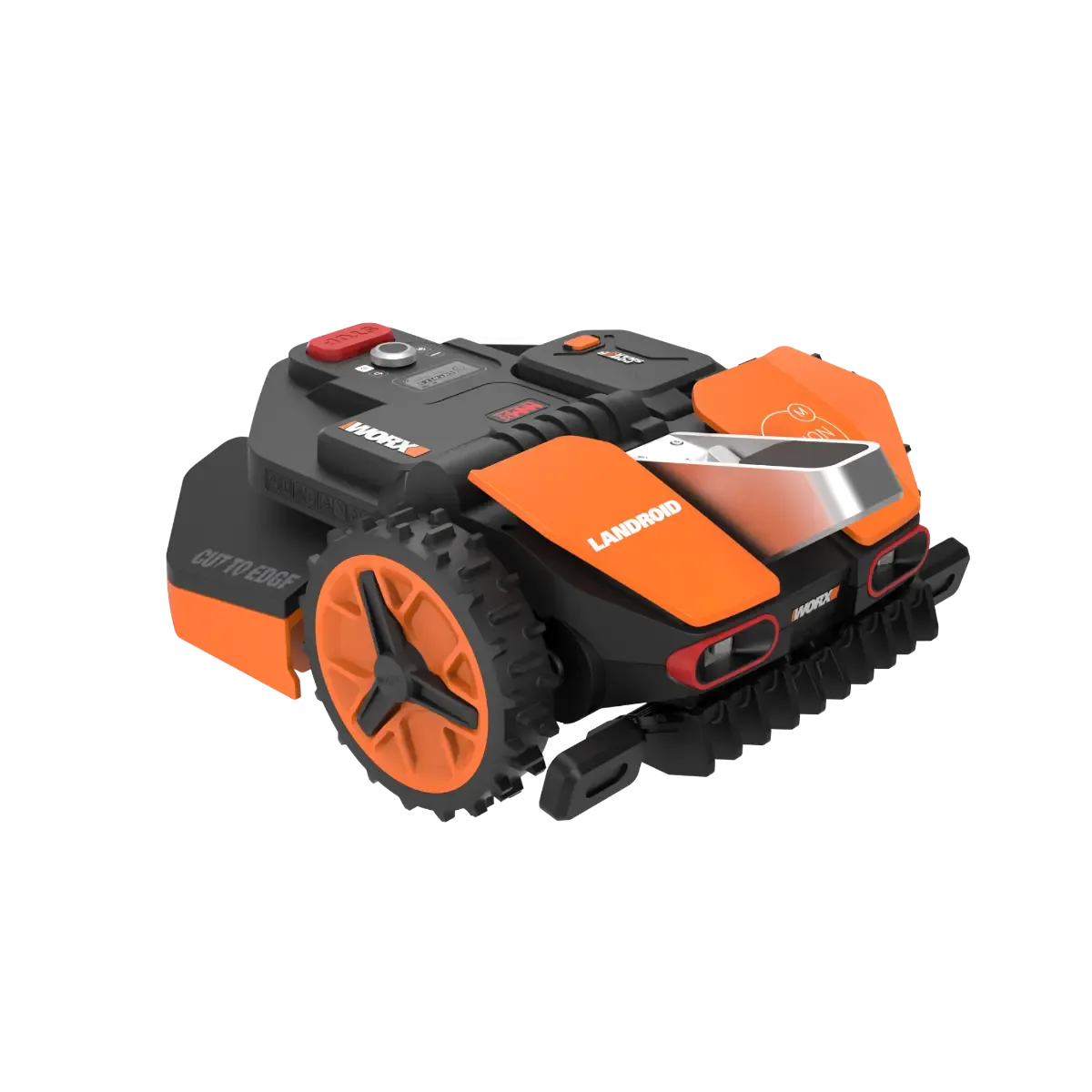
Landroid Vision is Worx's answer to the boundary-wire chore: no wire, no RTK antenna, no mapping drive. You set the dock on the grass, press go, and a 140-degree HDR camera with an onboard neural net decides what is lawn and what is not, treating the edge of the grass as the boundary. The 1/5-acre WR208 is the entry model; the WR210 is the same 33 lb machine rated for a quarter acre at $1,999.99 list. Pricing is all over the place: Worx lists the WR208 at $1,599.99, Amazon has it around $1,350, and Target and Worx have run it at $799.99. In use it is quiet at 59 dB, cuts to the edge with an offset blade, and will stop for pets, toys and hoses lying on the ground. Reviewers found the downward-pointing camera misses things above its sightline (a parked trailer, a playground slide) and that it needs a visible edge: where lawn meets mulch or a neighbor's grass without a curb, you stake down the included magnetic strip. Separate lawns need RFID tags and usually a carry between them. Versus an Eufy E15 or Segway Navimow i105 at similar money this is simpler to install but less precise and it mows in a random pattern; versus Worx's newer Landroid Vision Cloud (RTK plus camera, $1,799.99) it gives up mapping and systematic rows. Best for small, well-defined lawns where nobody wants to bury wire or plant an antenna.
TerraMow
TerraMow V1000
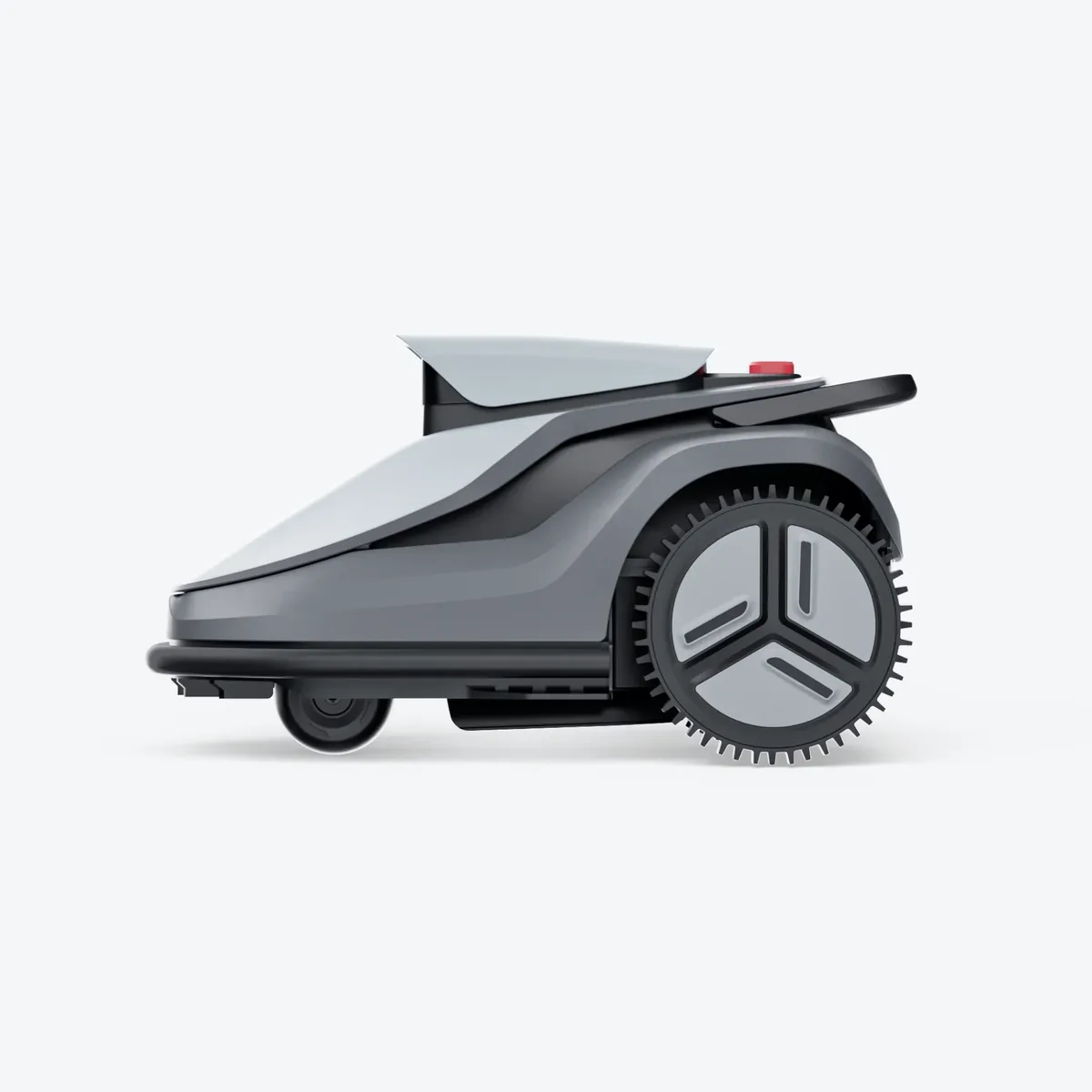
TerraMow is a vision-only brand that built a strong following in Europe first and now sells in the US mainly through Amazon and a couple of dealers, since the US variant on its own store is often sold out. The V1000 is the sweet spot of the range: it maps a lawn up to about 1,200 square meters (0.3 acre) by itself using three cameras and a 3D vision system, with no wire, no RTK antenna and no beacons, and the map lives on the mower so it keeps working if your Wi-Fi drops. It is small at 26 pounds, very quiet at under 54 dB, and cuts an 8-inch swath from 1 to 3 inches, with an edge mode, 20 zones and a 4G module whose first year of data is included. Owners on TerraMow's site, including a US buyer with a 5,500 square foot shared front lawn, talk about auto-mapping working on the first try and using virtual fences to keep it off the neighbors' grass; the recurring gripe is wanting more manual map editing for awkward corners. Limits: a 33 percent slope rating, a 4.5 Ah battery that covers only 160-300 square meters per charge, and a vision system that needs daylight, so no night mowing. Against the Eufy E15 or Worx Landroid Vision it is cheaper, quieter and handles complex layouts well; against a Segway Navimow i105 you give up RTK precision for a truly no-antenna setup.
Ecovacs
Ecovacs GOAT GX-600
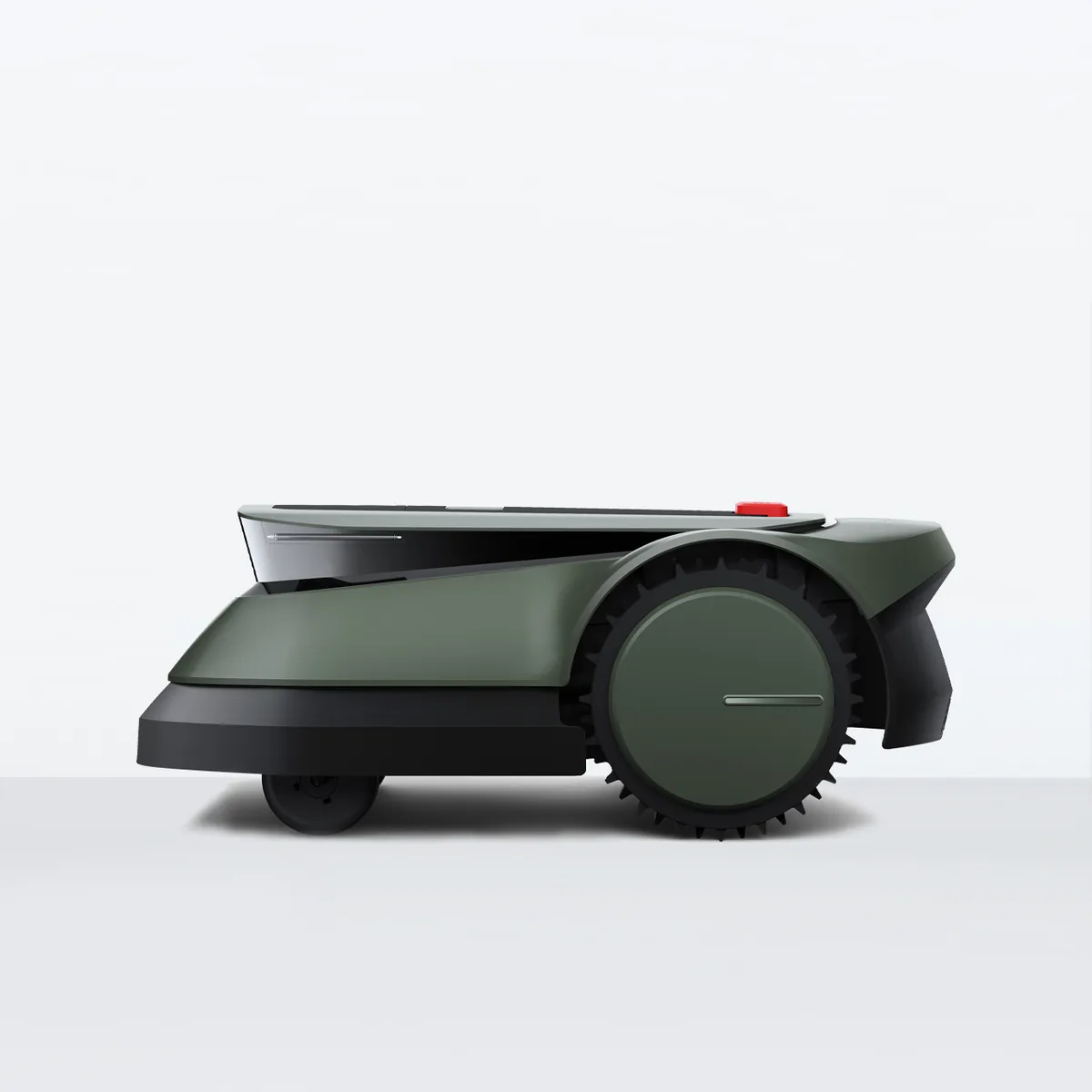
The GOAT GX-600 is Ecovacs' answer to the 'I just want it to work' crowd. There is no wire to bury and no RTK antenna to mount: a 150-degree fisheye camera plus a ToF sensor read the color and texture of your grass, so you set the base, press go, and it figures out where the lawn ends. That is genuinely quicker to get running than a Segway Navimow i105N, but the trade-off is that it never draws a map. There are no zones, no no-go areas, and no path to a second patch of grass across a driveway, and Android Police found it needs clear physical borders (beds, fences, mulch lines) to stay put. It handles 40% slopes, cuts an 8.66-inch swath, and heads home when it senses rain. Cutting height is a manual dial rather than an app setting. Ecovacs lists it at $1,299.99 but it has sat at $999.99 on their own store for months, and unlike the rest of the GOAT range it is not sold on Amazon in the US. Think of it as a set-and-forget mower for one simple, fenced yard under 6,500 sq ft; if your lawn has islands, a front and back section, or an open edge onto a neighbor's grass, spend a little more on the O1000 RTK or eufy E15 and get real maps.
Ambrogio
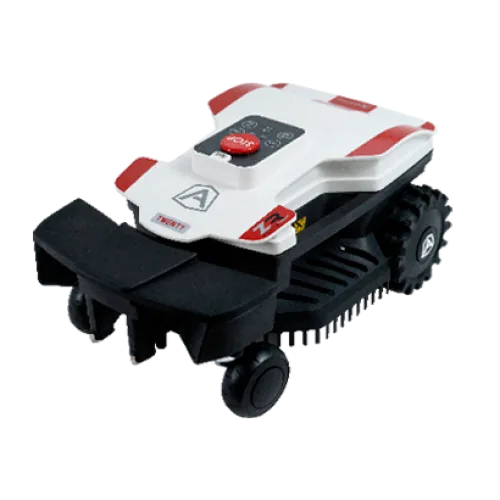
Ambrogio Twenty ZR
Ambrogio is the Italian dealer brand (Zucchetti) that landscapers respect, and the Twenty ZR is its oddball: a small mower that needs no perimeter wire, no RTK antenna and no camera map. Instead it uses radar plus grass-humidity sensors to recognize where the lawn stops, turning back when it meets paving, mulch beds or gravel, and mows the interior in a random pattern like a classic Robomow. That makes it the fastest install here, minutes rather than a weekend, but it only works if your lawn has a physical border everywhere; where grass simply continues into a neighbor's yard it will keep going, and Paradise Robotics is upfront that objects need to be about 6 inches tall for the radar to see them. It is a quarter-acre machine at heart: a 7-inch blade, 1 to 2.8 inch cut range, 45 percent slopes (20 percent near edges), 59 dB, a 5 Ah battery good for about four hours, and just 16.5 pounds. At about $1,799 through Paradise Robotics or GL Robotics, with an optional $699 4G Connect module for remote control and GPS theft tracking, it costs as much as a Segway Navimow i110 that maps a full acre with cameras and RTK, so buy it for the zero-install idea and the dealer relationship, not for value. A tidy, fully bordered quarter acre with an owner who refuses to run wire is the right home for it.
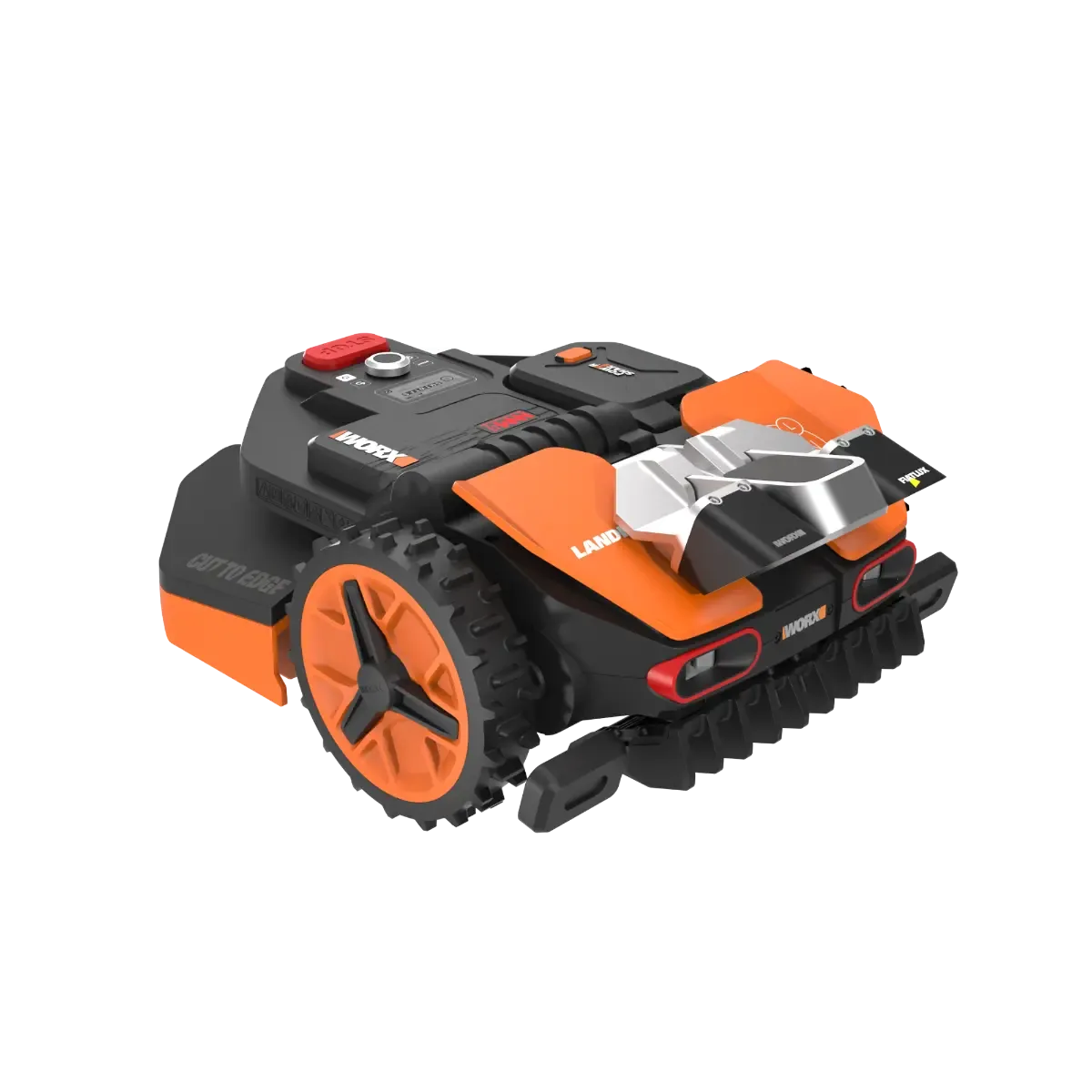
This is the bigger-lawn Vision, sold as the WR220 for half an acre with 3/4-acre (WR230) and 1-acre (WR235) siblings that share the same 33 lb body and 20V 4.0Ah pack and simply get longer daily schedules. List is a steep $2,499.99 to $3,499.99, and Worx has run the WR220 as low as about $1,100 during clearance, so watch for promos before paying full price. The pitch is identical to the smaller WR208: no wire, no RTK base station, no mapping session; the 140-degree HDR camera reads grass versus not-grass and treats that line as the boundary, while the same camera recognizes people, pets and objects on the ground and steers around them. It cuts to the edge with an off-center blade, has a rain sensor, and the optional Find My Landroid module adds 4G tracking. The compromises grow with the lawn: random-pattern mowing means it needs many more hours per week than an RTK mower to cover the same ground, split lawns still need RFID tags and a carry, and the camera struggles wherever there is no clear visual edge. For a half acre and up, a Mammotion Luba Mini AWD or Segway Navimow X3 will finish faster and mow in rows, and Worx's own Vision Cloud WR320.1 ($1,799.99) adds RTK for less money. Best for large, simple lawns with obvious edges where zero installation matters more than mowing speed.
Ecovacs
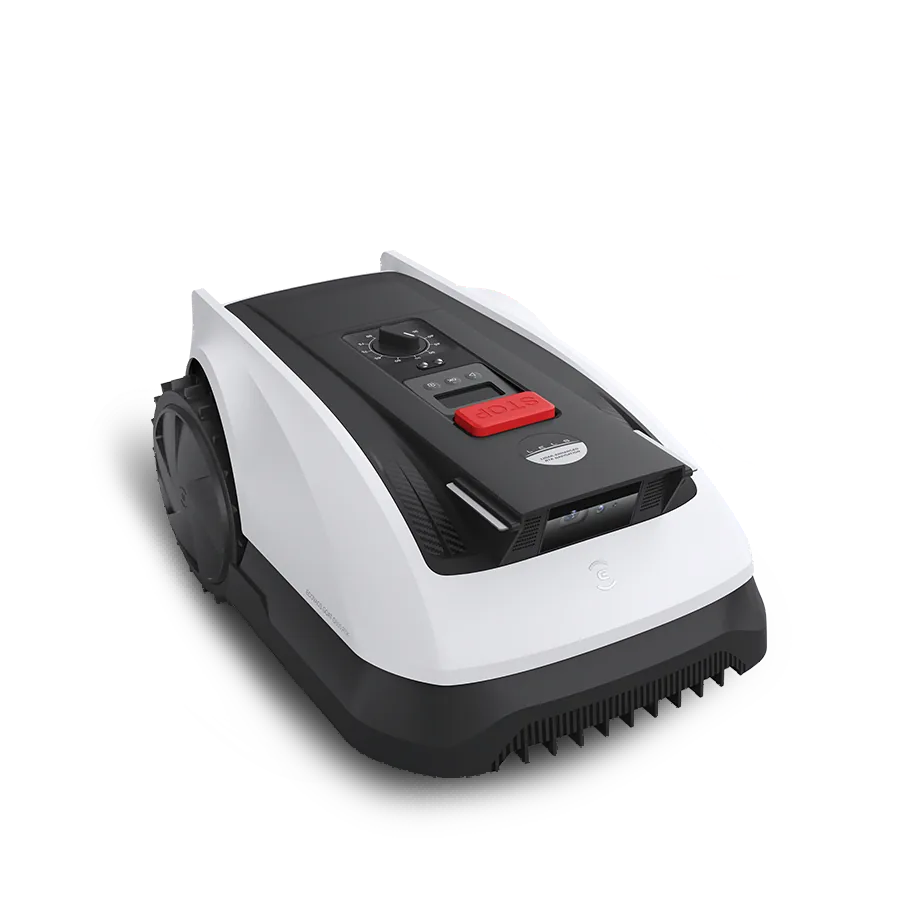
Ecovacs GOAT O1000 RTK
The GOAT O1000 RTK is the cheapest way into a properly mapped, wire-free robot mower from a big brand, and at $999.99 it undercuts the Segway Navimow i110N while doing most of the same job. You mount the included RTK antenna somewhere with open sky, let the mower auto-map, and then carve the map into zones and no-go areas in the Ecovacs Home app. A front camera and 3D ToF sensor handle obstacle avoidance and help it hold position when the satellite view gets patchy under trees. Owners on Amazon like the narrow 1.31-foot body for side yards and the TruEdge pass that gets close to fences, and several say it tamed rough, unmanicured rural lawns. The catches are a slow pace and a small 4 Ah battery: about 65 minutes of mowing, then 100 minutes on the dock, so a full 1/4 acre is an all-day affair. Owners also complain that the manual and app walkthrough are thin, and rural users have hit RTK signal drops that needed a support call. Getting mapping this cheap means you give up the string trimmer of the newer O1000 LiDAR Pro and settle for 45% slopes. For a flat-to-rolling suburban lot under about 8,600 sq ft with a decent view of the sky, it is a strong value pick.