Gardena
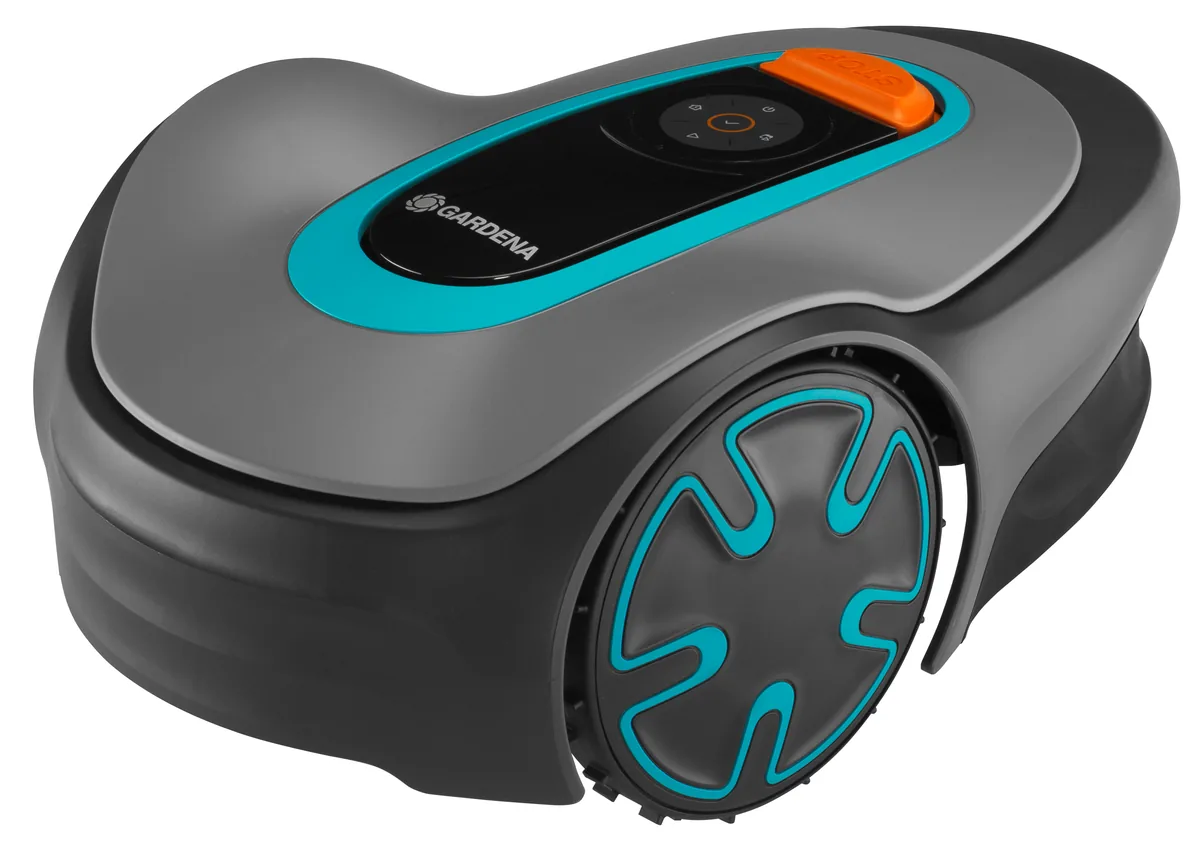
Gardena SILENO minimo
The SILENO minimo is Gardena's smallest, quietest mower and, at about $530 on Amazon, the cheapest way to get a European-built robot onto a tiny lawn. It is rated for 2,700 sq ft, climbs 35%, and at 57 dB is about as loud as a refrigerator, so nobody will notice it running at 2 am. Setup is boundary wire and a single guide wire; CorridorCut lets it pass through gaps down to about 24 in, and SensorControl adjusts how often it mows to how fast the grass is growing. It runs about 65 minutes per cycle on its 18V pack and recharges in 75. Now the limits: cut height maxes out at 1.8 in, which is too short for fescue or bluegrass and really aims it at Bermuda, zoysia and other warm-season grass; the app is Bluetooth-only with a 33 ft range, so no remote start or alerts; there is no rain sensor (it simply mows wet), no edge mode, and obstacle handling is a bumper. Gardena has shifted its US lineup to the SILENO flex ($599, 1 to 4 in cut, 8,600 sq ft), and the minimo appears to be selling down remaining Amazon stock, so treat it as a closeout buy rather than a long-term platform. Against a Worx Landroid S it is quieter and cheaper but far less connected. Best for a postage-stamp warm-season lawn where silence and price beat features.
We may earn a commission. Price and availability on Amazon may differ.
Specifications
How it navigates
Boundary wire and a single guide wire; random pattern with CorridorCut for passages down to about 24 in wide. Bluetooth-only app (about 33 ft), no Wi-Fi, GPS or remote control.
Boundary-wire mower: budget an afternoon (or an installer) for the perimeter wire before the first mow.
Highlights
Pros
- ✓57 dB is quieter than almost anything else on the market
- ✓Cheapest name-brand robot mower with a guide wire
- ✓CorridorCut and SensorControl handle narrow, oddly shaped lots well
- ✓Light enough (13 lb) to carry to a second patch
Cons
- ✗1.8 in maximum cut height is too low for cool-season grass
- ✗Bluetooth-only app with no remote control or alerts
- ✗No rain sensor, no edge mode, bumper-only obstacle handling
- ✗Appears to be closeout stock as Gardena moves the US line to the SILENO flex
- ✗No lift alarm, PIN only
Pros and cons above are drawn from the manufacturer’s spec sheet and published reviews; this model is too new for a body of owner reports.
Owner Insightssummarized from owner forums and retailer reviews
The SILENO minimo is Gardena's smallest and quietest mower, built for lawns under about 2,700 sq ft and now selling down as closeout stock in the US as the SILENO flex takes over the line. The owner verdict is genuinely split: a large group says it is a quiet, tidy, no-drama little machine that made a small lawn look better than hand mowing, and a smaller but loud group hit Bluetooth that would not connect, errors that appeared on flat ground, and a dead battery or dead mower just past the two-year warranty with support that did not help. Almost every negative review is about connectivity, reliability or service, not the cut.
Setup is an afternoon of boundary wire plus the single guide wire, and the Bluetooth walkthrough is easy when it works; the problem is that the app only talks within a few meters, some iPhones refuse to pair, and there is no remote start, no alerts and no GPS. Inside the wire it uses a random pattern with CorridorCut for narrow passages and the guide wire for reliable docking, and the cut is streak-free and fine-mulched. The reliability complaints cluster around three things - false tilt and wire-interrupted errors, units that stop charging on the dock, and batteries fading right after warranty - and around slopes, where owners found it gave up well below the rated grade.
It is best for a tiny, flat, warm-season lawn where near-silence and a low price matter more than app features, and the 1.8 in maximum cut rules it out for fescue or bluegrass. Against the newer SILENO flex at $599 you save about $70 but give up the 4 in cut range, bigger wheels and more area; against the Worx Landroid M at about $900 you get a quieter, better-built mower with no Wi-Fi, no rain sensor and no edge mode. Deal-breakers owners name: needing to control it from indoors, any real slope, tall cool-season grass, and being unwilling to gamble on Gardena support if the battery goes.
What owners like
- +At 57 dB it is quieter than a dishwasher - owners run it during a gathering or at 2 am and nobody notices
- +Feels more solidly built than the plastic budget mowers, with thicker materials and a compact footprint that fits a tiny lawn
- +CorridorCut and the guide wire get it through gaps down to about 24 in and back to the dock reliably, which random-only mowers struggle with
- +SensorControl auto-scheduling matches mowing frequency to growth, so it is not grinding the lawn every day in a dry August
- +Streak-free random cut that owners say looked healthier than their hand mowing after a few weeks
- +Setup is an afternoon - wire, guide wire and the Bluetooth walkthrough - and owners call the app onboarding intuitive once it pairs
- +The cheapest way into the German-built SILENO family, and used units hold up well when they are not one of the bad ones
Common complaints
- −Bluetooth is the sore point - a range of a few meters, owners who had to stand over the mower to connect, and iPhones that would not pair at all while an Android did
- −Phantom errors: tilt angle exceeded on flat ground and boundary wire interrupted while the app reports 100 percent wire quality, roughly every few weeks for some owners
- −Batteries have died soon after the two-year warranty with repair quotes close to a new mower, and some units failed within months
- −Support is the most consistent complaint - month-long battery replacements, a mower returned still broken, and warranty pushback that told one owner to just buy a new battery
- −Struggles on grades much beyond 10 degrees despite the 35 percent rating, and gets stuck on root patches and in narrow corners
- −Charging failures: units left on the dock for days that were still flat when started by hand
- −Mowing time is capped by software, so bringing an overgrown lawn down takes about three days of sessions
- −No rain sensor, so it mows wet unless you pause it, and the finish on uneven ground needs touch-ups
Common Questions
Can I control it from inside the house?
Is the Bluetooth pairing problem fixable?
What are the tilt-angle and wire-interrupted errors about?
How is the cut height for my grass?
How long does it last?
Is it worth buying now that the SILENO flex is out?
Gardena SILENO minimo, head-to-head
Mowers people look at alongside it
More from Gardena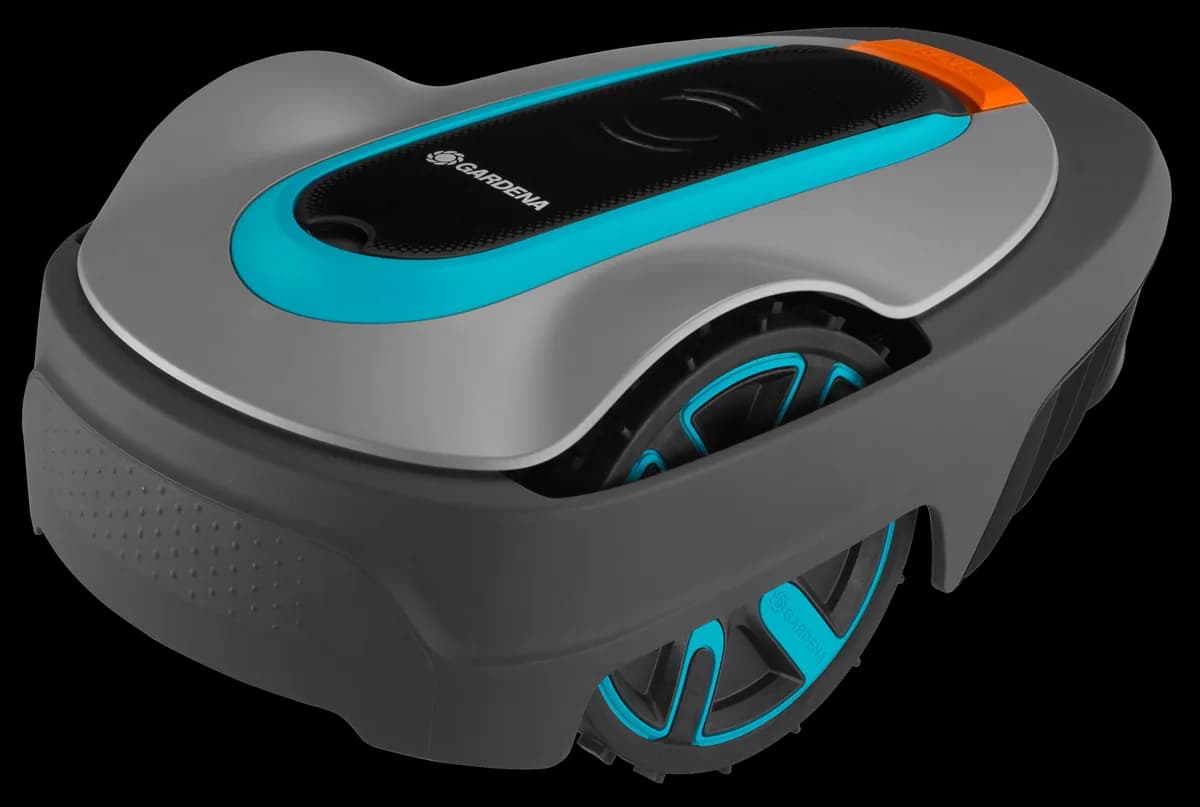
Gardena
Gardena SILENO city
The SILENO city is the small-lawn Gardena that Amazon has sold in volume for years, and the US-spec -41 revision is still listed there in two sizes: the 250 for 2,700 sq ft at about $611 and the 500 for 5,400 sq ft at about $821. Both share one body: a 6.3 in three-blade disc, a 0.8 to 2.0 in cut range, 35% slope rating, 57 dB, and roughly 65 minutes of mowing per 75-minute charge; the 500 simply carries a larger 18V pack and a longer schedule. Setup is a boundary wire plus a single guide wire, with CorridorCut for passages down to about 24 in and SensorControl that adjusts run time to how fast the grass is growing. It mows in the rain by design (there is a frost sensor, not a rain sensor), is hose-washable, and its 16 lb weight makes it easy to carry. The catches are the ones Gardena's whole wired line shares: the app is Bluetooth-only with about a 33 ft reach, so there is no remote start or alerts; obstacle handling is a bumper; and the 2 in maximum cut is too short for fescue or bluegrass, which points it at warm-season lawns. Gardena's international site now files the city as a legacy model, and the $599 SILENO flex cataloged here covers 8,600 sq ft with a 1 to 4 in cut range for less than the city 500, so the 250 at $611 is the only trim that still makes sense on price, and only if you want the quietest wired mower for a tiny yard. Against the Worx Landroid S you get less noise and a guide wire but lose Wi-Fi control.
Best for Small warm-season lawns under an eighth of an acre where a quiet, wired Gardena at about $611 beats app features.
Gardena
Gardena SILENO flex
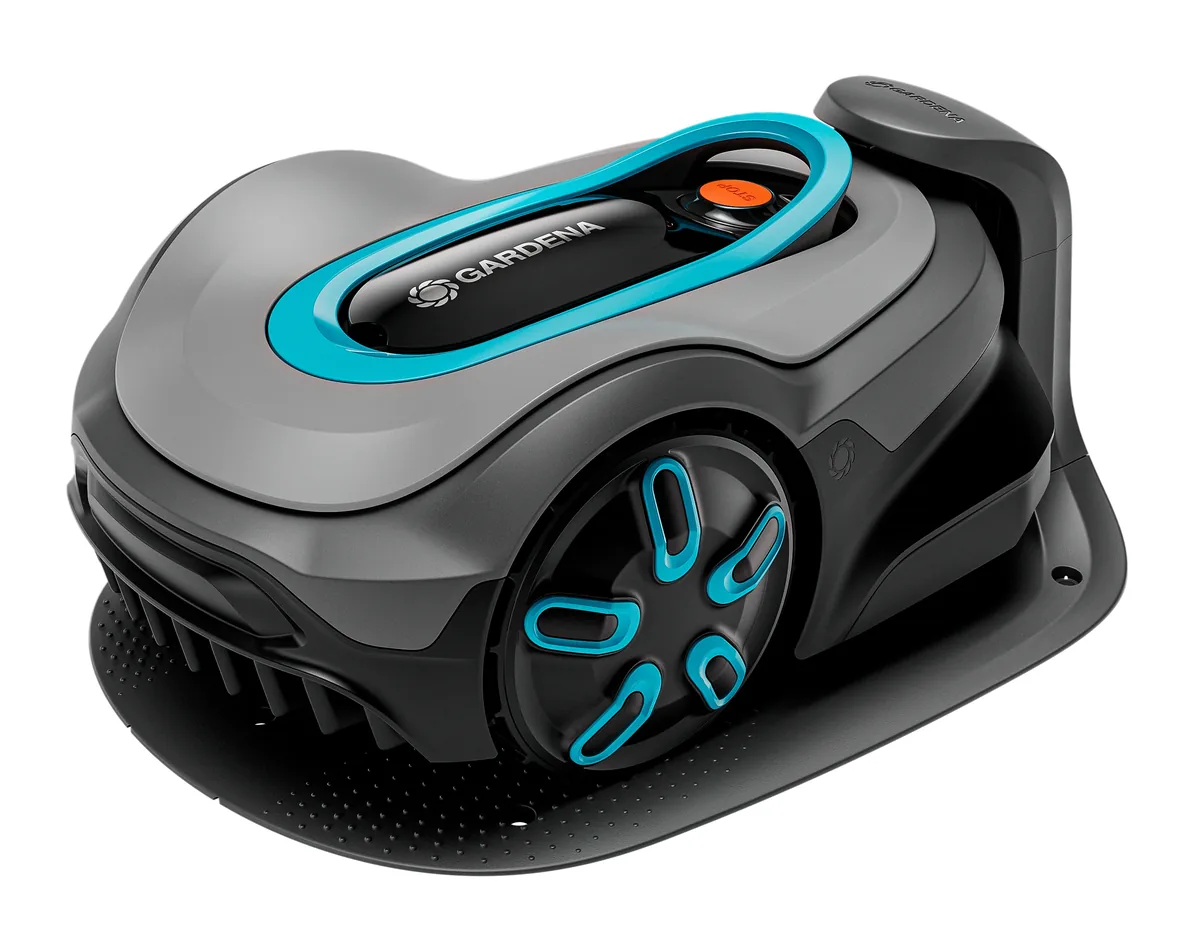
The SILENO flex is Gardena's 2025 redesign for the US and, at $599, the cheapest wired mower here from a major brand. It fixes the biggest complaint about the older SILENO City and Life: cut height now runs 1 to 4 in instead of topping out at 2 in, so it finally suits cool-season American lawns. Coverage is up to 8,600 sq ft, slopes up to 35%, and a 10 in cut on an 18V 3.6Ah pack gives about 90 minutes of mowing per 60-minute charge. Navigation is boundary wire plus a guide wire, which is still the most precise way to keep a robot out of the flower beds and lets it thread narrow corridors. It mows in the rain (there is no rain sensor by design, only a frost sensor), is quiet at 60 dB, and is hose-washable. The trade-offs are Gardena's usual ones: the app is Bluetooth-only with roughly a 33 ft range, so no remote start, notifications or GPS, and obstacle handling is a bumper. Anti-theft is a PIN plus a lift alarm. Versus the Worx Landroid M (around $900 street) you get a taller cut and a lower price but lose Wi-Fi control; versus a wire-free Segway Navimow i105 at $999 you give up couch control for a system that never loses satellite lock. Best for small, complex lawns under 0.2 acre where a wire is acceptable and quiet matters.
Best for Small, wire-friendly lawns up to about 0.2 acre where a quiet, cheap mower with a tall cut range matters more than remote app control.
Gardena
Gardena SILENO life
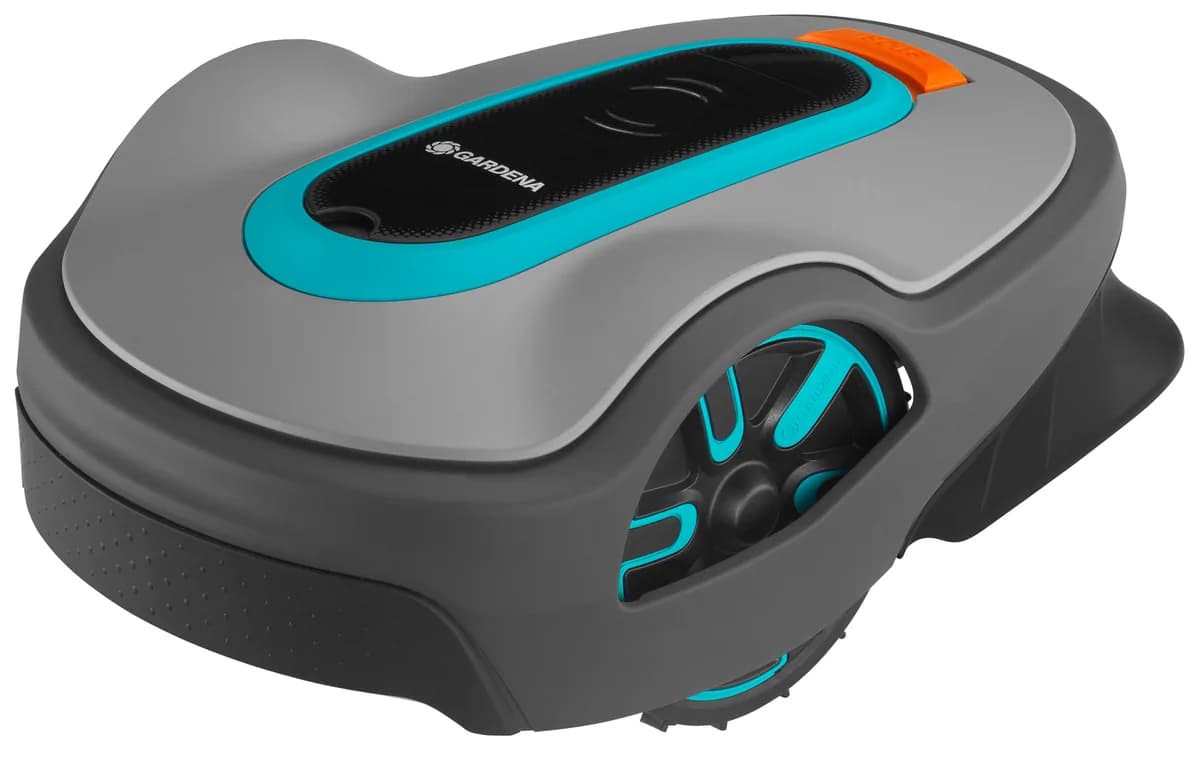
The SILENO life 750 is a wider cut than the city and minimo: an 8.7 in disc against the 6.3 in on the city and minimo, rated for 8,100 sq ft and 35% slopes, at about $715 on Amazon for the US-spec 15101-41. The larger deck is the whole argument. It covers the same 65-minute mowing cycle and 60-minute charge as the city but clears a lawn in fewer passes, and at 58 dB it is still quiet enough to run at night. Setup is boundary wire plus guide wire with CorridorCut for gaps down to about 24 in, SensorControl scales the schedule to growth, it mows in the rain by design (frost sensor only), and it rinses off with a hose. Anti-theft steps up from the city to a PIN plus an alarm. What has not changed is the 0.8 to 2.0 in cut range, which rules out fescue and bluegrass at a healthy height, and the Bluetooth-only app, which means walking within about 33 ft to change anything and no alerts when it gets stuck. Obstacle handling is a bumper unless you add Gardena's optional radar. Gardena's international site lists the life as a legacy model, and the 1000 size (15102-20, 10,800 sq ft) has no published US price, so treat the 750 as the last of the line. The $599 SILENO flex cuts wider still at 10 in and climbs steeper ground, so the life is the pick only when its lower price or quieter 58 dB matters more.
Best for Warm-season lawns up to about 0.2 acre that want a wide-cutting, quiet wired Gardena and can live with a Bluetooth-only app.
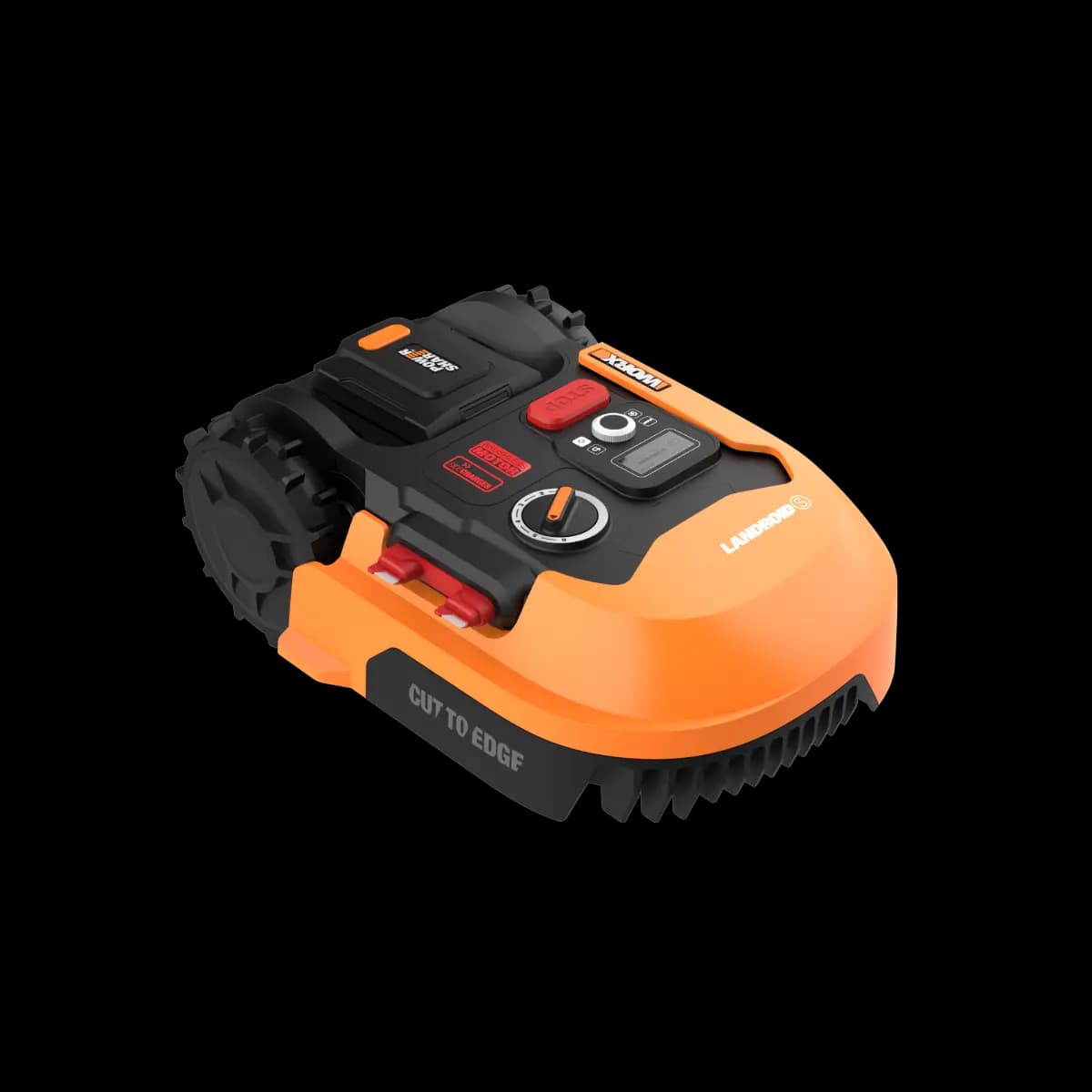
The Landroid S is the entry point to the Worx wired family: the same bump-and-turn platform as the M and L, shrunk to a 7.1 in three-blade disc, a 20V 2.0Ah Power Share pack and a 1/8 acre (5,445 sq ft) rating. Worx lists it at $999.99, which is hard to justify next to its own M at $1,199.99 list, but the street story is different - it has carried a $749.99 list at Amazon and Woot, open-box units have cleared around $630, and third-party reviewers quote it near $600, so treat the Worx price as a ceiling. The box is the full install kit: 820 ft of wire and 340 pegs, which is far more wire than an eighth-acre lawn needs. Once pegged it behaves like its siblings - AIA navigation through narrow passages without a guide wire, the off-center Cut to Edge blade, a self-leveling floating disc, a rain sensor, and 59 dB running. The trade-offs are a 30% slope ceiling, a 2.4 in maximum cut height that is too low for tall fescue, a small 2.0Ah pack that means frequent dock trips, and no obstacle sensing beyond the bumper. Against the Gardena SILENO flex at $599 with a 35% rating you pay more for the Worx app and battery ecosystem; against a Segway Navimow i105N at $799 you keep the wire but skip the RTK antenna.
Best for Small, flat lawns under an eighth of an acre whose owner already has Worx 20V tools and will buy on a street-price deal rather than at list.
Husqvarna
Husqvarna Automower 115H 4G
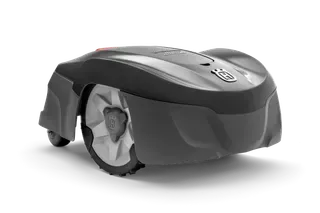
The 115H 4G is Husqvarna's budget Automower and, at the $300 the brand and its dealers have been selling it for through 2026, an easy way to try robot mowing without a big bet. It is old-school: you bury a boundary wire and one guide wire, it bounces randomly around up to 0.4 acres, and it cuts high at 2 to 3.6 inches, which makes it a better match for fescue and bluegrass than most budget robots. The 4G module means the Automower Connect app works from anywhere, with no subscription for ten years. Owners are consistent about the tradeoffs: wire install takes a weekend, the wire will eventually get cut and you will want a toner, cut height is a manual dial, there is no GPS tracking, and a fair number report it stalling short of the dock. It has only a bumper, so pick up toys and sticks, and slopes top out around 30 percent. Against a Segway Navimow i105N or a Worx Landroid Vision, you give up wire-free setup and any real obstacle avoidance; what you keep is quiet 58 dB operation and Husqvarna dealer service. Right for a small, flat, fenced yard on a tight budget; wrong for anyone who hates the idea of wire.
Best for A small, flat, fenced lawn where a $300 wired mower with dealer support beats a pricier wire-free robot.
Yard Force
Yard Force NX100i
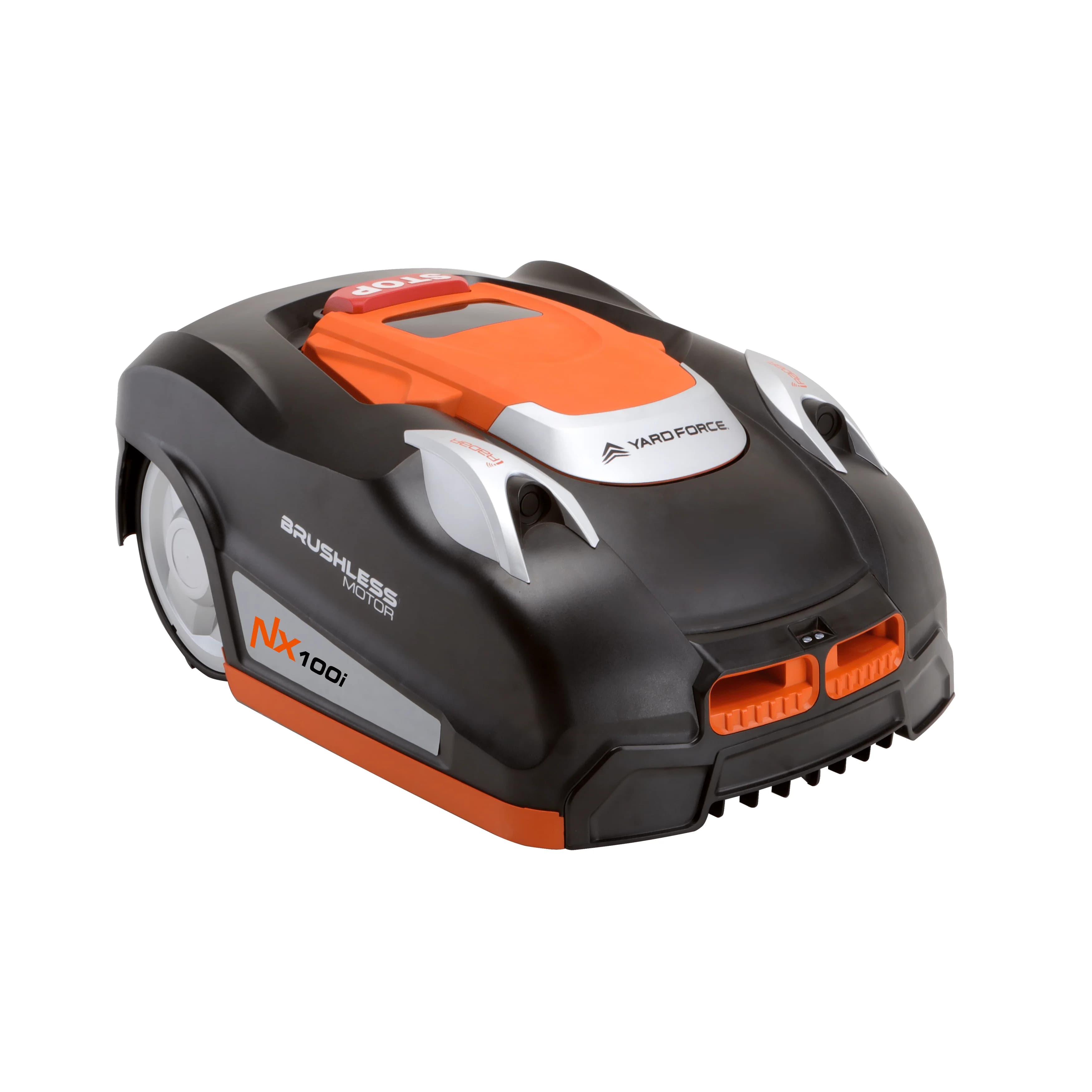
The NX100i is Yard Force's entry-level wired robot for US big-box shelves: $799 at yardforceusa.com, stocked at Home Depot and Lowe's, rated for 1/3 acre (14,520 sq ft) on a 28V pack that runs 80 to 90 minutes per charge. It cuts a narrow 7 in swath with a three-blade mulching disc across five height settings from 1.3 to 2.9 in, so it suits lawns kept short rather than a 3.5 in fescue cut. Yard Force claims 40% slopes, and the differentiator over most sub-$1,000 wired mowers is the iRadar ultrasonic sensor pair on the nose that slows and steers around furniture, pets and toys before the bumper touches them; a rain sensor, lift and tilt cutouts and a PIN lock are standard. Wi-Fi and Bluetooth feed the CloudHawk app for schedules, remote start and height changes, but there is no GPS, cellular or mapping - it mows in a random pattern inside the wire like any classic robot. One hands-on review called it small for its rating and found a full 1/3-acre lawn took two days of scheduled runs to finish, which is the trade-off for the 7 in deck; retail customer reviews mostly praise how easy it is to start and how compactly it stores. Against the Worx Landroid M WR147 ($902, 1/4 acre, 3-year warranty) the NX100i is cheaper, covers more and adds ultrasonic sensing, but gives up a year of coverage and Worx's cut-to-edge blade.
Best for A small, uncomplicated lawn up to 1/3 acre kept on the short side, for a buyer who wants the cheapest robot with real obstacle sensing.