Segway
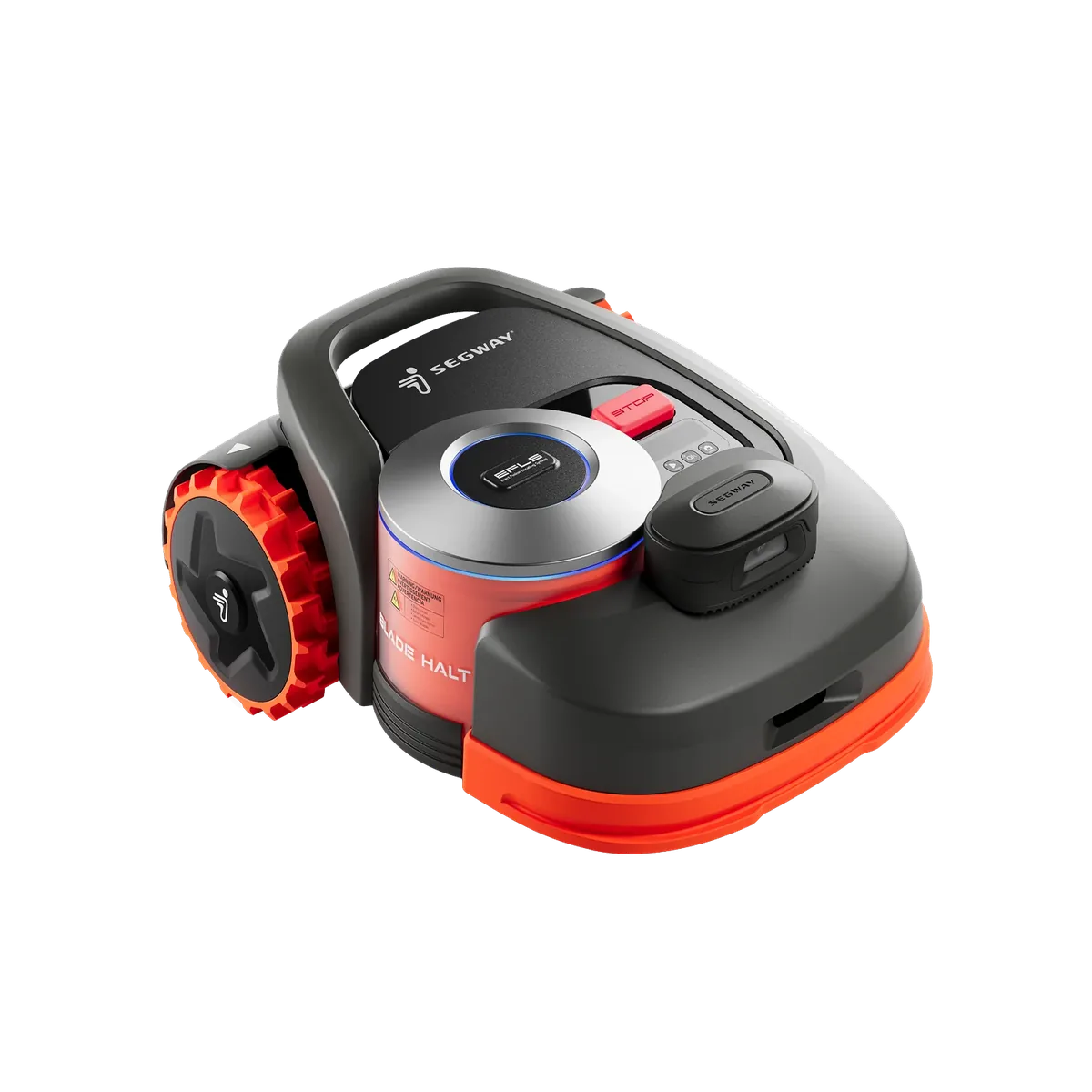
Segway Navimow H3000N
The H3000N-VF is the big-lawn version of Segway's original H series, rated for 0.74 acre with the same 8.3 in cut, 54 dB hub motors and 38.6 lb chassis as the H1500N but a larger battery (about four hours of mowing, five hours to recharge) and three years of 4G service bundled instead of one. It is being cleared out as the H2 and X3 lines take over, so it has sold on Amazon for $1,199 to $1,299 - sometimes less than the smaller H1500N - and Home Depot still lists it while Segway's own store shows it sold out at $2,599. Amazon owners say setup is easy and the finish looks great, and one reports about a third of an acre per charge. The gripes are familiar H1 issues: wheels that lack grip on damp slopes despite the 45% rating, boundary edits that are fiddly, some random-looking path choices, and RTK-only EFLS 1.0 positioning that struggles under tree canopy because the VisionFence camera only avoids obstacles. The 1.2 to 2.4 inch cutting height range is the real limiter for cool-season grasses. Against the Mammotion Luba 2 AWD 3000 at a similar clearance price you give up all-wheel drive and a 4 inch max cut but gain quieter running and a 4-year warranty. Best for a flat, open three-quarter acre of short-cut warm-season grass.
We may earn a commission. Price and availability on Amazon may differ.
Specifications
How it navigates
EFLS 1.0 RTK-only positioning from the included GNSS antenna kit (needs clear sky); virtual boundaries drawn by driving the perimeter in the app, up to 12 zones. VisionFence pod handles obstacles only.
Highlights
Pros
- ✓Covers 0.74 acre for a clearance price that often undercuts the smaller H1500N
- ✓Three years of 4G service and GPS anti-theft included
- ✓Very quiet 54 dB hub-motor drive
- ✓Owners say setup is straightforward and the striped finish looks professional
- ✓Rain sensor, IP66 body and 4-year warranty
Cons
- ✗1.2-2.4 in cutting height is too short for fescue, bluegrass or St. Augustine
- ✗RTK-only positioning loses its fix under trees; VisionFence does not help navigate
- ✗Owners report poor wheel grip on damp slopes and fiddly boundary edits
- ✗Five-hour recharge and single 8.3 in disc make full cycles slow on a big lawn
- ✗Discontinued model with erratic stock and pricing
Owner Insightssummarized from owner forums and retailer reviews
The H3000N-VF is the big-battery version of Segway's original H series: the same 8.3 inch cut, 54 dB hub motors and 38 pound chassis as the H1500N, with roughly four hours of runtime, a three-quarter-acre rating and three years of 4G in the box. It is being cleared out as the H2 and X3 lines take over, and owner sentiment reflects a mature but dated design - H3000 owners of two and three years call it precise and well built, while everyone agrees the traction and the RTK-only positioning belong to an earlier generation.
Setup mirrors the H1500N: an hour or so, a fussy antenna that wants open sky and clearance, a dead-level dock, and a perimeter driven in by hand. On open lawn the navigation is repeatable and the cut is even in straight rows, stopping about 6 inches from walls. Under trees it drifts. The VisionFence pod steers around toys and pots in good light but sulks at dusk and after rain. Where the H3000 differs from its smaller sibling is stamina: owners get about a third of an acre per charge, and the price of that is a five-hour recharge. The recurring H3000-specific gripe is wheels that lack grip on lumpy or damp ground, and the recurring H-series gripe is the 2.4 inch maximum cut.
Best for a flat, open three-quarter acre of warm-season grass kept short, bought at the $1,199 to $1,299 clearance price where it is sometimes cheaper than the H1500N. Against a Mammotion Luba 2 AWD 3000 at similar money you give up all-wheel drive and a 4 inch max cut for quieter running and bundled 4G; against Segway's own X330 you save a few hundred dollars but lose vision-fused positioning and the 2 to 4 inch range. Deal-breakers: tall cool-season grass, tree canopy over the antenna, and rough or damp slopes.
What owners like
- +Multi-year H3000 owners call it precise and high-end in build; one who has run it for close to three years still describes the mowing itself as exact, and another says the company walked him through every problem to a fix.
- +Battery is the reason to buy the H3000 over the H1500: about four hours of mowing, and owners report roughly a third of an acre per charge, so a three-quarter-acre lot finishes in a couple of cycles rather than a week of short runs.
- +Three years of 4G service are bundled, with GPS tracking and a leave-the-boundary alert included, versus one year on the H1500N and a $120 add-on on the i series.
- +Hub motors make the whole H series the quietest Navimow at 54 dB; testers of the H-body European twin said it sounded quieter than the spec and ran it at dawn without complaints.
- +Even, careful coverage on open lawn. Testers of the H body reported no missed spots once the map was right, and H3000 owners say the finish looks great with straight rows rather than random tracks.
- +A real rain sensor plus the app's rain toggle sends it home when weather turns, and the app itself is consistently praised as clear and easy to learn: schedules, height from the phone, live coverage and battery.
- +Handles ditches and straight slopes better than the i series thanks to the 45 percent rating and torquey hub motors; testers found slopes were not a problem.
- +Owners describe real software improvement over two to three years, with far fewer flowerbed strandings than when they first installed.
Common complaints
- −Same 1.2 to 2.4 inch cutting range as the rest of the H series, which reviewers flatly say rules it out for fescue, St. Augustine and any cool-season lawn kept at 3 inches; testers of the H body had to pre-mow anything taller before it could cope.
- −Traction is the specific H3000 complaint from long-term owners: it gets stuck on flat-but-not-quite-even ground and on damp slopes despite the rating, and one owner wants bigger wheels and better gearing before he would call it robust.
- −RTK-only positioning (EFLS 1.0). The antenna needs open sky and about 6 feet of clearance, and owners under canopy report weak-GPS errors, maps drifting a few feet and boundary crossings; the VisionFence camera avoids obstacles but does nothing for positioning.
- −Boundary editing is fiddly compared with the newer AI-assisted mapping, and owners note some random-looking path choices between zones. Moving the dock or antenna means remapping.
- −The plug-in VisionFence pod needs strong daylight and a clean lens; testers of the H body found dusk runs get skipped and water spots after rain block the next scheduled mow, and without it obstacles are found by bumping.
- −Leaves about a 6 inch strip uncut along walls, fences and raised borders, so trimming stays on the chore list.
- −Charging is slow, roughly five hours from empty for the bigger pack, versus 60 to 90 minutes on the X3 series, so a big lawn is a two-day job.
- −Dock placement is restrictive (level ground, clear sky, close to power) and owners ask for scheduling by sunrise and sunset and for scheduled charging windows the software does not offer. Some owners also report 4G renewal only via PayPal.
Common Questions
What is different between the H3000N and the H1500N?
Can it cut my lawn at 3 inches or higher?
Does it get stuck?
How does it handle trees and shade?
Is the app good?
Is the H3000N still worth buying on clearance?
Segway Navimow H3000N, head-to-head
Mowers people look at alongside it
More from Segway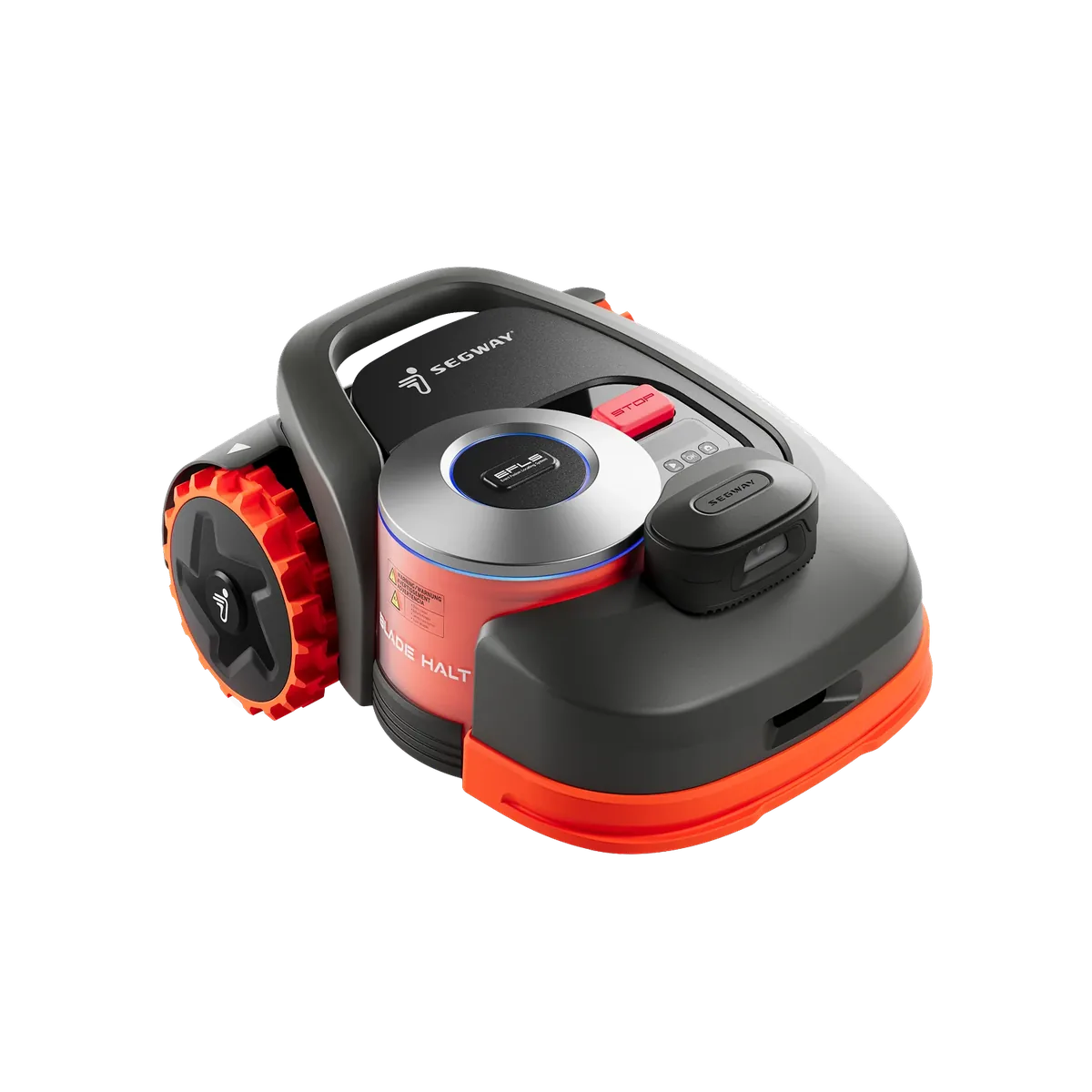
Segway
Segway Navimow H1500N
The H1500N-VF is Segway's first-generation premium mower, now on clearance as the H2 series replaces it, and the pricing is chaotic: Segway's store lists it sold out at $2,199, Amazon has bounced between $999 and $1,599, and Home Depot still carries it. What you get is a heavier 38 lb machine with quiet in-wheel hub motors (54 dB, the quietest Navimow), a battery that runs about four hours, built-in 4G with a year of service, and a real rain sensor. Navigation is EFLS 1.0 - RTK only - so it needs a clear sky over the antenna; the plug-in VisionFence camera pod on the back handles obstacles but does not help positioning, and Amazon owners report the map drifting by a few feet on tough sites and the mower crossing mapped boundaries. The dealbreaker for many US lawns is cutting height: 1.2 to 2.4 inches is a golf-course range, far too low for fescue or St. Augustine that wants 3 inches or more. The 45% slope rating beats the i series though, and owners praise how it handles ditches and uneven ground once mapped. Buy it only if your lawn is short-cut grass on a mostly open lot and you find one near $1,000; otherwise the newer X330 or H220 gets you 2 to 4 inch cutting and vision-fused positioning for not much more.
Best for Open, mostly treeless lots up to a third of an acre with short-cut grass, bought at clearance pricing.
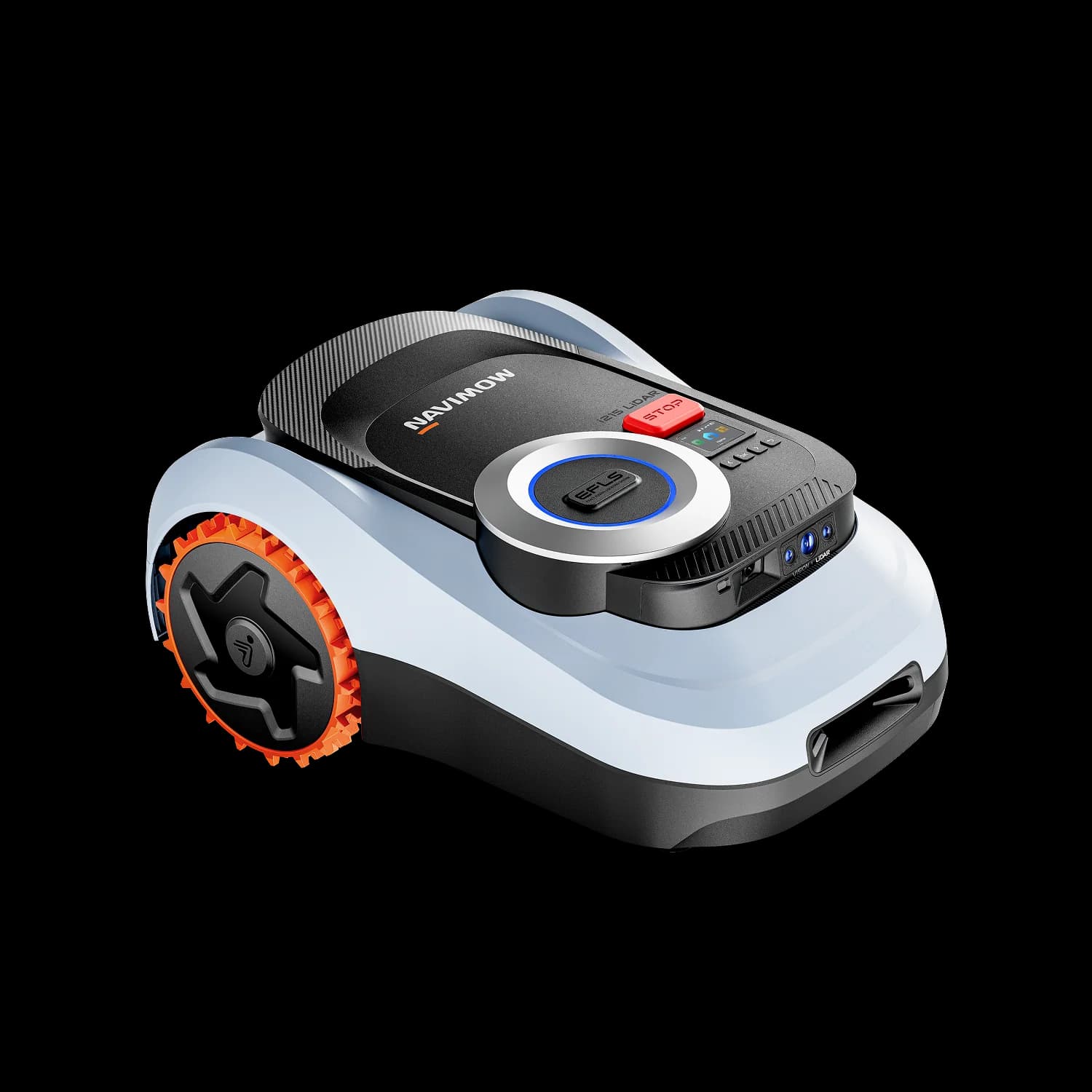
The i215 is Segway's first LiDAR mower and the first Navimow with no satellite dependence at all: a solid-state LiDAR unit scanning about 200,000 points a second to 230 ft, fused with a front camera, builds the map itself and holds position under tree canopy and beside the house where the RTK i-series lost lock. It is a bigger machine than the i2 AWD, with an 8.6 in six-blade disc, motorized 2 to 4 in height, a 7.65Ah battery good for about 160 minutes (130 minute recharge), 32 lb, and a 0.37 acre rating, at $1,599 list ($1,399 on sale this summer). PCWorld called it the robot mower that makes setup simple: two firmware updates and a joystick nudge onto the grass, then it mapped a 7,645 sq ft yard on its own and cut cleanly at 3.2 in. The same tester had to rescue it twice after it slipped off a narrow grass strip, because there is no cliff sensor and edges depend entirely on the map. AndroidGuys got a consistent finish across an obstacle-heavy yard but noted the rear-wheel drive gives up on side slopes, ruts and wet patches long before the sensors do, and that 4,570 sq ft per cycle means a full 0.37 acre runs over a day or two. Set against the X315 at $1,999, the i215 is cheaper, needs no antenna, but is two-wheel drive with a narrower deck and a smaller rating; against the Mammotion Luba 3 AWD 1500 at $2,399 it trades AWD and 80% slopes for $800 and a simpler, antenna-free install.
Best for Tree-shaded, obstacle-filled lawns up to a third of an acre with only gentle slopes, where RTK mowers lose their fix.
Segway
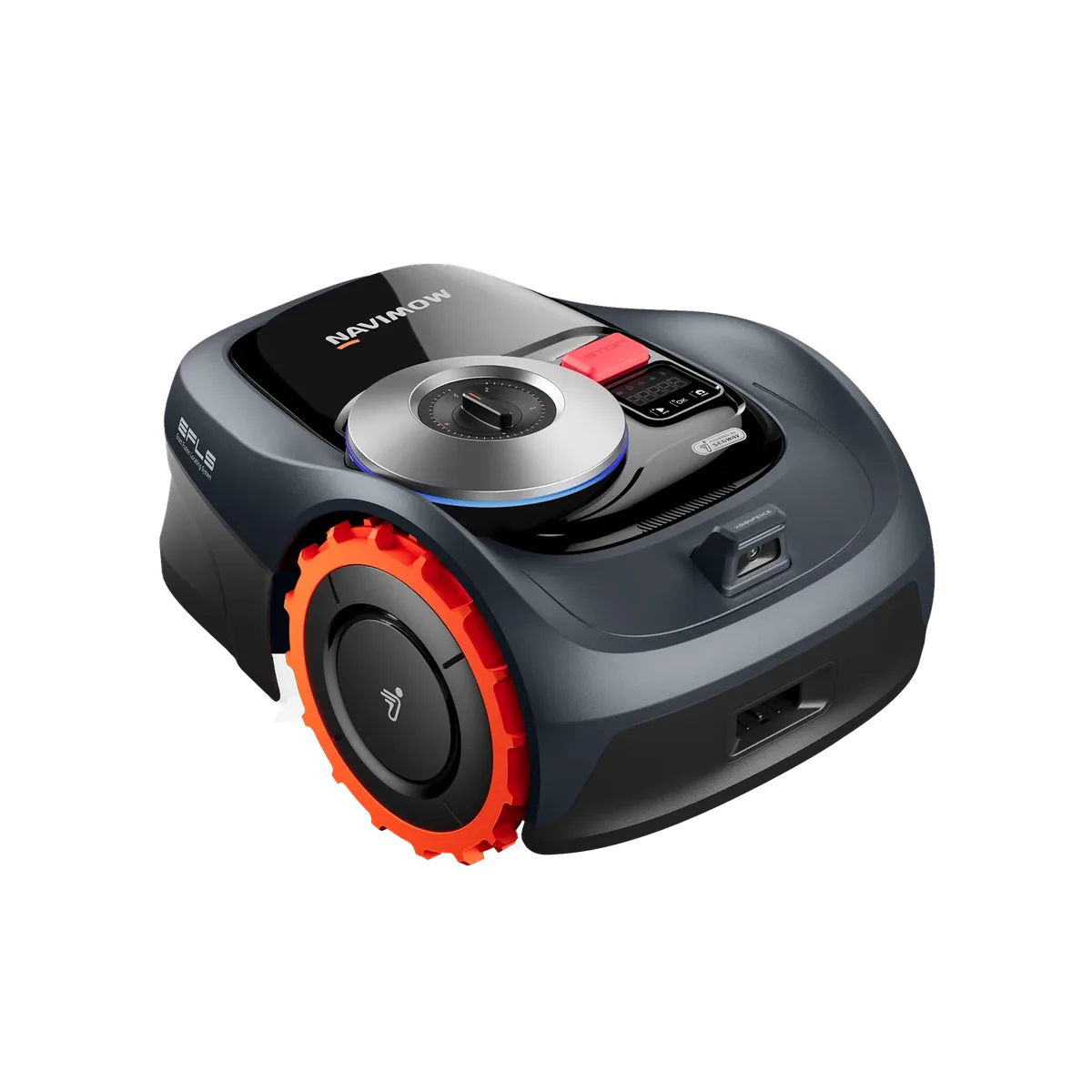
Segway Navimow i2 AWD
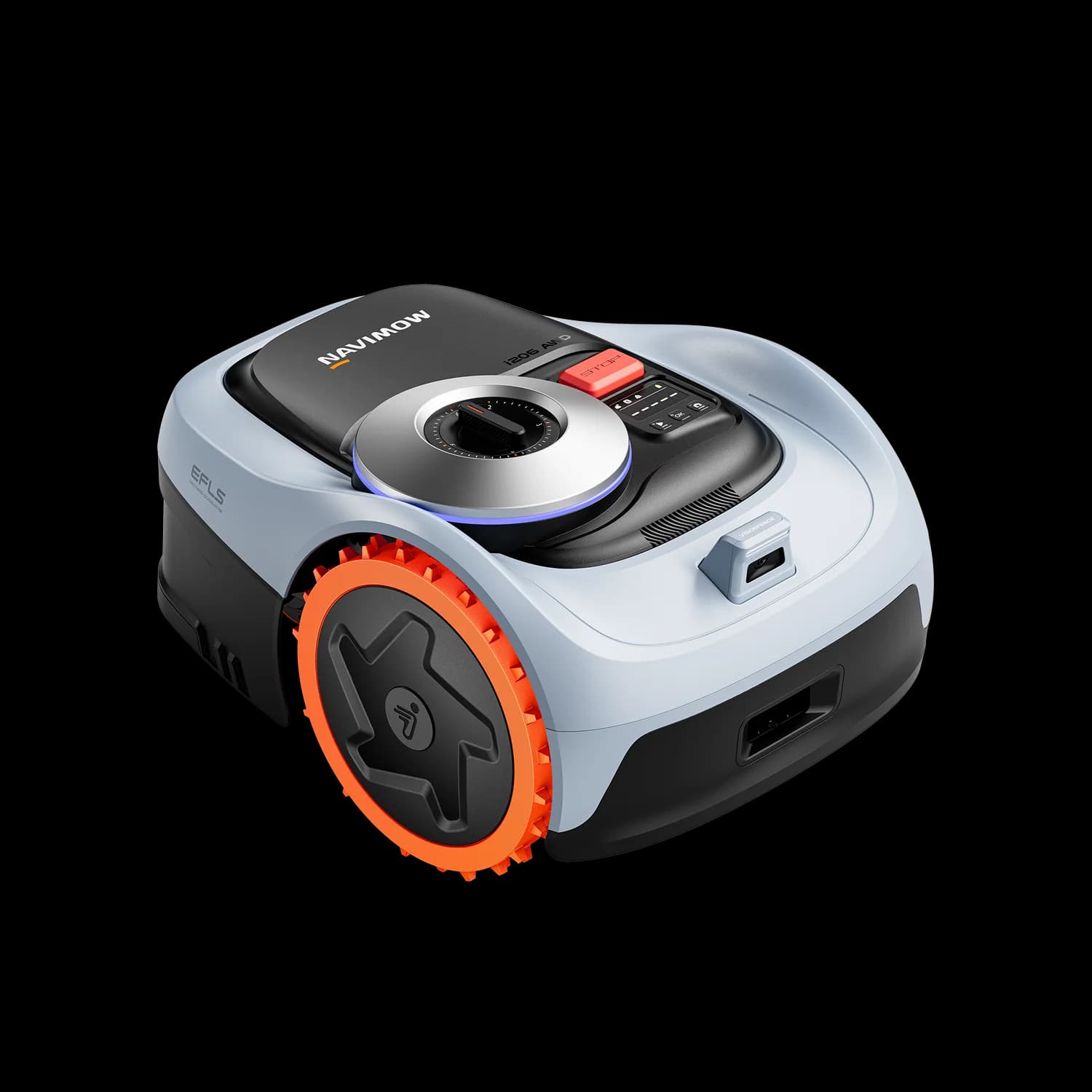
The i2 AWD replaces the i105N and i110N with the same 7.1 in single-disc body but three fixes for the old model's main complaints: a third, on-demand drive motor on the front zero-turn wheel with knobby off-road tires, a 4G module built in instead of the $120 Access+ add-on, and Network RTK that removes the antenna from setup where coverage exists. Slope rating rises from 30% to 45%, and Segway says the rear motor only engages when traction is needed, which stretches runtime by up to 30%. The i206 AWD ($999) carries a 2.55Ah pack for about an hour of mowing and a 0.15 acre rating; the i210 AWD ($1,299) doubles that to 5.1Ah, roughly two hours, and a quarter acre, and both recharge in about the same time they run. The cutting hardware is unchanged: 2 to 3.6 in height on a manual knob, a narrow deck, and no edge mode. Mowing Magic found the zero-turn wheel stopped the turf scuffing that plagued the i1 and rated the 59 dB noise as conversation-level, but confirmed the manual height knob and the uncut wall strip. Compared with the leftover i110N at $929 you pay a little more for real traction, built-in 4G and antenna-free setup; compared with the i215 LiDAR at $1,599 you give up LiDAR positioning under heavy tree canopy and the wider 8.6 in deck.
Best for Small suburban yards up to a quarter acre with a few slopes or muddy patches, for buyers who want antenna-free setup under $1,300.
Segway
Segway Navimow i110N
The i110N is the same 7.1 in body as the i105N with double the battery (5.1Ah, about 120 minutes per charge) so it can cover a quarter acre, and it won Tom's Guide's Editor's Choice for cut consistency at a price that has slid from $1,299 at launch to a $929 list and frequent sub-$800 sales. It uses Segway's EFLS 2.0 RTK plus a front VisionFence camera, so when the satellite fix wobbles under trees it can hold the boundary visually for a while instead of wandering off. Reviewers consistently praise the straight, overlapping stripes with no missed patches and the near-silent 58 dB operation that makes night mowing realistic. The complaints are the flip side of the budget price: it is slow (Tom's Guide clocked roughly three times the time of push mowing), the 30% slope rating and front-wheel drive mean it spins out on real hills, PCWorld's unit repeatedly drove off curbs because there is no drop-off detection, and GPS anti-theft needs the $120 Access+ 4G module. Segway has pulled it from its own store in favor of the i210 AWD, but Home Depot still stocks it. For a flat quarter-acre suburban lot it remains one of the cheapest dependable wire-free options; if your yard has slopes or a parking strip, look at the i210 AWD or a Luba Mini instead.
Best for Flat quarter-acre suburban yards where you want a quiet, accurate wire-free mower on a budget and can live with slow cycles.
Segway
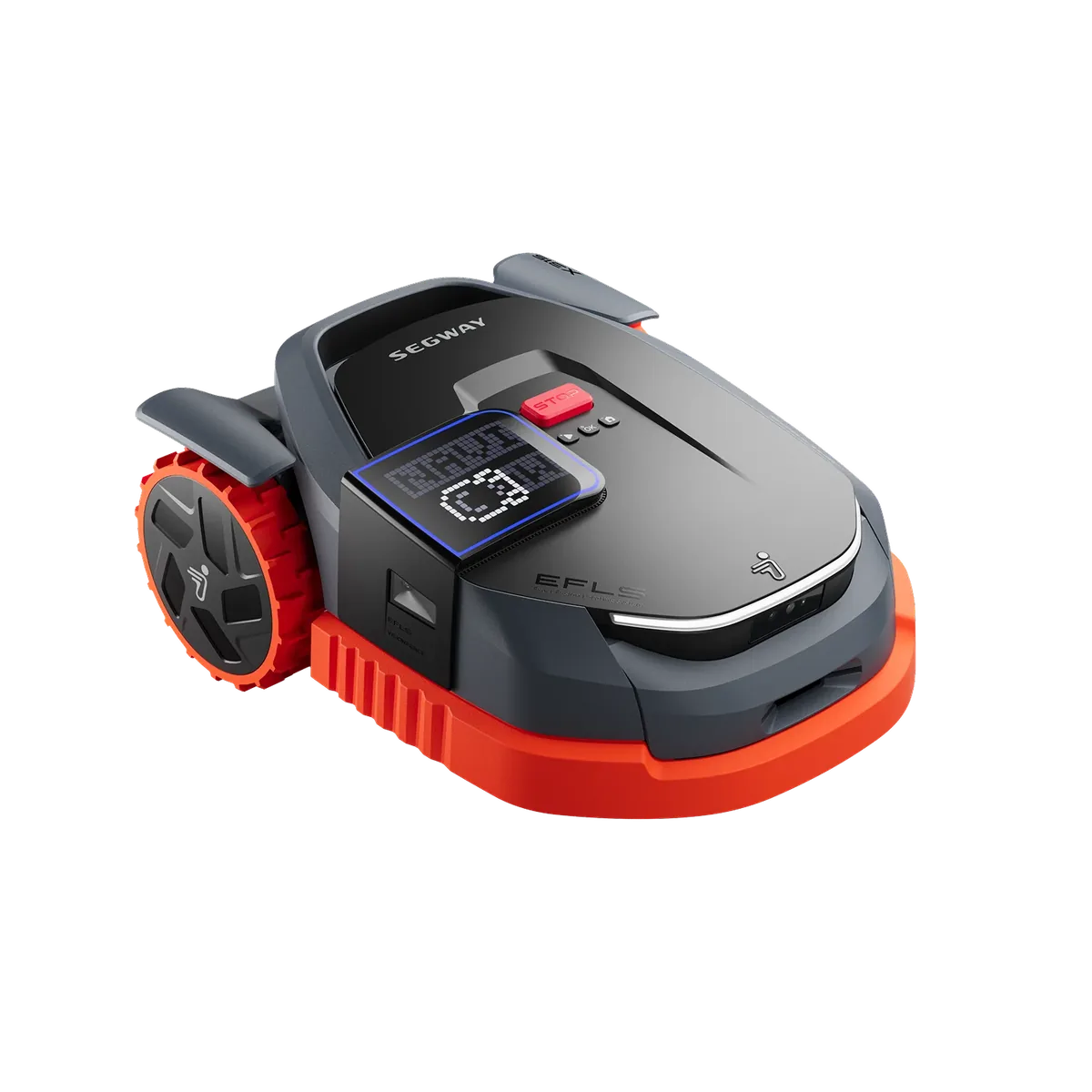
Segway Navimow X315
The X315 is the entry to Segway's X3 line: the same 43 lb chassis, 9.3 in cutting deck, 2 to 4 inch height range and EFLS 3.0 positioning as the $4,499 X390, just with a 6Ah battery good for about two hours and a half-acre rating. EFLS 3.0 fuses RTK with three cameras doing visual SLAM and odometry, which is why testers at Notebookcheck and TechRadar found it kept mowing straight under trees where RTK-only mowers stall. Obstacle avoidance uses a 300-degree camera array with a ToF sensor and recognizes 200+ objects including pets, with night vision so it can run after dark at 60 dB. Setup is about 30 minutes and truly wire-free, though you still mount an RTK antenna. Segway has pulled it from its own store (listed at $1,999 but unavailable) while Home Depot, Acme Tools and Abt still sell it, and it is the only X3 that does not get multiple years of 4G included - one year, then about $33 a year. Reviewers' knocks: it is two-wheel drive so the 50% slope rating is optimistic on side-hills, there is no onboard rain sensor (it relies on forecasts), the single 9.3 in disc leaves about 3.5 in uncut at edges without the optional Trimmer accessory, and standby power draw is high. Versus the Mammotion Yuka at $1,399 the X315 costs more but is faster and better under trees; if you are near 0.5 acre, the X330 is often only $300 more.
Best for Half-acre suburban yards with tree cover where you want X3 navigation and app polish at the lowest buy-in.
Segway
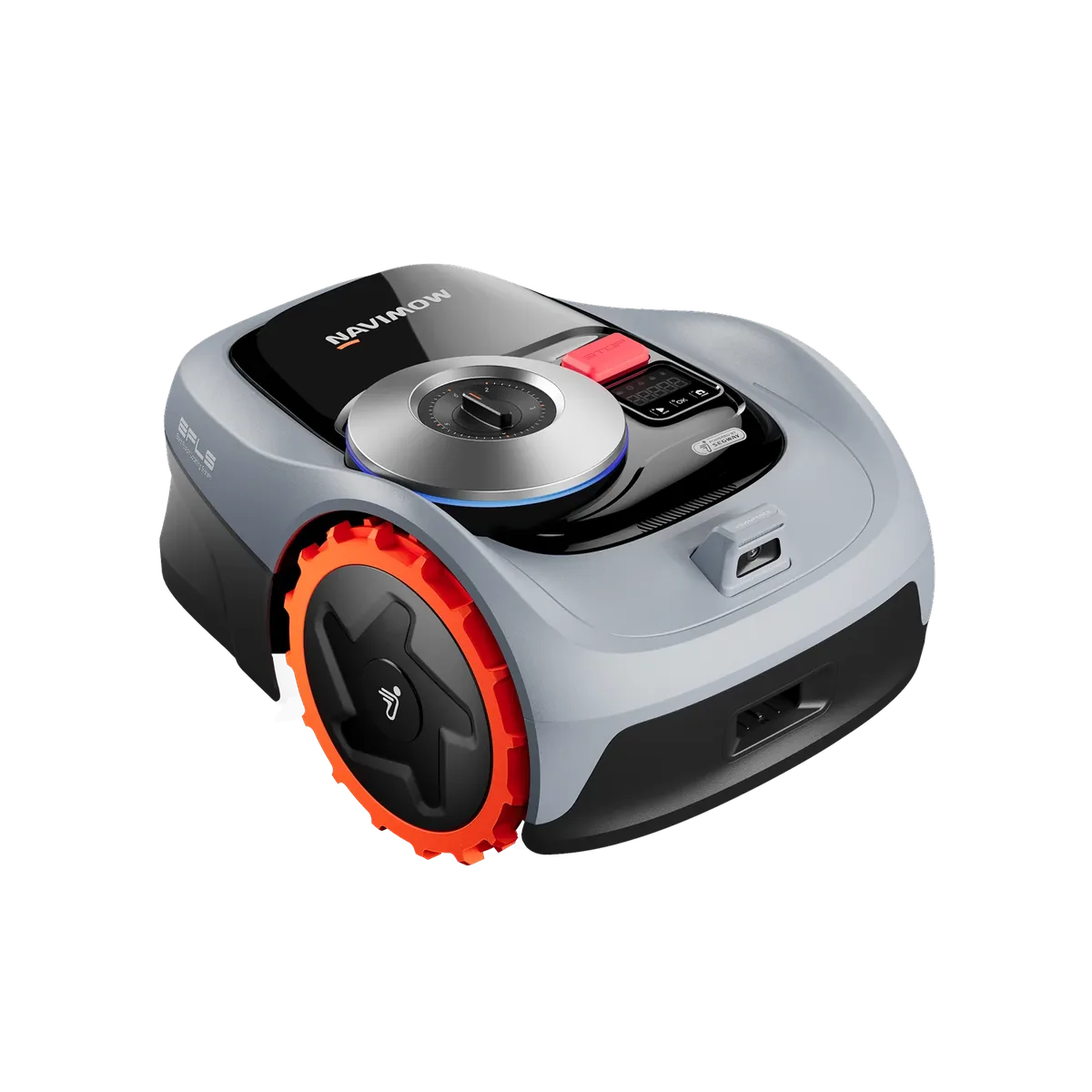
Segway Navimow i105N
The i105N is the mower that made wire-free RTK cheap. Segway cut it from $999 to $799 in 2026 and it regularly dips to $669-699, which puts it in Worx Landroid Vision territory while still using a proper RTK antenna for centimeter-level positioning. It is small - 7.1 in cutting width, 24 lb, a 2.55Ah battery good for about an hour - so the rated 1/8 acre is honest; Amazon owners with a typical city lot say a full cut takes around 2.5 hours across two or three charge cycles. Setup is genuinely DIY: mount the antenna somewhere with open sky, drive the mower around the perimeter with your phone, and let AI Assist Mapping snap to the lawn edges. Owners like the quiet 58 dB motor, the straight-line stripes, and that it pays for itself in a season versus a lawn service. The knocks are consistent too: getting stuck on flat ground and in dips, mapping frustration when trees hang over the antenna, a manual cutting-height dial, and a few units dying after a few months with slow email-only support. The 30% slope limit and front-wheel drive rule out anything hilly. Compared with the Mammotion Yuka Mini, the i105N is cheaper and simpler but has no vision-only mode when RTK is hopeless; step up to the i110N if you have more than about 5,000 sq ft.
Best for Flat city lots under 5,500 sq ft where a quiet, cheap wire-free mower matters more than hill-climbing or speed.