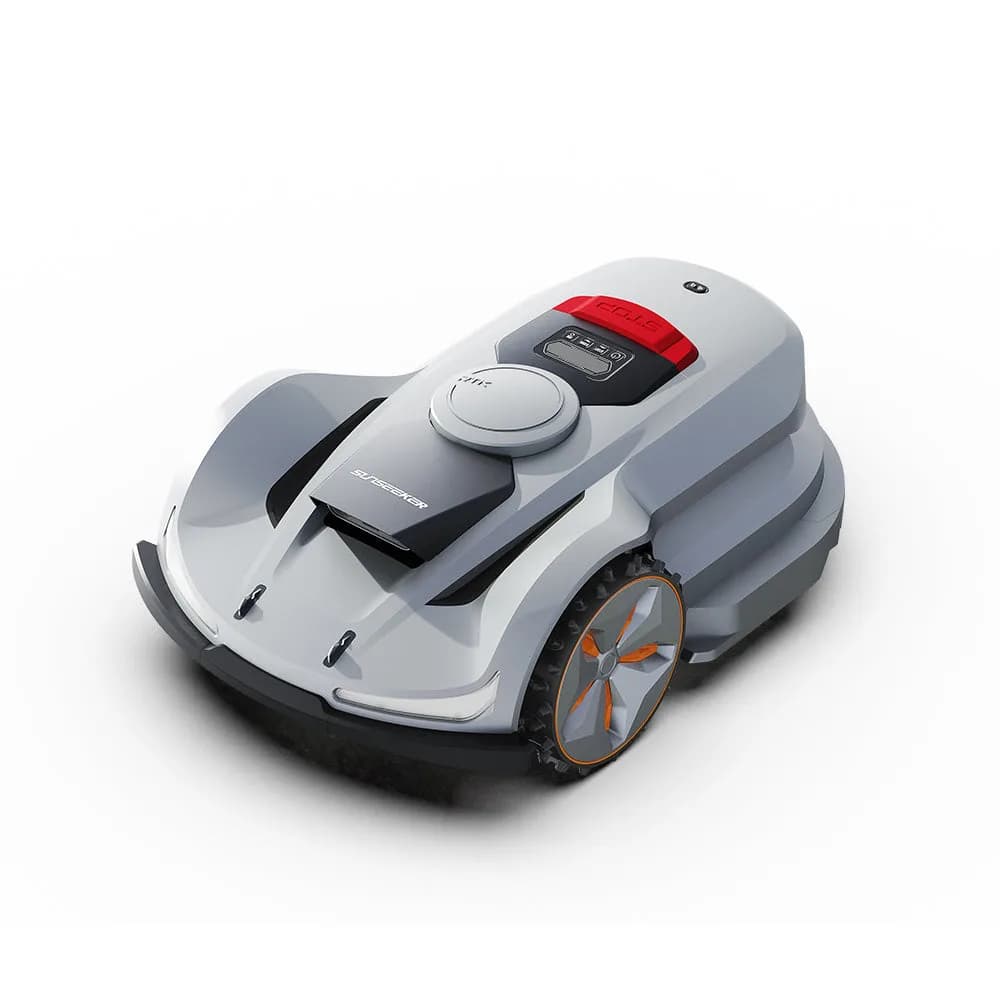
Sunseeker
Sunseeker X7 Plus
The X7 Plus is the long-range version of Sunseeker's AWD X7: same 14 in dual-disc deck, same 70% slope rating, same RTK-plus-camera AONavi navigation, but a higher-capacity battery that lets it schedule 1.5 acres instead of 0.75. List is $2,999.99 at Sunseeker (frequently sold out) and dealers such as Robotic Mower Services sell a Gen 2 at $2,799.99; the Amazon listing has been unavailable for a while. That undercuts a Mammotion Luba 2 AWD 5000 by several hundred dollars for similar coverage and traction. In practice it is a systematic-row mower with 100 zones, virtual walls and no-go areas, edge trimming to about 1.2 in, a rain sensor, and 4G tracking with a geofence lockout. Reviewers who ran the standard X7 praised the AWD on lumpy, sloped ground and the way the twin cameras learn the yard over a few passes, and criticized the app (a single joystick for mapping, thin documentation, schedules that are easier to leave in auto mode). Obstacle avoidance is good for people, pets and toys, but small low objects like a softball can be run over, and like every RTK mower the reference station needs open sky. At 60 dB it is quiet for a 31 lb machine with two spinning discs. Best for hilly 1 to 1.5 acre properties where AWD matters and the buyer is fine trading Mammotion's app polish for a lower price.
We may earn a commission. Price and availability on Amazon may differ.
Specifications
How it navigates
AONavi: RTK GNSS from an included reference station fused with VSLAM cameras, so it holds position under trees and near walls. Boundaries driven in with the app joystick; up to 100 zones with no-go areas.
Highlights
Pros
- ✓AWD with a 70% slope rating at a price below the Luba 2 AWD 5000
- ✓14 in dual floating discs cut wide and follow uneven ground
- ✓Camera plus RTK keeps positioning under trees where GPS-only mowers wander
- ✓100 zones, virtual walls and no-go areas cover complex properties
- ✓Built-in 4G tracking and geofence lockout
Cons
- ✗App is cluttered and mapping with the single joystick is slow
- ✗Small low obstacles like balls can be run over
- ✗Stock at Sunseeker is often sold out and Amazon has been unavailable
- ✗Slower than some rivals: reviewers saw it take roughly twice as long per pass
- ✗Low body limits it on the steepest banks despite the AWD rating
Pros and cons above are drawn from the manufacturer’s spec sheet and published reviews; this model is too new for a body of owner reports.
Owner Insightssummarized from owner forums and retailer reviews
The X7 Plus is the long-range version of Sunseeker's all-wheel-drive X7: the same 14 inch twin-disc deck, rear-steer AWD, 70 percent slope rating and RTK-plus-camera AONavi navigation, with a bigger battery that lets it schedule 1.5 acres instead of 0.75. Hands-on reports come from the Gen 2 X7 Plus, the Elite X7 Plus and the standard Orion and Elite X7, and they agree: the mechanical package is excellent - traction, cut and obstacle learning all impress - and the software is the compromise you make for the price.
Setup is easy in principle and hard in practice, because everything hinges on where the antenna can see sky; owners who hid it behind the house got skipped and aborted runs until they moved it out front. Mapping with the single joystick is slow, but once the map exists the mower is dependable: straight rows, an even cut on lumpy ground, reliable avoidance of people, pets and beds day and night, a rain sensor that docks it, and AWD that climbs and self-rescues. The app remains crowded and vaguely documented, error alerts are unhelpful, small balls get run over, and the pace is deliberate, so big lawns cycle through several charges.
Best for hilly, lumpy 1 to 1.5 acre properties with open sky where AWD matters and the buyer will trade app polish for price. At about $2,799 it undercuts a Mammotion Luba 2 AWD 5000 by several hundred dollars for similar coverage and traction, and reviewers who ran both rank the Sunseeker a close second to the Luba and far ahead of an EcoFlow Blade. Deal-breakers: a shaded lot that cannot give the antenna sky, tight 6 foot passages, or an owner who wants the mapping and scheduling experience of a Mammotion or Segway app.
What owners like
- +All-wheel drive with a steered rear wheel actually gets it out of trouble: testers of the X7 Plus watched it pull itself free where other mowers would strand, and reviewers of the whole X7 line say the big knobby wheels rarely get stuck.
- +Slopes are a non-issue for most yards. Testers ran the X7 Plus on 15 to 20 degree grades with no wheel slip, and the rear-steer AWD is rated to a 70 percent grade.
- +Twin 14 inch floating discs level out bumpy lawns; testers of the standard X7 saw it visibly smooth sprinkler divots and lumps, and the Gen 2 X7 Plus delivered an even, cut-to-spec lawn with minimal missed spots and stripe patterns on request.
- +The camera AI learns the yard. On the Orion X7 it avoided a drainage hole even at night and got better with each pass; on the X7 Plus Gen 2 it steered around trees, garden beds, a trampoline, a dog and a parked wheelbarrow without touching mulch.
- +Night mowing works. Testers report results nearly identical to daytime, and at about 60 dB nobody indoors notices.
- +A real rain sensor pauses and docks it, and one X7 Plus tester ran it shortly after heavy rain without tearing up the lawn.
- +The RTK link has range: on the Orion X7 it worked across five zones about 200 feet from the antenna with no line of sight, and testers of the Elite X7 ran it in spots the antenna could not see.
- +Serviceable and cheaper than the AWD competition: wheel motors, battery and 4G module come out with a few screws, and reviewers rank it a close second to a Mammotion Luba for several hundred dollars less.
Common complaints
- −Antenna placement is the single hardest part of owning one. It needs roughly 100 degrees of open sky and 5 feet from anything tall; the Gen 2 testers first placed it discreetly and got skipped runs and mid-cycle halts until they moved the 54 inch pole to the front of the house in plain view.
- −The app is the consistent weak point across every X7 review: crowded screens, thin documentation in awkward English, a single virtual joystick that made mapping straight lines nearly impossible (an hour for a quarter acre), confusing virtual walls versus no-go zones, and schedules that are either global or per-zone but not both.
- −Error messages are too vague to act on. A wood chip jamming the blades produced an alert with no diagnostic, and overnight docking occasionally throws errors that never happen in daylight.
- −Small, low objects get run over: testers watched it try to drive across a softball while reliably avoiding people and larger items, so pre-walk the lawn for balls and hoses.
- −It is slow and methodical, possibly half the speed of rivals, and while the Plus battery covers far more than the standard X7 (which needed a recharge after 20 percent of one zone), a full 1.5 acres still spans multiple charge cycles of about 90 minutes each.
- −Narrow passages between tall obstacles trip it up: testers saw only 70 to 80 percent success through 6 to 7 foot gaps, and the standard X7's low profile stopped it short on the steepest banks.
- −Tall grass wedges long clippings between blade and disc, so it is a maintenance mower that wants a regular schedule, and the map view in the app does not update if you leave it mid-job.
- −Shady lots are a poor fit. Both the Gen 2 testers and the Elite X7 testers say that without clear sky the RTK antenna struggles, and the Gen 2 team with close neighbors and mature trees called it a difficult install.
Common Questions
Where does the RTK antenna have to go?
Can it handle steep or bumpy yards?
How bad is the app really?
How long does 1.5 acres take?
Will it avoid toys and pets?
Does it trim edges?
Sunseeker X7 Plus, head-to-head
Mowers people look at alongside it
More from Sunseeker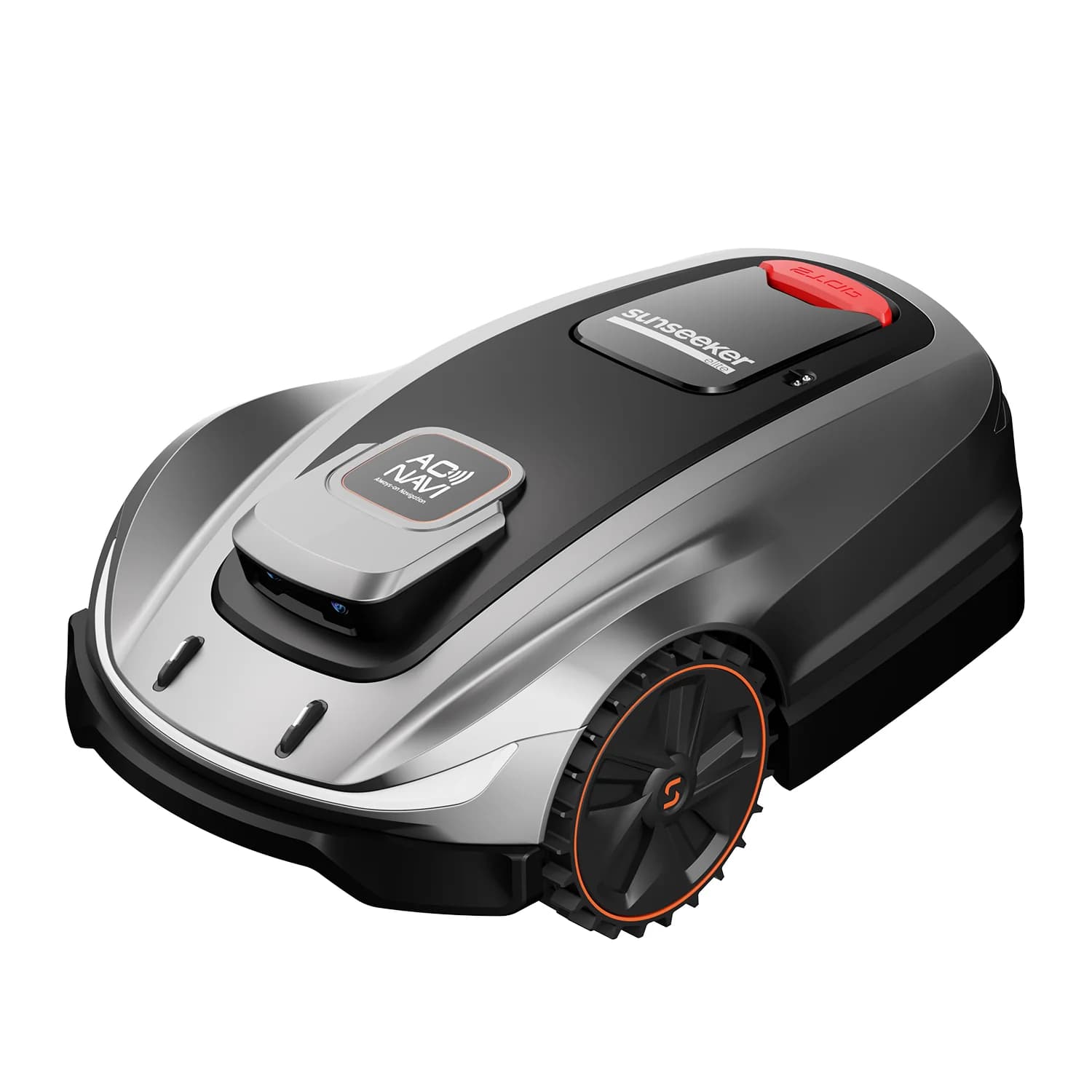
Sunseeker
Sunseeker X5 AWD
The X5 is the middle of Sunseeker's AWD range and an online-only model: a 0.5 acre rating, four driven wheels on off-road tires with a 60% slope rating, an 8.6 in floating deck adjustable from 1.6 to 3.2 in, and AONavi Pro navigation that fuses an included RTK base station (it needs a spot with open sky) with twin V-SLAM cameras so it keeps its line when trees block satellites. Sunseeker sells it for $1,499 against a $1,999.99 list, with 100 zones, corridors, no-go areas, a rain sensor and an offset blade that trims to within 1.2 in of fences. Sunseeker does not publish runtime, charge time or weight for the US model; an EU-spec review cites a 5Ah pack and 60 dB. That reviewer, on an uneven garden with obstacles placed on purpose, found the suspension and AWD handled the bumps, the binocular cameras avoided everything set out, and the app was simple, but needed three app updates before Bluetooth setup behaved. Store owners on sloped half-acres describe straight stripes and the edge blade taking over fence lines and driveways, and name the step-by-step setup and RTK firmware updates as the main friction. For the same $1,500 the Roborock RockMow X1 claims a full acre and 80% slopes with a wider 9.5 in deck, so the X5's case rests on its edge blade and Sunseeker's US support rather than raw numbers.
Best for Sloped half-acre suburban yards with fences and a driveway to edge, for buyers who want AWD traction at a mid-range price.
Sunseeker
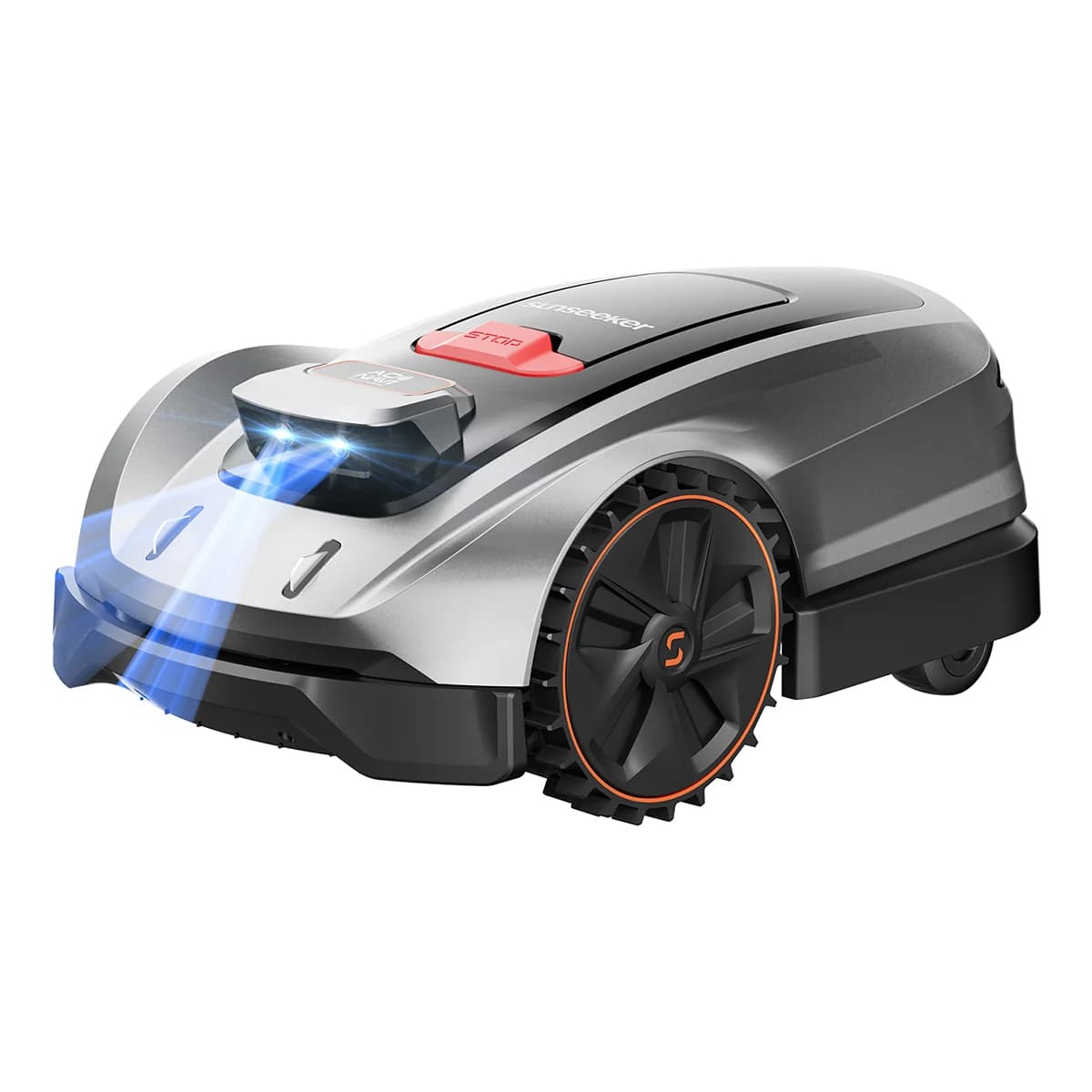
Sunseeker X3 Plus
The X3 Plus is Sunseeker's small-yard RTK mower: a 20 lb two-wheel-drive body with a 5 Ah pack, an 8 in three-blade disc, 1.6 to 3.2 in cut heights and a 0.3 acre rating, sold at $899.99 on Sunseeker's store against a $1,599.99 list that Tom's Guide called too high for what it does. Navigation is the same AONavi RTK-plus-camera stack as the AWD X5 and X7, so it mows in straight rows and holds position near the house, but the 30% slope rating and RWD mean it is a flat-lawn machine. Its trick is Ride-on-Edge: an offset blade that lets it run along hardscape and cut to about 1.2 in of a border, which is why CNET picked it as the affordable choice for medium lawns and Bob Vila made it runner-up in a 14-mower test. Tom's Guide ran it for a summer and found setup took 30 to 45 minutes, the twin cameras dodged a softball and a dog bone and tagged them on the map, and the app was easy, but it wedged a wheel in a grapefruit-sized divot and hung its lip on a log more than once, and each rescue means a PIN entry. There is no 4G, so manual driving only works within Bluetooth range. Against the Segway Navimow i105N at about the same sale price it adds real edge cutting and 100 zones; against the Mammotion Luba Mini AWD it gives up hills.
Best for Flat suburban lawns up to 0.3 acre with fences, beds and walkways where edge cutting saves the most trimmer time.
Sunseeker
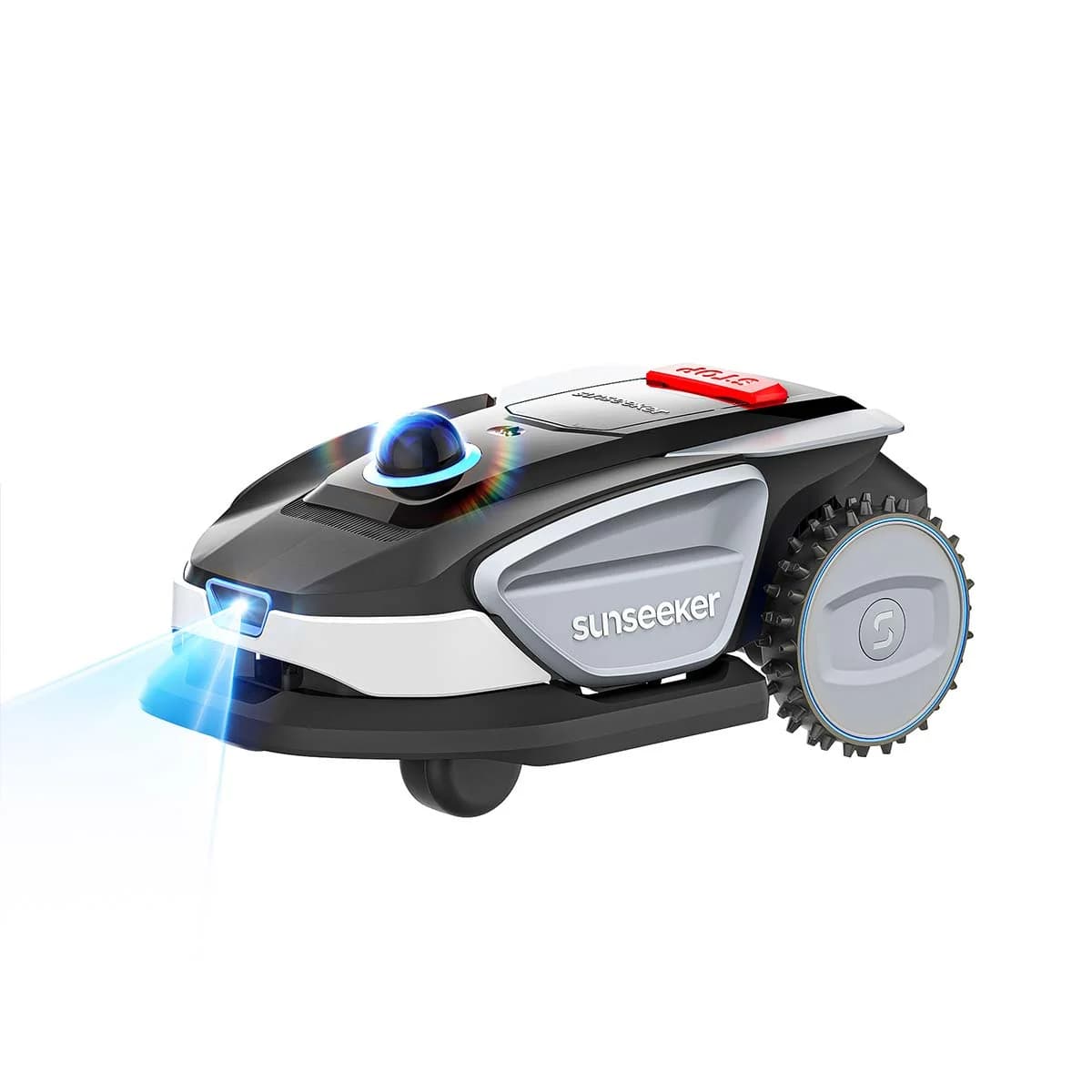
Sunseeker S4
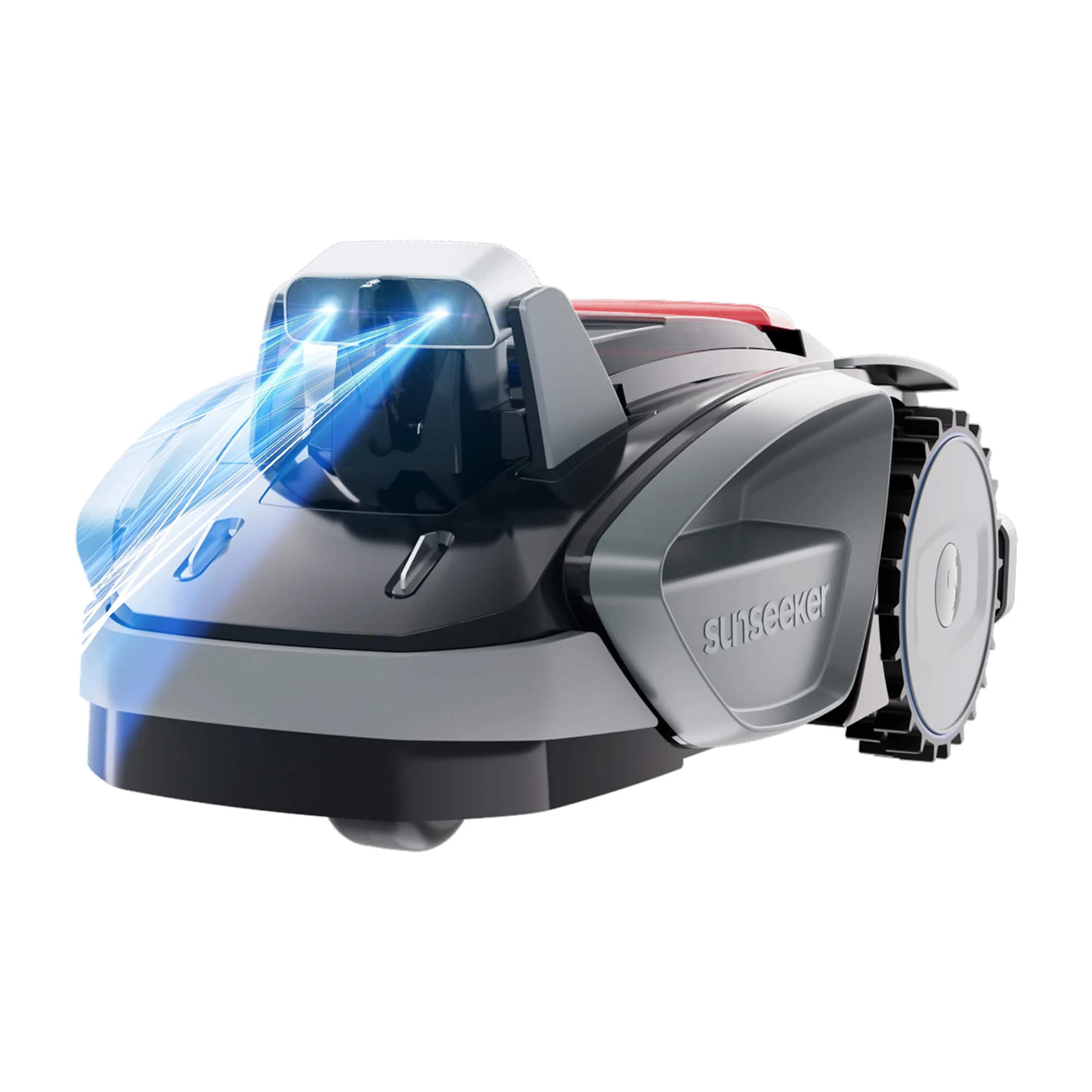
The S4 is Sunseeker's first LiDAR mower and its cheapest wire-free model with real positioning: a 172-channel 3D LiDAR dome on top plus a front camera build a 3D map of the yard, so there is no RTK antenna to mount and no need for open sky. It is rated for 0.25 acre, climbs 42%, cuts a narrow 7 in swath from 1.6 to 3.2 in, and runs about 90 minutes on its 20 V 4Ah pack before an 80 minute charge. Sunseeker sells it for $999.99 against a $1,799.99 list, and Amazon has dipped under $1,000. Tom's Guide ran one for a month on a 5,900 sq ft two-zone lot and rated it 4/5: auto-mapping worked on the first try, the app shows the LiDAR map of the yard in 3D, it rerouted around a bulldog and a Wiffle ball, and switching the cut direction to traceless removed the striping between passes. The complaint was edges - the blades sit 4.3 in inside the housing, so keep a trimmer handy despite the 1.2 in edge claim. It also went dead after standing water from a two-inch storm and needed a day to dry out. Store owners with oaks and maples report it holds position under canopy where their GPS mowers failed, and the 31.5 in passage width gets it through side yards. Against the Ecovacs GOAT O1000 LiDAR Pro it covers the same quarter acre for $500 less with a narrower deck.
Best for Quarter-acre lots under heavy tree cover or with narrow side passages, where an RTK antenna would never get a clean sky view.
Sunseeker
Sunseeker V3
The V3 is the cheapest wire-free mower in this catalog at $599.99 on Sunseeker's store ($999.99 list), and it gets there by skipping positioning altogether: two front cameras, each with a tiny wiper, read where the grass stops and treat that as the boundary. Screw down the dock, plug it in and it mows, which Trusted Reviews and Nerd Techy both timed at a few minutes. It is rated for 0.15 acre (6,400 sq ft) and 42% slopes, cuts a narrow 7.1 in path with three blades at 55 dB, and has a manual 0.8 to 2.4 in height dial rather than app adjustment. Trusted Reviews found obstacle avoidance excellent (it steered around balls, the reviewer and a visiting cat), the random pattern covered the lawn evenly, and rain delay and a dedicated edge mode work from the app over Wi-Fi or Bluetooth. The limits are structural: there is no map, so no zones or no-go areas, only a magnetic strip to fence off flower beds and arrow pads to cross a path; edge finish needs a trimmer because the disc sits centrally; and both reviewers had it stuck in cat-dug dips and beside a septic lid. No 4G or GPS tracking either. The eufy E15 does the same camera-only trick with an editable map and optional 4G for about twice the money; the Ecovacs Goat GX-600 is the closer price rival.
Best for A small, flat lawn up to 6,400 sq ft with clear grass edges and an owner who wants a three-minute setup at the lowest wire-free price.
Segway
Segway Navimow X350
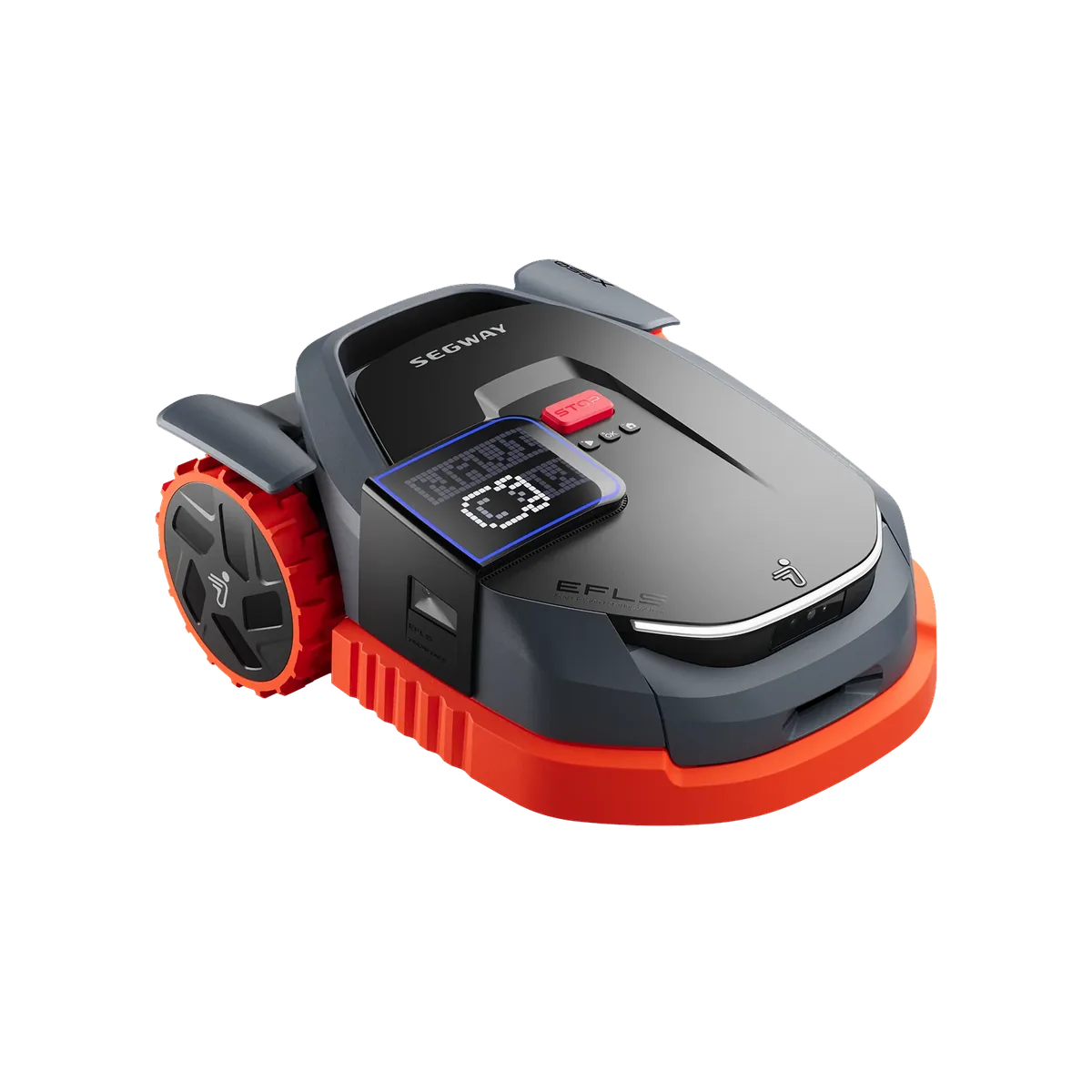
The X350 buys you battery, not a different mower: it shares the X330's 43.7 lb chassis, 9.3 in cut, 2 to 4 inch height range, EFLS 3.0 RTK-plus-vision positioning and 300-degree camera array, but carries a 10Ah pack for about 200 minutes per charge (80 minute recharge) and a 1.5 acre rating. Segway lists it at $2,799, down from $3,499 at launch, and it includes three years of 4G before the roughly $33 a year renewal. Residential Tech Today beta-tested this exact model for a season and found the standout traits were quiet 60 dB running that allowed night mowing, reliable obstacle recognition, and confident navigation on a tree-heavy lawn - RTK antenna placement still mattered, and moving it meant remapping. Early-spring patches of thin grass confused the VisionFence boundary logic until it was toggled off, and the optional Trimmer accessory occasionally hung up on rocks. As with all X3 mowers it is two-wheel drive, so the 50% slope rating assumes straight up-and-down runs, and there is no onboard rain sensor. Compared with a Husqvarna Automower 450X at roughly $4,000 installed, the X350 is a DIY afternoon and about a third cheaper; compared with the Mammotion Luba 2 AWD 5000 it gives up AWD hill-climbing for faster, straighter cutting. Best for 1 to 1.5 acres of mostly open, gently rolling lawn.
Best for Lawns of 1 to 1.5 acres with scattered trees and only gentle grades, for owners who want DIY setup instead of a dealer install.
Lymow
Lymow One Plus
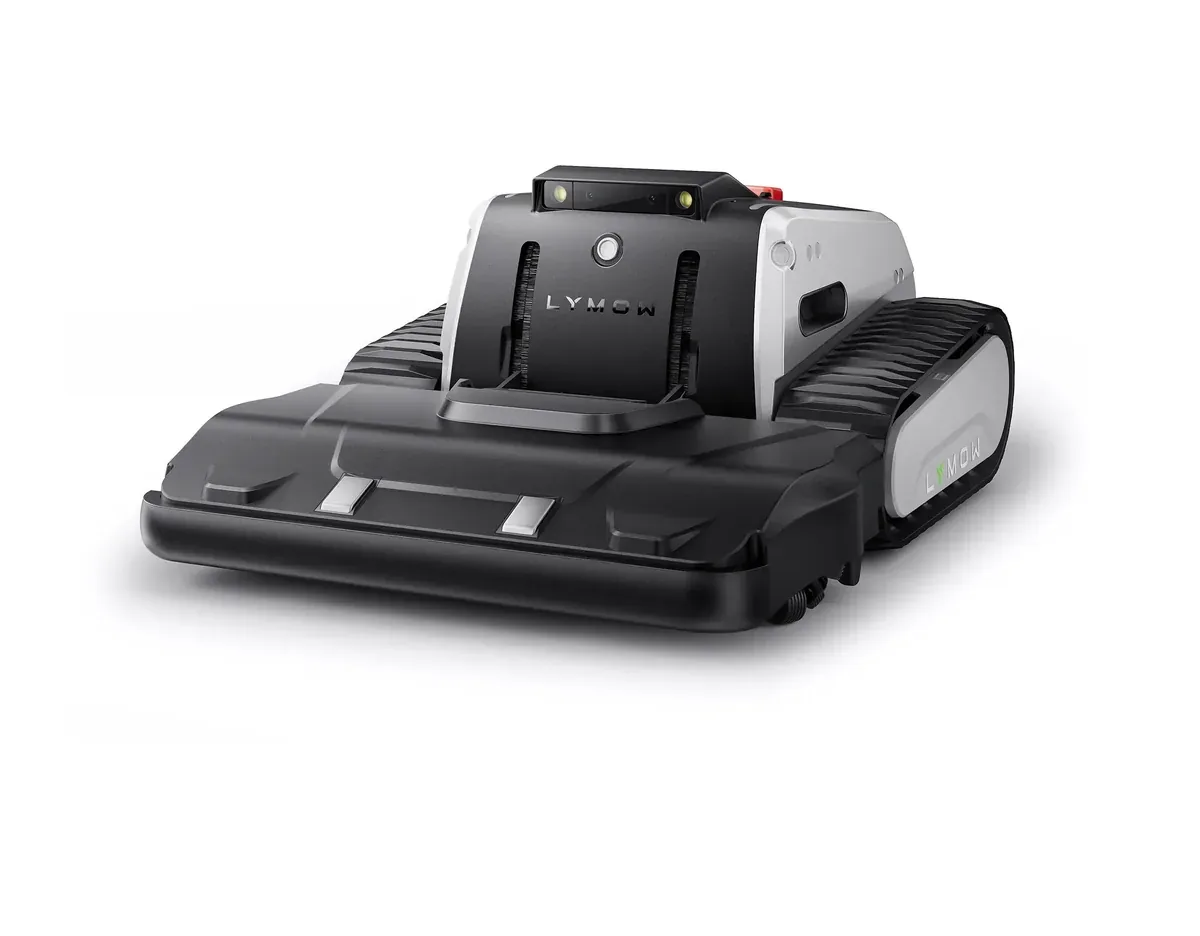
The Lymow One Plus is the tank of the robot mower world: it rides on rubber tracks instead of wheels, weighs almost 80 pounds, and swings two SK5 steel rotary blades across a 16-inch deck at up to 6,000 rpm. That combination is why it climbs a rated 45-degree (100 percent) slope and chews through tall, thick grass and fall leaves that stall a disc-blade mower like the Mammotion Luba 2 or a Segway Navimow. It replaced the original Lymow One in 2026 with about 50 percent more cutting power, a 528 Wh LiFePO4 battery good for roughly three hours, and a 90-minute fast charger on the 10A kit (the cheaper 5A kit takes about 150 minutes). Navigation is RTK plus VSLAM cameras, so the included RTK antenna needs open sky, then you drive the perimeter in the app to build up to 80 zones. The trade-offs are real: it is louder than a typical robot (about 62 dB in standard mode, 74 dB in turbo), it is not built for tight, fussy edges, and owners on Lymow's own site mention occasional offline drops and RTK hiccups that firmware updates have been chipping away at. If you have an acre or more of rough, hilly ground and were about to buy a small riding mower, this is the robot to look at. If your lot is a flat quarter acre full of beds, a lighter wheeled mower does the job for less.
Best for Large, hilly or rough lots of one to two acres where a wheeled robot would slip, stall or bog down.