Best Boundary-Wire Robot Mowers
The original robot mower design, and still the one that works in the most yards: a perimeter wire pinned or buried around the lawn and every bed carries a signal the mower won't cross, and a guide wire leads it home. The wire is the cost and the benefit at once. Laying it takes an afternoon or an installer, aerators and edgers cut it, and moving a flower bed means moving wire. In exchange you get a mower that runs under dense tree canopy, along two-story walls, and through narrow side yards where satellite-based machines lose their fix, at prices that start hundreds of dollars below wire-free equivalents. Most run a random pattern, which looks odd the first week and produces a uniformly cut lawn by the third. For a shaded lot, a complex yard, or a budget under a thousand dollars, the wire is still the honest answer.
MowerRanker tracks 22 boundary-wire mowers from 8 brands, priced $299 to $4,020. The highest-rated of them is the Husqvarna Automower 435X AWD at 3.6★, and the most affordable is the Husqvarna Automower 115H 4G at ~$299. Compare them all below.
Husqvarna
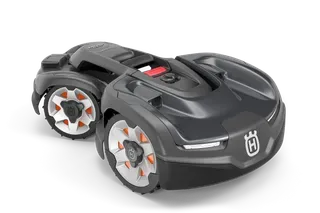
Husqvarna Automower 435X AWD
The 435X AWD is the wired predecessor of the 435 iQ AWD, and for $2,000 less it gives you the same all-wheel-drive, articulated chassis and 70 percent slope rating. Instead of satellites it follows a buried boundary wire plus guide wires, with GPS-assisted mapping to even out coverage across 0.9 acres and app-drawn stay-out zones. Owners on Husqvarna's site are mostly in year three to five and report the kind of reliability that keeps them buying the brand, along with the usual notes: install is a multi-day project or a dealer job, there are always a couple of steep spots that need smoothing, and the alarm and support experience vary by region. A Danish long-term reviewer put it well - if your lawn is flat, this model gains you nothing over a cheaper Automower, but on steep, uneven ground it is close to unstoppable. Rivals like the Mammotion Luba 2 AWD skip the wire entirely and cost less, so this only makes sense if you specifically want wire reliability under tree cover, a known chassis, and a Husqvarna dealer behind it. Note the two-year warranty versus four on the iQ models, and that the heavier body leaves visible tracks on soft ground.
Best for Steep or uneven lawns under heavy tree cover where a boundary wire is more dependable than satellites.
Robomow
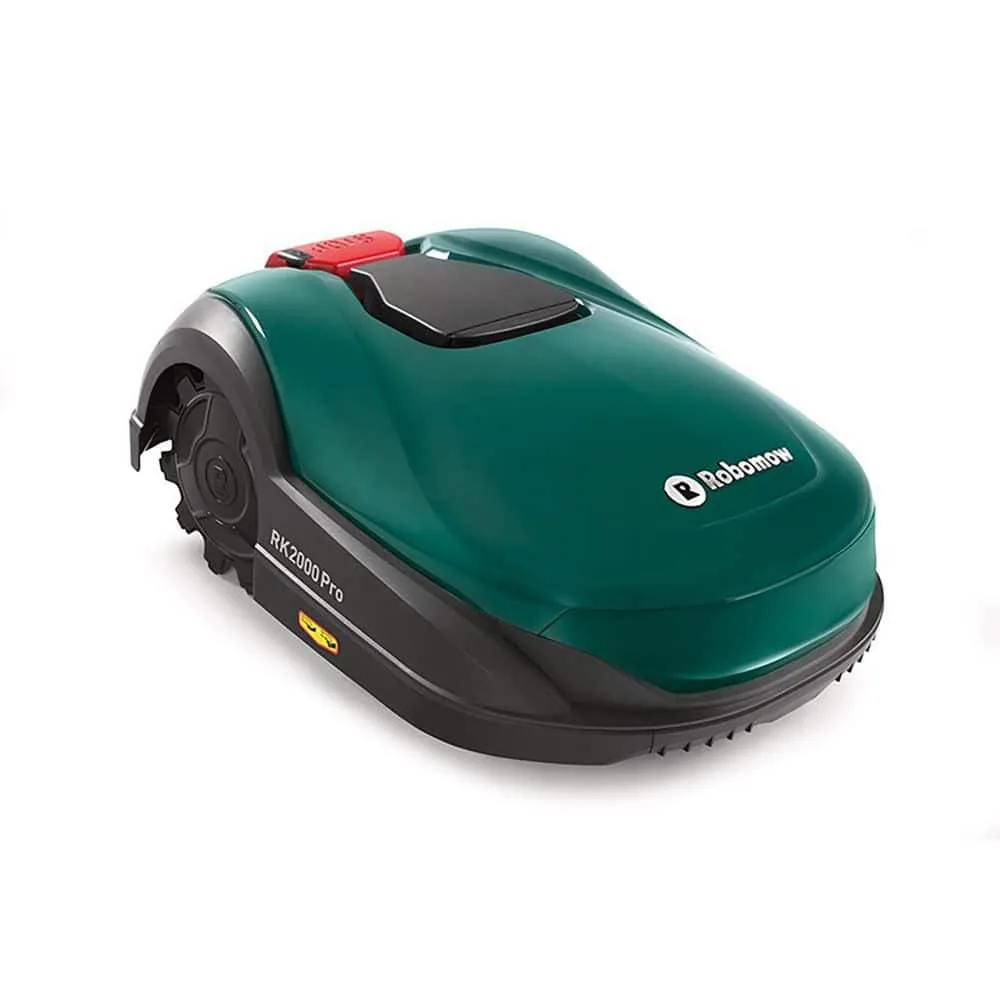
Robomow RK2000
Robomow was one of the original robot mower brands (Israeli, now part of MTD under Stanley Black & Decker) and the RK2000 is its mainstream US model: a boundary-wire mower rated for 2,000 square meters, about half an acre, sold mostly through Home Depot at $1,499 with a 3-year warranty. The RK series has a few things older wire mowers lack. The deck floats on a pendulum suspension, the blade disc sits offset so it can trim right over the wire on one side, the four razor blades are staggered on the spinning disc, and it climbs 45 percent inside the mowing area (20 percent along the wire). Runtime is 80-90 minutes with a 60-120 minute recharge, it is quiet at 64 dB maximum, and you can carve the lawn into a main zone plus four sub-zones. Programming happens on a 4.3-inch color touchscreen or over Bluetooth in the Robomow app; remote GSM access is an add-on module. It is also a random-pattern mower with no cameras, so anything you leave inside the wire gets bumped, and the wire itself is a weekend install. Home Depot buyers rate it a middling 2.9 out of 5 across 9 reviews, and Robomow's US presence has thinned since the MTD sale, so weigh that against a Husqvarna Automower 310 Mark II at a similar price with a far bigger dealer network. Pick the RK2000 if you specifically want the offset edge-cutting disc and the touchscreen; pick the Husqvarna for support.
Best for Half-acre wired lawns where close edge trimming and a touchscreen matter more than app polish or dealer support.
Robomow
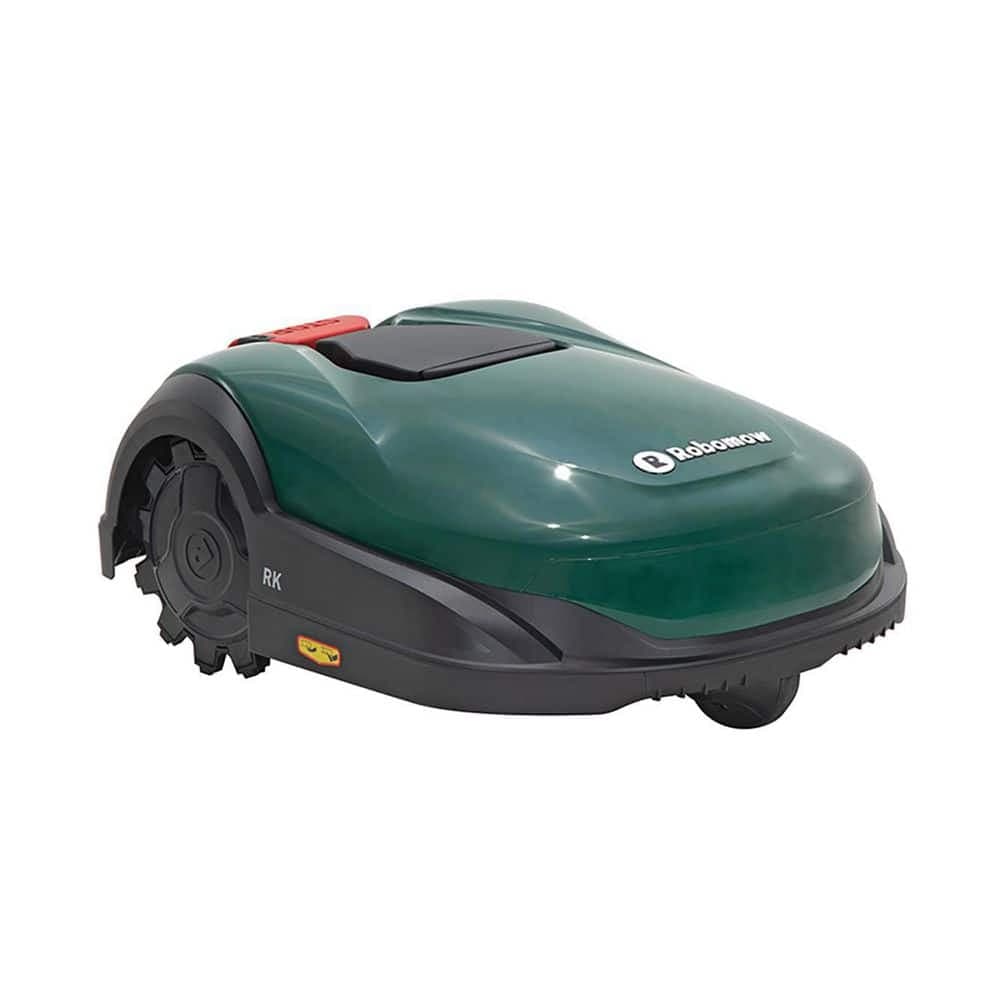
Robomow RK4000
The RK4000 is the big-lawn Robomow: a 16.5 in twin-disc deck, a 9.6Ah 18.5V pack good for 110 to 120 minutes per 90 to 110 minute charge, and a 1-acre rating, sold in the US only through Home Depot at $1,999. Robomow's international site calls this body the RK4000 Pro. That makes it one of the very few wired mowers under $2,000 rated for a full acre, and the twin discs cover ground twice as fast as the 8.3 in RK2000. The rest of the RK recipe carries over: floating deck, offset blades that trim over the wire, 45% (24 degree) slopes inside the area, a 0.6 to 3.9 in height range and a 4.3 in touchscreen. Home Depot owners who got a working unit praise the quiet running, clear setup documentation and better slope handling than similar mowers, and say it copes with tree debris. The complaints are the ones that follow the brand: it mows well where it goes but leaves patches it never reaches, units that stop seeing the boundary wire with a support ticket unanswered for a month, an app that cannot cancel a job or remember your PIN and needs its data cleared to reconnect, and remote control that does not actually work from outside Bluetooth range. A full-acre wire install is a weekend job. A Husqvarna Automower 430XH covers the same acre for about $700 more with a real dealer network behind it; a Segway Navimow X4 does it with no wire for about $500 more.
Best for A wired acre where a 16.5 in deck under $2,000 matters more than dealer support or a modern app.
STIHL
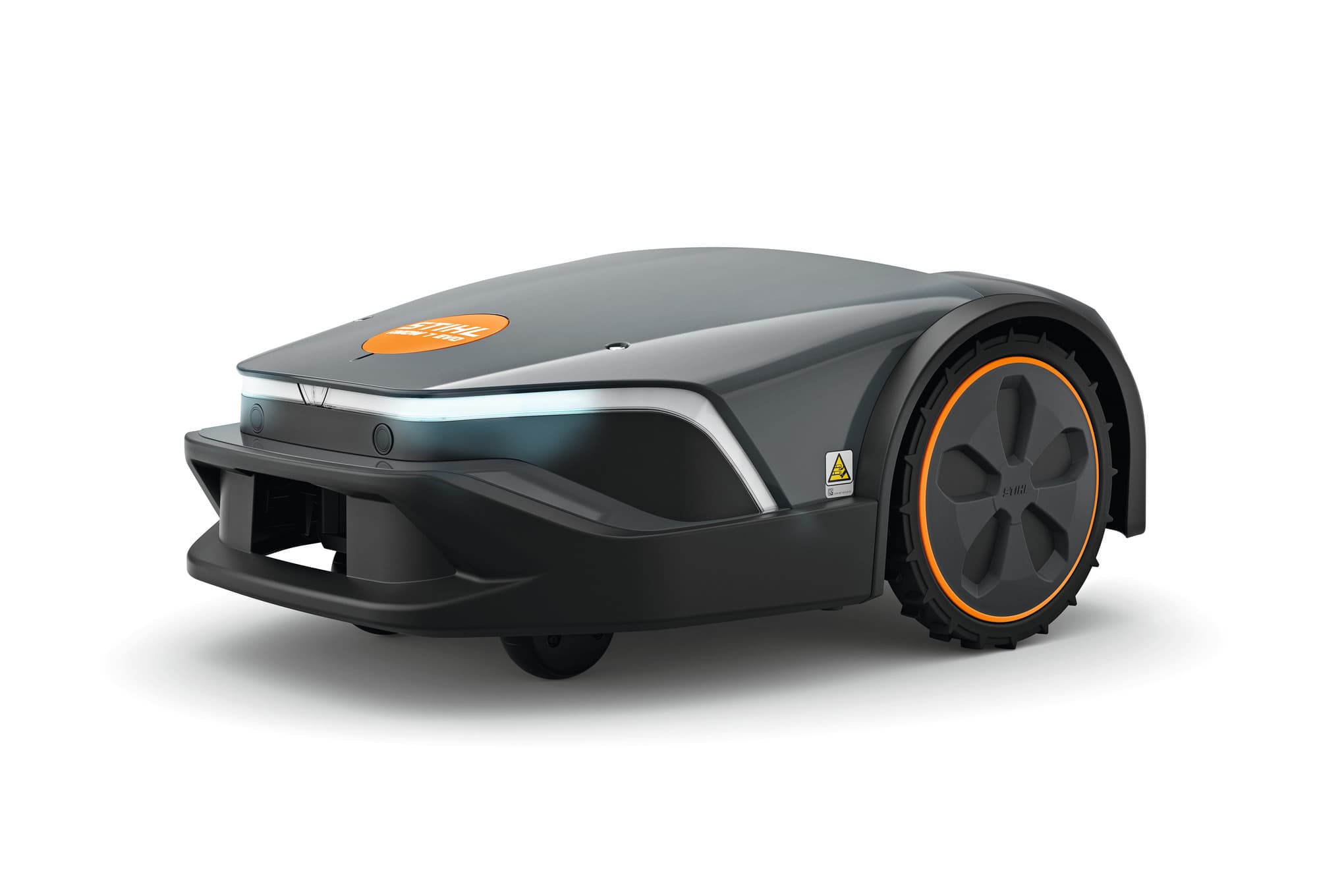
STIHL iMOW 7 EVO
The 7 EVO is the largest residential iMOW and the same machine as the 5 and 6 EVO with the biggest battery: about 240 minutes of mowing per charge (220 at an 80 percent fast charge that takes roughly 80 minutes), an 11-inch three-blade disc, ultrasonic sensors, a rain sensor and a mobile network module for the MY iMOW app. Like the 6 EVO, the US model (Mfr# IA01 011 1477) is the 4-inch high-cut version with a 2.4 to 4.0 inch electric height range, and it is rated for about an acre here versus 5,000 square meters (1.25 acres) on the European sheet. It is a boundary-wire mower, so a full acre means a long afternoon of wire for you or a dealer, and it weighs 37.5 pounds, heavier than its siblings. Ace and Interstate Supplies list it at $4,019.99. That is a lot for a wire machine in 2026: a Mammotion Luba 3 AWD 5000 covers 1.25 acres with LiDAR, cameras and 80 percent slope ability for about $3,299 and needs no wire, and a Husqvarna Automower 430X offers the same dealer-installed wire system with a longer track record. The 7 EVO's argument is a proven wire system, 61 dB sound power, a STIHL dealer who will install and maintain it, and a taller cut than most rivals manage.
Best for One-acre wired lawns kept tall, for buyers who want a STIHL dealer to install and maintain the system.
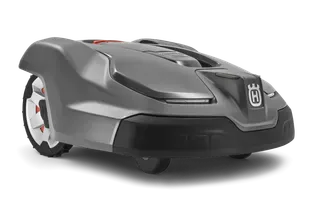
Husqvarna
Husqvarna Automower 430XH
The 430XH is the high-cut version of Husqvarna's long-running 430X: the same 9.45-inch deck, 0.8-acre rating and 145-minute runtime, but a 2-to-3.6-inch cutting range for tall fescue, bluegrass and other lawns that look terrible under two inches. It runs on a buried boundary wire with up to three guide wires and GPS-assisted mapping so it spends more time in areas it has been missing, and ultrasonic sensors slow it before it bumps into things. Owners are split in a way you should read before buying: the happy ones describe two-plus seasons of flawless mowing on hills and muddy spots and a lawn the neighbors comment on, while the unhappy ones describe a wheel falling off on the first mow, a mower that chewed its own boundary wire, and support that took days to answer. Nearly everyone agrees the wire install is 10 to 20 hours and worth renting a trencher for. Husqvarna's product page marks it discontinued, but its own shop still sells it at $2,500 with a two-year warranty. If you want tall-grass cutting without wire, the 420 iQ is the modern answer; if you have heavy shade where satellites struggle, this remains a sensible pick.
Best for A shaded half to three-quarter acre lawn of tall cool-season grass where a wire is more reliable than satellites.
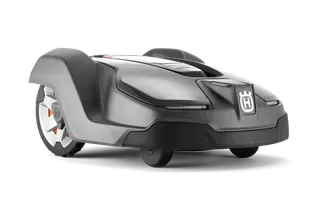
Husqvarna
Husqvarna Automower 430X
The 430X is Husqvarna's workhorse wired mower for medium lawns, rated for 0.8 acres and 45 percent slopes with a 9.45-inch deck and a low 0.8-to-2.4-inch cut range suited to Bermuda, zoysia and other lawns kept short. It follows a buried boundary wire with guide wires and GPS-assisted mapping, has ultrasonic sensors to slow for obstacles, and runs 145 minutes on a 50-minute charge, so it can cover a lot of ground in a day. Owners describe the cut quality as the reason to buy - a fine, even finish all summer - and the boundary wire as the reason to hesitate, with several reporting the mower cutting its own wire and having to splice it, plus flimsy connectors at the charging station. Wire install is the big lift; most say a rented trencher beats stakes. Husqvarna marks it discontinued, but the Husqvarna shop lists it at $2,500 and Amazon has been clearing units near $1,500, which is a lot of mower for the money if you can live with a wire. Against wire-free rivals like the Segway Navimow X3 or Mammotion Luba 2 you give up virtual maps and camera avoidance; against the 420 iQ you give up EPOS but keep the same dealer support for less. Good for shaded lots where satellites are unreliable.
Best for A shaded half to three-quarter acre lawn kept short, bought at clearance pricing by someone comfortable laying wire.

STIHL
STIHL iMOW 6 EVO
The 6 EVO is the middle STIHL iMOW: the same 11-inch three-blade disc, ultrasonic sensors and built-in mobile module as the 5 EVO, with a bigger battery that runs about 150 minutes per charge instead of 65 and recharges to 80 percent in roughly 75 minutes. The US version (Mfr# IA01 011 1447) is the 4-inch high-cut model, so it adjusts electrically from 2.4 to 4.0 inches rather than the 0.8 to 2.4 inch range STIHL sells in Europe, which suits fescue and other cool-season lawns kept tall. That taller deck is also why the US rating is about 0.6 acre, well under the 3,000 square meter (0.74 acre) figure on the international spec sheet. It is a boundary-wire mower, so someone lays perimeter and guide wire before it mows a blade of grass, and it climbs 45 percent slopes (55 with the optional Kit 10 wheels) at 61 dB sound power and 35 pounds. Ace Hardware and Interstate Supplies both list it at $3,099.99, dealer install extra. STIHL USA has removed the iMOW product pages from its own site, so dealers and Ace are the reference now. For the same $3,100 a Segway Navimow X350 covers more ground with RTK and cameras and no wire at all, so the case here is dealer install, dealer service and a quiet, clean finish rather than technology.
Best for Wired lawns around half an acre kept at 3 to 4 inches, for buyers who want a STIHL dealer to install and service it.
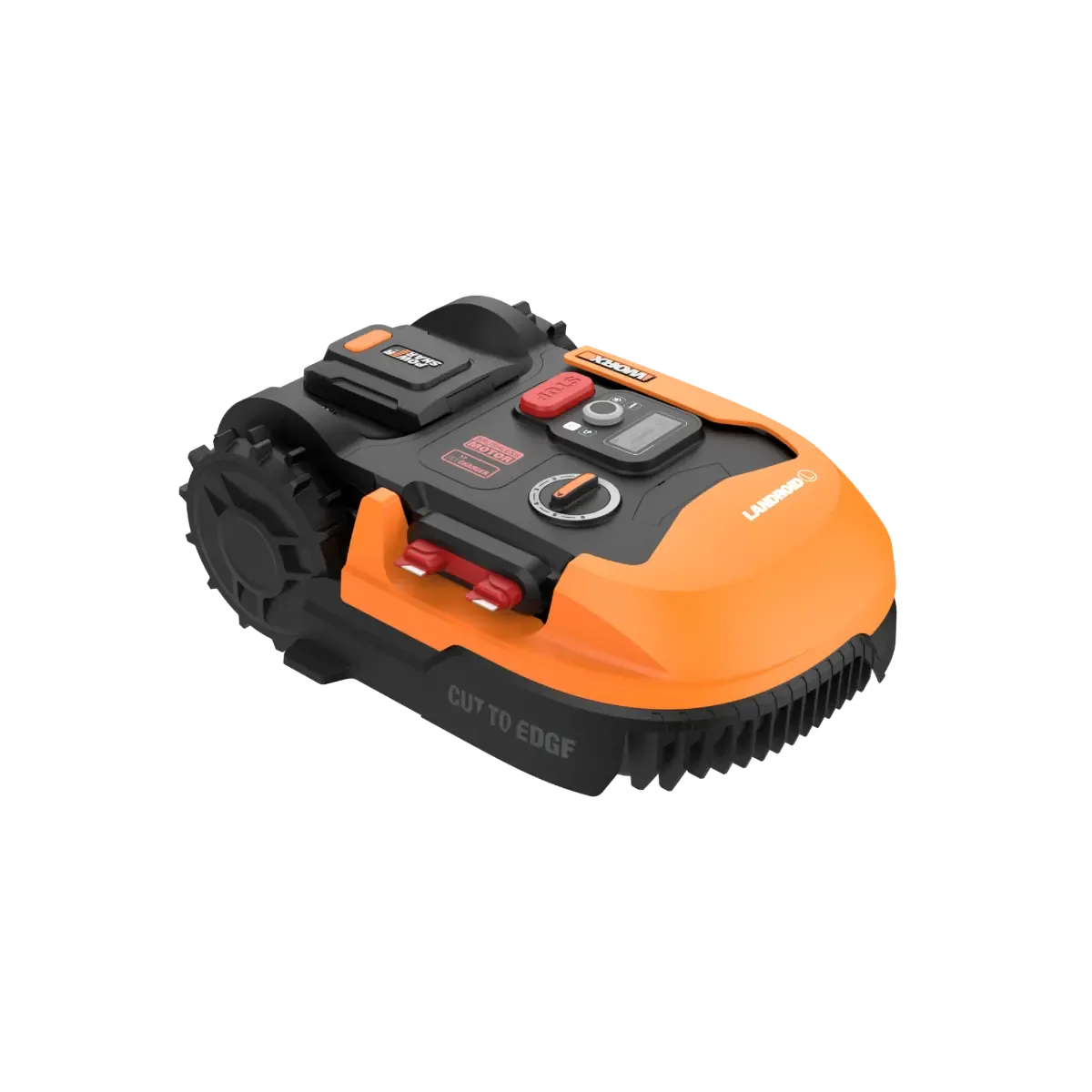
The Landroid L is the half-acre version of the Worx wired platform: same chassis logic as the M, a wider 8 in blade disc and a bigger 5.0Ah (some kits ship 6.0Ah) 20V Power Share pack that swaps into any Worx tool. Worx lists it at $1,499.99 but it has been sitting near $1,000 on Amazon and under $750 at Walmart, which makes it the cheapest half-acre robot from a brand with a US support line. Expect four to six hours laying the 820 ft of included wire. In use it is a bump-and-turn random mower with Cut to Edge, a floating blade disc that copes with lumpy ground, a rain delay, and a 30% slope rating that reviewers flag as the lowest in its class, so skip it on rolling terrain. Reviewers report roughly an hour of mowing per charge, so a full half acre means several dock trips a day and a schedule that runs most days. Obstacle avoidance is a bumper unless you add the ACS ultrasonic kit. Compared with a Husqvarna Automower 415X you give up polish and dealer support for roughly half the price; compared with a Segway Navimow at similar coverage you keep the wire but keep $700 in your pocket. Best for budget-minded owners of flat, open half-acre lawns who would rather spend a Saturday pegging wire than pay for RTK.
Best for Value shoppers with a flat, open lawn up to half an acre who do not mind installing boundary wire.
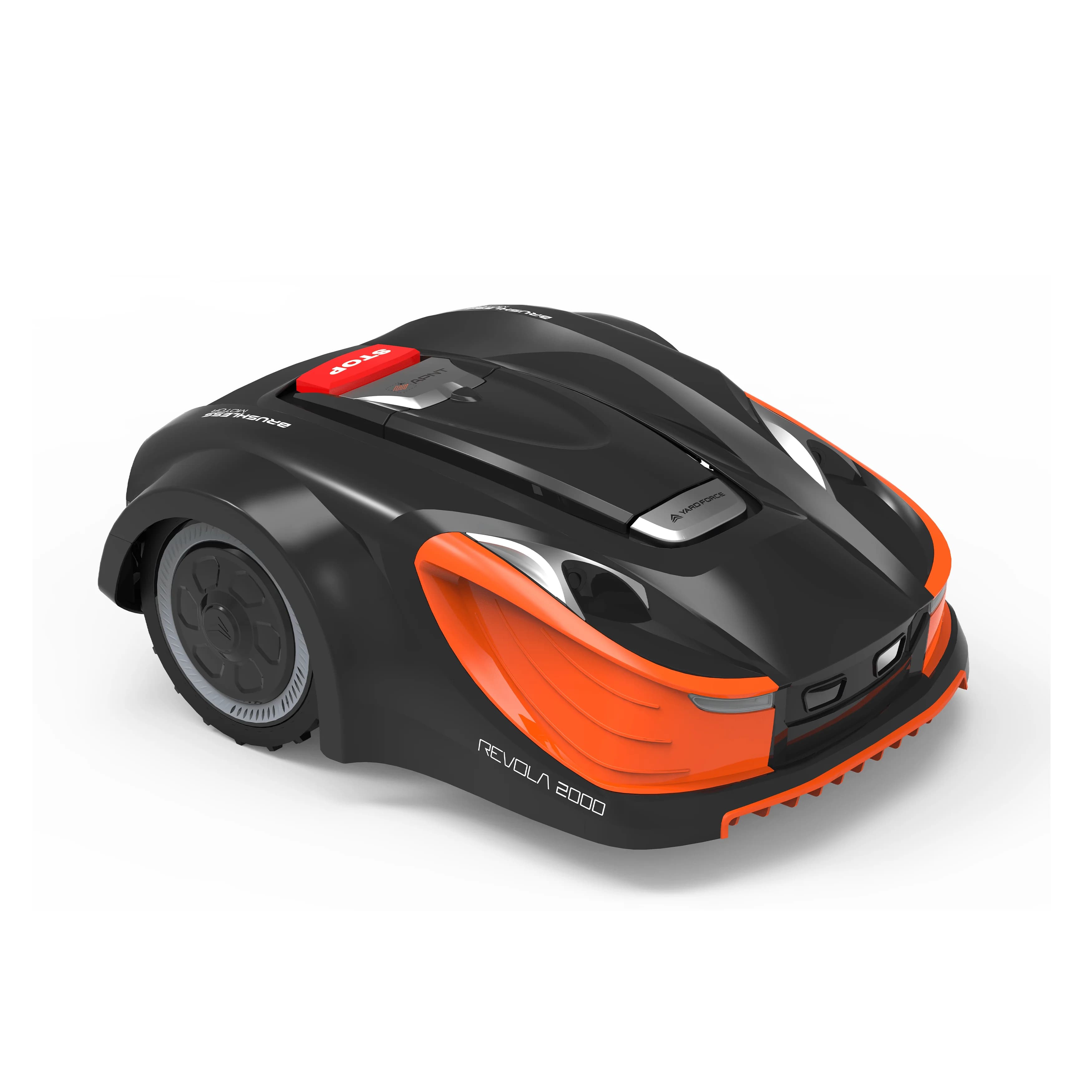
Yard Force
Yard Force Revola X4E
The Revola X4E is Yard Force's half-acre boundary-wire mower, $799 direct (Amazon lists it at $899), and the current yardforceusa.com page is explicit that it navigates inside an installed perimeter wire - the 'advanced navigation' in the retail title is app scheduling plus ultrasonic obstacle sensing, not RTK or LiDAR. The published sheet gives a 28V 4.0Ah pack, roughly 100 minutes per charge with an 80 minute recharge, an 8.7 in three-blade mulching deck, 800 ft of wire and 300 pegs in the box, and a 2-year warranty. Cut height is the one spec Yard Force disagrees with itself on: the current product page says six positions topping out at 2.4 in, while the retailer spec sheets and the Amazon listing say five settings from 1.3 to 3 in, so confirm before buying if you keep tall grass. Slope is rated at 22 degrees, about 40%. Front and back yards can run as separate zones, rain sensing sends it home, and anti-theft is a PIN lock with an alarm; there is no GPS tracking or cellular. One hands-on review found the wire boundary and obstacle detection dependable once installed, with cut quality on par with other mowers at this price, but flagged trouble getting replacement parts out of Yard Force. Against the Worx Landroid L WR155 ($999, also 1/2 acre on a wire) the X4E is $200 cheaper and lighter at 18.5 lb; the Worx answers with a 3-year warranty and cut-to-edge.
Best for A flat to gently sloped half acre for a buyer who accepts a wire install to get the lowest price on that much coverage.
Husqvarna
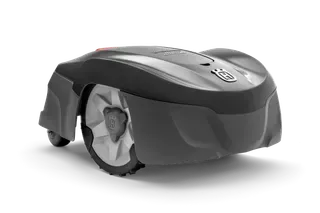
Husqvarna Automower 115H 4G
The 115H 4G is Husqvarna's budget Automower and, at the $300 the brand and its dealers have been selling it for through 2026, an easy way to try robot mowing without a big bet. It is old-school: you bury a boundary wire and one guide wire, it bounces randomly around up to 0.4 acres, and it cuts high at 2 to 3.6 inches, which makes it a better match for fescue and bluegrass than most budget robots. The 4G module means the Automower Connect app works from anywhere, with no subscription for ten years. Owners are consistent about the tradeoffs: wire install takes a weekend, the wire will eventually get cut and you will want a toner, cut height is a manual dial, there is no GPS tracking, and a fair number report it stalling short of the dock. It has only a bumper, so pick up toys and sticks, and slopes top out around 30 percent. Against a Segway Navimow i105N or a Worx Landroid Vision, you give up wire-free setup and any real obstacle avoidance; what you keep is quiet 58 dB operation and Husqvarna dealer service. Right for a small, flat, fenced yard on a tight budget; wrong for anyone who hates the idea of wire.
Best for A small, flat, fenced lawn where a $300 wired mower with dealer support beats a pricier wire-free robot.
STIHL
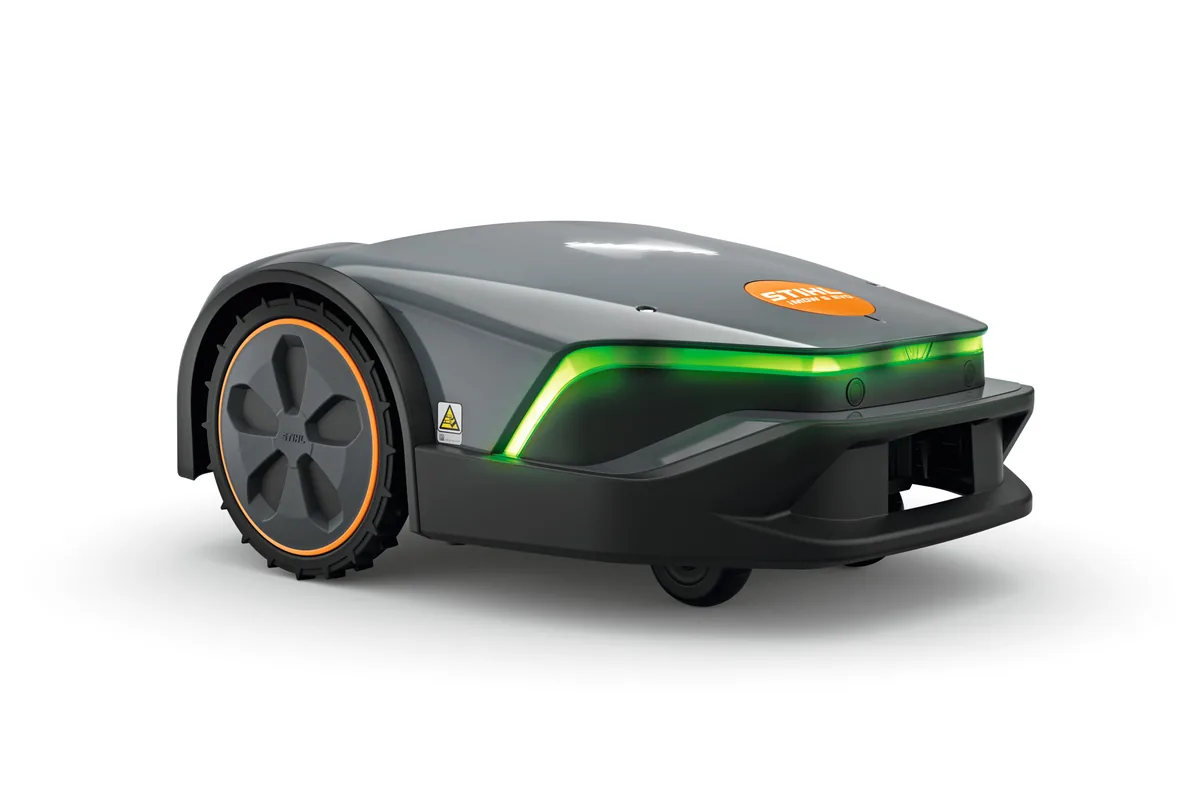
STIHL iMOW 5 EVO
STIHL's iMOW EVO line replaced the old Viking-era iMOWs in Europe in 2023 and reached US dealers in 2024, and the 5 EVO is the smallest of the three (the 5, 6 and 7 EVO cover roughly 0.37, 0.74 and 1.25 acres). It is a boundary-wire mower, so someone has to lay perimeter and guide wire, but once that is done it is one of the more polished wire machines around: an 11-inch disc with three free-swinging blades, electric height adjustment from 0.8 to 2.4 inches, 45 percent slopes (55 with the optional Kit 10 wheels), ultrasonic sensors that slow it before it bumps anything, a rain sensor you can tune, and a mobile network module built in so the MY iMOW app works away from home. It is quiet (61 dB sound power, 48 dB pressure) and light at 33 pounds. T3's reviewer called it outstanding on cut quality but was annoyed by app logouts and by its inability to cut flush to raised edges, a limit of any wire mower. Runtime is short, 65 minutes per charge with a 140-minute full recharge, though STIHL rates it for 1,500 square meters over a week of cycles. At about $2,530 through STIHL dealers and Ace, it costs more than a wire-free Segway Navimow i110 that covers the same area with no wire, so the case for it is dealer install, dealer service and STIHL build quality rather than technology. Best for someone who already has a STIHL dealer they trust and does not want to fuss with RTK antennas.
Best for Wired lawns up to about 0.37 acre for buyers who want a dealer-installed, dealer-serviced machine from a brand they already own tools from.
Husqvarna
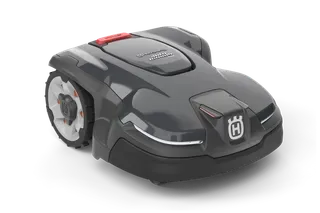
Husqvarna Automower 415X
The 415X was Husqvarna's small-yard X-line mower before the iQ series, and it is still sold through the Husqvarna shop and dealers at $2,000 even though the product page says discontinued. You get the premium X-line touches - LED headlights, app-adjusted electric cut height, GPS theft tracking and built-in cellular - in a 21-pound body rated for 0.37 acres and 40 percent slopes. The cut range of 0.8 to 2 inches suits warm-season grasses and tidy, short lawns, not tall fescue. It runs on a boundary wire with guide wires and a systematic passage mode, and the 50-minute runtime with a 60-minute charge means it cycles often. Owners say it just works once the wire is in, and that install takes about half a day if you watch the videos first; the complaints are about durability, with a warped cutting disk, wheels lost to surfacing rocks, and mowers that would not wake up after winter, plus customer service that punts to dealers. At 62 dB it is noticeably louder than a Navimow i110N, and a Segway or Mammotion at this price is wire-free with cameras. Choose it for a small, wire-friendly yard where you want Husqvarna dealer support and a short, even cut.
Best for A small suburban lawn kept short, where you want Husqvarna dealer service and do not mind a wire.
Greenworks
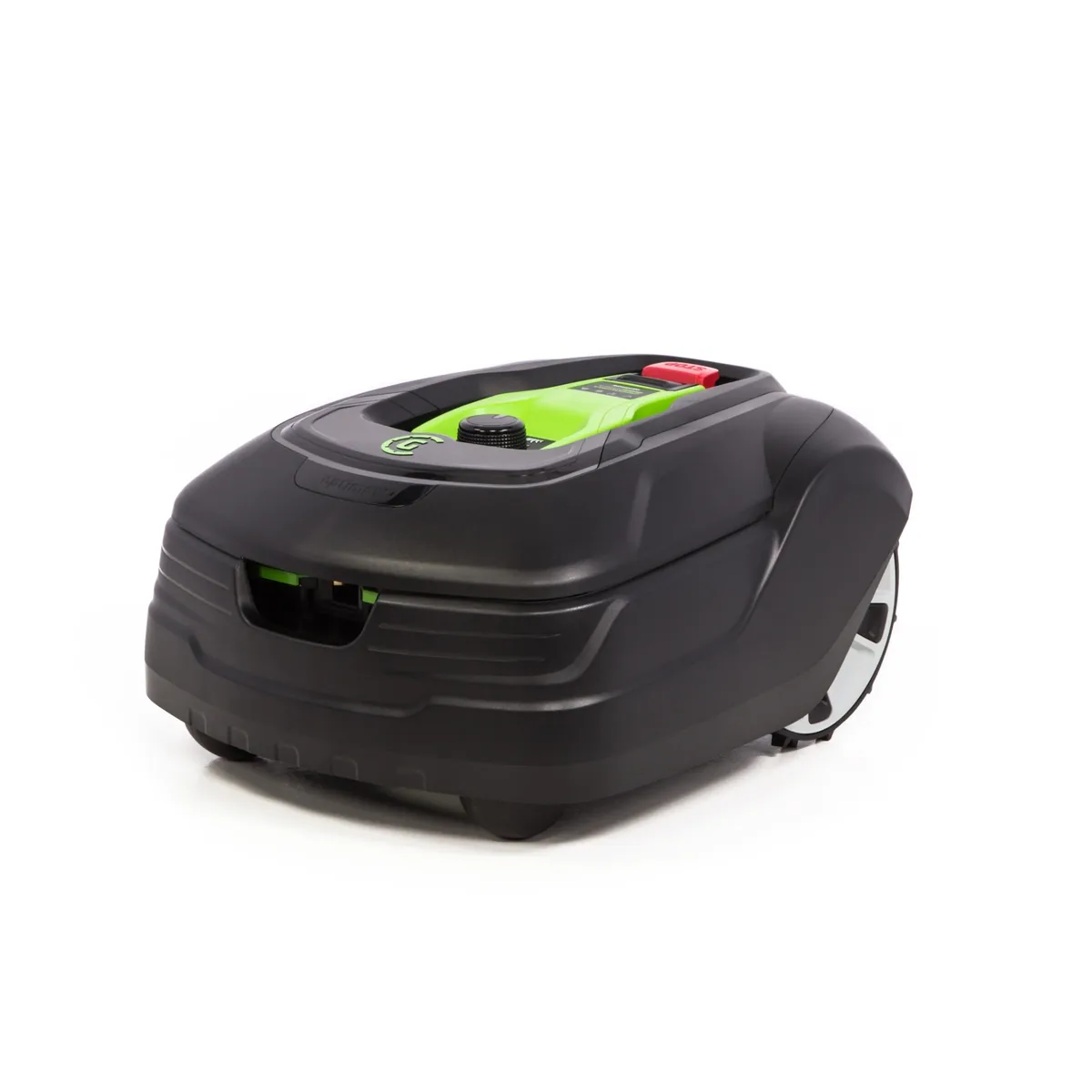
Greenworks Optimow 33H
The Optimow 33H is Greenworks' one-third-acre boundary-wire mower, now sold through the Greenworks Commercial dealer network rather than big-box stores; the online store lists it at $1,099.99 and sold out, so a local dealer is the realistic route. The H means high cut, 2.4 to 4.0 in, which suits fescue and Kentucky bluegrass lawns that the 0.8 to 2.4 in Optimow 33 would scalp. Mechanically it is a conventional Husqvarna-style platform: boundary wire plus guide wires, a random bounce pattern, three pivoting razor blades on an 8.7 in disc, a 24V battery, 130-minute recharge, IPX5 washdown and a 19 degree (about 34%) slope rating. Its differentiator is built-in 4G with GPS: the GreenGuide app works from anywhere and the mower can be tracked if it walks off. Owners of the sibling Optimow 50H on Best Buy like the cut but call the app frustrating, and the cellular plan is only prepaid for two years before an annual fee kicks in. There is no edge-cut mode and no camera, so it bumps its way around obstacles. Against a Husqvarna Automower 310 Mark II it is cheaper with a longer warranty, but dealer-only availability and the app complaints keep it from being an easy pick. Best for a flat to gently sloped third-acre lawn within reach of a Greenworks dealer.
Best for Cool-season lawns around a third of an acre whose owner has a nearby Greenworks dealer and wants cellular tracking without wire-free pricing.
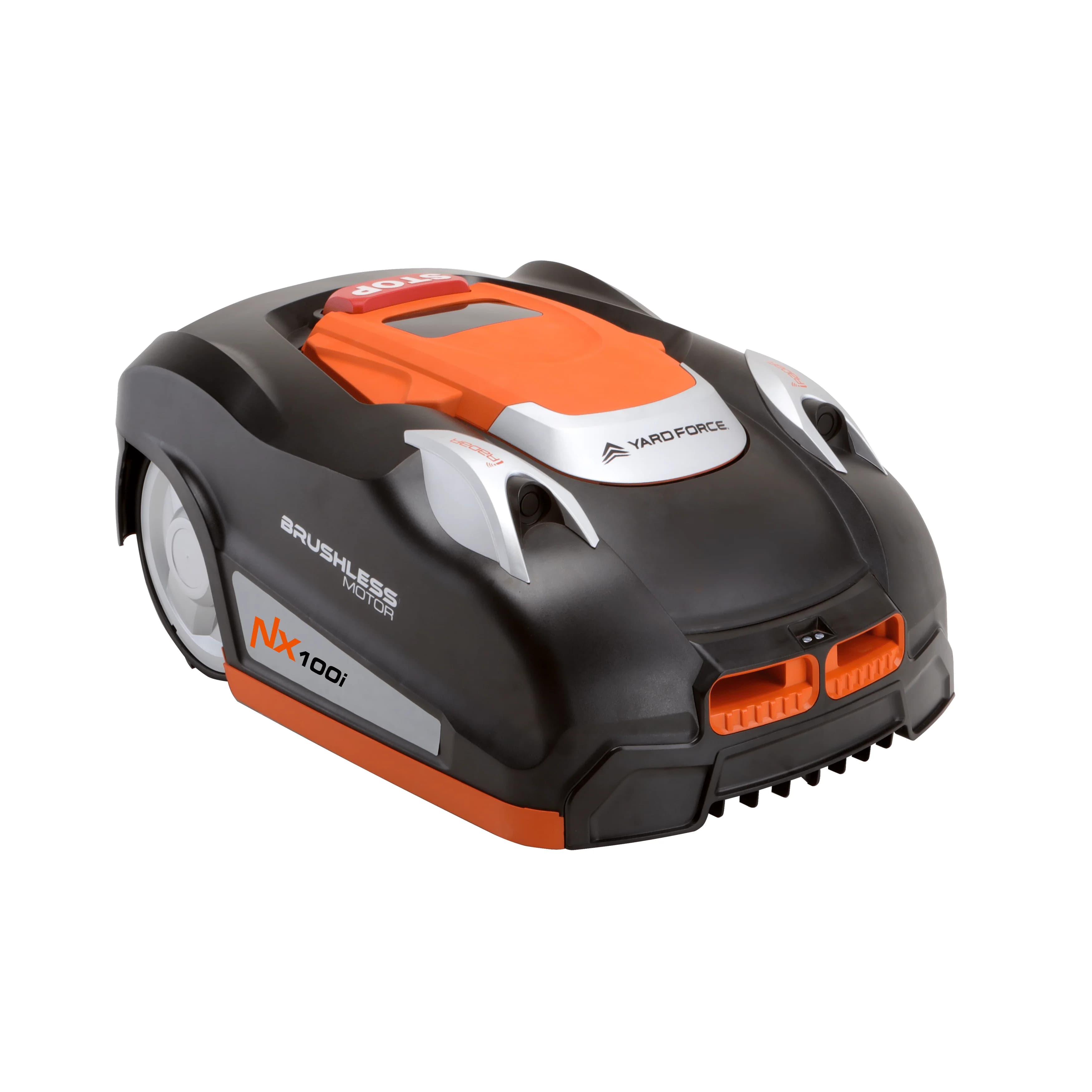
Yard Force
Yard Force NX100i
The NX100i is Yard Force's entry-level wired robot for US big-box shelves: $799 at yardforceusa.com, stocked at Home Depot and Lowe's, rated for 1/3 acre (14,520 sq ft) on a 28V pack that runs 80 to 90 minutes per charge. It cuts a narrow 7 in swath with a three-blade mulching disc across five height settings from 1.3 to 2.9 in, so it suits lawns kept short rather than a 3.5 in fescue cut. Yard Force claims 40% slopes, and the differentiator over most sub-$1,000 wired mowers is the iRadar ultrasonic sensor pair on the nose that slows and steers around furniture, pets and toys before the bumper touches them; a rain sensor, lift and tilt cutouts and a PIN lock are standard. Wi-Fi and Bluetooth feed the CloudHawk app for schedules, remote start and height changes, but there is no GPS, cellular or mapping - it mows in a random pattern inside the wire like any classic robot. One hands-on review called it small for its rating and found a full 1/3-acre lawn took two days of scheduled runs to finish, which is the trade-off for the 7 in deck; retail customer reviews mostly praise how easy it is to start and how compactly it stores. Against the Worx Landroid M WR147 ($902, 1/4 acre, 3-year warranty) the NX100i is cheaper, covers more and adds ultrasonic sensing, but gives up a year of coverage and Worx's cut-to-edge blade.
Best for A small, uncomplicated lawn up to 1/3 acre kept on the short side, for a buyer who wants the cheapest robot with real obstacle sensing.
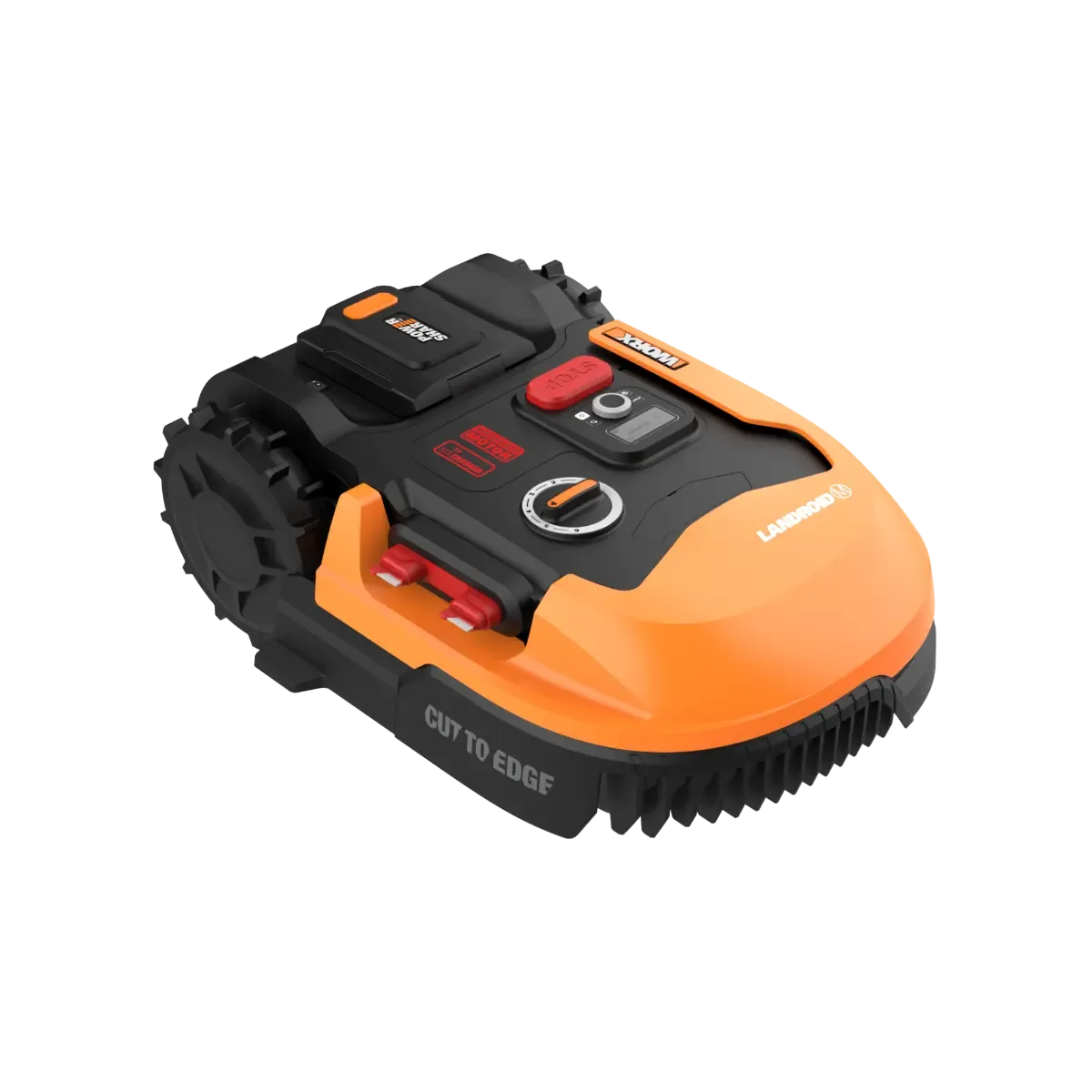
The Landroid M is Worx's quarter-acre boundary-wire mower and, thanks to the 20V Power Share battery it shares with every other Worx tool, it is usually one of the cheapest ways into robot mowing that still comes with a real app. Worx lists it at $1,199.99, but it sells for around $900 on Amazon and Walmart has been clearing it below $800, so shop around. Setup is the classic wire job: 820 feet of wire and 340 pegs are in the box, and plan on an afternoon of pegging. Once running, the AIA algorithm handles narrow passages without a guide wire, the off-center blade genuinely cuts to the edge, the floating blade disc lifts over bumps, and at 59 dB it is quiet enough to run at night. The catch is what it lacks: no camera or ultrasonic sensor in the box, so it bumps into anything the wire does not exclude, and there is no GPS tracking unless you buy the Find My Landroid module. Against the Gardena SILENO flex at $599 you pay more for a 3.5 in top cut height and Wi-Fi control; against the wire-free Landroid Vision you save several hundred dollars but do the wire work yourself. Best for flat, fairly open yards under a quarter acre owned by someone who already has Worx batteries in the garage.
Best for Budget buyers with a flat, open lawn under a quarter acre who already own Worx 20V tools.
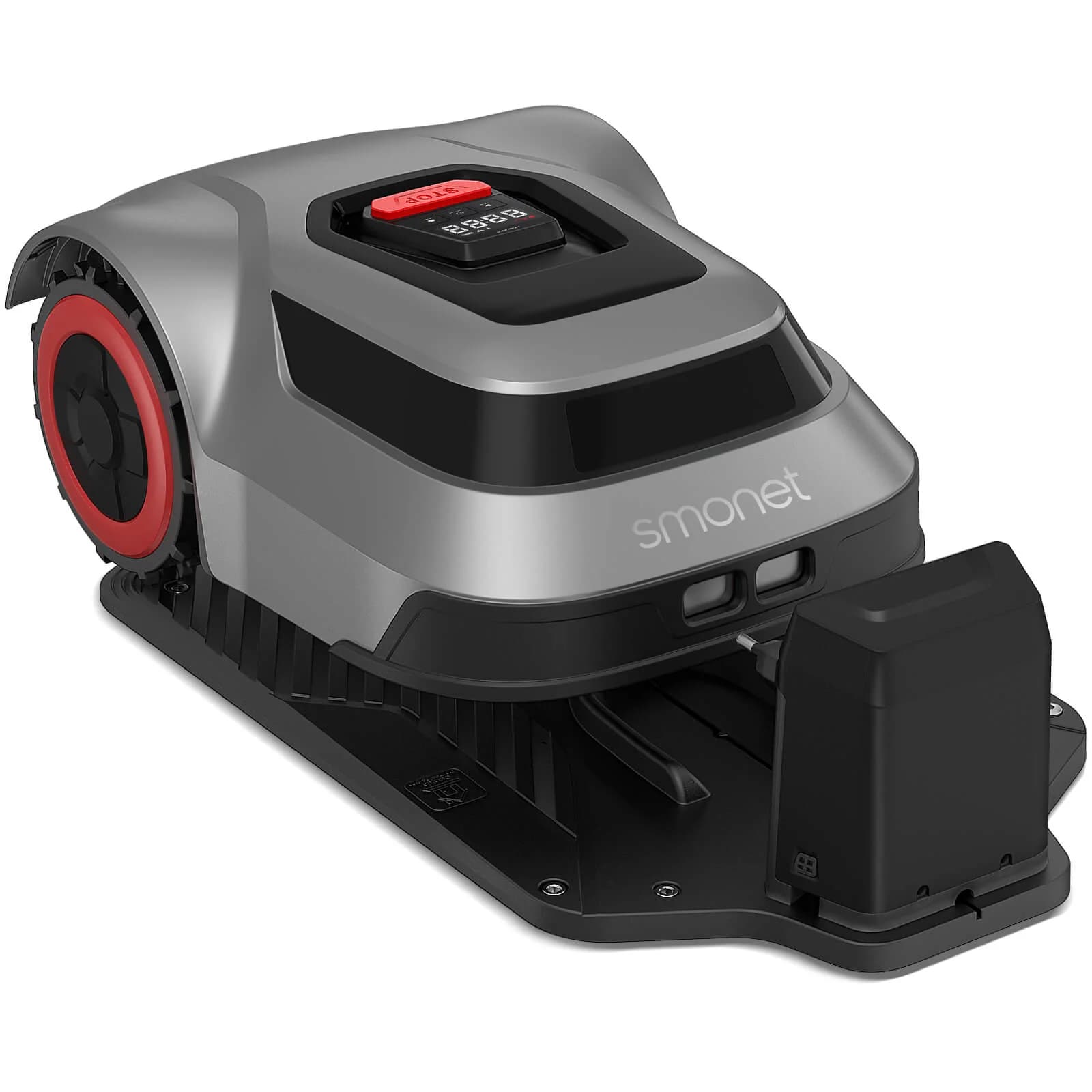
Smonet
Smonet RLM1000
Smonet is a smart-lock and pool-robot brand, and the RLM1000 is its one lawn mower: a quarter-acre boundary-wire unit that Home Depot lists at $999.99. The pitch is that it mows in S-shaped rows instead of the random bounce of a Robomow or Gardena, so a small lawn gets finished in fewer passes, and that its C-ToF wire-break detection puts the break point on the app map instead of leaving you to walk the perimeter with a meter. Beyond that the spec sheet is thin. The 2.5Ah pack runs about 70 minutes and recharges in under two hours, the cut is 8.2 in wide, and the height range is 1.2 to 2.8 in, which is short for fescue and really suits Bermuda or zoysia. It is quiet at 57 dB, has a rain sensor, connects over Wi-Fi and Bluetooth, and Smonet claims 45% slopes. There is no edge mode, no multi-zone support in the literature, no published weight, and nothing on anti-theft beyond the onboard keypad. Retail is the worry: Smonet's own store shows an empty mower collection, Newegg lists it out of stock, and Home Depot's page is the only live US price, so this looks like a run-out rather than a supported line. At $999 it sits against the Robomow RK1000 ($1,199, taller cut, edge disc) and the Gardena SILENO flex ($599, 1 to 4 in cut) and loses to both on maturity.
Best for A quarter-acre warm-season lawn whose owner wants systematic rows from a wired mower and accepts an unproven brand.
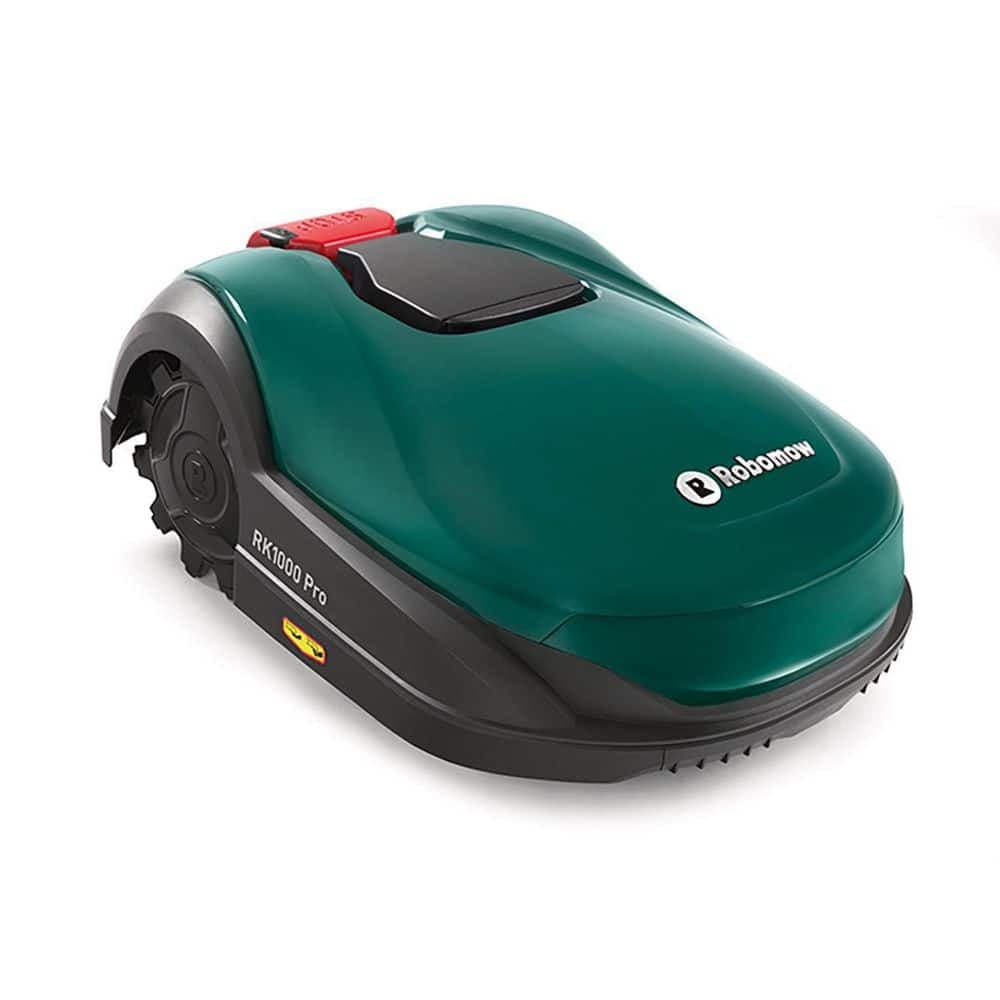
Robomow
Robomow RK1000
The RK1000 is the quarter-acre entry to Robomow's RK line, the same body and 4.9Ah pack as the RK2000 but rated for 1,000 square meters instead of 2,000, and Home Depot sells it for $1,199 with a 3-year warranty. Robomow's own spec sheet is honest about what that battery buys: 40 to 50 minutes of mowing per 60 to 120 minute charge, which is why it carries the smaller rating. What it shares with the RK2000 is the good stuff - a pendulum-suspended floating deck, an offset four-blade disc that trims over the wire on one side, a 45% (24 degree) slope rating inside the mowing area, a 0.6 to 3.9 in height range and a 4.3 in color touchscreen on the mower. Owners at Home Depot report it is quiet and simple to set up, but the same reviews rate it 2.9 out of 5 for the reasons that dog the whole line: the Bluetooth-only app drops connection, it is slow, a lawn near the 10,000 sq ft ceiling does not get finished on one charge, the wire is easy to tear up, and since Robomow's sale to MTD, US parts and support responses are slow and expensive. Robomow's own US site now redirects to a parts store. Against a Gardena SILENO flex at $599 for a similar lawn size, you pay double for the edge-trimming disc, the touchscreen and the taller cut.
Best for Small wired lawns under a quarter acre where the RK's edge-trimming disc and tall cut are worth paying double a Gardena for.
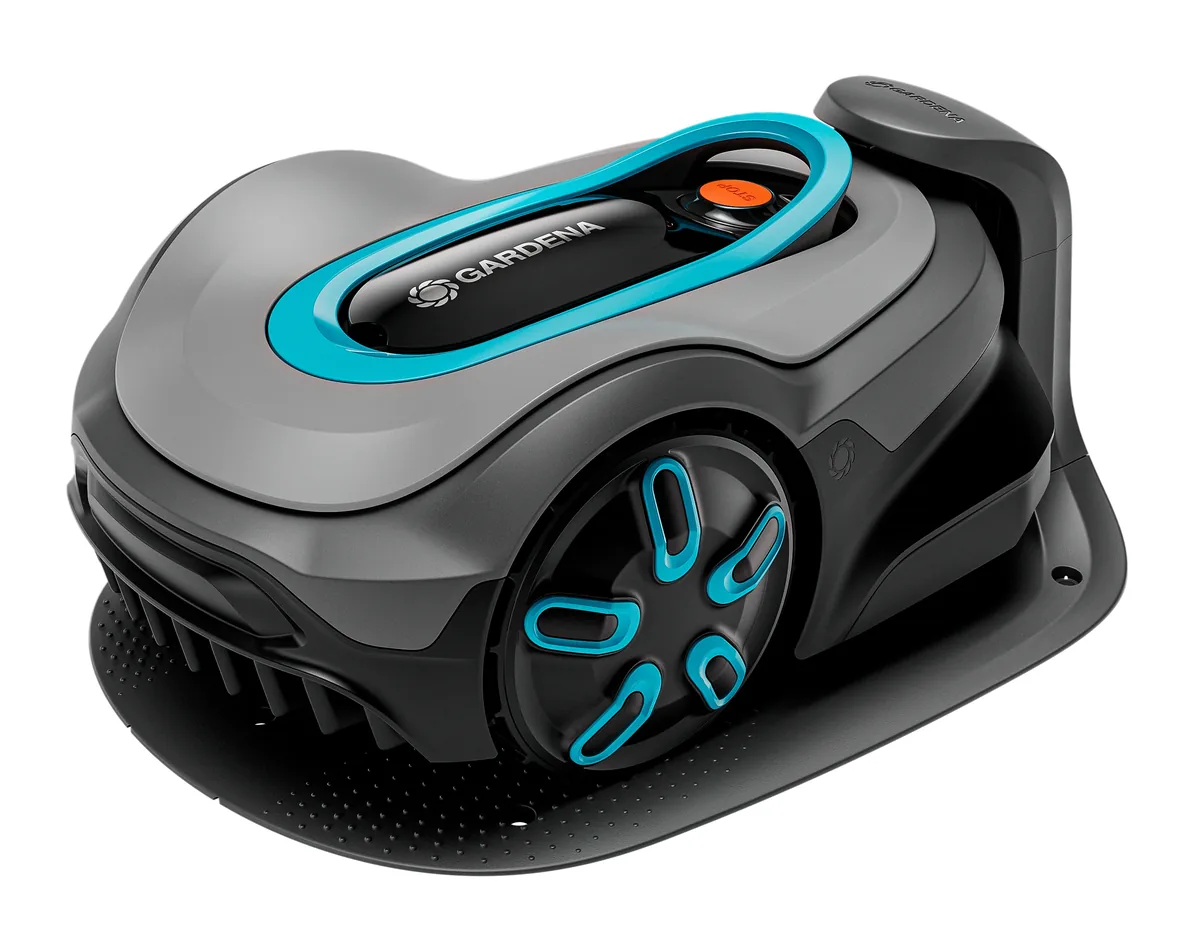
Gardena
Gardena SILENO flex
The SILENO flex is Gardena's 2025 redesign for the US and, at $599, the cheapest wired mower here from a major brand. It fixes the biggest complaint about the older SILENO City and Life: cut height now runs 1 to 4 in instead of topping out at 2 in, so it finally suits cool-season American lawns. Coverage is up to 8,600 sq ft, slopes up to 35%, and a 10 in cut on an 18V 3.6Ah pack gives about 90 minutes of mowing per 60-minute charge. Navigation is boundary wire plus a guide wire, which is still the most precise way to keep a robot out of the flower beds and lets it thread narrow corridors. It mows in the rain (there is no rain sensor by design, only a frost sensor), is quiet at 60 dB, and is hose-washable. The trade-offs are Gardena's usual ones: the app is Bluetooth-only with roughly a 33 ft range, so no remote start, notifications or GPS, and obstacle handling is a bumper. Anti-theft is a PIN plus a lift alarm. Versus the Worx Landroid M (around $900 street) you get a taller cut and a lower price but lose Wi-Fi control; versus a wire-free Segway Navimow i105 at $999 you give up couch control for a system that never loses satellite lock. Best for small, complex lawns under 0.2 acre where a wire is acceptable and quiet matters.
Best for Small, wire-friendly lawns up to about 0.2 acre where a quiet, cheap mower with a tall cut range matters more than remote app control.
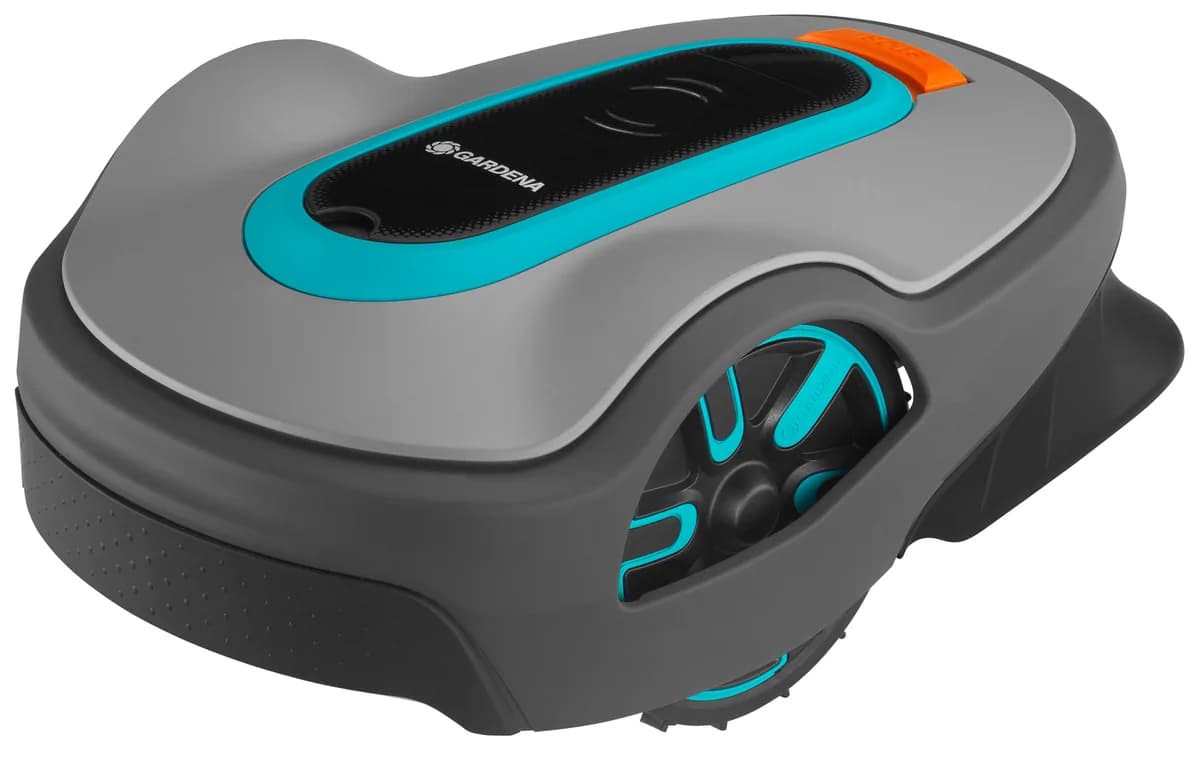
Gardena
Gardena SILENO life
The SILENO life 750 is a wider cut than the city and minimo: an 8.7 in disc against the 6.3 in on the city and minimo, rated for 8,100 sq ft and 35% slopes, at about $715 on Amazon for the US-spec 15101-41. The larger deck is the whole argument. It covers the same 65-minute mowing cycle and 60-minute charge as the city but clears a lawn in fewer passes, and at 58 dB it is still quiet enough to run at night. Setup is boundary wire plus guide wire with CorridorCut for gaps down to about 24 in, SensorControl scales the schedule to growth, it mows in the rain by design (frost sensor only), and it rinses off with a hose. Anti-theft steps up from the city to a PIN plus an alarm. What has not changed is the 0.8 to 2.0 in cut range, which rules out fescue and bluegrass at a healthy height, and the Bluetooth-only app, which means walking within about 33 ft to change anything and no alerts when it gets stuck. Obstacle handling is a bumper unless you add Gardena's optional radar. Gardena's international site lists the life as a legacy model, and the 1000 size (15102-20, 10,800 sq ft) has no published US price, so treat the 750 as the last of the line. The $599 SILENO flex cuts wider still at 10 in and climbs steeper ground, so the life is the pick only when its lower price or quieter 58 dB matters more.
Best for Warm-season lawns up to about 0.2 acre that want a wide-cutting, quiet wired Gardena and can live with a Bluetooth-only app.
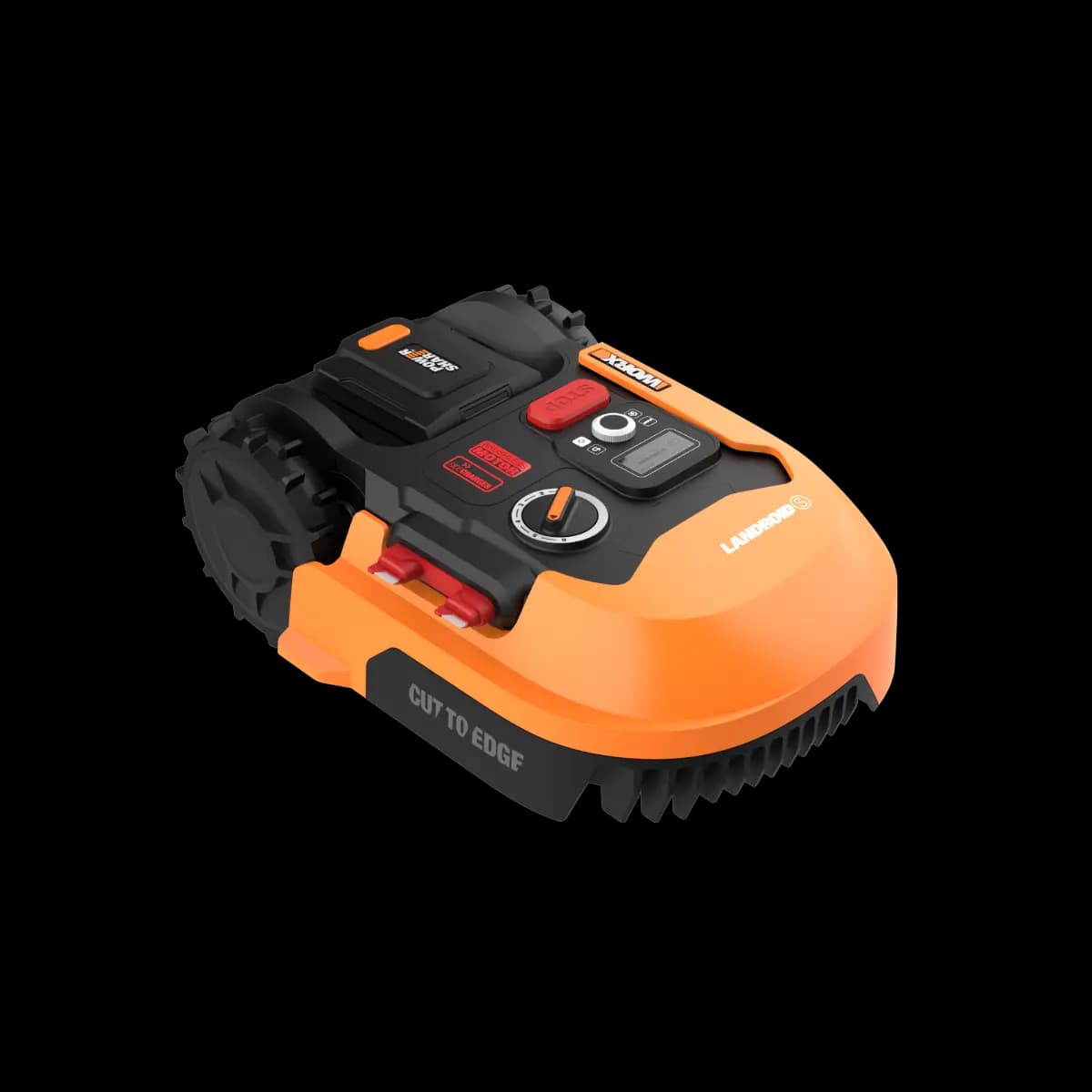
The Landroid S is the entry point to the Worx wired family: the same bump-and-turn platform as the M and L, shrunk to a 7.1 in three-blade disc, a 20V 2.0Ah Power Share pack and a 1/8 acre (5,445 sq ft) rating. Worx lists it at $999.99, which is hard to justify next to its own M at $1,199.99 list, but the street story is different - it has carried a $749.99 list at Amazon and Woot, open-box units have cleared around $630, and third-party reviewers quote it near $600, so treat the Worx price as a ceiling. The box is the full install kit: 820 ft of wire and 340 pegs, which is far more wire than an eighth-acre lawn needs. Once pegged it behaves like its siblings - AIA navigation through narrow passages without a guide wire, the off-center Cut to Edge blade, a self-leveling floating disc, a rain sensor, and 59 dB running. The trade-offs are a 30% slope ceiling, a 2.4 in maximum cut height that is too low for tall fescue, a small 2.0Ah pack that means frequent dock trips, and no obstacle sensing beyond the bumper. Against the Gardena SILENO flex at $599 with a 35% rating you pay more for the Worx app and battery ecosystem; against a Segway Navimow i105N at $799 you keep the wire but skip the RTK antenna.
Best for Small, flat lawns under an eighth of an acre whose owner already has Worx 20V tools and will buy on a street-price deal rather than at list.
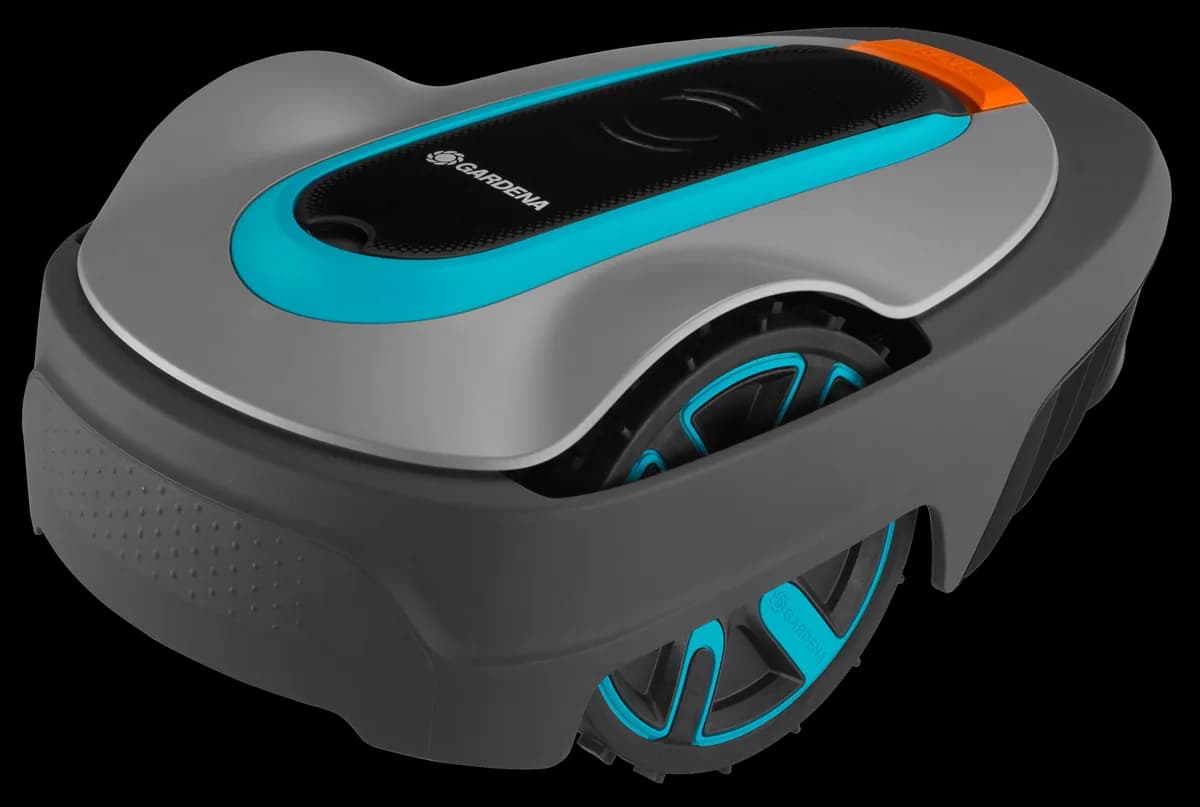
Gardena
Gardena SILENO city
The SILENO city is the small-lawn Gardena that Amazon has sold in volume for years, and the US-spec -41 revision is still listed there in two sizes: the 250 for 2,700 sq ft at about $611 and the 500 for 5,400 sq ft at about $821. Both share one body: a 6.3 in three-blade disc, a 0.8 to 2.0 in cut range, 35% slope rating, 57 dB, and roughly 65 minutes of mowing per 75-minute charge; the 500 simply carries a larger 18V pack and a longer schedule. Setup is a boundary wire plus a single guide wire, with CorridorCut for passages down to about 24 in and SensorControl that adjusts run time to how fast the grass is growing. It mows in the rain by design (there is a frost sensor, not a rain sensor), is hose-washable, and its 16 lb weight makes it easy to carry. The catches are the ones Gardena's whole wired line shares: the app is Bluetooth-only with about a 33 ft reach, so there is no remote start or alerts; obstacle handling is a bumper; and the 2 in maximum cut is too short for fescue or bluegrass, which points it at warm-season lawns. Gardena's international site now files the city as a legacy model, and the $599 SILENO flex cataloged here covers 8,600 sq ft with a 1 to 4 in cut range for less than the city 500, so the 250 at $611 is the only trim that still makes sense on price, and only if you want the quietest wired mower for a tiny yard. Against the Worx Landroid S you get less noise and a guide wire but lose Wi-Fi control.
Best for Small warm-season lawns under an eighth of an acre where a quiet, wired Gardena at about $611 beats app features.
Gardena
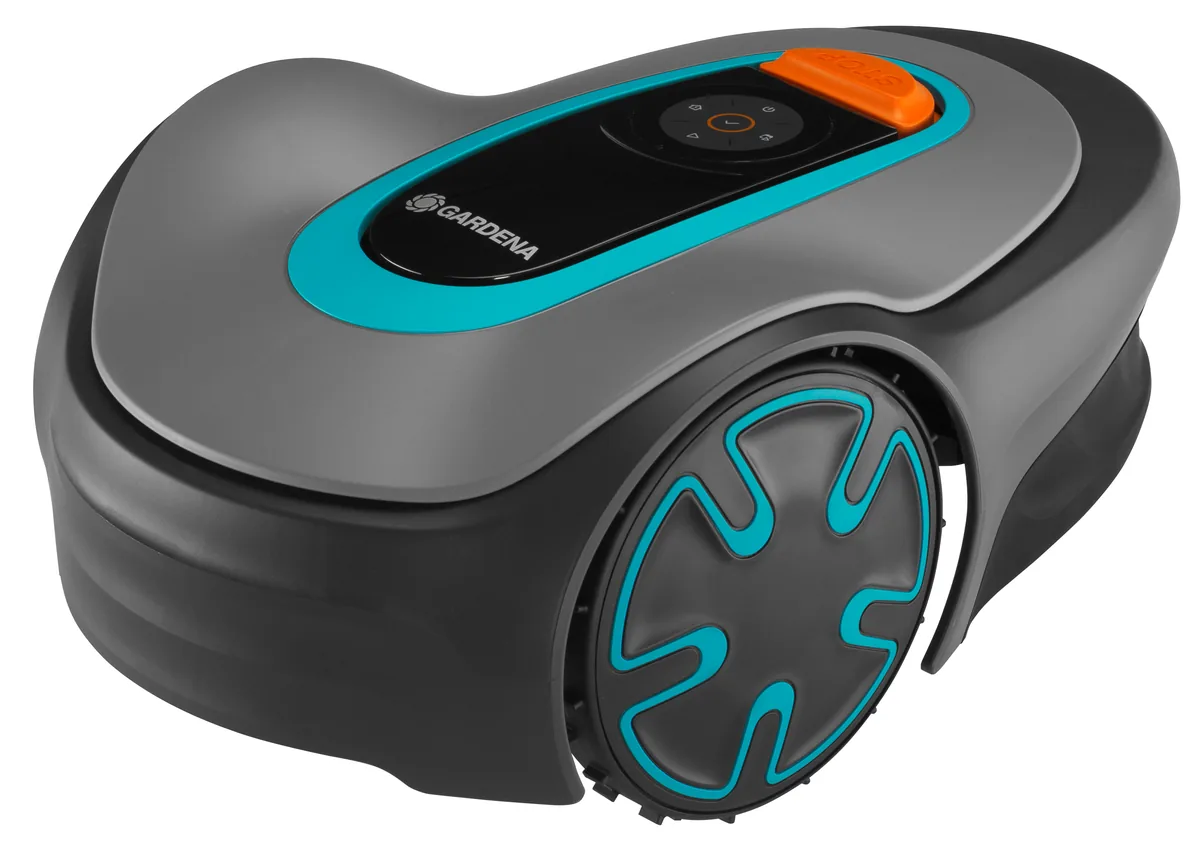
Gardena SILENO minimo
The SILENO minimo is Gardena's smallest, quietest mower and, at about $530 on Amazon, the cheapest way to get a European-built robot onto a tiny lawn. It is rated for 2,700 sq ft, climbs 35%, and at 57 dB is about as loud as a refrigerator, so nobody will notice it running at 2 am. Setup is boundary wire and a single guide wire; CorridorCut lets it pass through gaps down to about 24 in, and SensorControl adjusts how often it mows to how fast the grass is growing. It runs about 65 minutes per cycle on its 18V pack and recharges in 75. Now the limits: cut height maxes out at 1.8 in, which is too short for fescue or bluegrass and really aims it at Bermuda, zoysia and other warm-season grass; the app is Bluetooth-only with a 33 ft range, so no remote start or alerts; there is no rain sensor (it simply mows wet), no edge mode, and obstacle handling is a bumper. Gardena has shifted its US lineup to the SILENO flex ($599, 1 to 4 in cut, 8,600 sq ft), and the minimo appears to be selling down remaining Amazon stock, so treat it as a closeout buy rather than a long-term platform. Against a Worx Landroid S it is quieter and cheaper but far less connected. Best for a postage-stamp warm-season lawn where silence and price beat features.
Best for Tiny warm-season lawns where a near-silent, sub-$600 wired mower is more important than app features or a tall cut.