Best LiDAR Robot Mowers
LiDAR mowers build a 3D map of the yard with a spinning laser, the same idea as a high-end robot vacuum scaled up to lawn size. Because they position against the map rather than satellites, they work under dense tree cover, along walls, and at night, and there is no reference antenna to mount. Obstacle detection is the other win: a LiDAR mower sees a lawn chair, a dog, and a hose in 3D rather than guessing from a bumper. The class is young, so expect firmware churn, and the sensor adds cost and a spinning part to keep clean. Where the yard is shaded enough that RTK struggles and the budget rules out an installer for wire, this is the category to shortlist first.
MowerRanker tracks 9 LiDAR mowers from 5 brands, priced $1,499 to $3,199. The highest-rated of them is the Hookii Neomow X at 4.92★, and the most affordable is the Ecovacs GOAT O1000 LiDAR Pro at ~$1,499. Compare them all below.
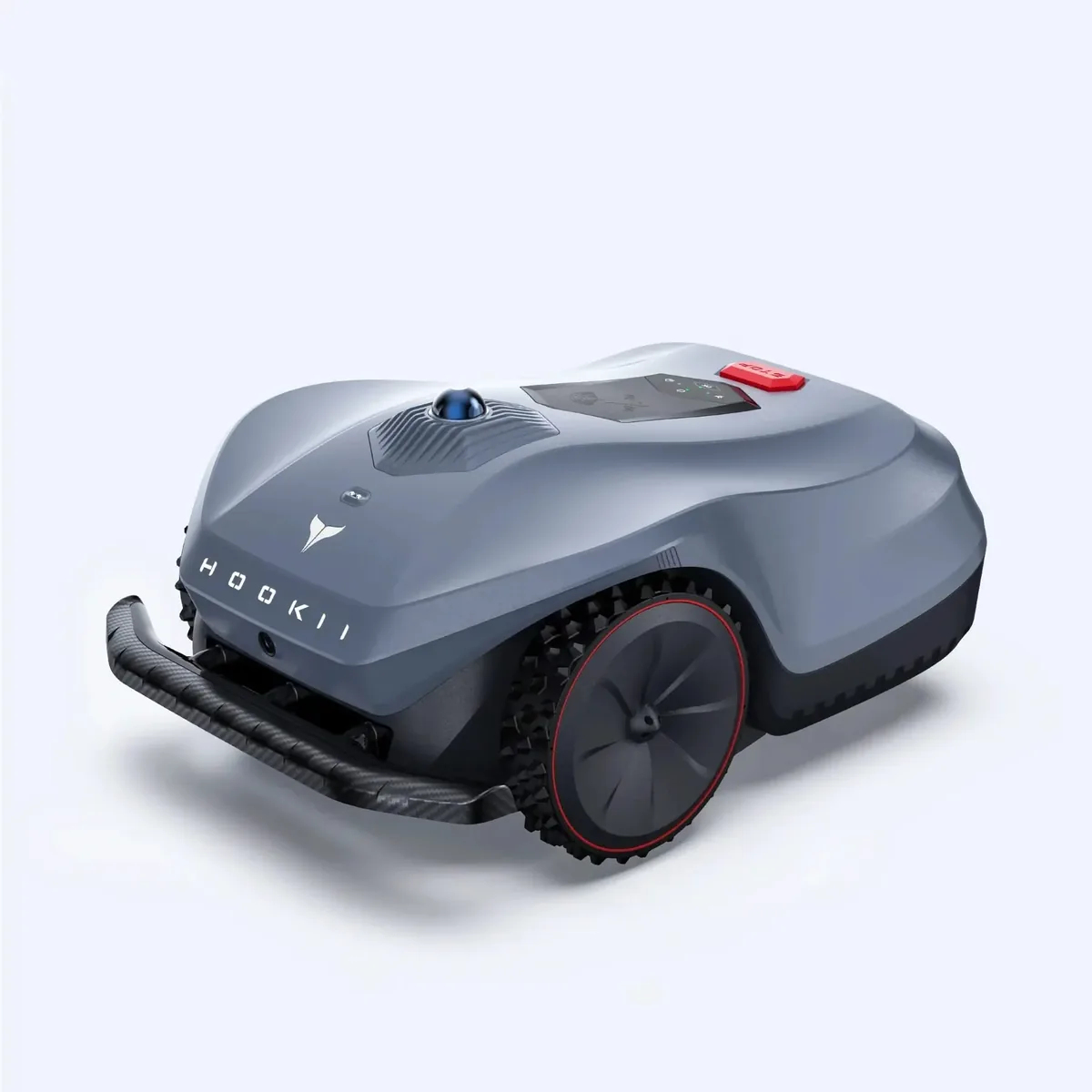
Hookii
Hookii Neomow X
The Neomow X was one of the first consumer mowers to put a spinning 3D LiDAR on the roof, the same idea Dreame and Ecovacs later adopted, and it still holds up: no boundary wire, no RTK antenna to find sky for, and it navigates under dense trees and at night because it does not depend on satellites. You drive it around the lawn edge once (about 45 minutes for a quarter acre per The Gadgeteer), then it mows in tidy parallel lines at under 60 dB. Three trims share one body: the X LE (0.37 acre, $1,799), the X (1 acre, $2,599) and the 17.5 Ah X Pro (1.5 acres, $2,899), and a newer Neomow X2 line with triple-camera auto-mapping now sits alongside it at similar prices. Hands-on reviewers at SmartHomeScene, The Gadgeteer and EasyLawnMowing all liked the cut and the app, and early owners on Hookii's site say it copes with clay, holes and dogs without getting stuck. Known weaknesses: it leaves about 2 inches uncut at hard edges, it is front-wheel drive so it slips on damp slopes well under its 45 percent rating, docking contacts can be finicky on uneven turf, and the camera half of the obstacle system is weaker in the dark. North American stock comes and goes, so check availability before you fall in love. If your yard is tree-covered and RTK mowers keep losing signal, this is the fix; if you want the tightest edges, look at a Segway Navimow with its edge blade.
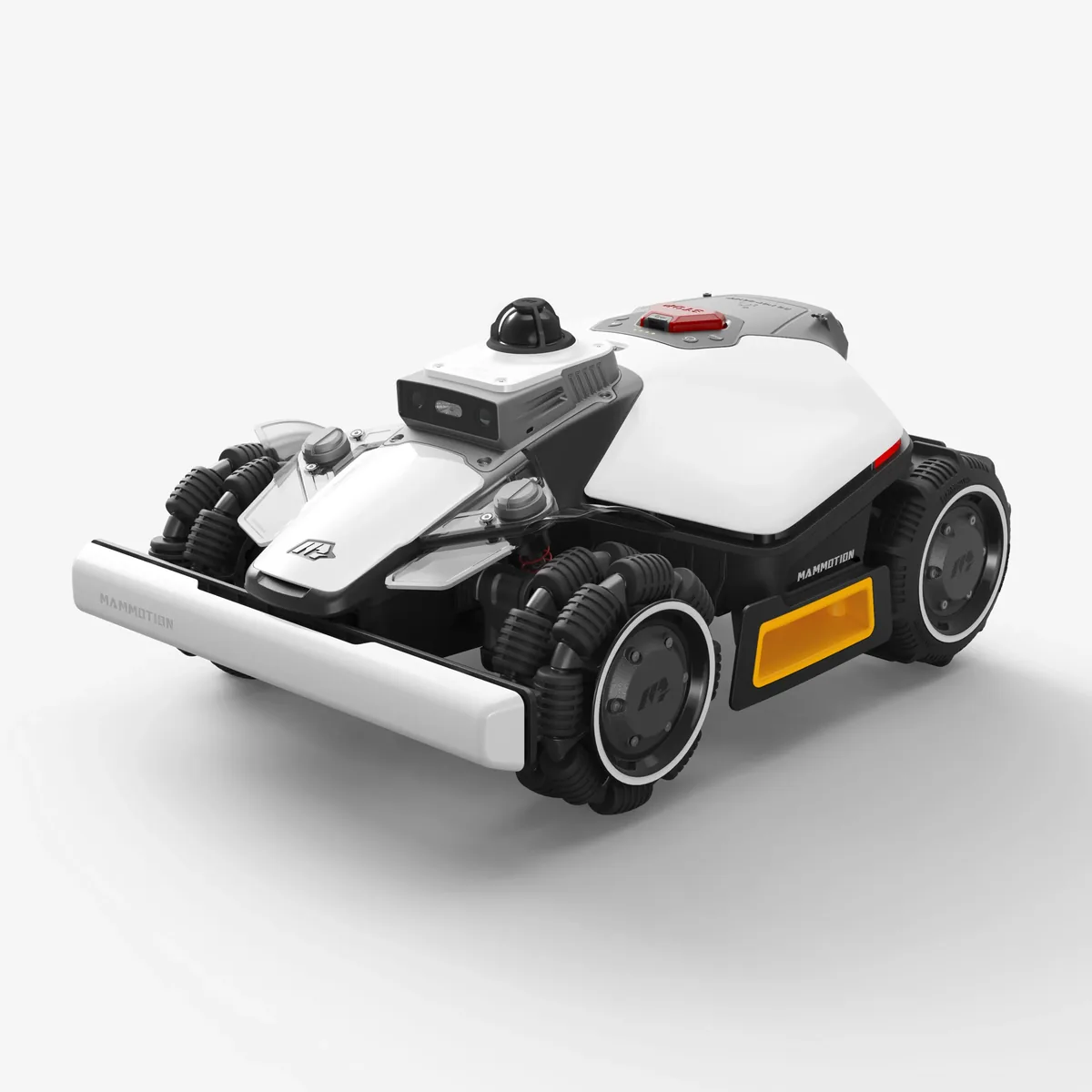
Mammotion
Mammotion Luba mini 2 AWD
Think of the Luba mini 2 AWD as the Luba 3's tech shrunk to fit a third-acre suburban lot. It replaced the original Luba mini AWD in spring 2026 (that one is now out of stock at Mammotion) and swapped NetRTK-only positioning for a 360-degree LiDAR dome plus two AI cameras, so it no longer cares whether your yard has open sky. It keeps the four hub motors that let it climb 80 percent grades, and it adds something the big Lubas lack: a second, fixed 4.7 inch edge disc that trims within about 2 inches of walls and beds, which owners say cut their string-trimmer time way down. The main deck is only 7.8 inches, so it is slower per pass than a Luba 3, but 150 minutes of runtime covers a 0.37 acre lawn in a session or two. Owners who came from wire mowers rave about the setup and the finish, and the complaints are the fixed 2.6 inch height of the edge disc, a learning curve on multi-zone mapping, and wheels that occasionally spin on a wet hill. In the US only the 1500 size is sold, with the H version (2.2 to 4.0 inch cut) at $1,699 on sale. Compared with a Segway Navimow i110 you pay more but get AWD and LiDAR; compared with a Yuka mini 2 you get hill-climbing traction. Best for hilly, obstacle-heavy yards up to 0.37 acres.
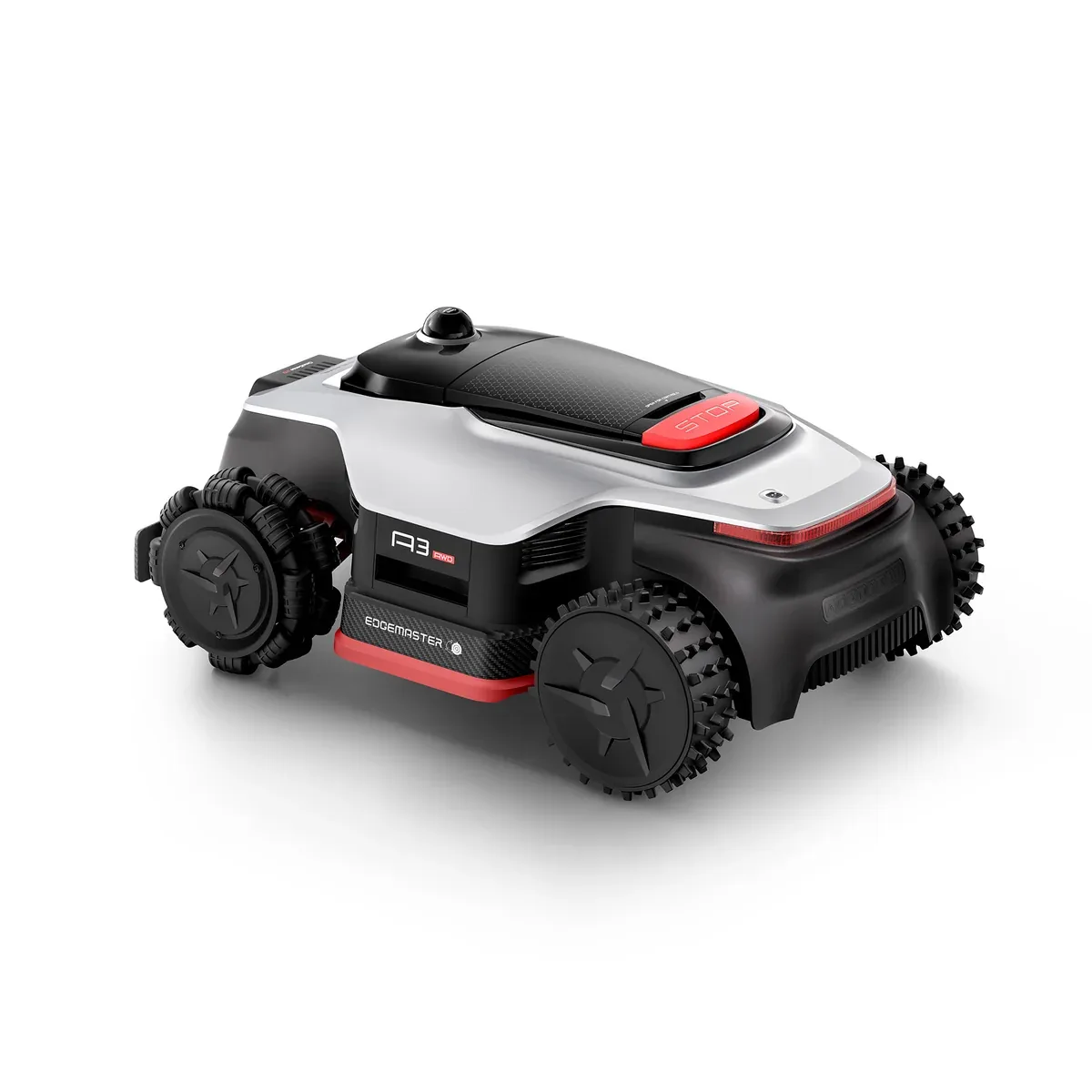
Dreame
Dreame A3 AWD Pro
The A3 AWD Pro is the mower Dreame wants you to think of as a Mammotion Luba 2 AWD without the RTK antenna. OmniSense 3.0 pairs a roof-mounted 360-degree 3D LiDAR with binocular AI cameras, so it maps most yards on its own and keeps working under trees and beside buildings where satellite mowers lose signal. Four hub motors, omni front wheels and knobby rear tires carry it up 80% (38.7-degree) slopes and over 2.2-inch bumps, and a 15.8-inch dual-disc deck with the EdgeMaster 2.0 sliding blade gets within about 1.2 inches of borders. The 2500, 3500 and 5000 versions share one body and differ in battery (5, 7.5 and 10 Ah) and coverage; the 2500 is regularly $2,249.99 on Dreame's site against a $3,099.99 list. Gizmodo's 3.5/5 review and Android Authority's hands-on both loved the slope handling and the setup but flagged unpolished software, spotty Bluetooth pairing and, more seriously, AWD spin-turns that carve ruts and a bald patch near the dock on uneven ground. Owners on Dreame's store (4.4 stars) and Amazon echo the split: some say it handles a 45% hill and flower beds better than anything they have tried, others report a stuck rear wheel, a dead PIN dial or missed strips out of the box. It is a big, heavy machine at 52.7 lb. Best for steep, complex lots from half an acre up where an RTK antenna is not an option and you can accept some early-adopter friction.
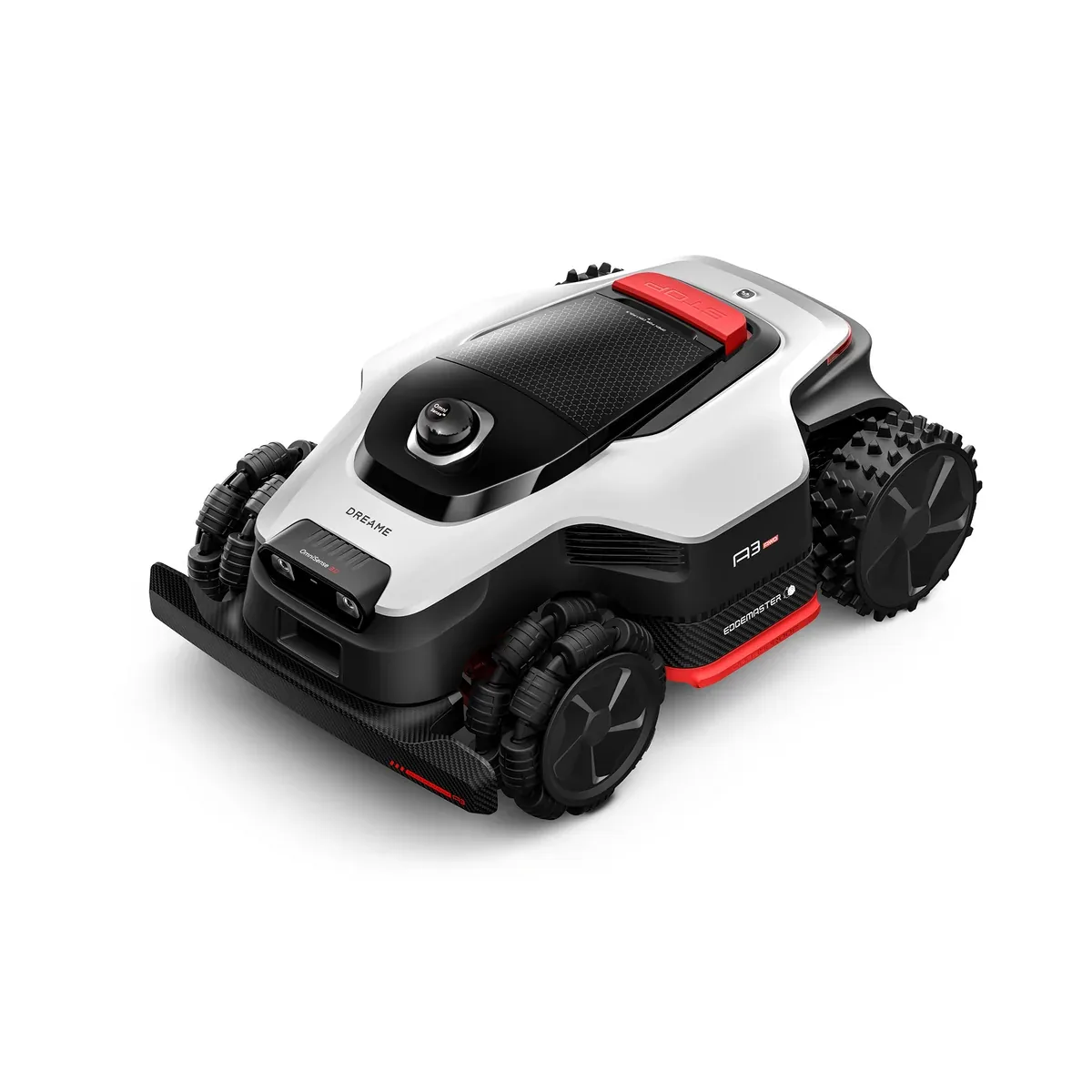
Dreame
Dreame A3 AWD
The A3 AWD is Dreame's real entry into the US market after the A1, A1 Pro and A2 stayed in Europe, and it is the cheapest all-wheel-drive, no-RTK mower you can buy from a major brand. It shares the OmniSense 3.0 stack with the A3 AWD Pro: a 360-degree 3D LiDAR on the hood plus binocular AI cameras that map the yard on their own and recognize about 300 obstacle types. Four hub motors and knobby rear tires give it an 80% (38.7-degree) slope rating that leaves rear-drive rivals like the Ecovacs GOAT O1000 LiDAR Pro and Segway Navimow i110N far behind. It comes as a 1000 (0.25 acre, $1,599.99 on sale from $1,999.99) or 2000 (0.5 acre, $1,899.99) that differ only in battery and coverage. The trade-off versus the Pro is a single 7.9-inch disc rather than dual 15.8-inch discs, so it covers ground slowly, and the EdgeMaster sliding disc leaves under 1.9 inches at borders instead of 1.2. Reviews on Dreame's store are strong (4.3 stars) and owners praise the AWD for not getting stuck in bumpy yards, but Amazon owners are harsher: a weed a few inches tall can register as an obstacle, mapping takes several tries, the dock tower can pop apart, and support has been slow. Built-in 4G with three free years, an AirTag slot and a 3-year warranty sweeten it. Best for hilly or lumpy lots under half an acre where slope matters more than speed.
Mammotion
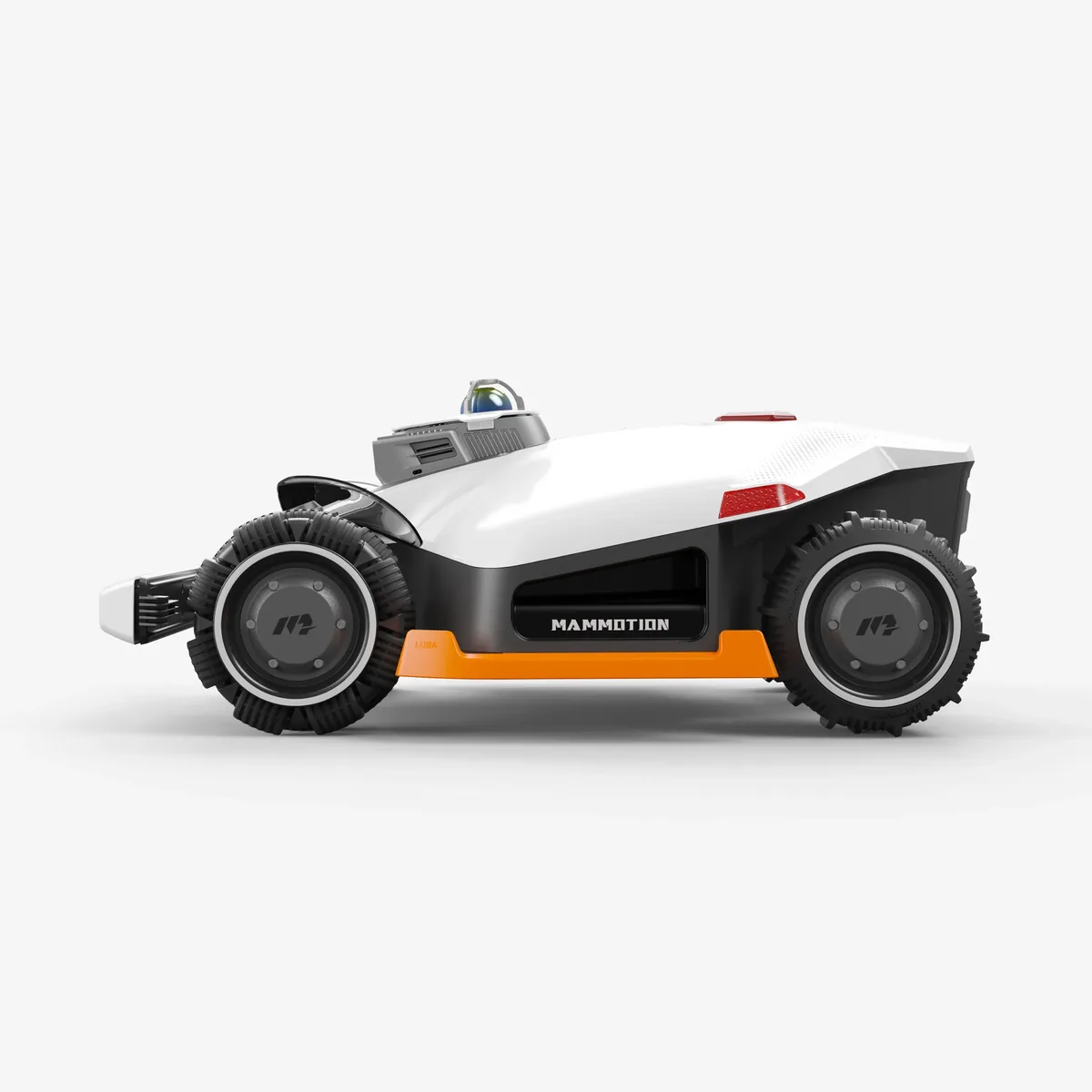
Mammotion Luba 3 AWD
The Luba 3 AWD is Mammotion's 2026 flagship and the mower that finally fixed the Luba's biggest headache: there is no RTK antenna to mount. It positions with a 360-degree LiDAR dome, two AI cameras and free NetRTK corrections pulled over Wi-Fi or its built-in 4G, and owners on wooded lots say it maps and mows under tree cover where the Luba 2 used to wander. The rest is familiar Luba: four hub motors and omni wheels that climb 80 percent slopes, a 15.7 inch dual-disc deck with 165 W motors on the 3000 and 5000, and up to 50 zones. The 3000 is the sweet spot at $2,109 on sale (it is oddly cheaper than the 1500), and it comes in a 2.2 to 4.0 inch high-cut or 1.0 to 2.7 inch standard deck. Owners praise the setup and the app, and the common gripes are learning menus that keep changing with OTA updates, a 1.25 acre map cap on the 5000, and the occasional unit that dies after a firmware push with slow support. Against the Roborock RockMow X1 LiDAR it costs less and cuts wider; against a Husqvarna 450X NERA it is a fraction of the price with no dealer install. Best for half-acre and larger lawns with hills, trees and several zones.
Ecovacs
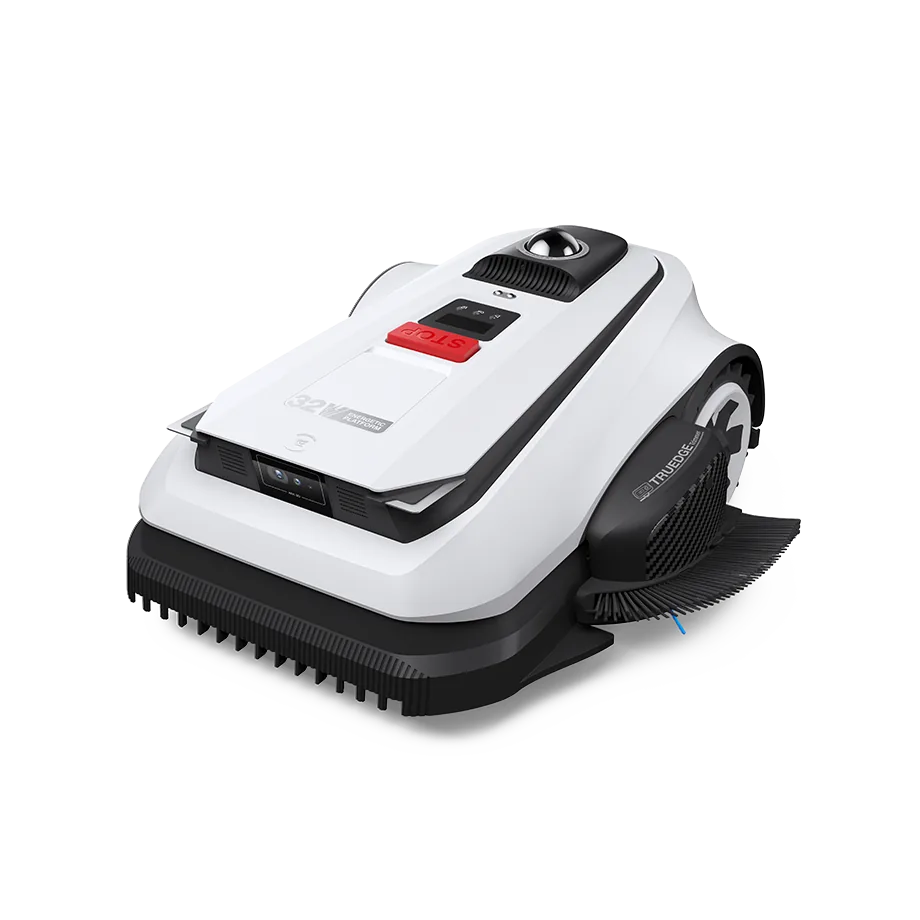
Ecovacs GOAT A3000 LiDAR Pro
The GOAT A3000 LiDAR Pro is the mower Ecovacs points at when someone asks for a whole-yard robot: a 7.5 Ah, 32V battery good for about 160 minutes per charge, a 13-inch dual-disc deck, 50% slopes, and a built-in TruEdge string trimmer that swings out to cut flush against fences, beds and walls. Navigation is a 360-degree LiDAR plus 3D ToF, so there is no antenna and it maps a typical lot in about five minutes, holding 2 cm accuracy under trees where RTK mowers wander. It launched in February 2026 at $2,499.99, which is $500 less than the trimmer-less 2025 A3000 LiDAR it replaced. Reviewers at How-To Geek, BGR and Freshly Charged all landed in the same place: excellent cut quality and the trimmer removes 75-90% of hand edging, but it is loud when the trimmer runs (82 dBA), it treats grass over about 8 inches as an obstacle, and it struggles with curved borders and tall tufts. Owners moving from a first-generation Mammotion Luba praise how easy LiDAR setup is versus placing an RTK antenna, but note that stripes default to true north until you fiddle with per-zone angles, and that the trimmer will not run in auto mode without a dedicated edging session. Against the Dreame A3 AWD Pro it is rear-wheel drive with a lower slope rating; against the Mammotion Luba 2 it wins on edging. Best for well-kept suburban lawns up to 3/4 acre with mostly straight borders.
Ecovacs
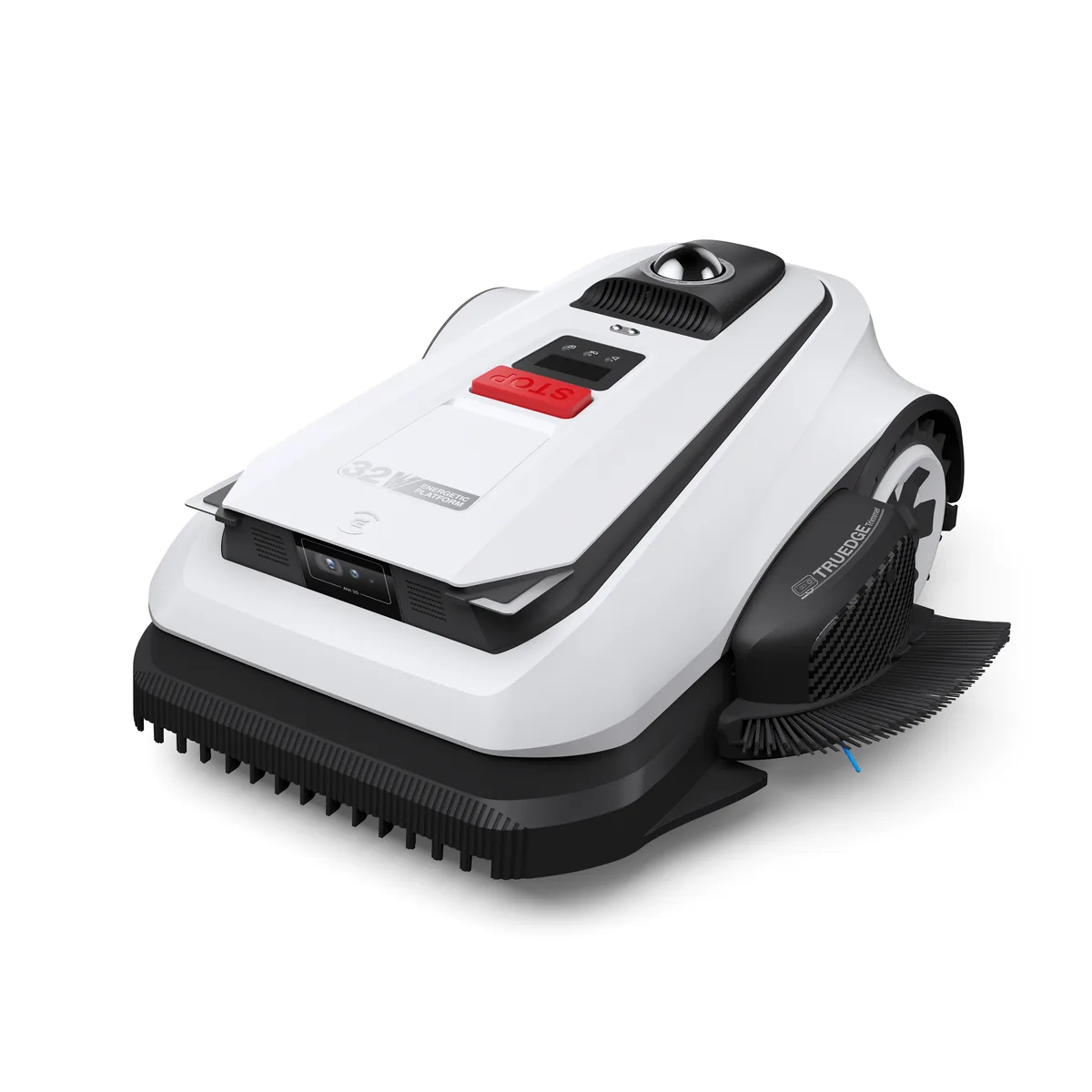
Ecovacs GOAT A2000 LiDAR Pro
The GOAT A2000 LiDAR Pro is the mid-size member of Ecovacs' 2026 LiDAR trio: the same HoloScope 360 spinning LiDAR and 3D ToF mapping as the A3000 LiDAR Pro, the same 32V dual-disc deck cutting a 12.96-inch path, and the same left-side TruEdge string trimmer, but with a smaller 3 Ah battery aimed at yards up to about half an acre. It maps in minutes without an RTK antenna, holds 2 cm positioning under trees, and lets you split, merge and delete zones in the app. Owners on Amazon are mostly enthusiastic: one who works with warehouse robots said setup took 30 minutes and 1,500 sq ft used about 40% of the battery, and most like the striped finish and the fact that the trimmer actually handles fence lines. The gripes are familiar Ecovacs ones. The trimmer only works on clockwise passes, it cannot reach into tight or triangular corners, path edges still need a hand trimmer, and reviewers at BTTR and EFTM watched the wheels scuff dirt around fence posts. Runtime is a modest 50 minutes with a 50-minute recharge, so big lawns mean several cycles. At $1,999.99 it sits right on top of the Segway Navimow X330 and Mammotion Luba Mini AWD; pick the A2000 if edge trimming matters more to you than all-wheel drive, and step up to the A3000 LiDAR Pro if your lawn is closer to 3/4 acre.
Roborock
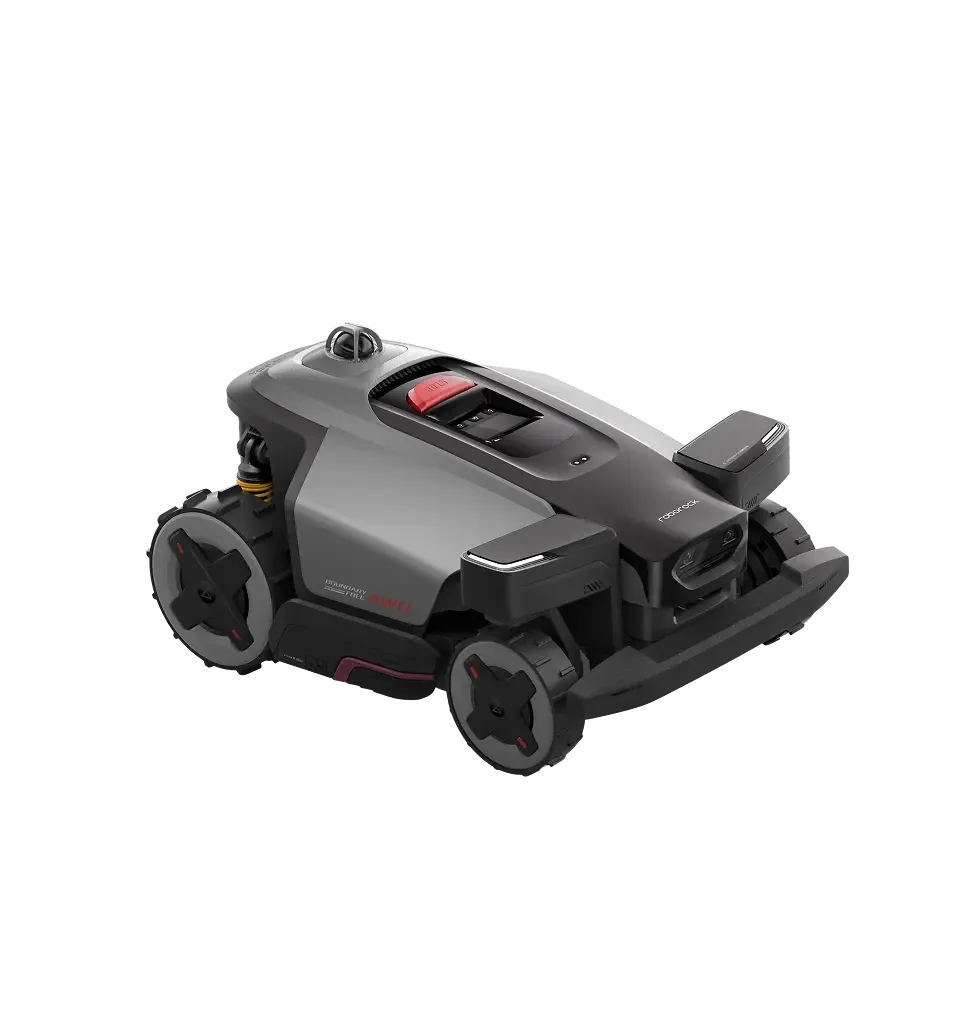
Roborock RockMow X1 LiDAR
The RockMow X1 LiDAR (model X120H) is the RockMow X1's AWD chassis with a spinning LiDAR dome on top and no RTK antenna in the box. That is the whole pitch: if your lawn is hemmed in by trees, fences and a two-story house, satellite RTK mowers spend half their time hunting for a fix, whereas this one builds a 3D map of the yard and mows in straight, systematic lines regardless of sky. It launched in the US in July 2026 at $3,199 list, with a $2,499 opening deal that has since ended, and it is rated for 0.49 acres, 80 percent slopes and 3.1 inch obstacles with the same 9.5 inch six-blade deck and 1.6 to 3.5 inch app-set height as its siblings. Lab reviewers praised the navigation, the quiet motor and a clean cut, but found the obstacle avoidance weak (it drove straight over hoses and balls that cheaper mowers dodged), the AI auto-mapping non-functional at launch, and edge results disappointing even with the $150 PreciEdge module because the software keeps a wide margin. It costs more than a Mammotion Luba 3 AWD 3000, which has LiDAR, NetRTK and a wider deck, and about the same as a Dreame A2 with far less edge precision. Best for half-acre lawns with terrible sky view and real slopes, for buyers who trust Roborock to finish the software.
Ecovacs
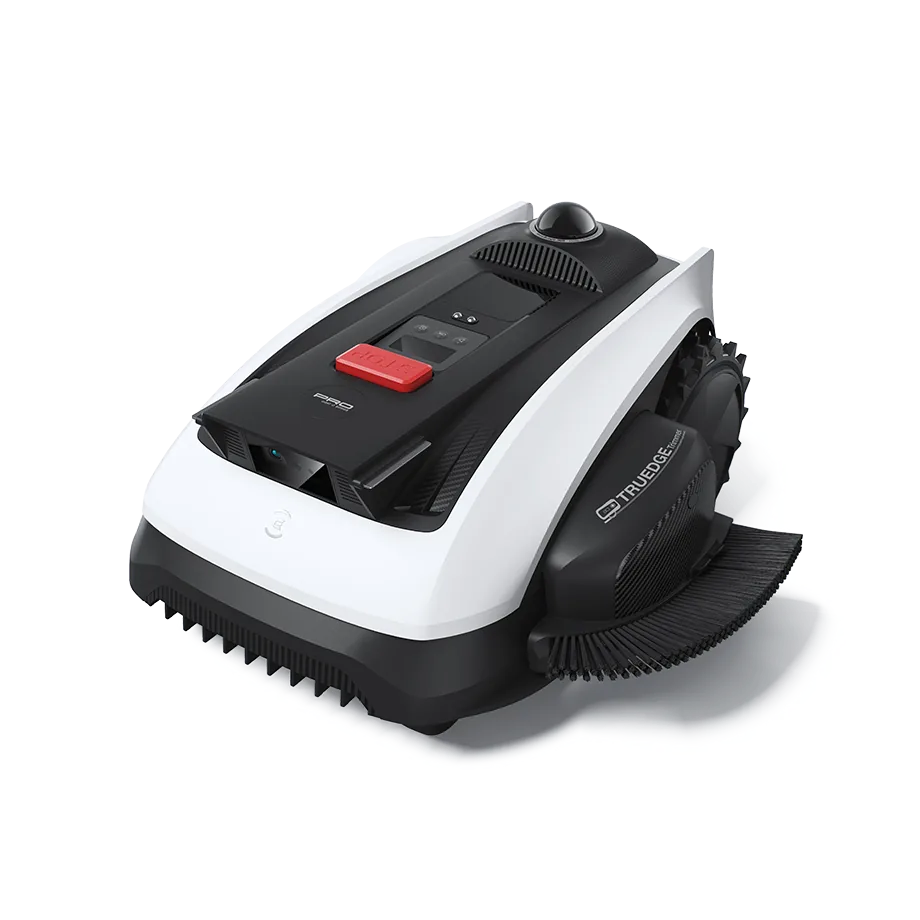
Ecovacs GOAT O1000 LiDAR Pro
The GOAT O1000 LiDAR Pro is the 2026 replacement for the O1000 RTK's antenna: a spinning 360-degree LiDAR on the hood plus a 3D ToF sensor build a 3D map of your yard with no satellite station, so it works under tree canopy and beside walls where RTK mowers lose lock. Ecovacs also bolted on its TruEdge string trimmer, which swings out on the left side to buzz grass up to 3.54 inches past the blade disc along fences and beds. That trimmer is the big reason to pay $1,499.99 instead of $999.99 for the O1000 RTK, and it is also the loud part: 61 dBA mowing, 81 dBA when the trimmer spins. The 5.2 Ah battery gives about 90 minutes per charge with a 70-minute recharge, cutting an 8.66-inch path at 1.18 to 3.15 inches. Early owners say the blades are whisper quiet, that it copes with bumpy vole-ridden lawns and exposed roots, and that a 3,700 sq ft back yard takes two charges on the gentle speed setting. The app has a learning curve and you will want the optional garage if the dock sits in full sun. Against the Segway Navimow i110N it costs more but skips the antenna and adds edge trimming; against the Dreame A3 AWD 1000 it is cheaper but rear-wheel drive and limited to 45% slopes. Best for shaded 1/4-acre lots where an RTK antenna would struggle.