Mammotion
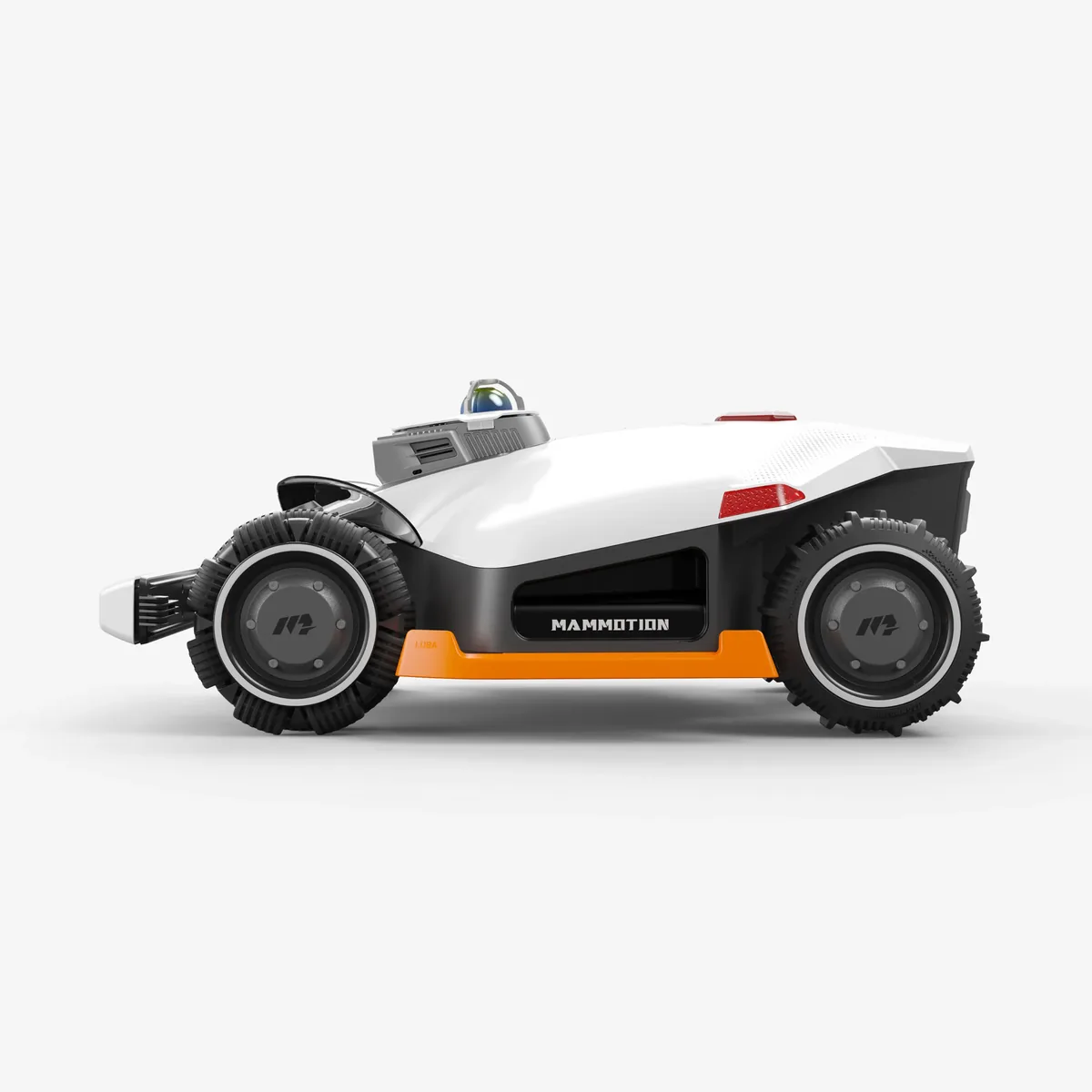
Mammotion Luba 3 AWD
The Luba 3 AWD is Mammotion's 2026 flagship and the mower that finally fixed the Luba's biggest headache: there is no RTK antenna to mount. It positions with a 360-degree LiDAR dome, two AI cameras and free NetRTK corrections pulled over Wi-Fi or its built-in 4G, and owners on wooded lots say it maps and mows under tree cover where the Luba 2 used to wander. The rest is familiar Luba: four hub motors and omni wheels that climb 80 percent slopes, a 15.7 inch dual-disc deck with 165 W motors on the 3000 and 5000, and up to 50 zones. The 3000 is the sweet spot at $2,109 on sale (it is oddly cheaper than the 1500), and it comes in a 2.2 to 4.0 inch high-cut or 1.0 to 2.7 inch standard deck. Owners praise the setup and the app, and the common gripes are learning menus that keep changing with OTA updates, a 1.25 acre map cap on the 5000, and the occasional unit that dies after a firmware push with slow support. Against the Roborock RockMow X1 LiDAR it costs less and cuts wider; against a Husqvarna 450X NERA it is a fraction of the price with no dealer install. Best for half-acre and larger lawns with hills, trees and several zones.
We may earn a commission. Price and availability on Amazon may differ.
Coverage versions
Mammotion sells the Mammotion Luba 3 AWD as one machine with several coverage ratings. The hardware is the same; the rated area (and usually the battery) changes with the version.
| Version | Rated area | Approx. price |
|---|---|---|
| 1500, LUBA 3 AWD 1500H | 16,146 sq ft (16,146 sq ft) | ~$2,399 |
| 3000, LUBA 3 AWD 3000H | 0.74 acres (32,292 sq ft) | ~$2,109 |
| 5000, LUBA 3 AWD 5000 | 1.24 acres (53,820 sq ft) | ~$3,299 |
Specifications
How it navigates
Tri-Fusion: 360-degree LiDAR plus dual AI cameras plus free NetRTK over Wi-Fi or 4G, so there is no reference station to mount. Drive the perimeter in the app or let AI auto-map, then edit borders and zones.
Highlights
Pros
- ✓No RTK antenna to mount; NetRTK plus LiDAR keeps position under trees and next to the house
- ✓Owners describe setup and mapping as easy, with a 4-hour cycle on a fifth-acre and clean edges
- ✓AWD hub motors and omni wheels pull it up steep, damp grades that two-wheel mowers spin on
- ✓Deep app: DropMow for unmapped areas, border editing, obstacle-free zones and ten saved maps
- ✓Built-in 4G with 3 years of service and a 3-year warranty
Cons
- ✗Frequent firmware updates change menus, and a few owners report units bricking after a push with slow support
- ✗5000 owners hit a 1.25 acre mapping cap even though the mower could cover more per week
- ✗Cannot resume an interrupted task from where it stopped, a feature the Luba 2 has
- ✗Base station roof and cleaning stand are extra, and the LiDAR dome is vulnerable if it flips
Owner Insightssummarized from owner forums and retailer reviews
The Luba 3 AWD is Mammotion's 2026 flagship for lawns up to 1.25 acres, and the first Luba that does not need a separate RTK antenna: 360-degree LiDAR, dual AI cameras and free NetRTK over Wi-Fi or 4G share positioning duties. Reviewers who ran it on chaotic, tree-covered, rooty or hilly yards came away calling it the best robot mower they have tested, and several are keeping their units. Early-owner sentiment is strong, with the caveats that Mammotion's app connectivity and the brand's uneven support record follow it.
Setup is under fifteen minutes of assembly plus a perimeter drive with the on-screen joystick; auto-mapping exists but was less precise than manual for most testers. Navigation is the reason to buy it: it kept straight stripes under canopy and along fences where RTK drifts, and even in an open field where LiDAR has little to see it held its lines on NetRTK alone. Cut quality from the 15.7 in dual deck is clean and striped, though skid-steer turns can tear damp turf. The app is deep and mostly excellent, but Wi-Fi and Bluetooth drops and slow refreshes are a recurring gripe.
Best for half-acre to 1.25-acre lawns with trees, slopes or buildings that break satellite fixes, where its $2,100 to $3,300 price buys a mower that simply works. Against the Luba 2 AWD X it drops the antenna hassle but cannot cut below 2.2 in or cover more than 1.25 acres; against the Segway Navimow X3 series it climbs steeper ground and includes cellular for three years. Deal-breakers: a sodden lawn that ruts under zero-turns, no Wi-Fi or cell coverage at the dock, or a need for a 1 in cut.
What owners like
- +No RTK antenna to site - plug the dock into power, and NetRTK over Wi-Fi or 4G plus LiDAR and cameras has it mowing within minutes; three years of 4G and NetRTK are included
- +Tri-Fusion positioning holds its line under heavy tree canopy, beside buildings and along tall fences where RTK-only mowers drift - reviewers called the results boringly reliable
- +AWD traction shrugged off wet long grass, a sheep field of mounds, tree roots and exposed rock; when blades stall on a steep tuft it pauses, reverses, retries, then routes around
- +The app was called the best of any brand by one tester - reverse over mapping mistakes, obstacle-free zones for dense growth, off-peak charging, an 80 percent dormant charge cap and detailed notifications
- +15.7 in twelve-blade deck leaves clean parallel stripes and mulch fine enough that a breeze clears it; a fifth-acre lawn finished in about four hours with one recharge
- +Quiet enough that one owner runs it at 3 AM without neighbor complaints - just a low mechanical hum
- +Obstacle recognition of 300-plus object types swerved around a dog bed at the last second, stopped for a person stepping in front and gave a farm dog a wide berth
- +Dandelions and tall weeds above the grass line get cut cleanly, and the 2.2 to 4.0 in range suits cool-season lawns kept at 3 in or more
Common complaints
- −Skid-steer zero-turns scuff and tear thinner, damp turf; one unit nearly augered off a slippery ledge mid-turn and had to be caught by hand
- −The front bumper came loose repeatedly during mapping for one reviewer, and the bumper in general is touchy on rough ground
- −App connectivity is the weak spot - Wi-Fi and Bluetooth drop, reopening the app can take a minute or two to refresh, and editing a map means re-driving the 41 lb mower rather than dragging a line
- −The dock ships without a roof; the garage add-on is about $200 on a machine that already costs $2,100 to $3,300
- −Manual perimeter mapping is tedious on big or complex yards, and AI auto-mapping was less accurate than doing it by hand for one tester
- −A physical security key is required - lose it and the mower is, in one reviewer's words, an ornamental patio paperweight
- −Runtime falls roughly 20 percent on 38-degree embankments or in total darkness with obstacles, and the range tops out at 1.25 acres, so 2-acre lawns still need the Luba 2 10000X
- −Mowing a second lawn with no mapped route to it is clumsy (DropMow or ramps), and brand-wide owner complaints about firmware regressions and support loops apply here too
Common Questions
Do I need to install an RTK reference station?
Does it really work under trees?
Will it damage my lawn when it turns?
How long does a mow take?
Luba 2 or Luba 3?
What is the app like day to day?
Mammotion Luba 3 AWD, head-to-head
Mowers people look at alongside it
More from Mammotion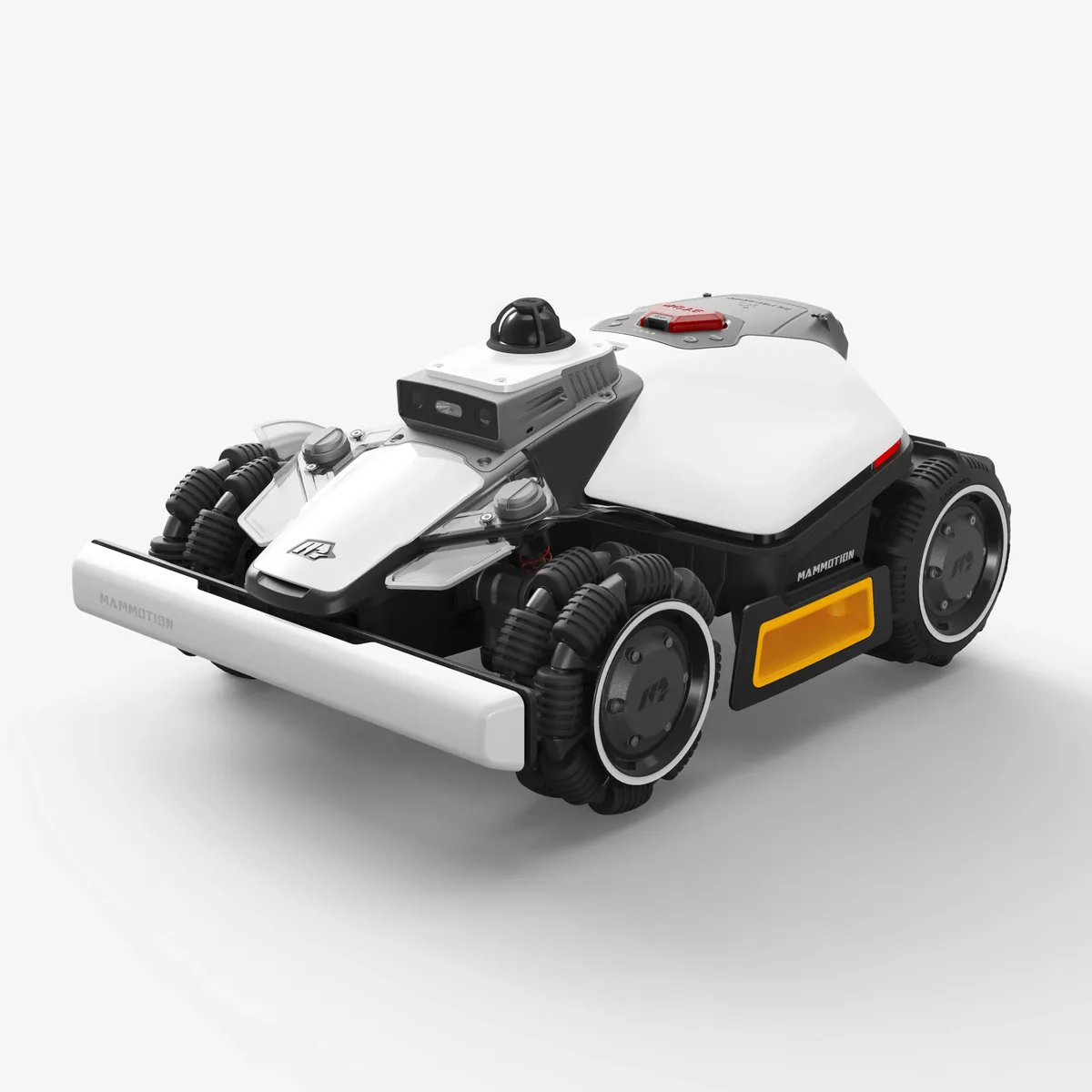
Mammotion
Mammotion Luba mini 2 AWD
Think of the Luba mini 2 AWD as the Luba 3's tech shrunk to fit a third-acre suburban lot. It replaced the original Luba mini AWD in spring 2026 (that one is now out of stock at Mammotion) and swapped NetRTK-only positioning for a 360-degree LiDAR dome plus two AI cameras, so it no longer cares whether your yard has open sky. It keeps the four hub motors that let it climb 80 percent grades, and it adds something the big Lubas lack: a second, fixed 4.7 inch edge disc that trims within about 2 inches of walls and beds, which owners say cut their string-trimmer time way down. The main deck is only 7.8 inches, so it is slower per pass than a Luba 3, but 150 minutes of runtime covers a 0.37 acre lawn in a session or two. Owners who came from wire mowers rave about the setup and the finish, and the complaints are the fixed 2.6 inch height of the edge disc, a learning curve on multi-zone mapping, and wheels that occasionally spin on a wet hill. In the US only the 1500 size is sold, with the H version (2.2 to 4.0 inch cut) at $1,699 on sale. Compared with a Segway Navimow i110 you pay more but get AWD and LiDAR; compared with a Yuka mini 2 you get hill-climbing traction. Best for hilly, obstacle-heavy yards up to 0.37 acres.
Best for Small to mid-size yards with steep spots, tree cover and lots of beds where a compact AWD mower with an edge disc pays off.
Mammotion
Mammotion YUKA mini 2 1000H
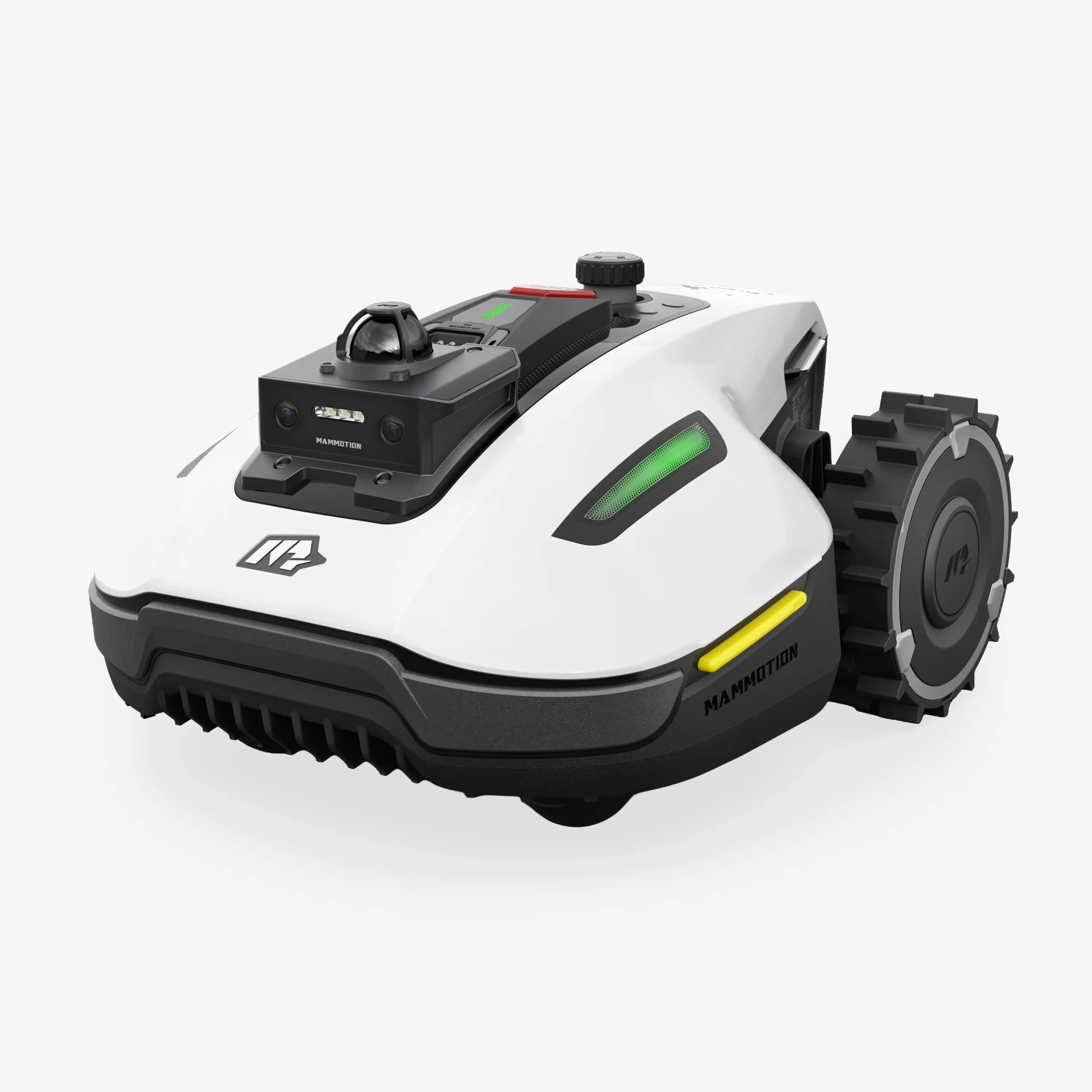
The YUKA mini 2 1000H is a different machine from the first-gen Yuka mini even though the body looks alike: the NetRTK-plus-camera setup is gone, replaced by a spinning 360 degree LiDAR puck with a 60 m range, two AI cameras and a 10 TOPS chip. That is why it costs $1,399 (list $1,559) against $749 for the original, and why it suits a different lawn. The first-gen unit leans on satellite corrections and wanders under trees and along fences; reviewers ran the mini 2 down a narrow fenced path with tree cover and it tracked straight with no drift, then cut so close to a stone border that almost nothing was left to trim. Otherwise it is a small rear-drive mower: a 7.5 inch disc with five pivoting blades, a 2.0 to 3.5 inch cut on the H version, 45 percent slopes, a 6.1 Ah battery good for about 2.5 hours and 2,690 sq ft per charge, and a 0.25 acre ceiling. Testers watched it slow for a football and steer around a glove lying flat, and it remembers strips it skipped and comes back. The knocks are minor but real: cut height is a manual dial rather than per-zone in the app, the 4G module is a separate purchase, added areas cannot be auto-mapped, and it was sold out on Mammotion's US store in late September 2026 while Amazon and Home Depot still stocked it. Next to the Sunseeker S4, the other quarter-acre LiDAR mower near this price, the Mammotion buys a longer LiDAR range and a 3-year warranty.
Best for Quarter-acre yards with tree cover, tall fences or several zones linked by narrow paths where a satellite-guided mower loses its place.
Mammotion
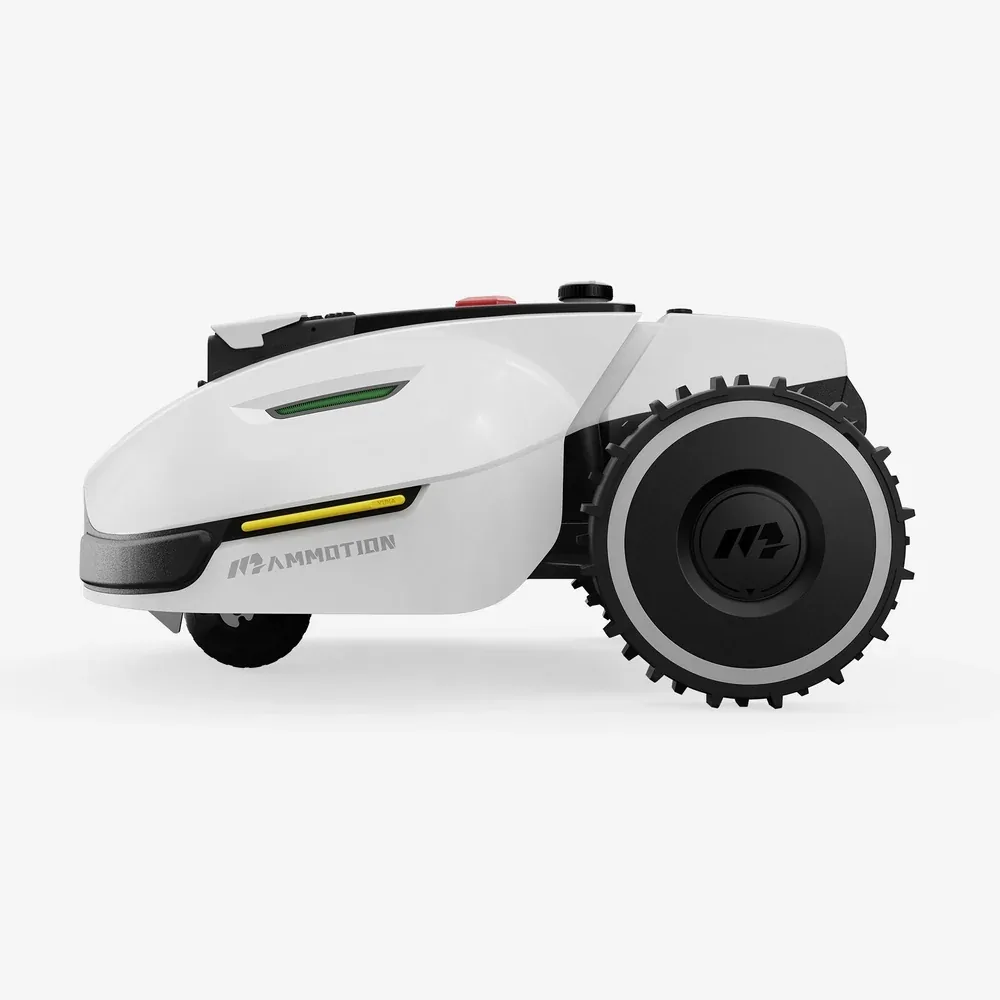
Mammotion Luba 2 AWD X
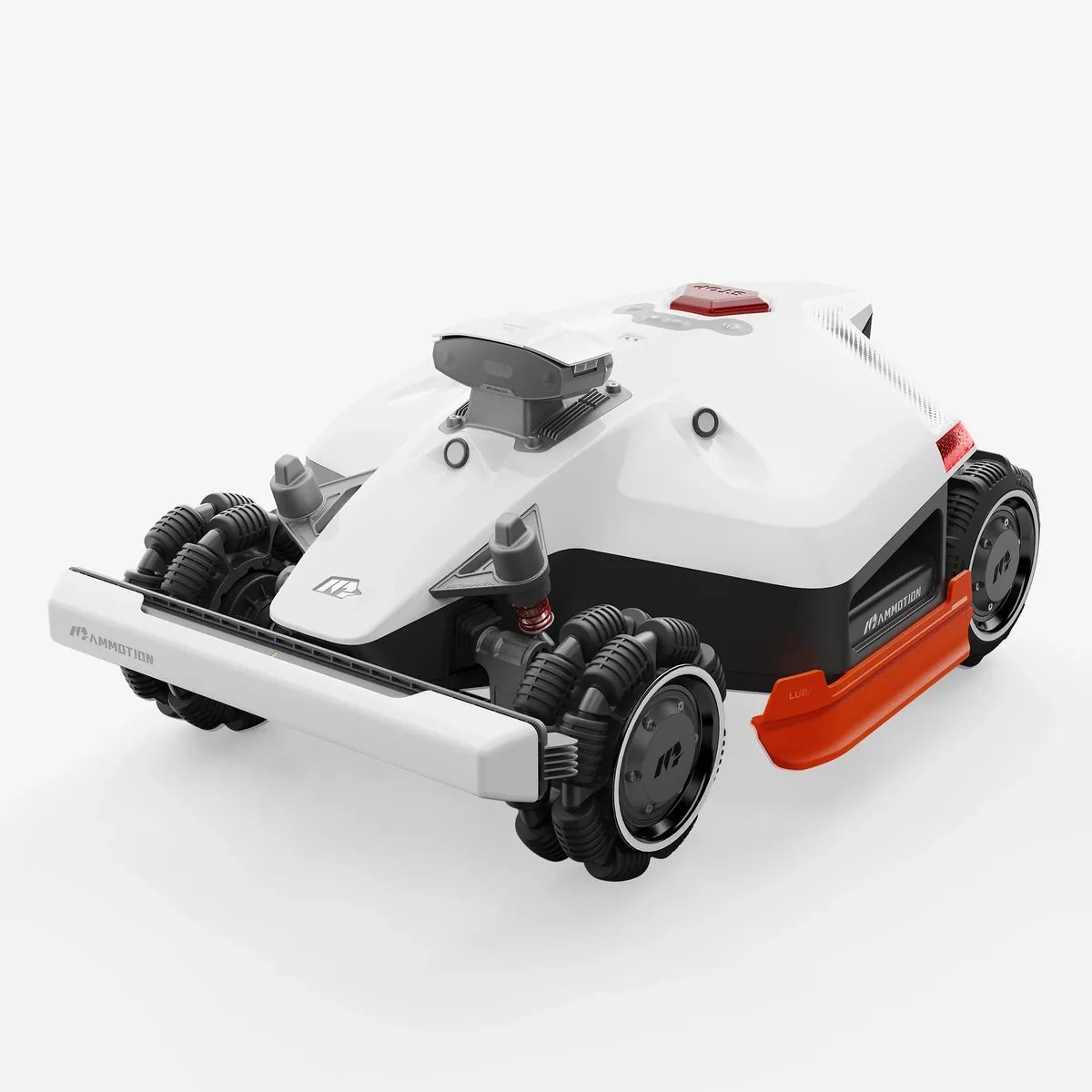
The Luba 2 AWD X is the mower that made Mammotion a household name in the US, and in fall 2026 it is a clearance buy: Mammotion's own store shows every trim out of stock with a banner pointing at the Luba 3, but Home Depot and Best Buy still have units, with the 3000X down from $2,599 to about $1,999. What you get is the same all-wheel-drive body that climbs 80 percent grades, a 15.7 inch dual-disc deck that clears a big yard fast, and a 2025 X refresh that added the UltraSense AI camera so it keeps its bearings when the RTK station loses sky. The catch is that RTK station: it must be mounted high with an open view, and most owner complaints trace back to a poorly placed antenna. The X version cuts 1.0 to 2.7 inches, so northern cool-season lawns should look for the HX (2.2 to 4.0 inches) instead. Versus the newer Luba 3 you give up LiDAR and free NetRTK, which matters if your lawn is ringed by trees; versus a Segway Navimow X3 you gain real AWD and a wider deck. Best for hilly half-acre to 2.5 acre properties with decent sky, bought on discount.
Best for Big, hilly lawns with open sky where a discounted last-generation AWD mower beats paying full price for the Luba 3.
Mammotion
Mammotion Yuka
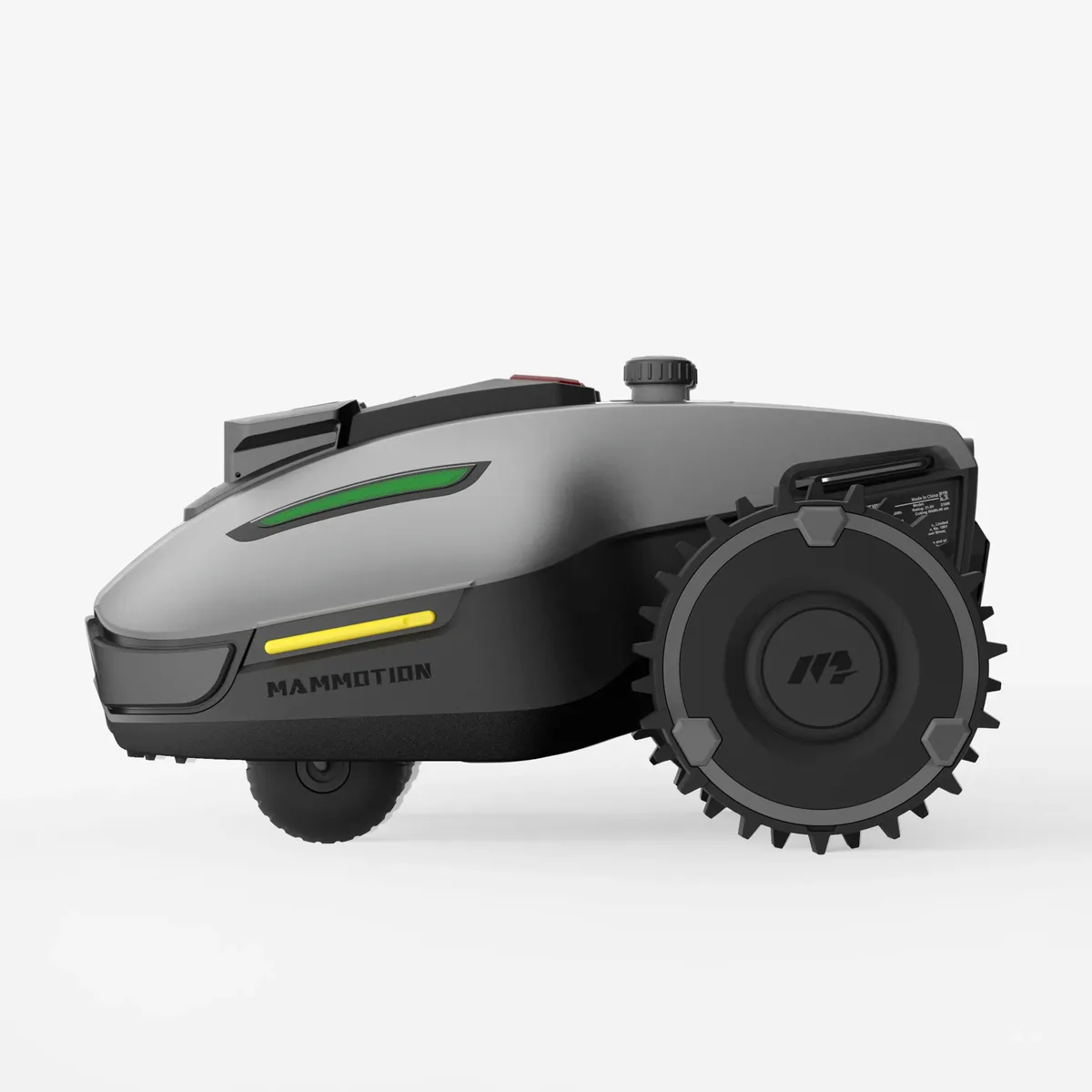
The Yuka is Mammotion's two-wheel-drive mower with a party trick nobody else has: an optional $700 sweeper cart that collects clippings and leaves, then dumps them at spots you pick in the app. The 12.6 inch dual-disc deck is nearly as wide as a Luba's, the 1.2 to 4.0 inch height range suits any US grass, and the 2025 lineup runs 1000, 2000 and 3000 square meters (a quarter to three-quarter acre). Positioning is an included RTK station plus a front AI camera; owners with open lawns love it, while a vocal minority in tree-heavy neighborhoods say it simply cannot hold position without clear sky, so this is not the pick for a wooded lot. Rear-wheel drive also means it bogs on rough or soggy ground, and the sweeper, while clever, gets stuck now and then. Mammotion's US store no longer lists the Yuka (the LiDAR-based Yuka mini 2 is its future), but Home Depot and Best Buy still stock it, with the 3000 around $1,449 on sale. If you want an AWD alternative at similar money look at the Luba 2 AWD X clearance; if you want a station-free RWD mower for a small yard, the Yuka mini 2. Best for flat, open lawns up to 3/4 acre with heavy leaf drop.
Best for Flat, open-sky lawns up to three-quarters of an acre where leaf and clipping pickup matters more than hill climbing.
Mammotion
Mammotion Yuka mini
The Yuka mini is the cheapest way into a wire-free, station-free robot mower from a brand with a real support desk, and at $749 for the 600H (or about $949 for the 800H at Home Depot) it undercuts the Navimow i105 while still carrying a 3-year warranty. There is no RTK antenna: it pulls free NetRTK corrections over your Wi-Fi and leans on two front cameras to track the grass edge, which is why it auto-maps a small yard in ten minutes. It is a 23 pound, rear-drive machine with a 7.5 inch disc and a 2.0 to 3.5 inch cut, rated for 50 percent slopes, though owners with bumpy or sloped yards say the front caster and lift sensor trip constantly and they end up rescuing it. On flat lawns under a fifth of an acre owners are happy: quiet, tidy stripes, and they like that it stays in bounds even where GPS is weak. Weak points are an app that lacks polish, cautious behavior around tree trunks that leaves rings of long grass, no built-in 4G (a $129 module adds it) and a 2 inch minimum height that rules out a tight cut. Mammotion has since released the LiDAR Yuka mini 2 at $1,399, so this is the value play. Best for flat, simple yards up to 0.2 acres and first-time robot owners.
Best for Flat suburban yards up to a fifth of an acre where a cheap, station-free mower with real warranty support is the goal.
Dreame
Dreame A3 AWD Pro
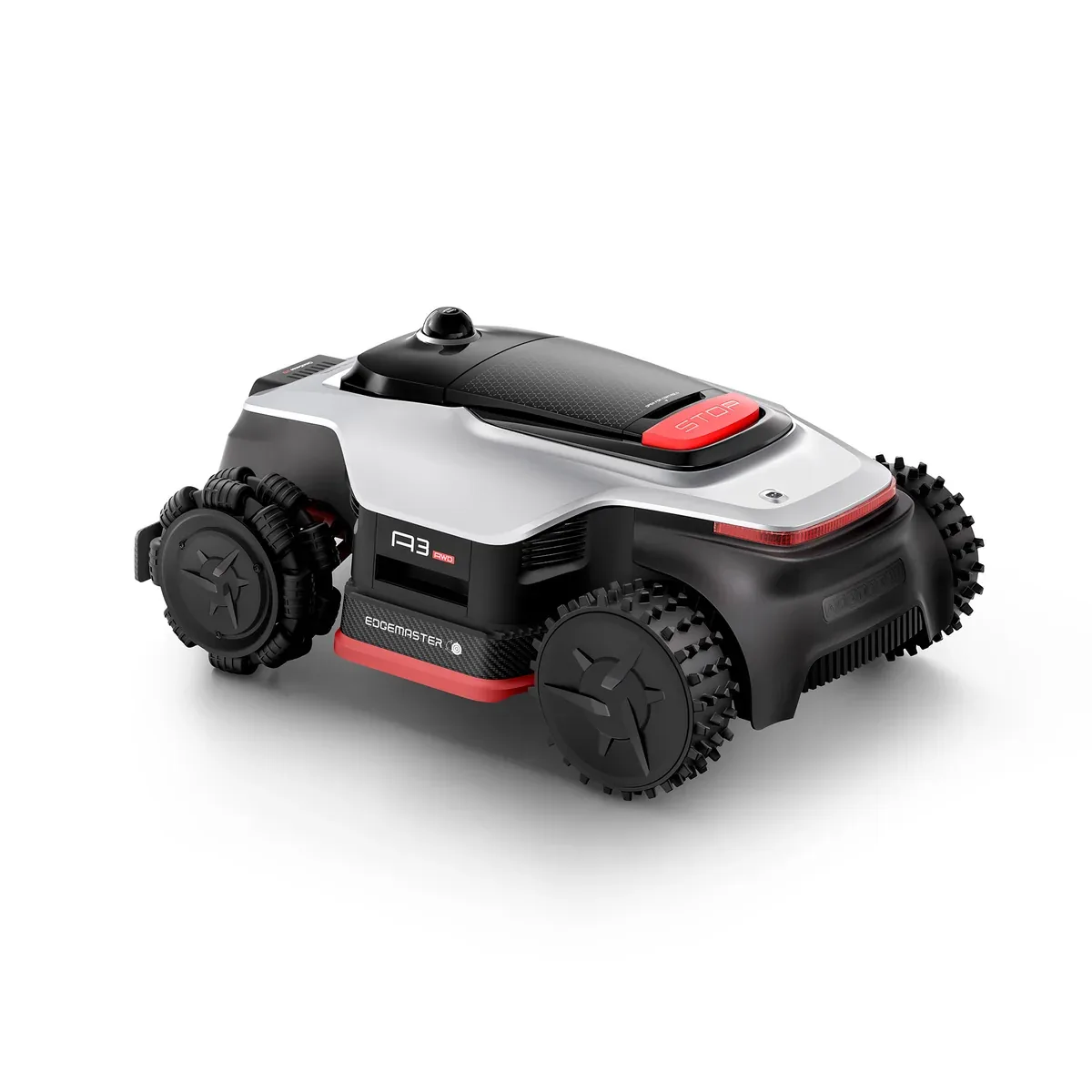
The A3 AWD Pro is the mower Dreame wants you to think of as a Mammotion Luba 2 AWD without the RTK antenna. OmniSense 3.0 pairs a roof-mounted 360-degree 3D LiDAR with binocular AI cameras, so it maps most yards on its own and keeps working under trees and beside buildings where satellite mowers lose signal. Four hub motors, omni front wheels and knobby rear tires carry it up 80% (38.7-degree) slopes and over 2.2-inch bumps, and a 15.8-inch dual-disc deck with the EdgeMaster 2.0 sliding blade gets within about 1.2 inches of borders. The 2500, 3500 and 5000 versions share one body and differ in battery (5, 7.5 and 10 Ah) and coverage; the 2500 is regularly $2,249.99 on Dreame's site against a $3,099.99 list. Gizmodo's 3.5/5 review and Android Authority's hands-on both loved the slope handling and the setup but flagged unpolished software, spotty Bluetooth pairing and, more seriously, AWD spin-turns that carve ruts and a bald patch near the dock on uneven ground. Owners on Dreame's store (4.4 stars) and at other retailers echo the split: some say it handles a 45% hill and flower beds better than anything they have tried, others report a stuck rear wheel, a dead PIN dial or missed strips out of the box. It is a big, heavy machine at 52.7 lb. Best for steep, complex lots from half an acre up where an RTK antenna is not an option and you can accept some early-adopter friction.
Best for Steep, complex properties from half an acre to 1.2 acres where shade rules out RTK and you want one of the widest cuts in a LiDAR mower.