Mammotion
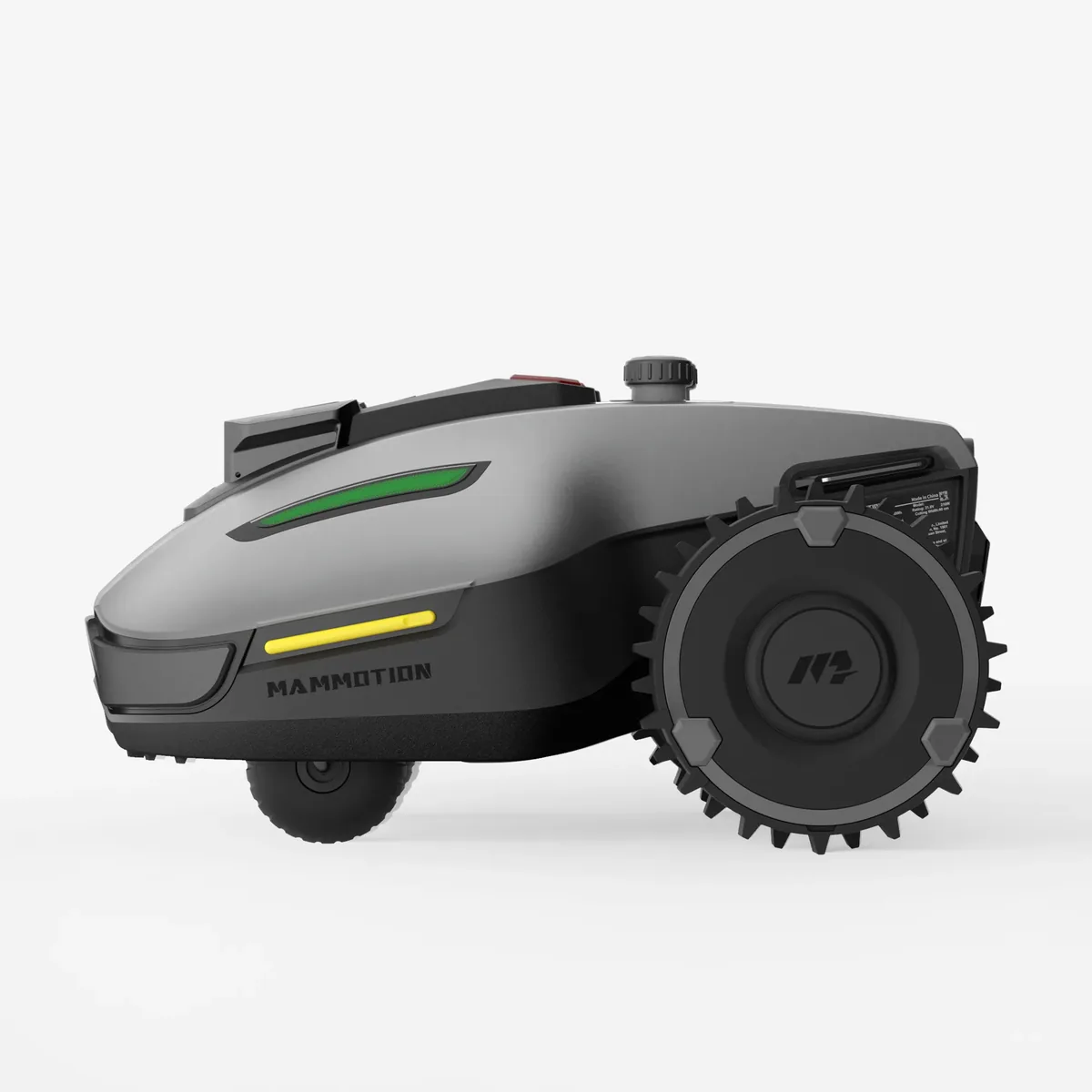
Mammotion Yuka mini
The Yuka mini is the cheapest way into a wire-free, station-free robot mower from a brand with a real support desk, and at $749 for the 600H (or about $949 for the 800H at Home Depot) it undercuts the Navimow i105 while still carrying a 3-year warranty. There is no RTK antenna: it pulls free NetRTK corrections over your Wi-Fi and leans on two front cameras to track the grass edge, which is why it auto-maps a small yard in ten minutes. It is a 23 pound, rear-drive machine with a 7.5 inch disc and a 2.0 to 3.5 inch cut, rated for 50 percent slopes, though owners with bumpy or sloped yards say the front caster and lift sensor trip constantly and they end up rescuing it. On flat lawns under a fifth of an acre owners are happy: quiet, tidy stripes, and they like that it stays in bounds even where GPS is weak. Weak points are an app that lacks polish, cautious behavior around tree trunks that leaves rings of long grass, no built-in 4G (a $129 module adds it) and a 2 inch minimum height that rules out a tight cut. Mammotion has since released the LiDAR Yuka mini 2 at $1,399, so this is the value play. Best for flat, simple yards up to 0.2 acres and first-time robot owners.
We may earn a commission.
Price and availability on Amazon’s site may differ.
Coverage versions
Mammotion sells the Mammotion Yuka mini as one machine with several coverage ratings. The hardware is the same; the rated area (and usually the battery) changes with the version.
| Version | Rated area | Approx. price |
|---|---|---|
| 600H · YUKA mini 600H | 6,458 sq ft (6,458 sq ft) | ~$749 |
| 800H · YUKA mini 800H | 8,611 sq ft (8,611 sq ft) | ~$949 |
Specifications
How it navigates
Free NetRTK corrections over Wi-Fi (no reference station) fused with UltraSense AI vision that follows grass edges when satellites drop. Auto-maps a small yard in about 10 minutes, or drive the perimeter; 15 zones.
Highlights
Pros
- ✓No RTK station, no wire: plug in the dock, auto-map, mow
- ✓Lowest price of any Mammotion and one of the cheapest vision-assisted mowers with a 3-year warranty
- ✓Quiet enough that owners run it at dawn; clean uniform cut on regular lawns
- ✓AI vision keeps it inside boundaries next to the house where satellite signal fades
- ✓Light 23 pound body is easy to carry between front and back yards
Cons
- ✗Owners with slopes or uneven ground report frequent stuck and lift-sensor stops
- ✗Overly cautious around trees and will not go back for patches it avoided
- ✗App is functional but clunky, with occasional connectivity drops and a laggy camera feed
- ✗No built-in 4G, and the 2.0 inch minimum cut is too tall for warm-season lawns
Compare the Mammotion Yuka mini
Related robot mowers
More from Mammotion →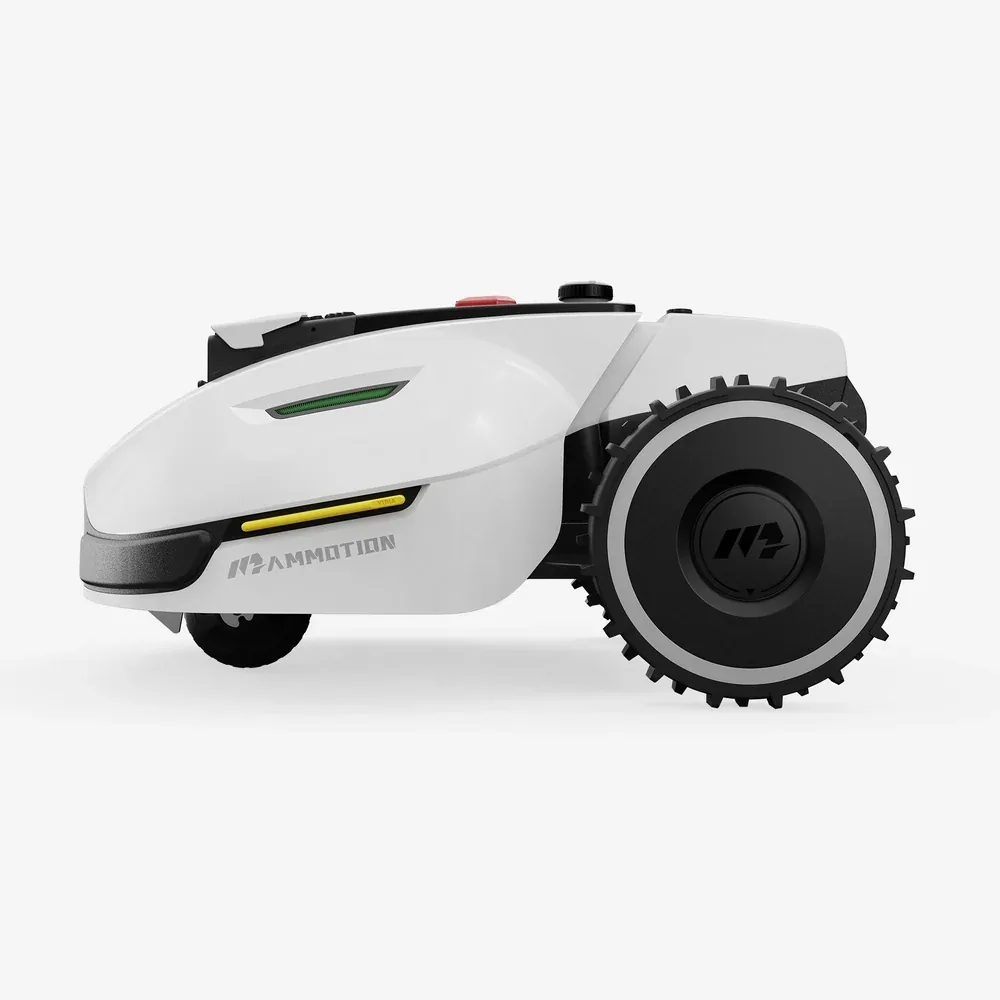
Mammotion
Mammotion Yuka
The Yuka is Mammotion's two-wheel-drive mower with a party trick nobody else has: an optional $700 sweeper cart that collects clippings and leaves, then dumps them at spots you pick in the app. The 12.6 inch dual-disc deck is nearly as wide as a Luba's, the 1.2 to 4.0 inch height range suits any US grass, and the 2025 lineup runs 1000, 2000 and 3000 square meters (a quarter to three-quarter acre). Positioning is an included RTK station plus a front AI camera; owners with open lawns love it, while a vocal minority in tree-heavy neighborhoods say it simply cannot hold position without clear sky, so this is not the pick for a wooded lot. Rear-wheel drive also means it bogs on rough or soggy ground, and the sweeper, while clever, gets stuck now and then. Mammotion's US store no longer lists the Yuka (the LiDAR-based Yuka mini 2 is its future), but Home Depot and Best Buy still stock it, with the 3000 around $1,449 on sale. If you want an AWD alternative at similar money look at the Luba 2 AWD X clearance; if you want a station-free RWD mower for a small yard, the Yuka mini 2. Best for flat, open lawns up to 3/4 acre with heavy leaf drop.
Mammotion
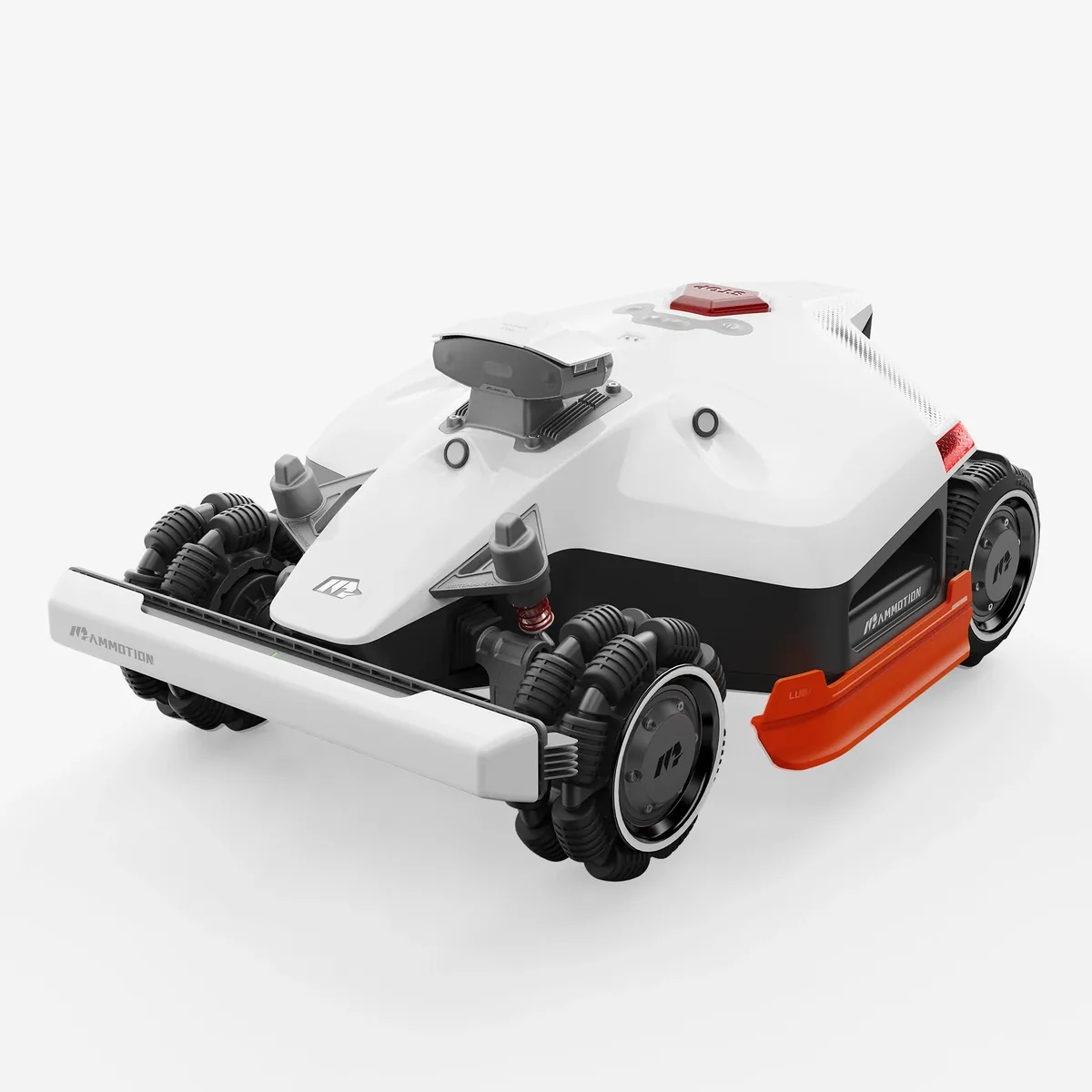
Mammotion Luba 2 AWD X
The Luba 2 AWD X is the mower that made Mammotion a household name in the US, and in fall 2026 it is a clearance buy: Mammotion's own store shows every trim out of stock with a banner pointing at the Luba 3, but Home Depot and Best Buy still have units, with the 3000X down from $2,599 to about $1,999. What you get is the same all-wheel-drive body that climbs 80 percent grades, a 15.7 inch dual-disc deck that clears a big yard fast, and a 2025 X refresh that added the UltraSense AI camera so it keeps its bearings when the RTK station loses sky. The catch is that RTK station: it must be mounted high with an open view, and most owner complaints trace back to a poorly placed antenna. The X version cuts 1.0 to 2.7 inches, so northern cool-season lawns should look for the HX (2.2 to 4.0 inches) instead. Versus the newer Luba 3 you give up LiDAR and free NetRTK, which matters if your lawn is ringed by trees; versus a Segway Navimow X3 you gain real AWD and a wider deck. Best for hilly half-acre to 2.5 acre properties with decent sky, bought on discount.
Mammotion
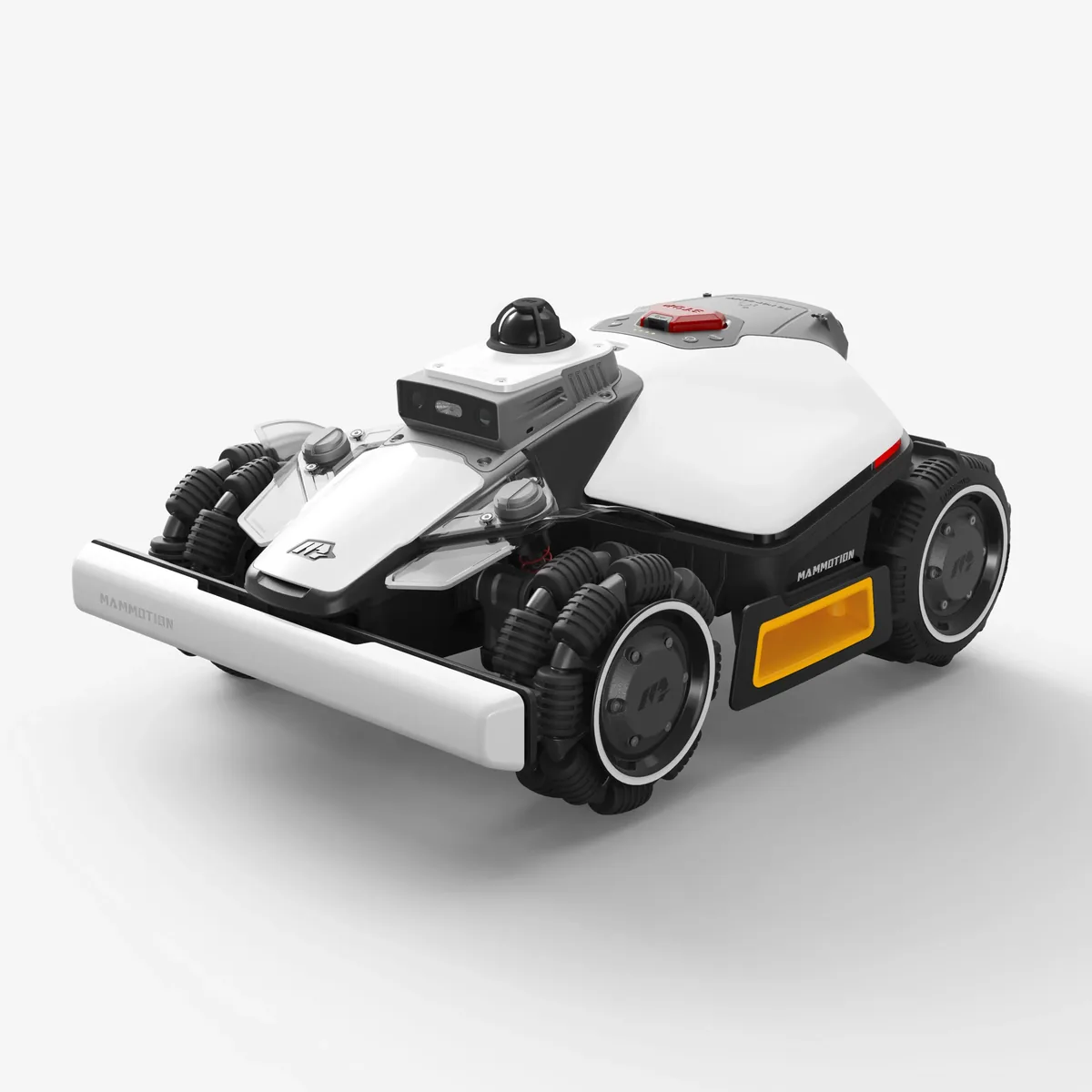
Mammotion Luba mini 2 AWD
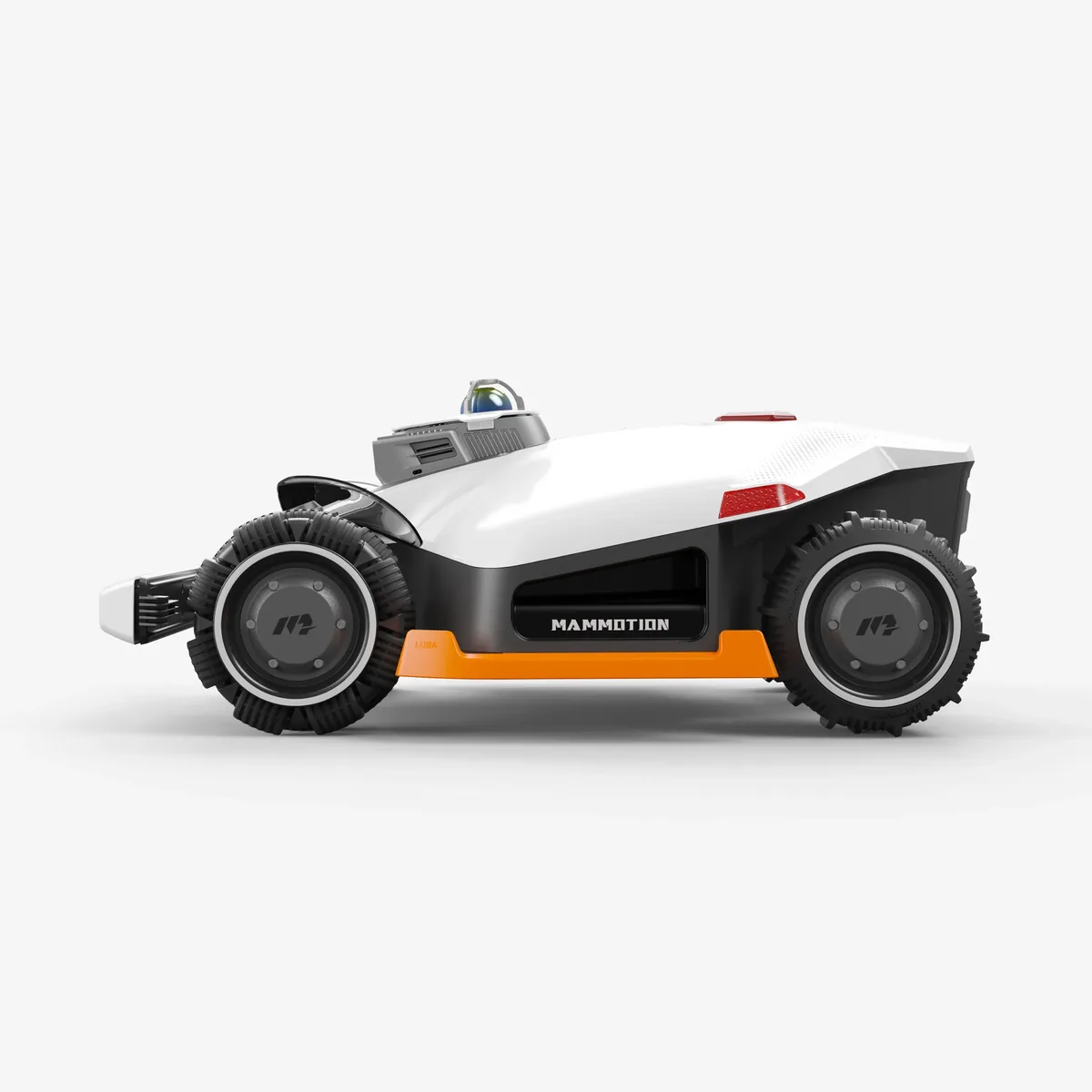
Think of the Luba mini 2 AWD as the Luba 3's tech shrunk to fit a third-acre suburban lot. It replaced the original Luba mini AWD in spring 2026 (that one is now out of stock at Mammotion) and swapped NetRTK-only positioning for a 360-degree LiDAR dome plus two AI cameras, so it no longer cares whether your yard has open sky. It keeps the four hub motors that let it climb 80 percent grades, and it adds something the big Lubas lack: a second, fixed 4.7 inch edge disc that trims within about 2 inches of walls and beds, which owners say cut their string-trimmer time way down. The main deck is only 7.8 inches, so it is slower per pass than a Luba 3, but 150 minutes of runtime covers a 0.37 acre lawn in a session or two. Owners who came from wire mowers rave about the setup and the finish, and the complaints are the fixed 2.6 inch height of the edge disc, a learning curve on multi-zone mapping, and wheels that occasionally spin on a wet hill. In the US only the 1500 size is sold, with the H version (2.2 to 4.0 inch cut) at $1,699 on sale. Compared with a Segway Navimow i110 you pay more but get AWD and LiDAR; compared with a Yuka mini 2 you get hill-climbing traction. Best for hilly, obstacle-heavy yards up to 0.37 acres.
Mammotion
Mammotion Luba 3 AWD
The Luba 3 AWD is Mammotion's 2026 flagship and the mower that finally fixed the Luba's biggest headache: there is no RTK antenna to mount. It positions with a 360-degree LiDAR dome, two AI cameras and free NetRTK corrections pulled over Wi-Fi or its built-in 4G, and owners on wooded lots say it maps and mows under tree cover where the Luba 2 used to wander. The rest is familiar Luba: four hub motors and omni wheels that climb 80 percent slopes, a 15.7 inch dual-disc deck with 165 W motors on the 3000 and 5000, and up to 50 zones. The 3000 is the sweet spot at $2,109 on sale (it is oddly cheaper than the 1500), and it comes in a 2.2 to 4.0 inch high-cut or 1.0 to 2.7 inch standard deck. Owners praise the setup and the app, and the common gripes are learning menus that keep changing with OTA updates, a 1.25 acre map cap on the 5000, and the occasional unit that dies after a firmware push with slow support. Against the Roborock RockMow X1 LiDAR it costs less and cuts wider; against a Husqvarna 450X NERA it is a fraction of the price with no dealer install. Best for half-acre and larger lawns with hills, trees and several zones.
Roborock
Roborock RockNeo Q1
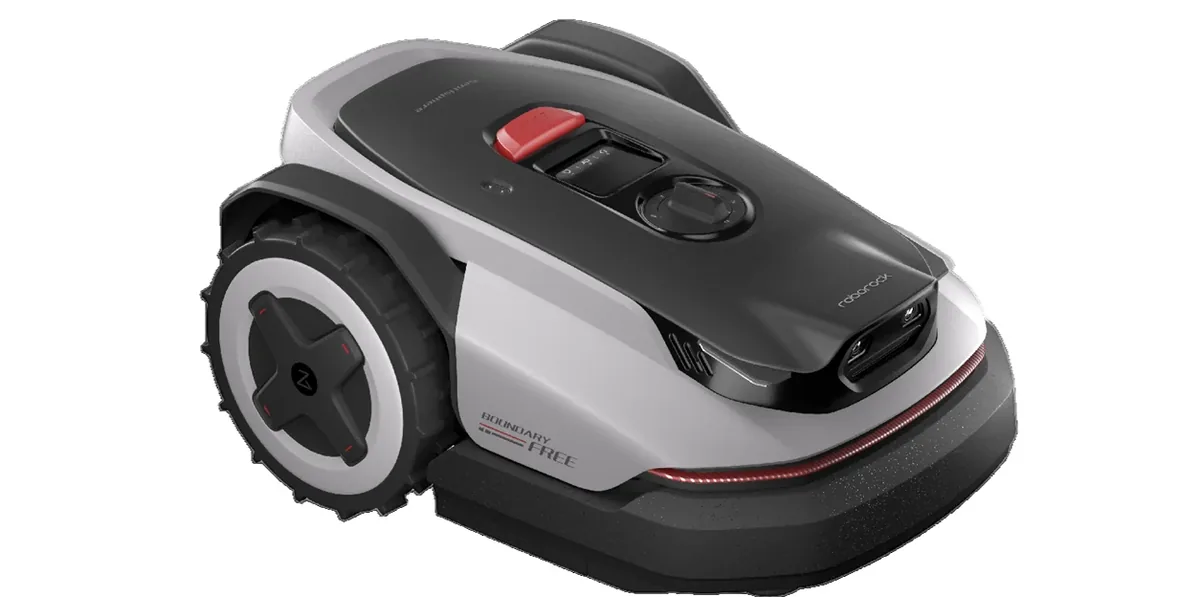
The RockNeo Q1 (Q110H in the US) is Roborock's entry mower: a 27 pound, rear-wheel-drive machine for quarter-acre lawns that lists at $1,299 but has been selling on Amazon for $800 to $1,000 most of the summer. It uses the same full-band RTK antenna plus camera VSLAM as the RockMow, and Roborock later pushed a network RTK mode so you can skip the antenna if you have decent cell coverage. Owners describe it as whisper quiet, good at systematic back-and-forth mowing of open lawn, and nicer to map than Segway's app, and they like the headlights for evening runs. They are also blunt that it is for simple, flat, easy yards: the plain wheels get stuck if it wanders onto rock beds or sand, it struggles on real slopes despite the 45 percent rating, and it needs a wide-open view of the sky to hold position. Cutting height is a manual dial from 1.6 to 3.1 inches, edge cutting needs the $90 PreciEdge module, and even with it the software keeps a cautious margin around anything hanging over the lawn. Compared with a Navimow i105 it is quieter and maps better; compared with a Mammotion Yuka mini it needs an antenna but climbs about the same. Best for flat, open quarter-acre lots where price and quiet matter most.
Segway
Segway Navimow i105N
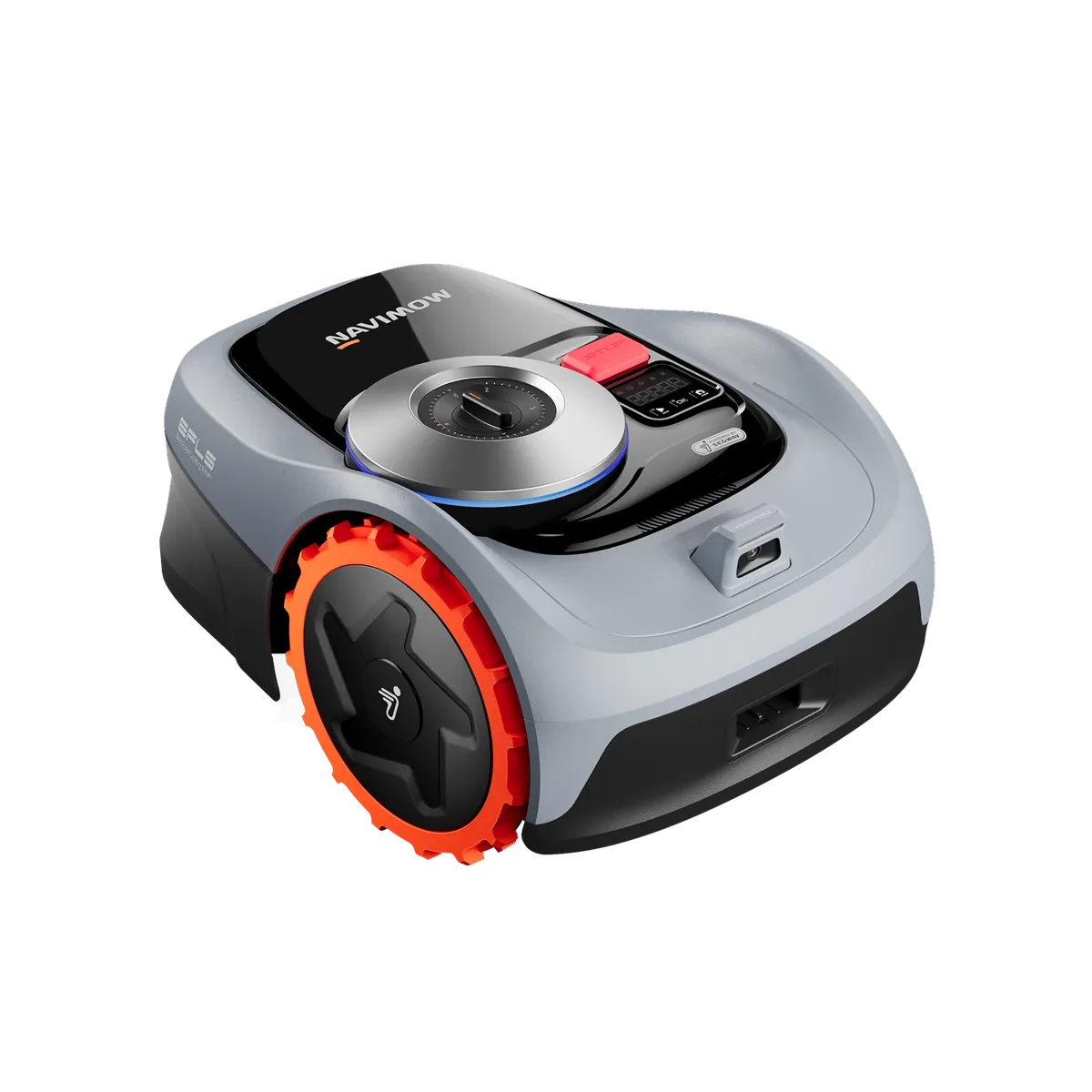
The i105N is the mower that made wire-free RTK cheap. Segway cut it from $999 to $799 in 2026 and it regularly dips to $669-699, which puts it in Worx Landroid Vision territory while still using a proper RTK antenna for centimeter-level positioning. It is small - 7.1 in cutting width, 24 lb, a 2.55Ah battery good for about an hour - so the rated 1/8 acre is honest; Amazon owners with a typical city lot say a full cut takes around 2.5 hours across two or three charge cycles. Setup is genuinely DIY: mount the antenna somewhere with open sky, drive the mower around the perimeter with your phone, and let AI Assist Mapping snap to the lawn edges. Owners like the quiet 58 dB motor, the straight-line stripes, and that it pays for itself in a season versus a lawn service. The knocks are consistent too: getting stuck on flat ground and in dips, mapping frustration when trees hang over the antenna, a manual cutting-height dial, and a few units dying after a few months with slow email-only support. The 30% slope limit and front-wheel drive rule out anything hilly. Compared with the Mammotion Yuka Mini, the i105N is cheaper and simpler but has no vision-only mode when RTK is hopeless; step up to the i110N if you have more than about 5,000 sq ft.