Best RTK GPS Robot Mowers (Wire-Free)
RTK stands for real-time kinematic: a reference antenna on your roof or a pole corrects the mower's GPS to within a couple of centimeters, so you draw the boundary from your phone by driving the mower around the edge and never touch a spool of wire. Setup drops from an afternoon to half an hour, changing the map takes minutes, and the mowers cut in straight passes rather than bouncing. The catch is the sky. Both the antenna and the mower need a wide view of it, and tree canopy, tall fences, and the strip along a house wall degrade the fix. Every mower in this class handles brief shade with dead reckoning; none handles a lawn that is mostly under trees. If your yard is open, this is the category that has made robot mowing mainstream since 2023.
MowerRanker tracks 7 RTK GPS mowers from 3 brands, priced $1,299 to $4,999. The highest-rated of them is the Husqvarna Automower 435 iQ AWD at 4.2★, and the most affordable is the Segway Navimow H3000N at ~$1,299. Compare them all below.
Husqvarna
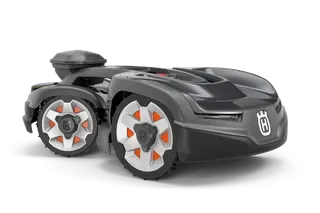
Husqvarna Automower 435 iQ AWD
This is the mower for the yard that scares other robots: the 435 iQ AWD pairs all-wheel drive and an articulated, pivoting rear body with Husqvarna's EPOS wire-free navigation, and it is rated for 70 percent slopes, roughly 35 degrees, on up to 1.3 acres. Owners on Husqvarna's site describe steep waterfront lawns and ditches they used to mow in cleats now being handled without a wire in the ground, and the few complaints are about tall landscape edging confusing it and slow satellite lock rather than traction. The cut is narrower than the 4-series at 8.7 inches with a 1.2-to-2.8-inch height range, so it is not the pick for tall cool-season grass, and ultrasonic sensors rather than radar handle obstacles. At $5,000 it is the most expensive residential Automower and roughly double the price of a Mammotion Luba 2 AWD 5000, which also climbs hills and cuts wider. What you are paying for is the dealer network, a four-year warranty, and a chassis that has been proving itself on hilly lawns since the 435X AWD debuted in 2019. If your slopes are under 45 percent, save money with a 420 iQ; if they are not, this is the safest bet in the category.
Husqvarna
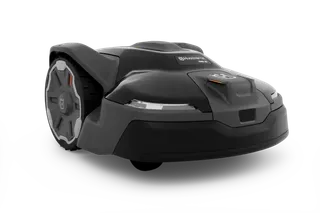
Husqvarna Automower 440 iQ
The 440 iQ is the big-lawn iQ, rated for two acres with a 138-minute runtime and a 54-minute charge, but it is physically the same 39-pound machine as the 420 iQ with the same 9.4-inch deck. That matters, because two acres on a nine-inch cut means the mower is out most of the day, every day, and any EPOS signal dropout under trees or between buildings costs you real coverage. Husqvarna does let you run a physical wire in trouble spots and mix it with the virtual map, which no camera-only rival offers. The 1-to-4-inch cut range is great for tall fescue and other cool-season lawns that hate a scalp. Owners on Husqvarna's site praise the cut quality and quiet 62 dB operation, but the same threads include people who waited months on dealer parts or had a remap land five feet off, and Amazon buyers rate this model lower than its siblings. At $4,300 it is a lot of money for rear-wheel drive and a 45 percent slope limit when a Mammotion Luba 2 AWD 5000 or an Ecovacs GOAT A3000 covers similar ground with AWD or a wider deck for less. Pick it if you have a big, open, mostly flat property, want Husqvarna dealer support, and like the idea of a four-year warranty on a mower that will be working nearly around the clock.
Husqvarna
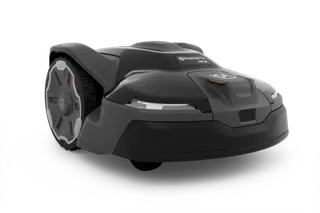
Husqvarna Automower 420 iQ
If you are going to buy an iQ, this is probably the one. The 420 iQ is the same 9.4-inch, 1-to-4-inch cut body as the 410 iQ with a faster 54-minute charge and a one-acre rating, and Husqvarna and Amazon have both sold it for well under list for most of 2026. Setup is wire-free: you mount the RS1 reference station, walk the boundary with the mower in the app, and draw stay-out zones and transport paths on the map. A long-time 450X owner who upgraded reported it cut his half-acre Michigan lawn faster and more systematically than his wired mower, in stripes or a checkerboard if you want to show off. The weak spots are the same as the rest of the family: EPOS needs sky, so narrow side yards between houses can drop signal and stop the mower cold, and while radar slows it for large objects it does not dodge sticks. Compared with a Mammotion Luba 2 AWD 3000 at similar money you give up all-wheel drive and a wider deck; compared with a Segway Navimow X3 you give up camera vision. What you get instead is a dealer who will actually service it and a four-year warranty. Best for a flat to moderately sloped acre where you want set-and-forget reliability and someone local to call.
Husqvarna
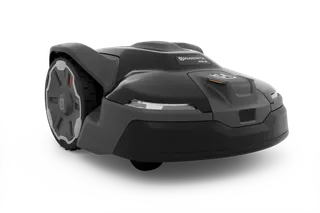
Husqvarna Automower 410 iQ
The 410 iQ is the entry point to Husqvarna's wire-free lineup, and it is the one to look at if your lawn is a straightforward half acre with open sky. It navigates with EPOS RTK satellite positioning from an RS1 reference station you mount on the house, so there is no perimeter wire to bury, and it can still fall back to a physical wire in a shaded side yard where the signal drops. Radar handles obstacle slowdown, but owners are clear that it will still shove a stray branch around, so you tidy the yard first. The cut is the classic Husqvarna razor-blade mulch that leaves a fine finish, and it runs at 62 dB, quiet enough for early mornings. The catch is money and coverage: at $2,600 it costs more than a Segway Navimow i110N or Mammotion Luba Mini that map with cameras and cut wider, and the 420 iQ regularly sells for only a few hundred more with double the rated area. Reviews on Husqvarna's site skew toward long-time Automower owners who love the dealer network, mixed with a vocal group frustrated by units that lost GPS between the front and back yard or waited weeks on parts. Buy it if you value a local dealer and a four-year warranty over spec-sheet bragging rights.
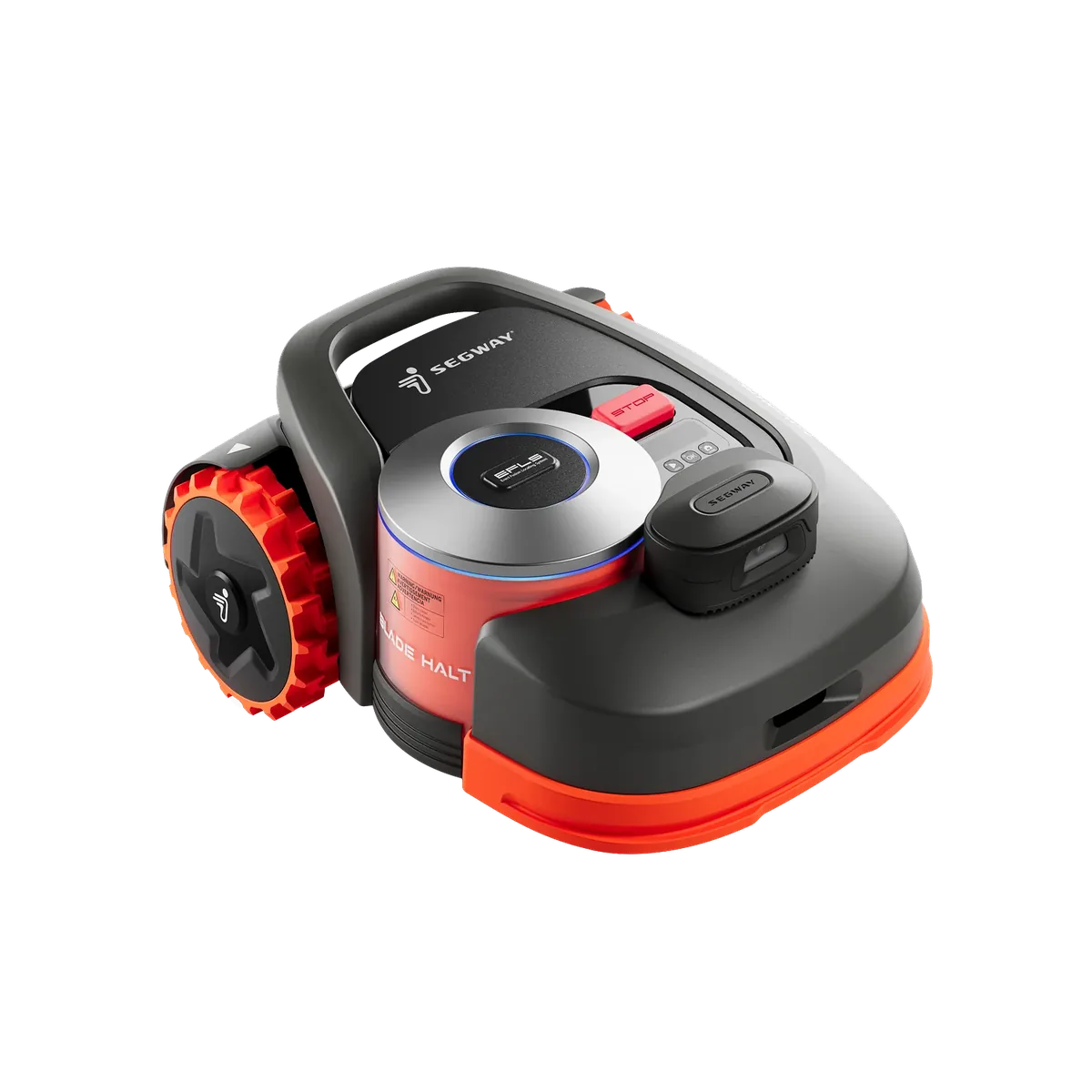
Segway
Segway Navimow H3000N
The H3000N-VF is the big-lawn version of Segway's original H series, rated for 0.74 acre with the same 8.3 in cut, 54 dB hub motors and 38.6 lb chassis as the H1500N but a larger battery (about four hours of mowing, five hours to recharge) and three years of 4G service bundled instead of one. It is being cleared out as the H2 and X3 lines take over, so it has sold on Amazon for $1,199 to $1,299 - sometimes less than the smaller H1500N - and Home Depot still lists it while Segway's own store shows it sold out at $2,599. Amazon owners say setup is easy and the finish looks great, and one reports about a third of an acre per charge. The gripes are familiar H1 issues: wheels that lack grip on damp slopes despite the 45% rating, boundary edits that are fiddly, some random-looking path choices, and RTK-only EFLS 1.0 positioning that struggles under tree canopy because the VisionFence camera only avoids obstacles. The 1.2 to 2.4 inch cutting height range is the real limiter for cool-season grasses. Against the Mammotion Luba 2 AWD 3000 at a similar clearance price you give up all-wheel drive and a 4 inch max cut but gain quieter running and a 4-year warranty. Best for a flat, open three-quarter acre of short-cut warm-season grass.

Kress is the Positec sister brand to Worx, but its RTKn mowers are a dealer product, and the KR172 is the half-acre entry point at $1,699.99 (list $2,499.99). The pitch is simple: satellite RTK without the antenna. Instead of a base station in your yard, Kress runs its own network of reference antennas hosted at dealers and pipes corrections to the mower over 4G, so setup means drawing a boundary in the app rather than hunting for a spot with clear sky. When trees or the house block satellites it falls back on inertial navigation and odometry, and it mows in straight parallel stripes rather than the random bounce of a Robomow or older Husqvarna. Specs are modest: an 8-inch cut, 1.6 to 3.5 inch height range, 40 percent slopes, 59 dB and about 26 pounds, with a 4 Ah 20 V battery and 0.5 acre recommended (0.7 acre maximum). What you do not get is camera obstacle avoidance; that is reserved for the OAS variant and pricier Kress models, so this one relies on its bumper and your no-go zones. The catch is coverage: RTKn only works if a Kress dealer antenna is within range of your address, so the dealer has to confirm that before you buy, and you are tied to that dealer for service. Against a Segway Navimow i110 you pay more for the no-antenna convenience and stripes. Good for a suburban half acre near an established Kress dealer; skip it if nobody nearby carries the brand.
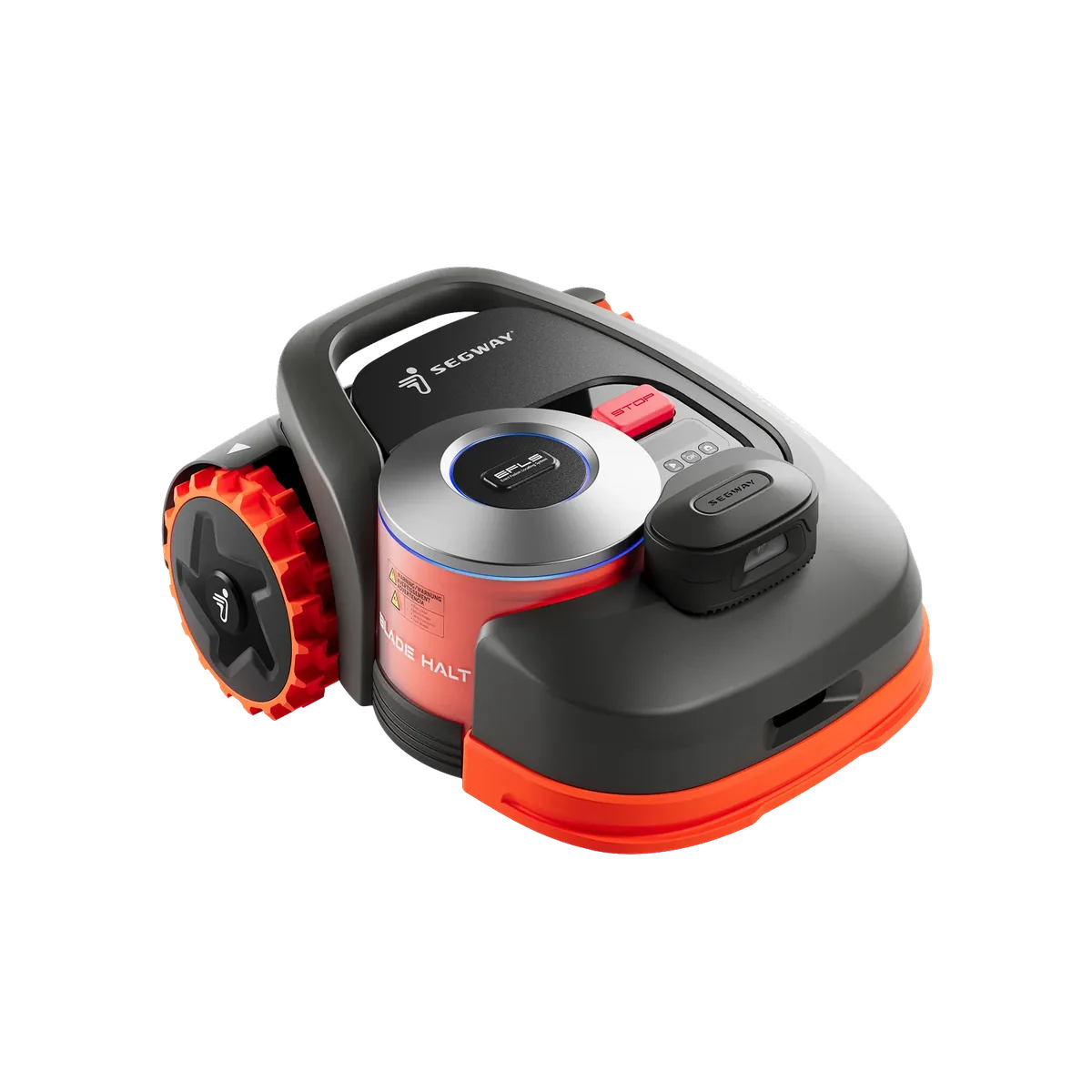
Segway
Segway Navimow H1500N
The H1500N-VF is Segway's first-generation premium mower, now on clearance as the H2 series replaces it, and the pricing is chaotic: Segway's store lists it sold out at $2,199, Amazon has bounced between $999 and $1,599, and Home Depot still carries it. What you get is a heavier 38 lb machine with quiet in-wheel hub motors (54 dB, the quietest Navimow), a battery that runs about four hours, built-in 4G with a year of service, and a real rain sensor. Navigation is EFLS 1.0 - RTK only - so it needs a clear sky over the antenna; the plug-in VisionFence camera pod on the back handles obstacles but does not help positioning, and Amazon owners report the map drifting by a few feet on tough sites and the mower crossing mapped boundaries. The dealbreaker for many US lawns is cutting height: 1.2 to 2.4 inches is a golf-course range, far too low for fescue or St. Augustine that wants 3 inches or more. The 45% slope rating beats the i series though, and owners praise how it handles ditches and uneven ground once mapped. Buy it only if your lawn is short-cut grass on a mostly open lot and you find one near $1,000; otherwise the newer X330 or H220 gets you 2 to 4 inch cutting and vision-fused positioning for not much more.