What a Robot Mower Really Costs: Price Tiers, Blades, Batteries and Subscriptions
The sticker is the easy part. A robot mower is a thing you buy once and then feed blades, a battery every few years, and in some cases a subscription, and the brands are not equally honest about that. Here is the full bill, tier by tier, and the comparison to the lawn service the mower is usually replacing.
What each price tier buys
| Tier | What you get | What you give up | Who it's for |
|---|---|---|---|
| Under $1,000 | Wire mowers, small vision mowers | Wire install or daylight-only; small coverage | Small lawns, shaded lots, budget |
| $1,000-$2,000 | Mainstream RTK, straight passes, app maps | AWD, big batteries, cellular | Open lawns to about 1/2 acre |
| $2,000-$3,500 | AWD, RTK + vision, cellular, 1 acre+ | Value; the frontier tax | Sloped, large, or partly shaded yards |
| $3,500+ | Multi-acre, tracks, dealer support | Rational cost-benefit on a normal lot | Properties and steep ground |
The jumps are not evenly spaced. Under $1,000 buys a boundary-wire mower for a small or medium lawn or a small camera-only machine: real, proven mowers with either an installation chore or a daylight-only limit. $1,000-$2,000 is the biggest step in the catalog, because it's where wire-free RTK arrives at mainstream prices; this is the right tier for an open quarter-acre. $2,000-$3,500 adds AWD, bigger batteries and coverage ratings, camera fusion for shade, and built-in cellular. Above $3,500 you are paying for acres, tracks, or a dealer relationship.
Blades: the cost that shows up monthly
Most robot mowers cut with small pivoting razor blades on a spinning disc: three to six of them, replaced as a set. They are cheap individually and they wear fast because the mower runs daily and hits the occasional stick, so owners in season swap them every one to two months. Landroid-style larger blades and the fixed blades on some flagships last longer per set and cost more per set. Either way, budget a modest but real annual figure and buy a bulk pack; third-party blades exist for the common disc patterns and owners report mixed results with them.
A dull blade is the most common cause of the 'my lawn looks torn' complaint. If the tips of the grass go brown a few days after mowing, it's the blades, not the mower.
Batteries, subscriptions, and the quiet costs
The battery is a lithium pack that cycles once or twice a day all season, and owners report three to six years before runtime drops enough to matter. Replacements run from around $150 for the small wire mowers to $400 or more for the AWD flagships, and on some models they are dealer-only. It's the one big line item in year four, and it's worth checking that the pack is user-replaceable before you buy.
Cellular is the cost that surprises people. Built-in 4G is what enables GPS theft tracking and control from anywhere; some brands include it for years on their premium lines, others bundle a year and then charge an annual fee, and some sell the module separately. The spec table on each mower page records the terms. Add the RTK network subscription on models that use it, a set of boundary pegs or an installer for wire mowers, and a mowing-strip of pavers if you want a clean edge, and the true first-year cost is the sticker plus a few hundred.
The math against a lawn service
A weekly mowing service for a typical suburban lot runs a meaningful amount per visit across a 25-30 week season, and the number is what makes the mower purchase rational: a mainstream RTK mower pays for itself against a service in roughly one to two seasons, and against your own time the payback is faster. The mower also mows daily, which a service never will, and the lawn shows it.
The honest counterpoints: you still trim edges and blow the walk, a service brings a trimmer and a blower, and a mower has to be dealt with when it gets stuck. The people happiest with the purchase are the ones who wanted to stop mowing but not stop caring about the lawn; the people who wanted to stop thinking about the yard entirely are the ones who go back to the service.
Mowers mentioned in this guide
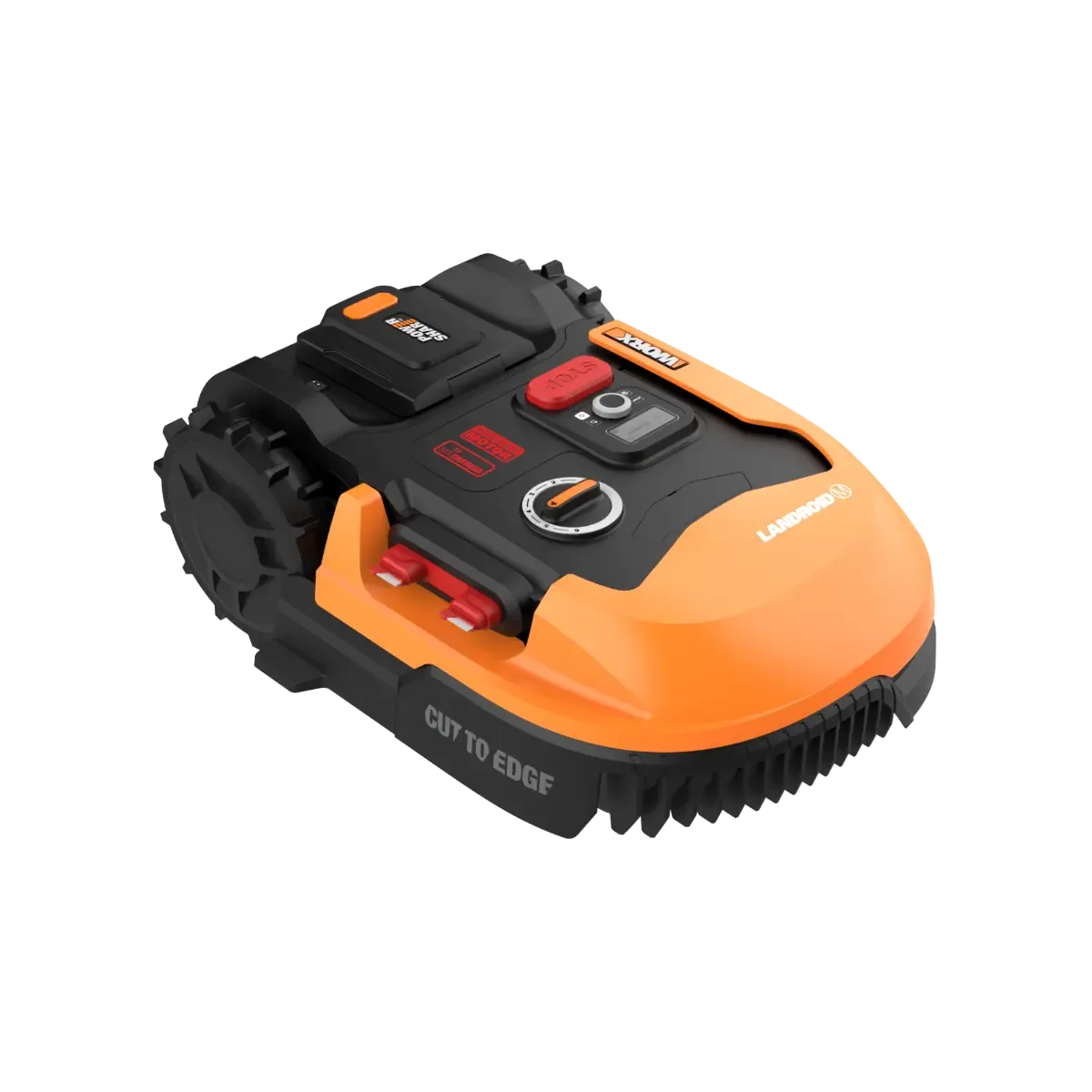
The Landroid M is Worx's quarter-acre boundary-wire mower and, thanks to the 20V Power Share battery it shares with every other Worx tool, it is usually one of the cheapest ways into robot mowing that still comes with a real app. Worx lists it at $1,199.99, but it sells for around $900 on Amazon and Walmart has been clearing it below $800, so shop around. Setup is the classic wire job: 820 feet of wire and 340 pegs are in the box, and plan on an afternoon of pegging. Once running, the AIA algorithm handles narrow passages without a guide wire, the off-center blade genuinely cuts to the edge, the floating blade disc lifts over bumps, and at 59 dB it is quiet enough to run at night. The catch is what it lacks: no camera or ultrasonic sensor in the box, so it bumps into anything the wire does not exclude, and there is no GPS tracking unless you buy the Find My Landroid module. Against the Gardena SILENO flex at $599 you pay more for a 3.5 in top cut height and Wi-Fi control; against the wire-free Landroid Vision you save several hundred dollars but do the wire work yourself. Best for flat, fairly open yards under a quarter acre owned by someone who already has Worx batteries in the garage.
Segway
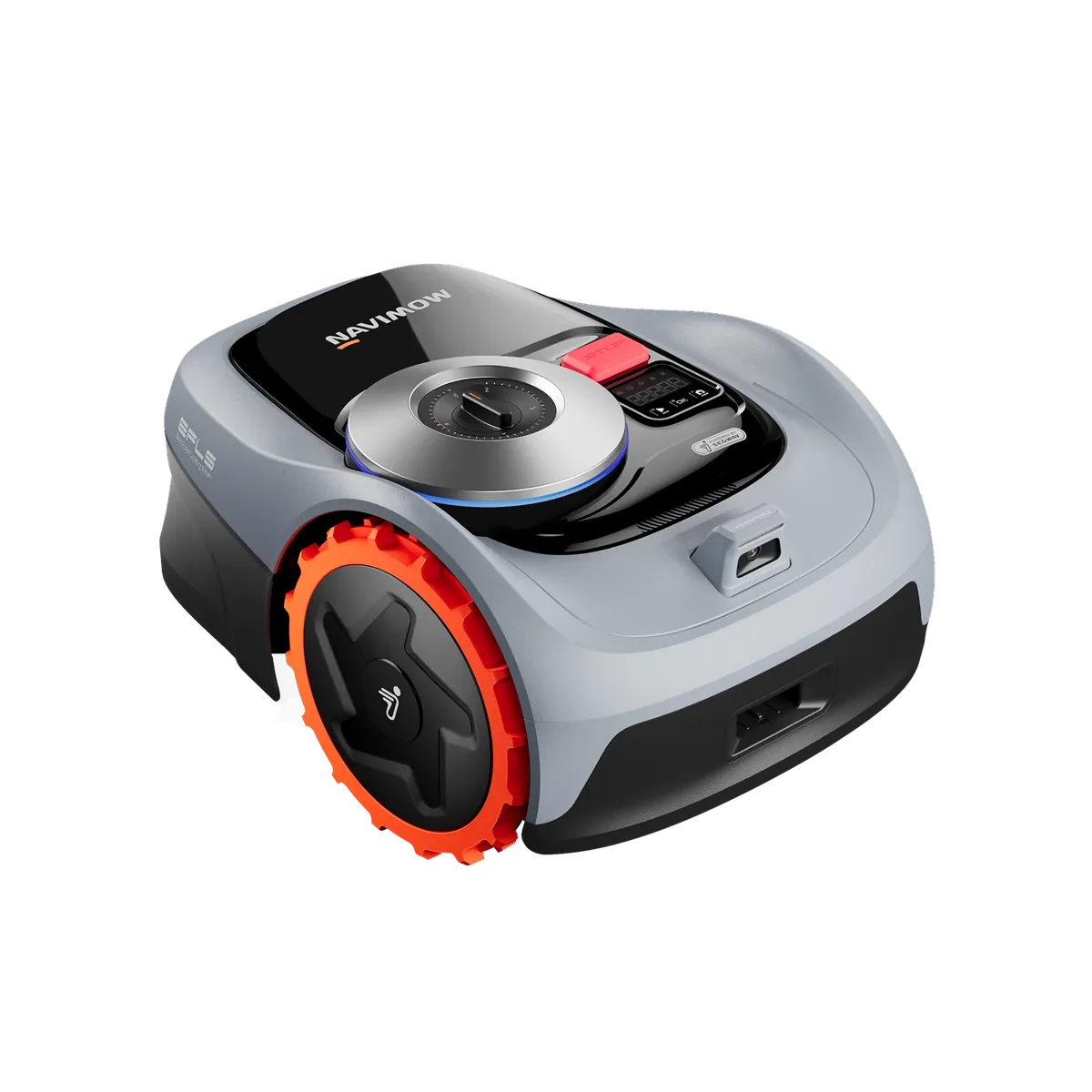
Segway Navimow i105N
The i105N is the mower that made wire-free RTK cheap. Segway cut it from $999 to $799 in 2026 and it regularly dips to $669-699, which puts it in Worx Landroid Vision territory while still using a proper RTK antenna for centimeter-level positioning. It is small - 7.1 in cutting width, 24 lb, a 2.55Ah battery good for about an hour - so the rated 1/8 acre is honest; Amazon owners with a typical city lot say a full cut takes around 2.5 hours across two or three charge cycles. Setup is genuinely DIY: mount the antenna somewhere with open sky, drive the mower around the perimeter with your phone, and let AI Assist Mapping snap to the lawn edges. Owners like the quiet 58 dB motor, the straight-line stripes, and that it pays for itself in a season versus a lawn service. The knocks are consistent too: getting stuck on flat ground and in dips, mapping frustration when trees hang over the antenna, a manual cutting-height dial, and a few units dying after a few months with slow email-only support. The 30% slope limit and front-wheel drive rule out anything hilly. Compared with the Mammotion Yuka Mini, the i105N is cheaper and simpler but has no vision-only mode when RTK is hopeless; step up to the i110N if you have more than about 5,000 sq ft.
Ecovacs
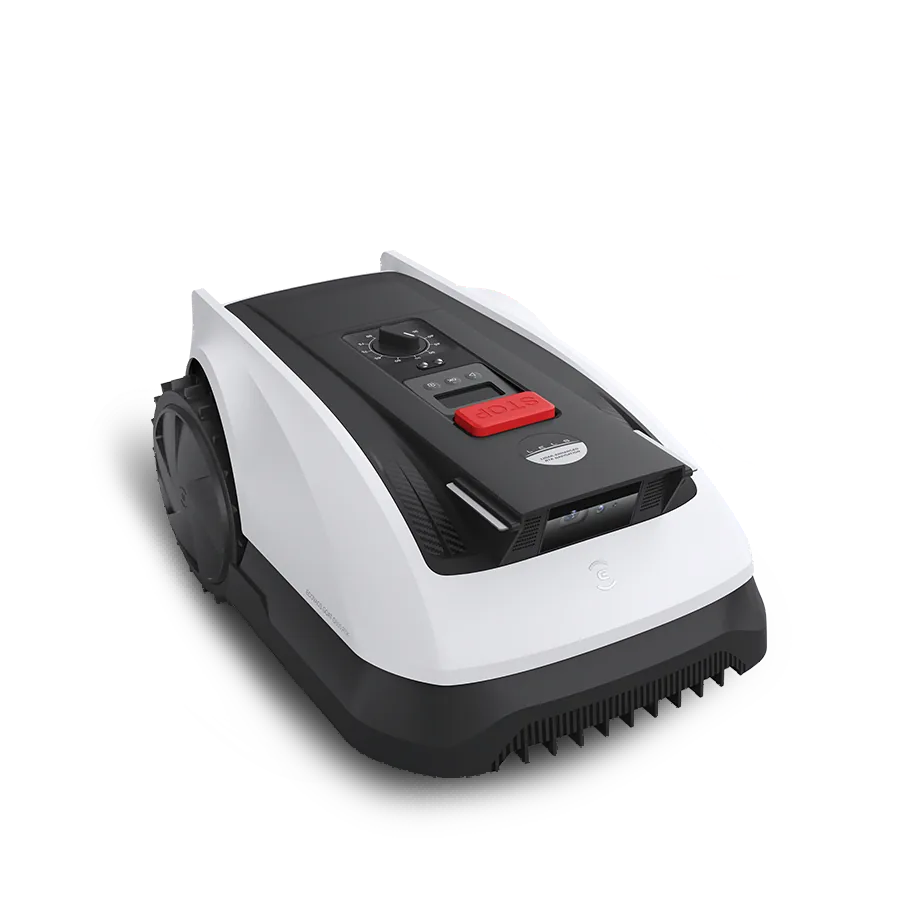
Ecovacs GOAT O1000 RTK
The GOAT O1000 RTK is the cheapest way into a properly mapped, wire-free robot mower from a big brand, and at $999.99 it undercuts the Segway Navimow i110N while doing most of the same job. You mount the included RTK antenna somewhere with open sky, let the mower auto-map, and then carve the map into zones and no-go areas in the Ecovacs Home app. A front camera and 3D ToF sensor handle obstacle avoidance and help it hold position when the satellite view gets patchy under trees. Owners on Amazon like the narrow 1.31-foot body for side yards and the TruEdge pass that gets close to fences, and several say it tamed rough, unmanicured rural lawns. The catches are a slow pace and a small 4 Ah battery: about 65 minutes of mowing, then 100 minutes on the dock, so a full 1/4 acre is an all-day affair. Owners also complain that the manual and app walkthrough are thin, and rural users have hit RTK signal drops that needed a support call. Getting mapping this cheap means you give up the string trimmer of the newer O1000 LiDAR Pro and settle for 45% slopes. For a flat-to-rolling suburban lot under about 8,600 sq ft with a decent view of the sky, it is a strong value pick.
Husqvarna
Husqvarna Automower 420 iQ
If you are going to buy an iQ, this is probably the one. The 420 iQ is the same 9.4-inch, 1-to-4-inch cut body as the 410 iQ with a faster 54-minute charge and a one-acre rating, and Husqvarna and Amazon have both sold it for well under list for most of 2026. Setup is wire-free: you mount the RS1 reference station, walk the boundary with the mower in the app, and draw stay-out zones and transport paths on the map. A long-time 450X owner who upgraded reported it cut his half-acre Michigan lawn faster and more systematically than his wired mower, in stripes or a checkerboard if you want to show off. The weak spots are the same as the rest of the family: EPOS needs sky, so narrow side yards between houses can drop signal and stop the mower cold, and while radar slows it for large objects it does not dodge sticks. Compared with a Mammotion Luba 2 AWD 3000 at similar money you give up all-wheel drive and a wider deck; compared with a Segway Navimow X3 you give up camera vision. What you get instead is a dealer who will actually service it and a four-year warranty. Best for a flat to moderately sloped acre where you want set-and-forget reliability and someone local to call.