Ecovacs
Ecovacs GOAT O1000 RTK
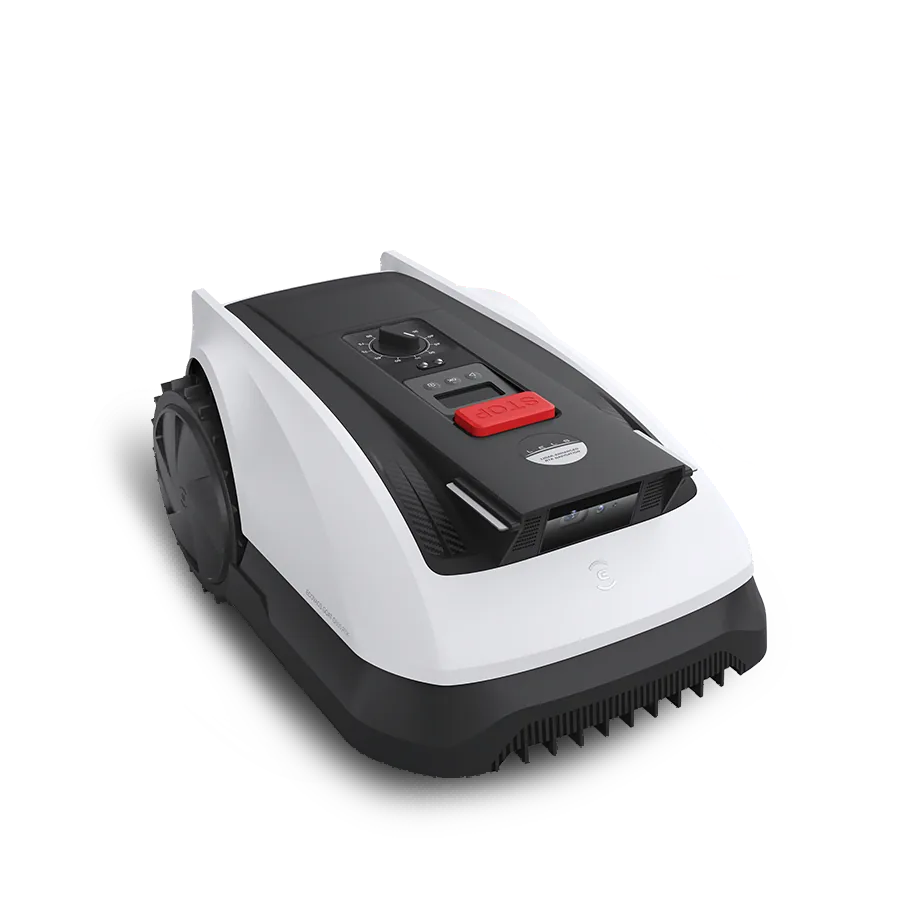
The GOAT O1000 RTK is the cheapest way into a properly mapped, wire-free robot mower from a big brand, and at $999.99 it undercuts the Segway Navimow i110N while doing most of the same job. You mount the included RTK antenna somewhere with open sky, let the mower auto-map, and then carve the map into zones and no-go areas in the Ecovacs Home app. A front camera and 3D ToF sensor handle obstacle avoidance and help it hold position when the satellite view gets patchy under trees. Owners on Amazon like the narrow 1.31-foot body for side yards and the TruEdge pass that gets close to fences, and several say it tamed rough, unmanicured rural lawns. The catches are a slow pace and a small 4 Ah battery: about 65 minutes of mowing, then 100 minutes on the dock, so a full 1/4 acre is an all-day affair. Owners also complain that the manual and app walkthrough are thin, and rural users have hit RTK signal drops that needed a support call. Getting mapping this cheap means you give up the string trimmer of the newer O1000 LiDAR Pro and settle for 45% slopes. For a flat-to-rolling suburban lot under about 8,600 sq ft with a decent view of the sky, it is a strong value pick.
We may earn a commission.
Price and availability on Amazon’s site may differ.
Specifications
How it navigates
RTK antenna included (needs open sky), fused with a front camera and 3D ToF to hold position in shaded spots. Auto-maps the yard; zones, no-go areas and paths are edited in the Ecovacs Home app.
Highlights
Pros
- ✓$999.99 for a mapped, multi-zone RTK mower is the best price in its class
- ✓Slim 1.31 ft body squeezes through 2.3 ft side-yard gaps
- ✓TruEdge pass gets close enough to fences that owners retire the string trimmer in most spots
- ✓Owners report it copes with rough, unmanicured lawns and routes around trees on its own
- ✓Quietest GOAT at 57 dBA
Cons
- ✗Small 4 Ah battery: about 65 minutes mowing, then 100 minutes charging
- ✗RTK antenna needs open sky; rural owners report signal drops
- ✗Thin manual and app onboarding trip up first-time owners
- ✗No string trimmer and only 45% slope rating versus the LiDAR Pro models
Compare the Ecovacs GOAT O1000 RTK
Related robot mowers
More from Ecovacs →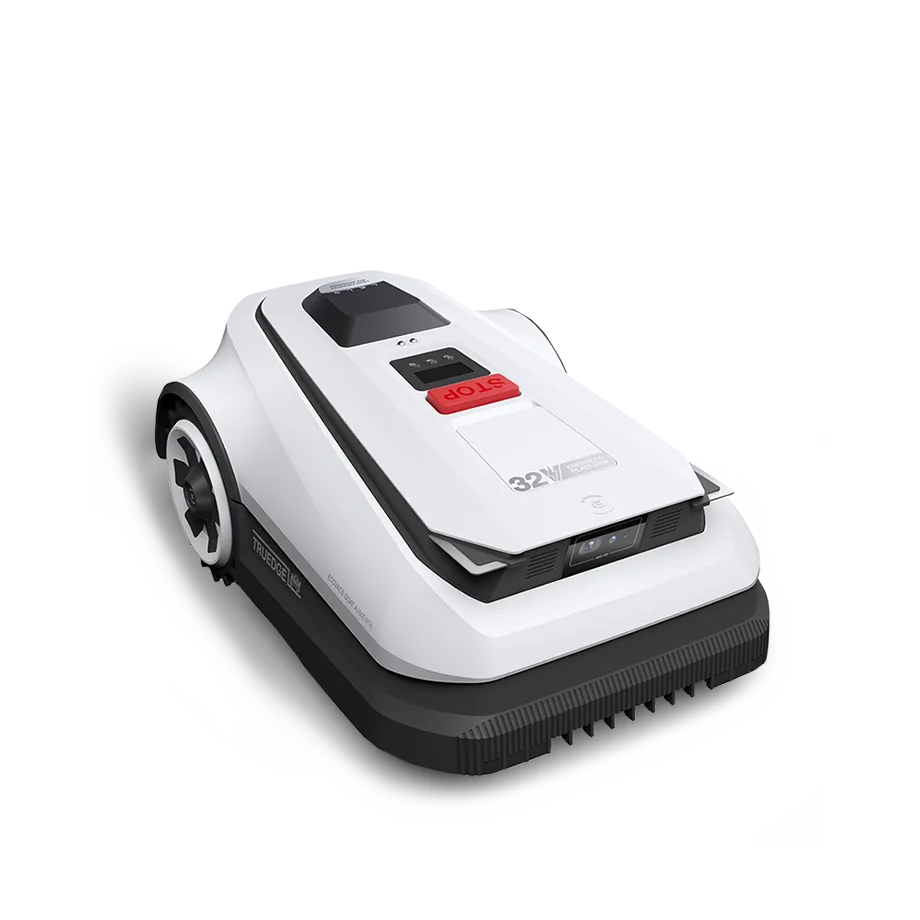
Ecovacs
Ecovacs GOAT A2500 RTK
The GOAT A2500 RTK was Ecovacs' 2025 flagship and it is now the value play in the range: the list price is still $1,999.99 but Amazon has sold it between $1,500 and $1,750 for most of 2026. You get the 32V dual-disc deck with a 12.99-inch cut, 50% slope capability, and a LELS RTK antenna backed by a 3D ToF sensor and AI camera so it keeps its bearings under moderate tree cover. The 3 Ah battery charges in about 45 minutes, which matters because runtime is only about 64 minutes; Ecovacs' own math is 5,382 sq ft per charge. Owners are split. Happy ones describe mowing three separate yards every couple of days, a useful live map, and a mower that frees itself when stuck. The unhappy ones (and the Amazon average sits in the low 3s) report RTK dropouts, hectic spot-turns that dig into turf, edge passes that back off when plants overhang a bed, and nagging app pop-ups. Notebookcheck's verdict of 'fast, but not flawless' is about right. Compared with the Segway Navimow X330 it is quicker across open ground but less refined at edges, and unlike the newer A2000 LiDAR Pro it has no string trimmer. It suits open half-acre lawns with a good view of the sky where you want speed and can tolerate some fiddling; heavy shade or lots of narrow beds point you toward the LiDAR models.
Ecovacs
Ecovacs GOAT GX-600
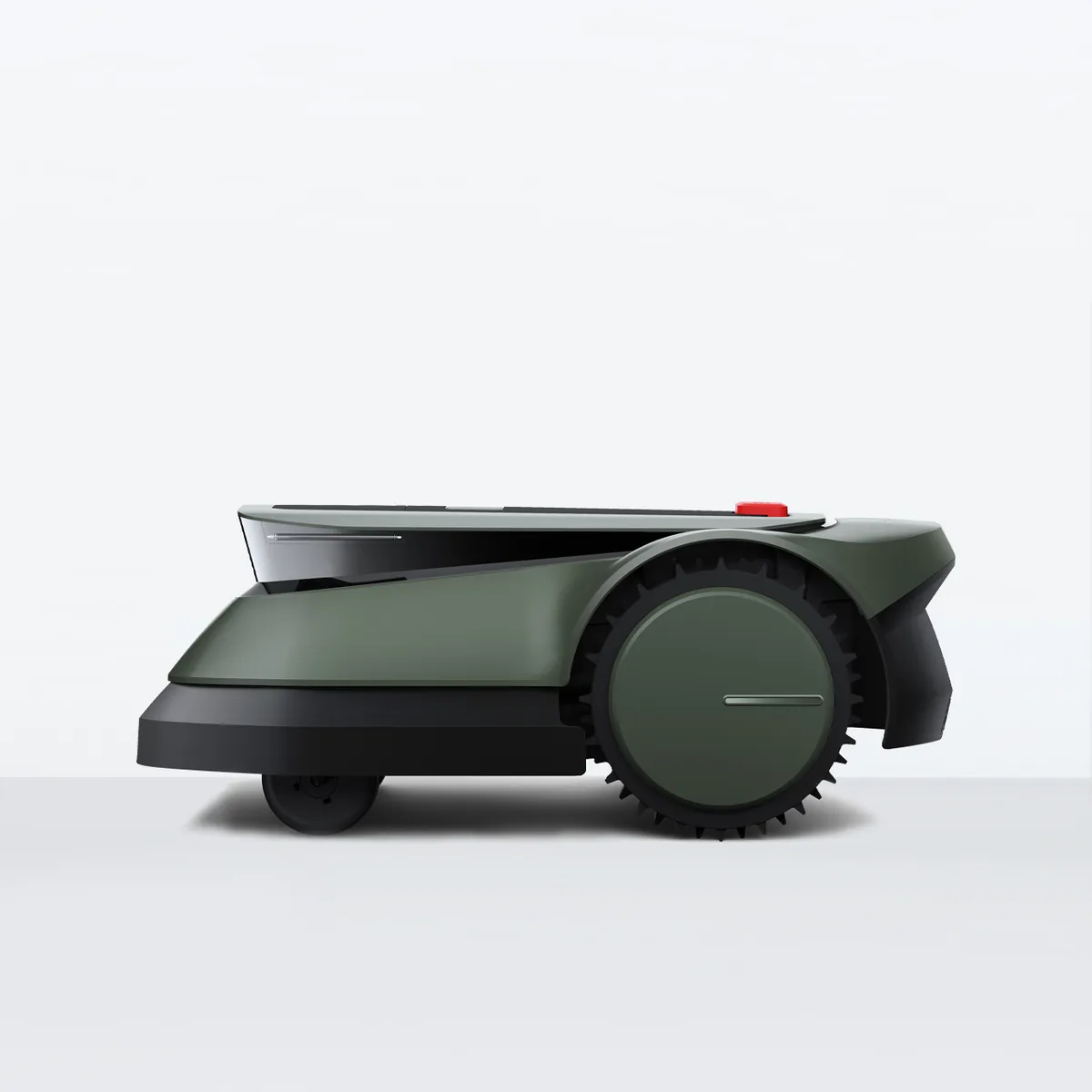
The GOAT GX-600 is Ecovacs' answer to the 'I just want it to work' crowd. There is no wire to bury and no RTK antenna to mount: a 150-degree fisheye camera plus a ToF sensor read the color and texture of your grass, so you set the base, press go, and it figures out where the lawn ends. That is genuinely quicker to get running than a Segway Navimow i105N, but the trade-off is that it never draws a map. There are no zones, no no-go areas, and no path to a second patch of grass across a driveway, and Android Police found it needs clear physical borders (beds, fences, mulch lines) to stay put. It handles 40% slopes, cuts an 8.66-inch swath, and heads home when it senses rain. Cutting height is a manual dial rather than an app setting. Ecovacs lists it at $1,299.99 but it has sat at $999.99 on their own store for months, and unlike the rest of the GOAT range it is not sold on Amazon in the US. Think of it as a set-and-forget mower for one simple, fenced yard under 6,500 sq ft; if your lawn has islands, a front and back section, or an open edge onto a neighbor's grass, spend a little more on the O1000 RTK or eufy E15 and get real maps.
Ecovacs
Ecovacs GOAT O1000 LiDAR Pro
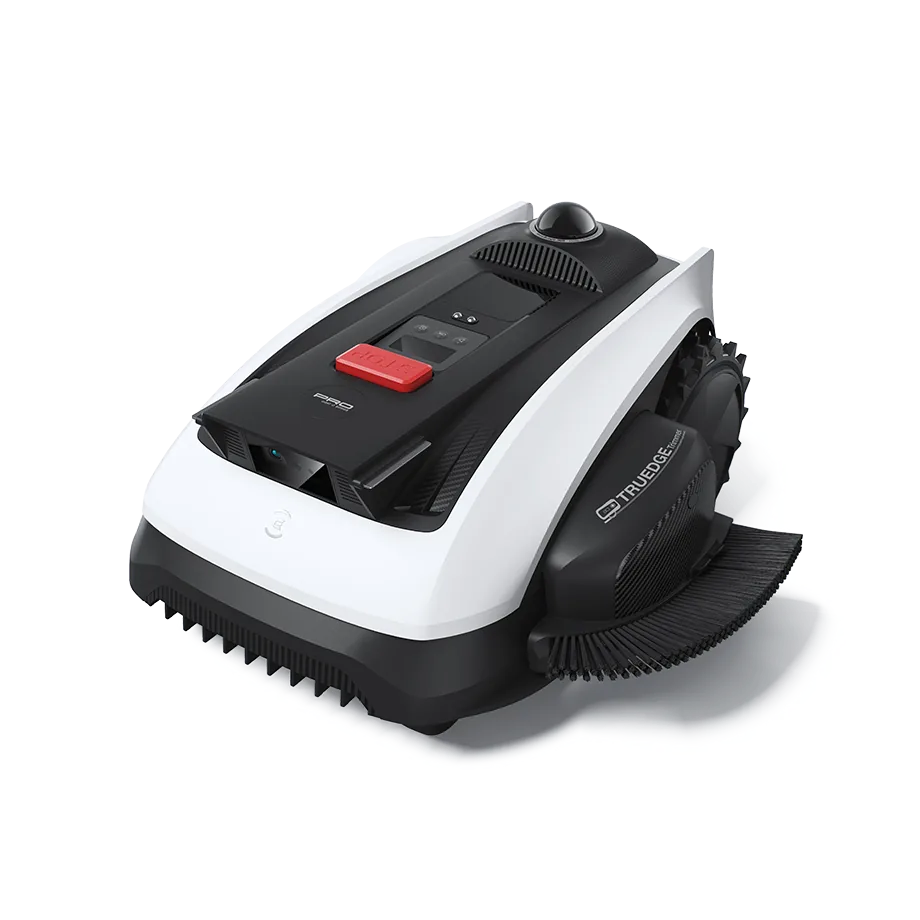
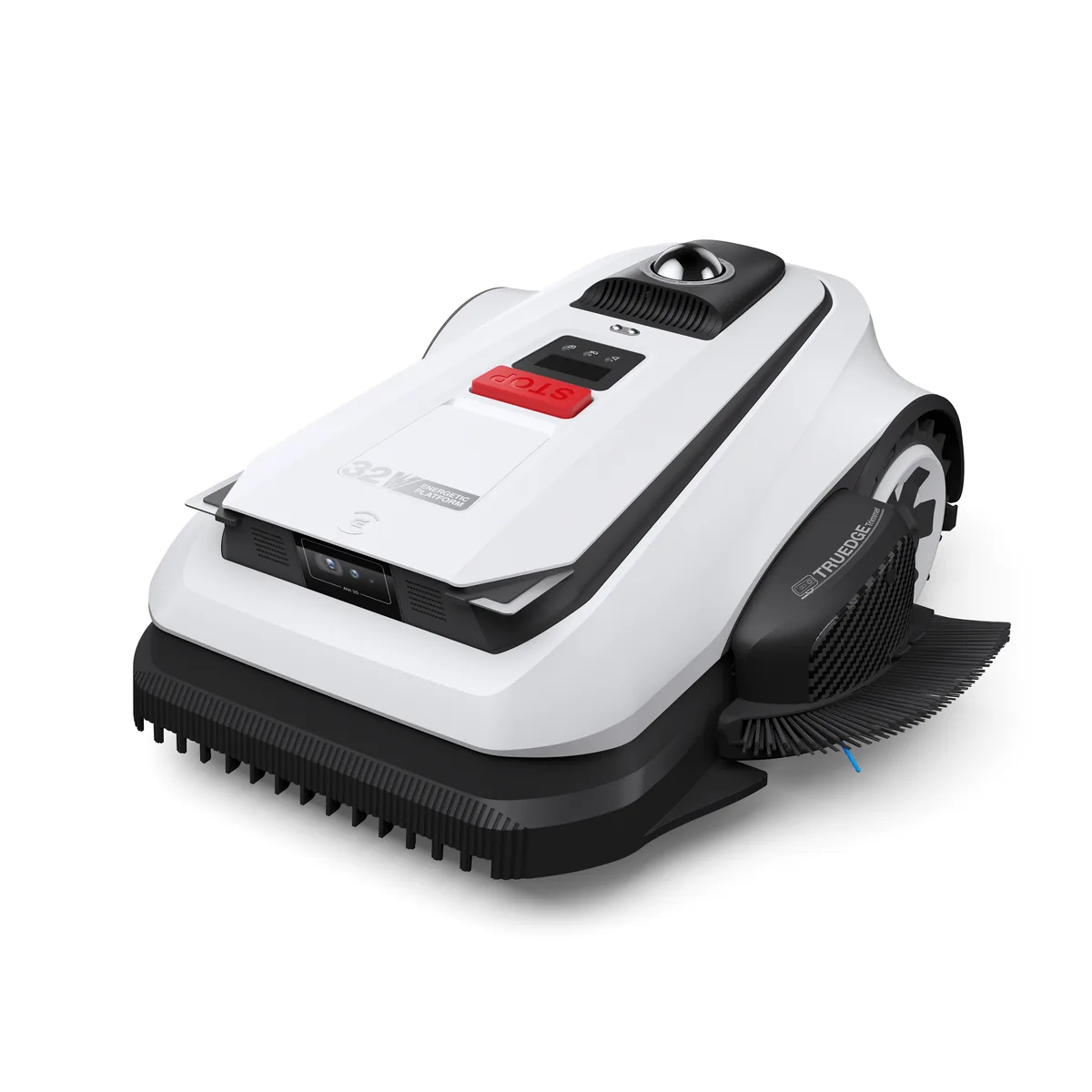
The GOAT O1000 LiDAR Pro is the 2026 replacement for the O1000 RTK's antenna: a spinning 360-degree LiDAR on the hood plus a 3D ToF sensor build a 3D map of your yard with no satellite station, so it works under tree canopy and beside walls where RTK mowers lose lock. Ecovacs also bolted on its TruEdge string trimmer, which swings out on the left side to buzz grass up to 3.54 inches past the blade disc along fences and beds. That trimmer is the big reason to pay $1,499.99 instead of $999.99 for the O1000 RTK, and it is also the loud part: 61 dBA mowing, 81 dBA when the trimmer spins. The 5.2 Ah battery gives about 90 minutes per charge with a 70-minute recharge, cutting an 8.66-inch path at 1.18 to 3.15 inches. Early owners say the blades are whisper quiet, that it copes with bumpy vole-ridden lawns and exposed roots, and that a 3,700 sq ft back yard takes two charges on the gentle speed setting. The app has a learning curve and you will want the optional garage if the dock sits in full sun. Against the Segway Navimow i110N it costs more but skips the antenna and adds edge trimming; against the Dreame A3 AWD 1000 it is cheaper but rear-wheel drive and limited to 45% slopes. Best for shaded 1/4-acre lots where an RTK antenna would struggle.
Ecovacs
Ecovacs GOAT A2000 LiDAR Pro
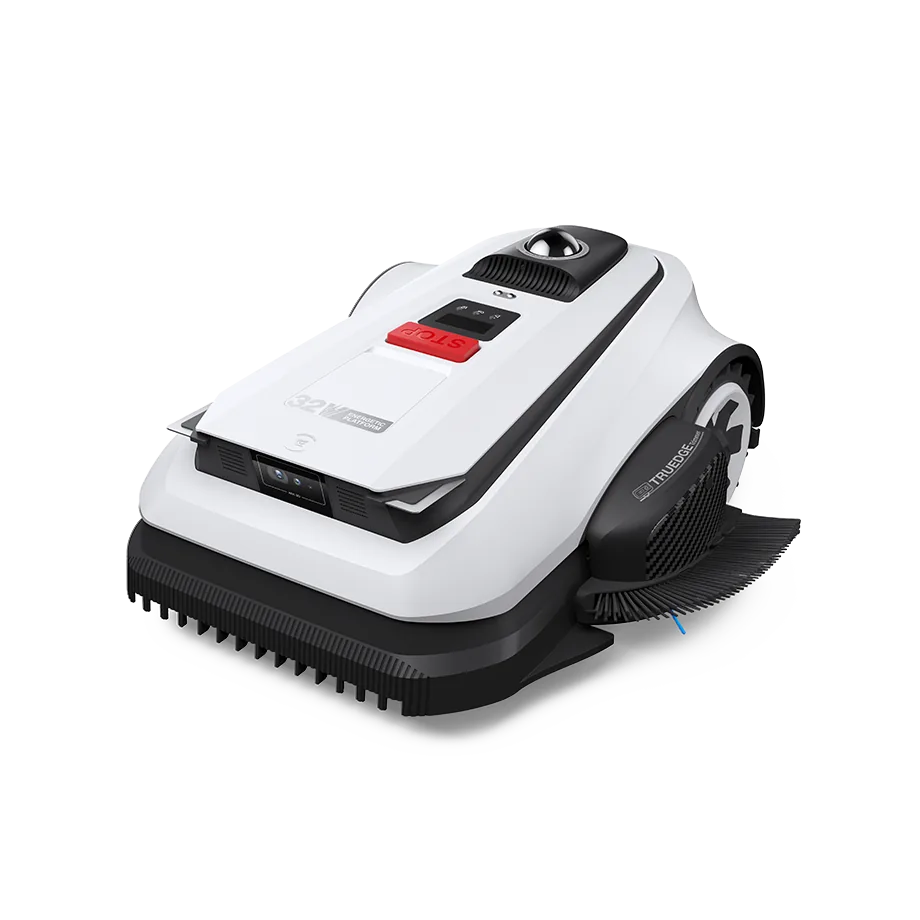
The GOAT A2000 LiDAR Pro is the mid-size member of Ecovacs' 2026 LiDAR trio: the same HoloScope 360 spinning LiDAR and 3D ToF mapping as the A3000 LiDAR Pro, the same 32V dual-disc deck cutting a 12.96-inch path, and the same left-side TruEdge string trimmer, but with a smaller 3 Ah battery aimed at yards up to about half an acre. It maps in minutes without an RTK antenna, holds 2 cm positioning under trees, and lets you split, merge and delete zones in the app. Owners on Amazon are mostly enthusiastic: one who works with warehouse robots said setup took 30 minutes and 1,500 sq ft used about 40% of the battery, and most like the striped finish and the fact that the trimmer actually handles fence lines. The gripes are familiar Ecovacs ones. The trimmer only works on clockwise passes, it cannot reach into tight or triangular corners, path edges still need a hand trimmer, and reviewers at BTTR and EFTM watched the wheels scuff dirt around fence posts. Runtime is a modest 50 minutes with a 50-minute recharge, so big lawns mean several cycles. At $1,999.99 it sits right on top of the Segway Navimow X330 and Mammotion Luba Mini AWD; pick the A2000 if edge trimming matters more to you than all-wheel drive, and step up to the A3000 LiDAR Pro if your lawn is closer to 3/4 acre.
Ecovacs
Ecovacs GOAT A3000 LiDAR Pro
The GOAT A3000 LiDAR Pro is the mower Ecovacs points at when someone asks for a whole-yard robot: a 7.5 Ah, 32V battery good for about 160 minutes per charge, a 13-inch dual-disc deck, 50% slopes, and a built-in TruEdge string trimmer that swings out to cut flush against fences, beds and walls. Navigation is a 360-degree LiDAR plus 3D ToF, so there is no antenna and it maps a typical lot in about five minutes, holding 2 cm accuracy under trees where RTK mowers wander. It launched in February 2026 at $2,499.99, which is $500 less than the trimmer-less 2025 A3000 LiDAR it replaced. Reviewers at How-To Geek, BGR and Freshly Charged all landed in the same place: excellent cut quality and the trimmer removes 75-90% of hand edging, but it is loud when the trimmer runs (82 dBA), it treats grass over about 8 inches as an obstacle, and it struggles with curved borders and tall tufts. Owners moving from a first-generation Mammotion Luba praise how easy LiDAR setup is versus placing an RTK antenna, but note that stripes default to true north until you fiddle with per-zone angles, and that the trimmer will not run in auto mode without a dedicated edging session. Against the Dreame A3 AWD Pro it is rear-wheel drive with a lower slope rating; against the Mammotion Luba 2 it wins on edging. Best for well-kept suburban lawns up to 3/4 acre with mostly straight borders.
Segway
Segway Navimow i110N
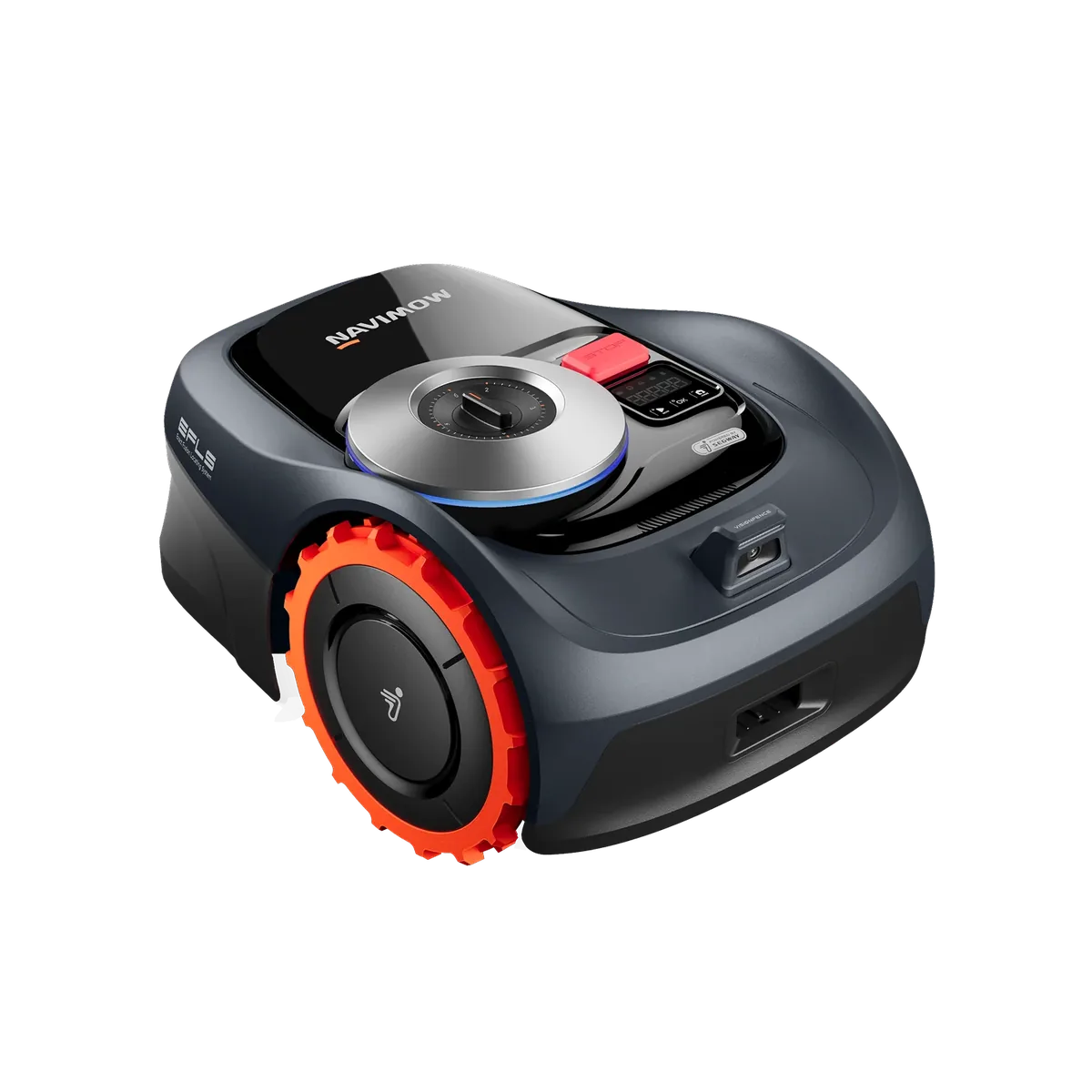
The i110N is the same 7.1 in body as the i105N with double the battery (5.1Ah, about 120 minutes per charge) so it can cover a quarter acre, and it won Tom's Guide's Editor's Choice for cut consistency at a price that has slid from $1,299 at launch to a $929 list and frequent sub-$800 sales. It uses Segway's EFLS 2.0 RTK plus a front VisionFence camera, so when the satellite fix wobbles under trees it can hold the boundary visually for a while instead of wandering off. Reviewers consistently praise the straight, overlapping stripes with no missed patches and the near-silent 58 dB operation that makes night mowing realistic. The complaints are the flip side of the budget price: it is slow (Tom's Guide clocked roughly three times the time of push mowing), the 30% slope rating and front-wheel drive mean it spins out on real hills, PCWorld's unit repeatedly drove off curbs because there is no drop-off detection, and GPS anti-theft needs the $120 Access+ 4G module. Segway has pulled it from its own store in favor of the i210 AWD, but Home Depot still stocks it. For a flat quarter-acre suburban lot it remains one of the cheapest dependable wire-free options; if your yard has slopes or a parking strip, look at the i210 AWD or a Luba Mini instead.