Anthbot
Anthbot M5
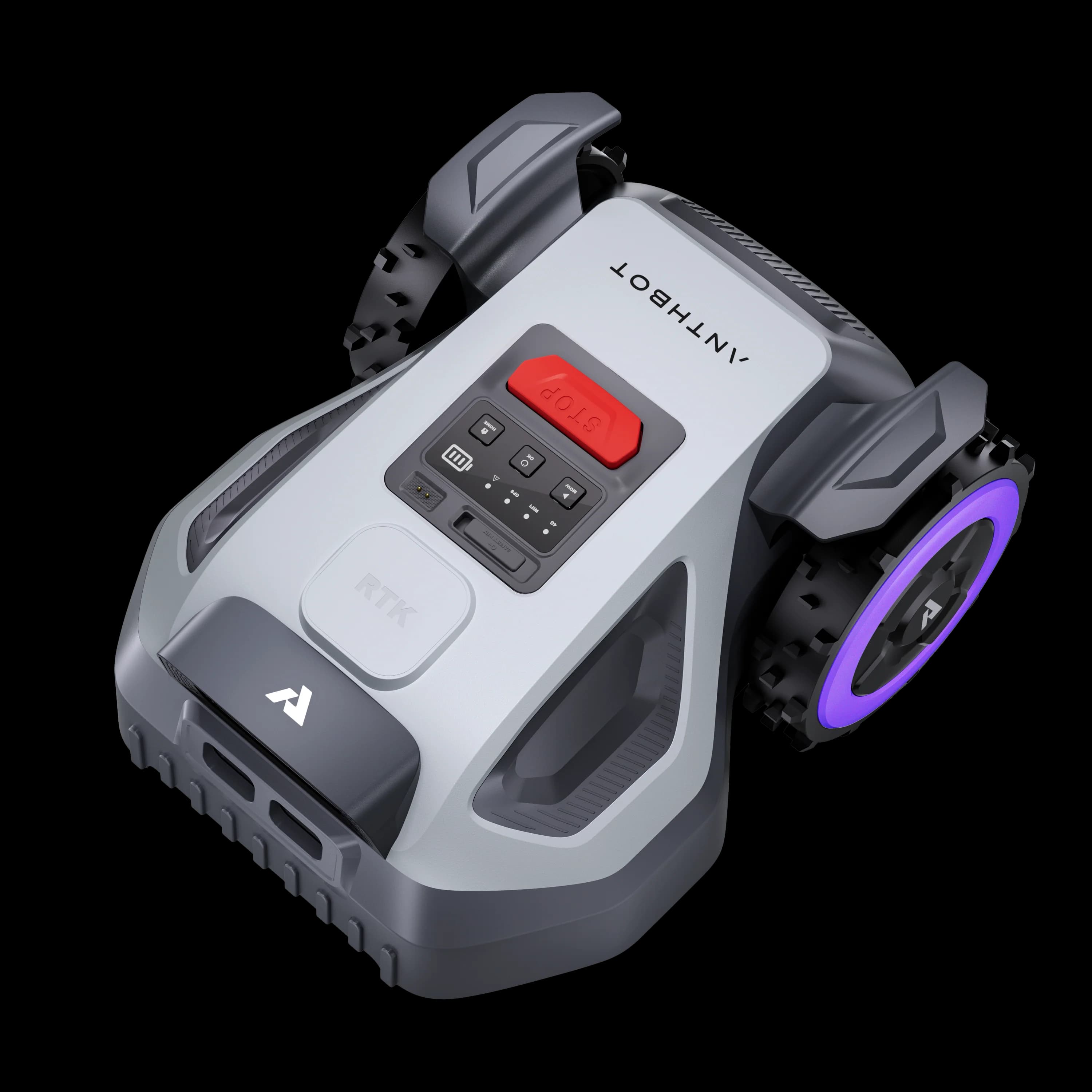
The M5 is the entry point to Anthbot's 2026 M series, a compact wire-free mower rated for 500 m2 (about 1/8 acre) that anthbot.com sells for $649 against a $799 list, or $679 with a garage. It uses the same full-band RTK receiver and two 150-degree HDR cameras as the M9, and the cameras run visual odometry so it keeps mowing when a house or tree blocks the satellite view; a 4G module is built in with no subscription, and NetRTK positioning (no base station) comes as a three-month trial. The deck is a 7.9 inch five-blade disc with 1.2 to 2.8 inch app-set height, it climbs 45 percent, mows about 150 m2 an hour at 58 dB, and rain sensing sends it home. Reviewers who ran one found setup and mapping the easy part and cut quality fine on maintained grass, but reported missed slivers along edges, slower edge passes, and a mower that struggles once grass is overgrown or the layout gets intricate. Runtime and weight are not published. Against the Segway Navimow i105N ($799, 0.12 acre) it costs $150 less and adds 4G and a rain sensor; against Anthbot's own Genie 600e it trades the four-camera array for a newer body with on-edge mowing.
We may earn a commission. Price and availability on Amazon may differ.
Specifications
How it navigates
Full-band RTK from an included reference station plus two 150-degree HDR cameras running visual odometry to bridge satellite dropouts; NetRTK over the built-in 4G is a 3-month trial. Auto-map or drive the perimeter in the app.
Highlights
Pros
- ✓Cheapest RTK-plus-vision mower with 4G built in and no subscription for app control
- ✓Ten-minute wire-free setup; reviewers called mapping the easiest part
- ✓Rain sensor and auto-rescheduling around sunrise, sunset and forecast
- ✓On-edge mowing and 20 zones on a mower this small
Cons
- ✗Edge passes are slow and reviewers found missed slivers along borders
- ✗Struggles in overgrown grass; it is a maintenance mower, not a first cut
- ✗Runtime, battery size and weight are not published
- ✗NetRTK is only a 3-month trial, so plan on mounting the reference station in open sky
Owner insights
Owner discussion for this model has not been compiled yet. The pros and cons above come from the maker’s spec sheet and published reviews.
Anthbot M5, head-to-head
Mowers people look at alongside it
More from Anthbot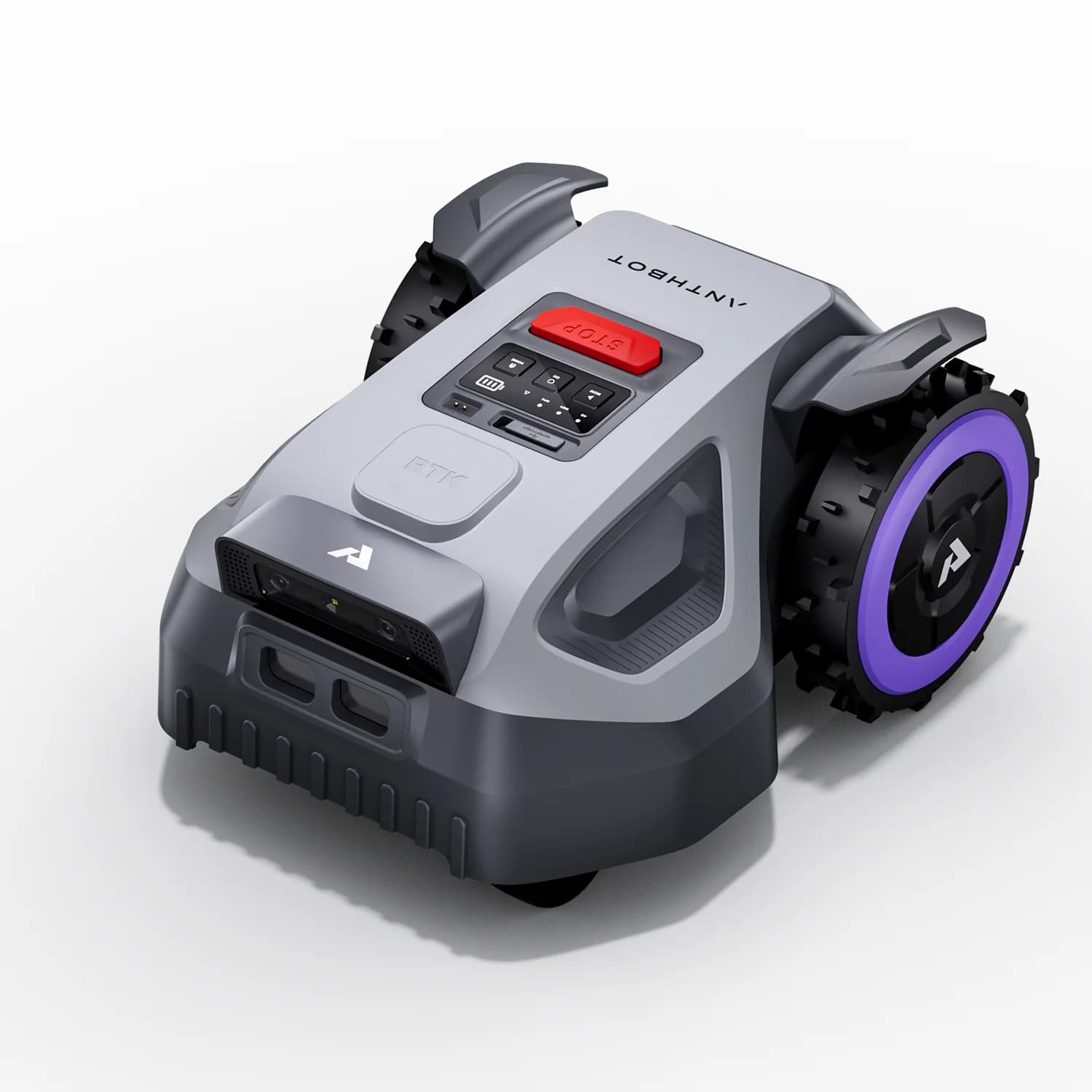
Anthbot
Anthbot M9
The M9 is the M5 body with a 5 Ah, 90 Wh battery, rated for 1,000 m2 (about a quarter acre) and sold direct for $699 against an $899 list, or $769 with a garage. Positioning is full-band RTK from an included reference station plus dual 150-degree HDR cameras, with NetRTK over the built-in 4G as an option, so there is no wire and setup takes about ten minutes. It cuts with a 7.9 inch five-blade disc at 1.2 to 2.8 inches, climbs 45 percent, runs about 90 minutes per charge and recharges in 90 more, weighs 22.5 lb, and stays under 58 dB. Two independent hands-on reviews were positive: one had it navigate an L-shaped lawn with clothesline poles cleanly and leave neat U-pattern stripes on uneven ground, the other watched it finish about 80 percent of a yard in 77 minutes while steering around dog holes and shrubs, and both praised the beginner-friendly app. The gripes are the 2.8 inch maximum height, lower than the 3.5 inches a Navimow allows, occasional false stops for shadows, and a remap if the first auto-map comes out loose. Against the Segway Navimow i110N ($929, same quarter acre) it is $230 cheaper, includes 4G and a rain sensor and cuts wider; the Mammotion Yuka mini ($749) is the closer fight, and the M9 is rated for more ground.
Best for Flat or gently rolling quarter-acre lawns for first-time robot owners who want RTK precision and 4G for under $700.
Anthbot
Anthbot Genie
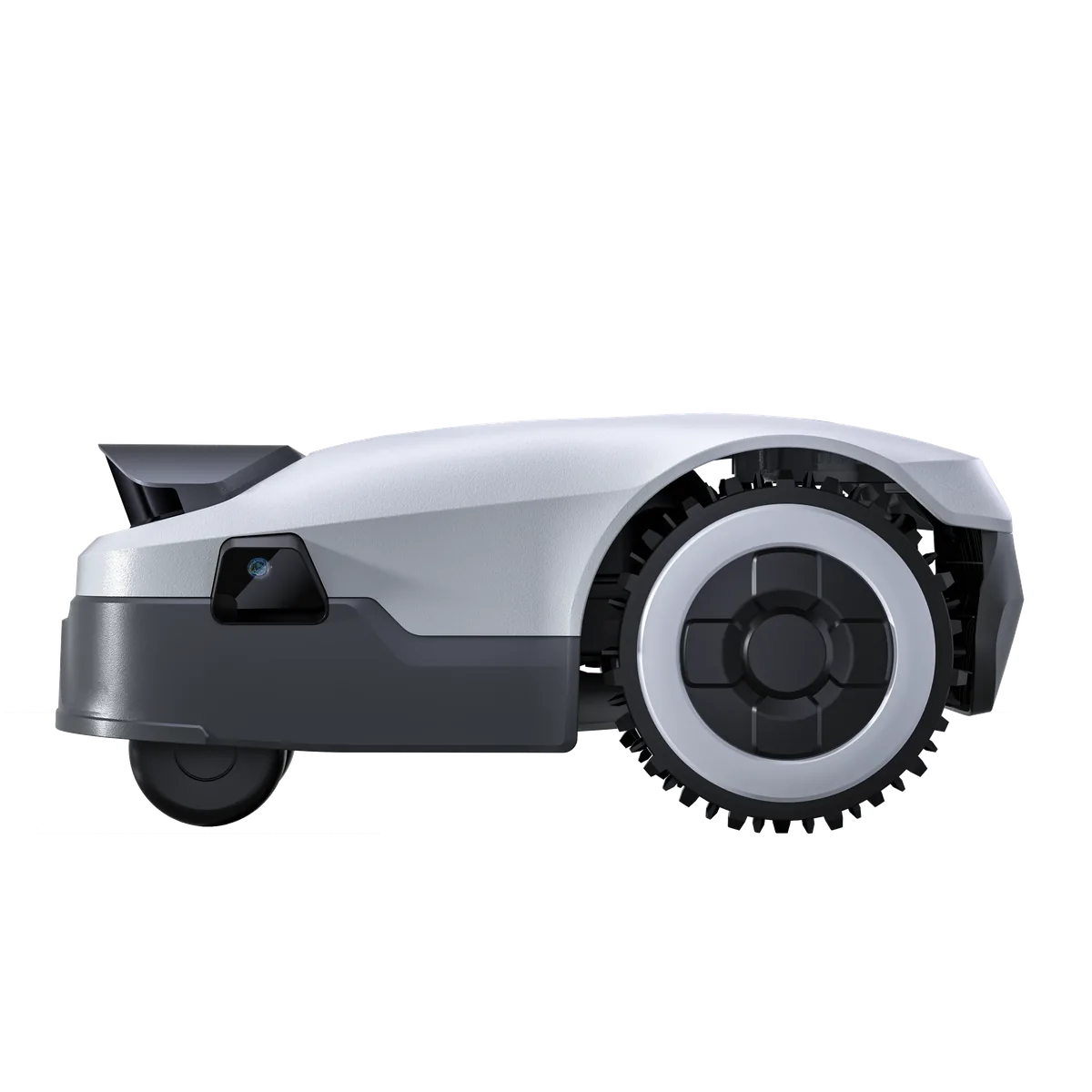
The Anthbot Genie started as a Kickstarter in 2024 and has settled into the role of the budget RTK mower that actually works on a plain lawn. In fall 2026 Anthbot sells the 600e for $699, the 1000 for $799 and the 3000 for $899 direct, which is less than half of what Mammotion or Roborock charge for similar coverage, and the 3000 is rated for up to 0.89 acres. The hardware is modest: a 7.9 inch disc, 1.2 to 2.8 inch app-set height, rear-wheel drive and a 45 percent slope rating, but the 10 Ah battery in the 3000 runs about four hours, it is one of the quietest mowers at 58 dB, and an included RTK antenna plus four cameras handle positioning and obstacles. Owners who set the antenna in open sky say mapping was easy, the stripes look professional and it handles multiple zones well; the negative reviews are the flip side, describing RTK dropouts near houses, a stubborn firmware update at first setup, over-cautious stops for leaves, and a unit that degraded badly in its second season with slow support. The narrow deck means a large yard takes two passes to look finished. It competes with the Navimow i105 on price while covering far more ground, and the Yuka mini beats it on setup simplicity. Best for budget buyers with flat, open lawns up to three-quarters of an acre.
Best for Budget shoppers with flat, open lawns up to three-quarters of an acre who want RTK precision without a $2,000 price tag.

Anthbot
Anthbot N8
The N8 is Anthbot's 4-in-1 mower, on sale since September 10, 2026 at $1,699: it mows, mulches, bags clippings into a 23 liter rear bin, and sweeps leaves, and when a radar sensor sees the bin is full it drives to a dump point you set in the app, empties, and resumes. Rated for 1,500 m2 (about 3/8 acre) at 135 m2 an hour, it positions with full-band RTK plus dual 150-degree HDR cameras, with NetRTK over 4G as a paid option, and carries the same 1,000-object AI avoidance as the M series. The deck is a 7.9 inch disc at 1.2 to 2.8 inches with a 4,000 rpm cyclone fan behind it, the 9.2 Ah, 198 Wh battery recharges in about 80 minutes, and it weighs 36 lb before the bag goes on. Anthbot rates it at 58 dB mowing but 68 dB collecting, and it only manages about 200 m2 per charge with the bag attached, so a full 3/8 acre bagging run is several cycles. It climbs 45 percent, has a rain sensor and an LED for low light, and Anthbot's own listing says the sweeper is for a light layer of leaves, not piles. This entry is built from Anthbot's published specs rather than independent testing. The cataloged comparison is the Mammotion Yuka ($1,349), which also sweeps and collects but cuts 12.6 inches wide and is rated for 0.75 acre; the N8 costs $350 more with a narrower deck, and its case is the 23 liter bin and the choice to bag clippings rather than mulch them.
Best for Lawns up to 3/8 acre where the owner wants clippings bagged and fall leaves swept rather than mulched, and has a spot to dump them.
Anthbot
Anthbot M5 LiDAR
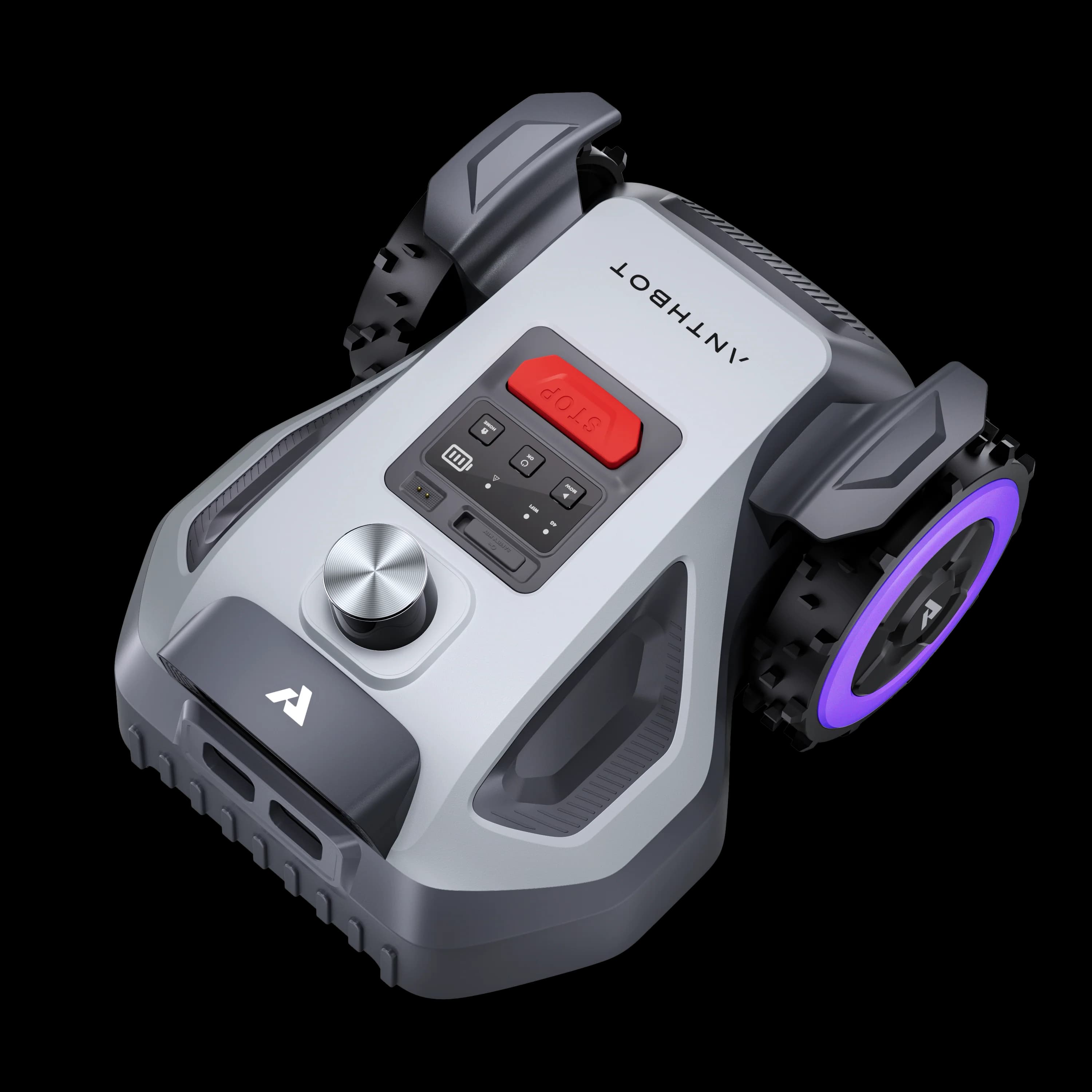
The M5 LiDAR is the 500 m2 M5 body with the RTK receiver swapped for a 360-degree LiDAR dome on top, priced at $799 direct against $949 list. With no reference station to mount and no satellite fix to wait for, it maps by auto-mapping or driving the perimeter and holds position under trees and against walls where the RTK M5 needs open sky. It keeps the dual 150-degree HDR cameras for obstacle recognition, the 7.9 inch five-blade disc, 1.2 to 2.8 inch app height, 45 percent slope rating, 58 dB noise, rain sensing and IPX6 washdown. The trade-offs are real: the 2.5 Ah battery gives roughly 40 minutes per charge with a 60 minute recharge, and one hands-on test found the LiDAR track snakes slightly more than RTK through narrow passages and hesitates at high-contrast surface changes, while still scoring it 85/100 for mapping speed, edge tuning and moving between zones through gaps and ramps. 4G remote access is paid after the trial. Weight is not published and only two reviews sit on the product page. The cataloged rival is the Ecovacs Goat O1000 LiDAR Pro at $1,499 for a quarter acre; the M5 LiDAR halves the price for half the area, so it suits small, enclosed, tree-shaded lawns better than the RTK M5 does.
Best for Small, enclosed lawns up to 1/8 acre with tree cover, walls or narrow side passages that would starve an RTK antenna.
Segway
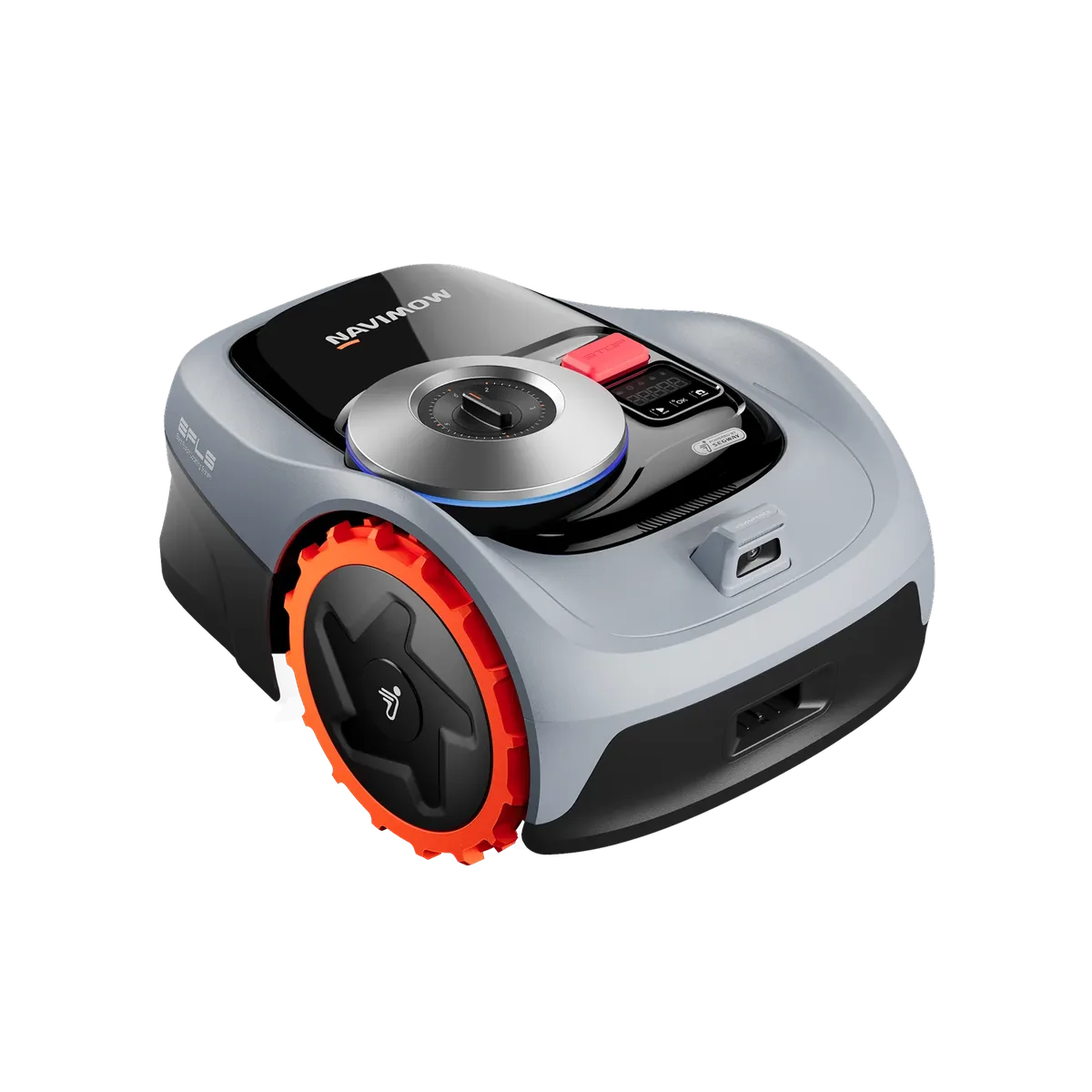
Segway Navimow i105N
The i105N is the mower that made wire-free RTK cheap. Segway cut it from $999 to $799 in 2026 and it regularly dips to $669-699, which puts it in Worx Landroid Vision territory while still using a proper RTK antenna for centimeter-level positioning. It is small - 7.1 in cutting width, 24 lb, a 2.55Ah battery good for about an hour - so the rated 1/8 acre is honest; Amazon owners with a typical city lot say a full cut takes around 2.5 hours across two or three charge cycles. Setup is genuinely DIY: mount the antenna somewhere with open sky, drive the mower around the perimeter with your phone, and let AI Assist Mapping snap to the lawn edges. Owners like the quiet 58 dB motor, the straight-line stripes, and that it pays for itself in a season versus a lawn service. The knocks are consistent too: getting stuck on flat ground and in dips, mapping frustration when trees hang over the antenna, a manual cutting-height dial, and a few units dying after a few months with slow email-only support. The 30% slope limit and front-wheel drive rule out anything hilly. Compared with the Mammotion Yuka Mini, the i105N is cheaper and simpler but has no vision-only mode when RTK is hopeless; step up to the i110N if you have more than about 5,000 sq ft.
Best for Flat city lots under 5,500 sq ft where a quiet, cheap wire-free mower matters more than hill-climbing or speed.
Mammotion
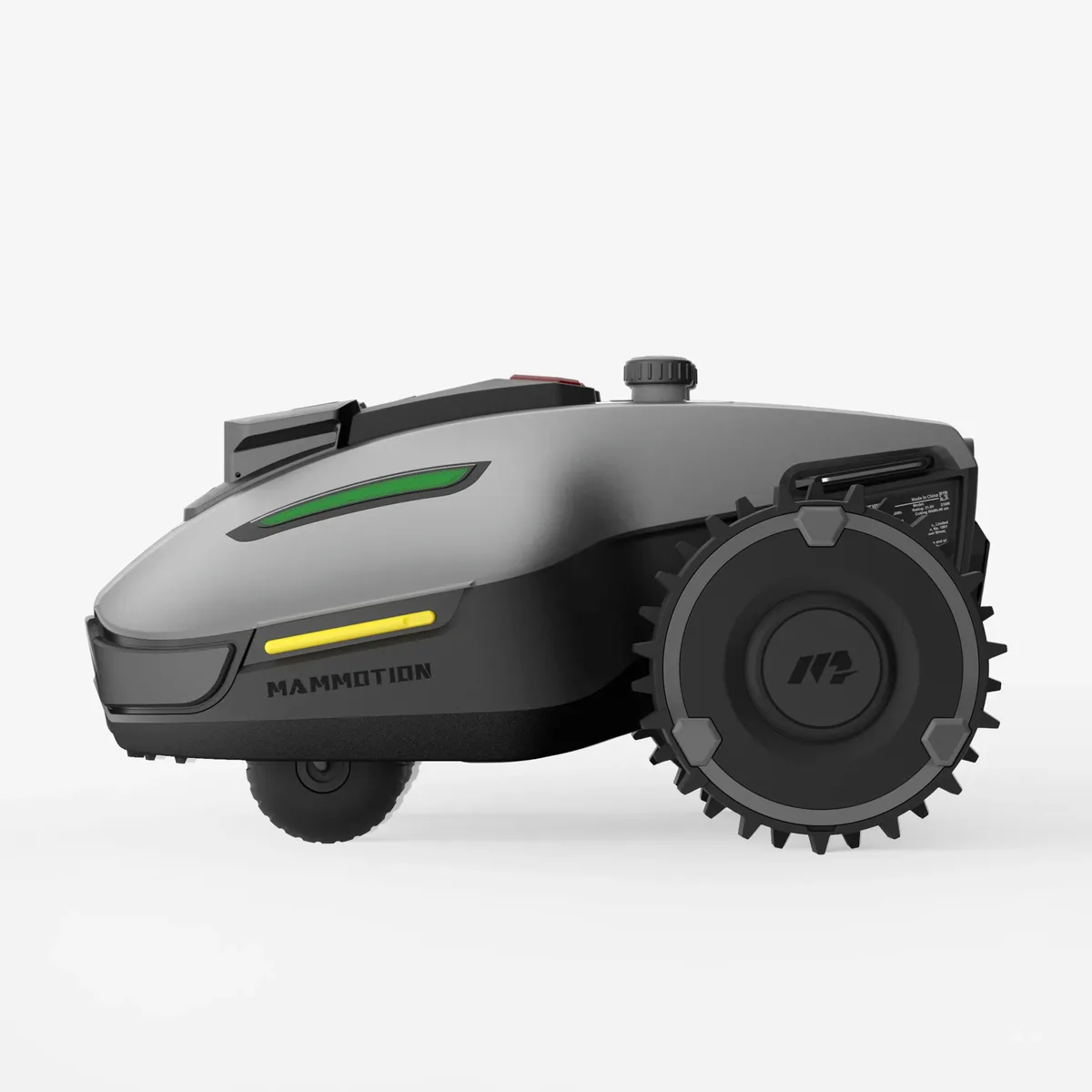
Mammotion Yuka mini
The Yuka mini is the cheapest way into a wire-free, station-free robot mower from a brand with a real support desk, and at $749 for the 600H (or about $949 for the 800H at Home Depot) it undercuts the Navimow i105 while still carrying a 3-year warranty. There is no RTK antenna: it pulls free NetRTK corrections over your Wi-Fi and leans on two front cameras to track the grass edge, which is why it auto-maps a small yard in ten minutes. It is a 23 pound, rear-drive machine with a 7.5 inch disc and a 2.0 to 3.5 inch cut, rated for 50 percent slopes, though owners with bumpy or sloped yards say the front caster and lift sensor trip constantly and they end up rescuing it. On flat lawns under a fifth of an acre owners are happy: quiet, tidy stripes, and they like that it stays in bounds even where GPS is weak. Weak points are an app that lacks polish, cautious behavior around tree trunks that leaves rings of long grass, no built-in 4G (a $129 module adds it) and a 2 inch minimum height that rules out a tight cut. Mammotion has since released the LiDAR Yuka mini 2 at $1,399, so this is the value play. Best for flat, simple yards up to 0.2 acres and first-time robot owners.
Best for Flat suburban yards up to a fifth of an acre where a cheap, station-free mower with real warranty support is the goal.