Toro
Toro Haven VM75
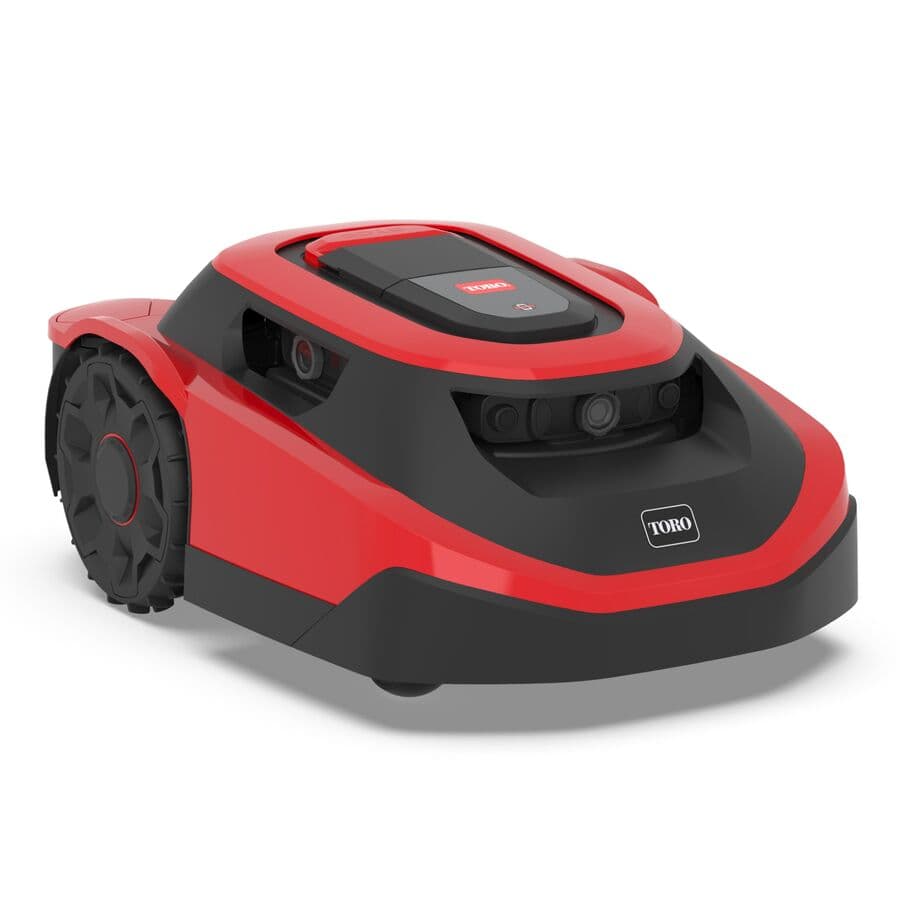
The Haven VM75 is Toro's first robot mower and the only camera-only robot from a major US outdoor-power brand. Four onboard cameras build a 3D point-cloud map of the yard, so there is no wire to bury, no RTK antenna and no GPS to lose under trees; you map by pushing the mower around the perimeter and zig-zagging the interior. It was shown in early 2024, slipped a year, and reached dealers in spring 2025 at $3,499; Toro's site now lists $3,999 for the 3/4-acre model, and it is dealer-only with no online checkout. The spec sheet is solid: a 10-inch deck with four blades, 0.75 to 3.25 inch cut, 47 percent (25 degree) slopes, 3 hours per charge with a 1-hour recharge, IPX6 weatherproofing, night mowing and 2-year warranty on a 41-pound body. The catches are in Toro's own help center: SmartZone mowing is a random pattern rather than rows, the blades stop short of the shroud so about 4 inches of edge needs a trimmer, the mower talks to a hub that must be wired to your router by Ethernet, and there is no cellular option. Reviewers who saw the 2024 pre-production units praised the push-to-map setup and app, and later noted Toro had not finalized details by launch. Against the Worx Landroid Vision AI WR220 ($2,499, half acre) it covers more lawn with a wider deck for $1,500 more; against a Segway Navimow X350 at the same money you give up RTK row mowing for a dealer and a brand name.
Specifications
How it navigates
Camera-only: four onboard cameras build a 3D point-cloud map of the yard, so no wire, RTK antenna or GPS. You map by pushing the mower around the perimeter and zig-zagging the interior; the dock needs two fixed reference objects within 65 ft.
Highlights
Pros
- ✓Vision navigation works under heavy tree cover and next to buildings where RTK mowers drop out
- ✓Setup is pushing the mower around the yard, not wire or antenna placement
- ✓Night vision cameras and IPX6 sealing let it mow overnight and in wet weather
- ✓10-inch deck with four blades and a 3.25-inch top height suit thick northern lawns
- ✓Sold and serviced through Toro dealers with a 2-year warranty
Cons
- ✗$3,999 list is $500 above launch pricing and more than RTK rivals that mow in rows
- ✗Random-pattern mowing, not lanes, so it needs more hours for the same lawn
- ✗Blades stop about 4 inches short of the shroud edge; plan on trimming every few weeks
- ✗Hub must be plugged into your router by Ethernet; no cellular or standalone Wi-Fi
- ✗No published noise figure and no owner reviews on Toro's site yet
Pros and cons above are drawn from the manufacturer’s spec sheet and published reviews; this model is too new for a body of owner reports.
Owner insights
Owner discussion for this model has not been compiled yet. The pros and cons above come from the maker’s spec sheet and published reviews.
Toro Haven VM75, head-to-head
Mowers people look at alongside it
More from Toro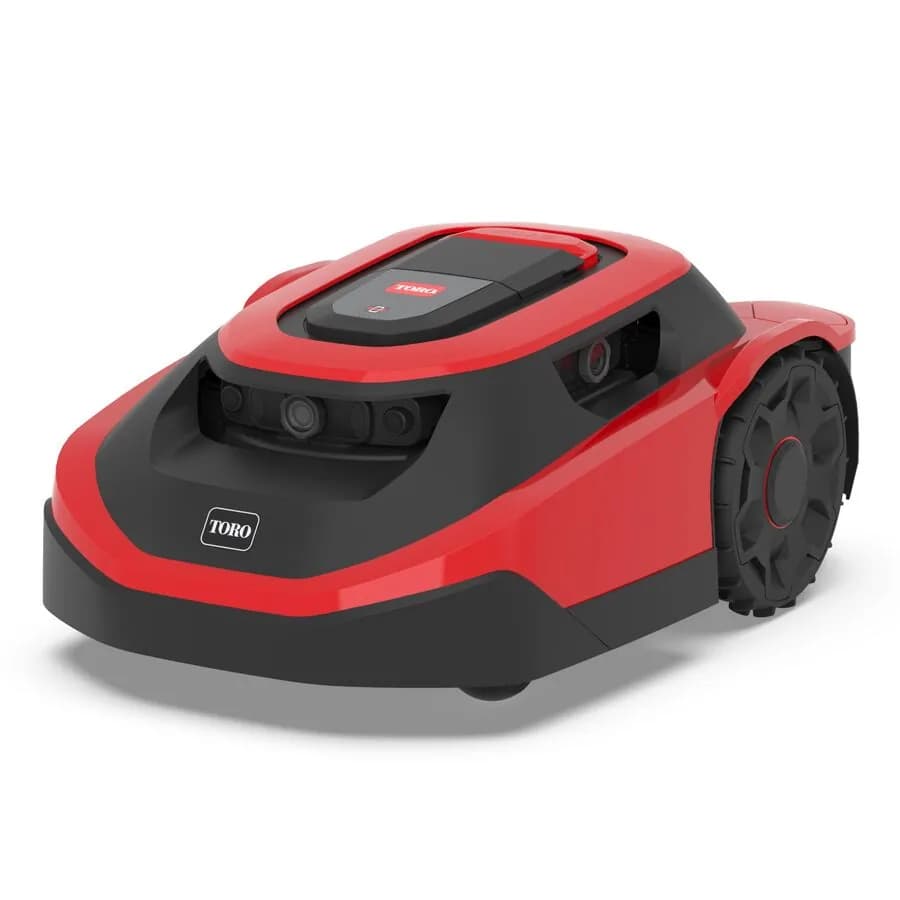
Toro
Toro Haven VM125
The VM125 is the bigger Toro Haven: the same camera-only body as the VM75 with a 12,000 mAh (216 Wh) battery good for 4.5 hours per charge, a 90-minute recharge, faster ground speed and, unique to this model, ultrasonic sensors that spot obstacles before the cameras and bumper have to. It is rated for 1.25 acres, climbs 47 percent (25 degree) slopes and cuts a 10-inch path from 0.75 to 3.25 inches, sealed to IPX6 with night-capable cameras and a 2-year warranty. Toro's site lists it at $4,499, up from $3,999 at the spring 2025 launch, and it is dealer-only. Everything else about the Haven applies: mapping is a walk pushing the mower, the SmartZone pattern is random rather than rows, the blades leave about 4 inches of edge for a trimmer, and the mower talks to an Ethernet-wired hub with no cellular option. An acre and a quarter of random-pattern mowing means it will be out most days, which is where the long runtime earns its keep. At this price the Mammotion Luba 3 AWD 5000 covers the same 1.25 acres with LiDAR plus cameras, row mowing and 80 percent slopes for about $3,299, so the VM125 is for buyers who specifically want a camera system that works under tree canopy and a Toro dealer to call.
Best for Acre-plus lawns under heavy tree cover where GPS and RTK mowers struggle and a Toro dealer relationship matters.
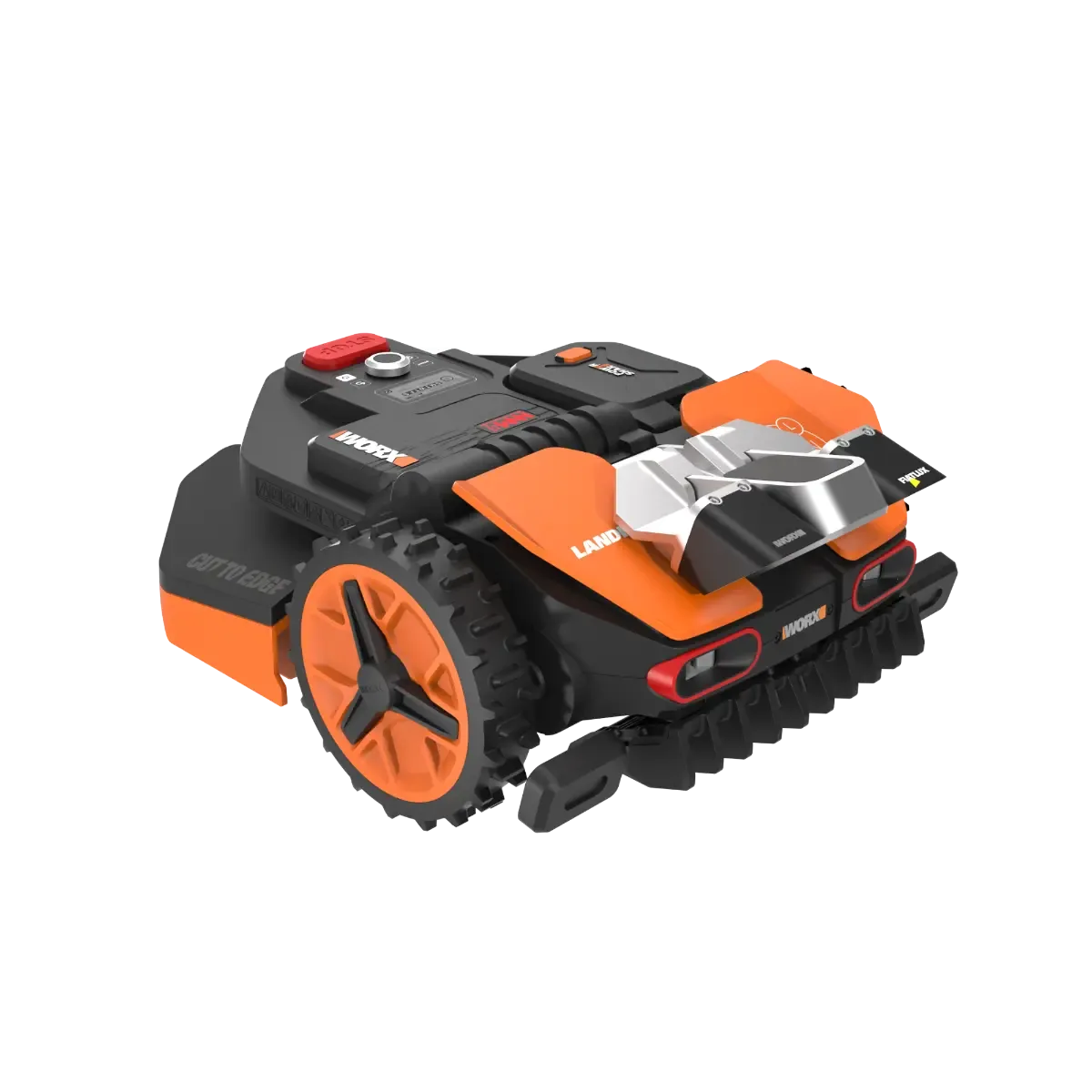
This is the bigger-lawn Vision, sold as the WR220 for half an acre with 3/4-acre (WR230) and 1-acre (WR235) siblings that share the same 33 lb body and 20V 4.0Ah pack and simply get longer daily schedules. List is a steep $2,499.99 to $3,499.99, and Worx has run the WR220 as low as about $1,100 during clearance, so watch for promos before paying full price. The pitch is identical to the smaller WR208: no wire, no RTK base station, no mapping session; the 140-degree HDR camera reads grass versus not-grass and treats that line as the boundary, while the same camera recognizes people, pets and objects on the ground and steers around them. It cuts to the edge with an off-center blade, has a rain sensor, and the optional Find My Landroid module adds 4G tracking. The compromises grow with the lawn: random-pattern mowing means it needs many more hours per week than an RTK mower to cover the same ground, split lawns still need RFID tags and a carry, and the camera struggles wherever there is no clear visual edge. For a half acre and up, a Mammotion Luba Mini AWD or Segway Navimow X3 will finish faster and mow in rows, and Worx's own Vision Cloud WR320.1 ($1,799.99) adds RTK for less money. Best for large, simple lawns with obvious edges where zero installation matters more than mowing speed.
Best for Owners of a large, open lawn with clear edges who want the simplest possible install and can wait on promo pricing.
Ambrogio
Ambrogio Twenty ZR
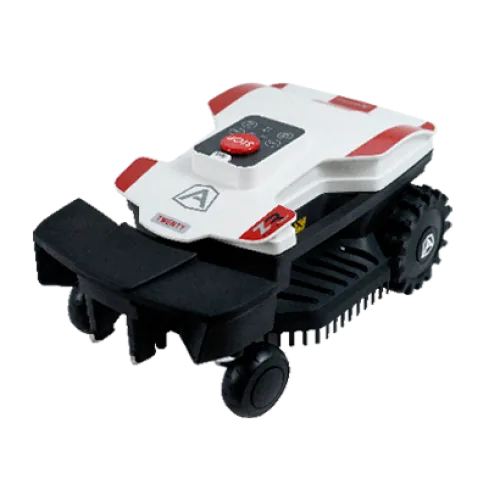
Ambrogio is the Italian dealer brand (Zucchetti) that landscapers respect, and the Twenty ZR is its oddball: a small mower that needs no perimeter wire, no RTK antenna and no camera map. Instead it uses radar plus grass-humidity sensors to recognize where the lawn stops, turning back when it meets paving, mulch beds or gravel, and mows the interior in a random pattern like a classic Robomow. That makes it the fastest install here, minutes rather than a weekend, but it only works if your lawn has a physical border everywhere; where grass simply continues into a neighbor's yard it will keep going, and Paradise Robotics is upfront that objects need to be about 6 inches tall for the radar to see them. It is a quarter-acre machine at heart: a 7-inch blade, 1 to 2.8 inch cut range, 45 percent slopes (20 percent near edges), 59 dB, a 5 Ah battery good for about four hours, and just 16.5 pounds. At about $1,799 through Paradise Robotics or GL Robotics, with an optional $699 4G Connect module for remote control and GPS theft tracking, it costs as much as a Segway Navimow i110 that maps a full acre with cameras and RTK, so buy it for the zero-install idea and the dealer relationship, not for value. A tidy, fully bordered quarter acre with an owner who refuses to run wire is the right home for it.
Best for Small, fully bordered lawns up to a quarter acre where the owner wants zero installation and has an Ambrogio dealer nearby.
eufy
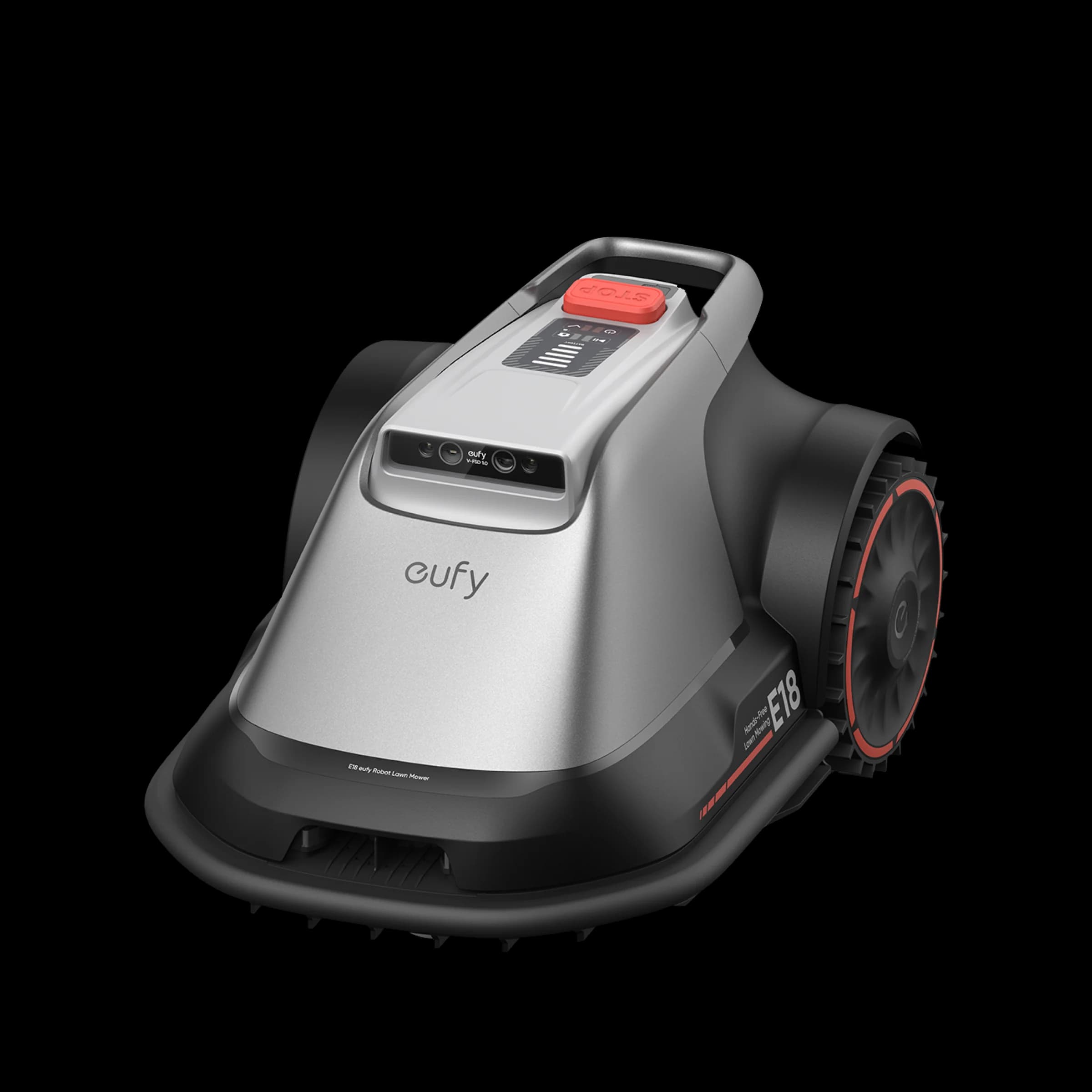
eufy E18
The E18 is the eufy E15 with a bigger battery: same 8 inch three-blade disc, same 1 to 3 inch cut, same twin stereo cameras and roofed base station, same 18 degree (32 percent) slope limit, but rated for 0.3 acre instead of 0.2. PCWorld confirmed the two are otherwise identical, so everything said about the E15 applies, good and bad. The good is the setup: PCWorld went from box to first mow faster than with any mower it had tested, and another tester mapped a yard in about 45 minutes with no wire, antenna or perimeter drive. The cut is even from the first pass and the 3D perception dodged toys, furniture and a dog, then came back for the patch it skipped. The bad is the camera-only navigation: it cannot mow after dark, it read sun glare and tall grass as obstacles, it kept tripping on walkway stones, it returns to the dock after mapping each zone, and rear-drive plastic wheels plus that 18 degree limit make it a flat-lawn machine. Availability is the other wrinkle. eufy's US store now sells only the E15 standalone, Best Buy has stopped selling the E18 new, and the live US listings are Lowe's at $1,399.99 (down from a $1,999.99 launch price) and Amazon. That is roughly $100 more than an E15 for 50 percent more rated area, which only matters if your lawn is genuinely over 0.2 acre; on a smaller lot the E15 is the same mower for less. Best for flat, fenced lawns between 0.2 and 0.3 acre whose owner wants the simplest possible setup and will never need a night cut.
Best for Flat, fenced suburban lawns of 0.2 to 0.3 acre owned by someone who values a robot-vacuum-simple setup over slope or night mowing.
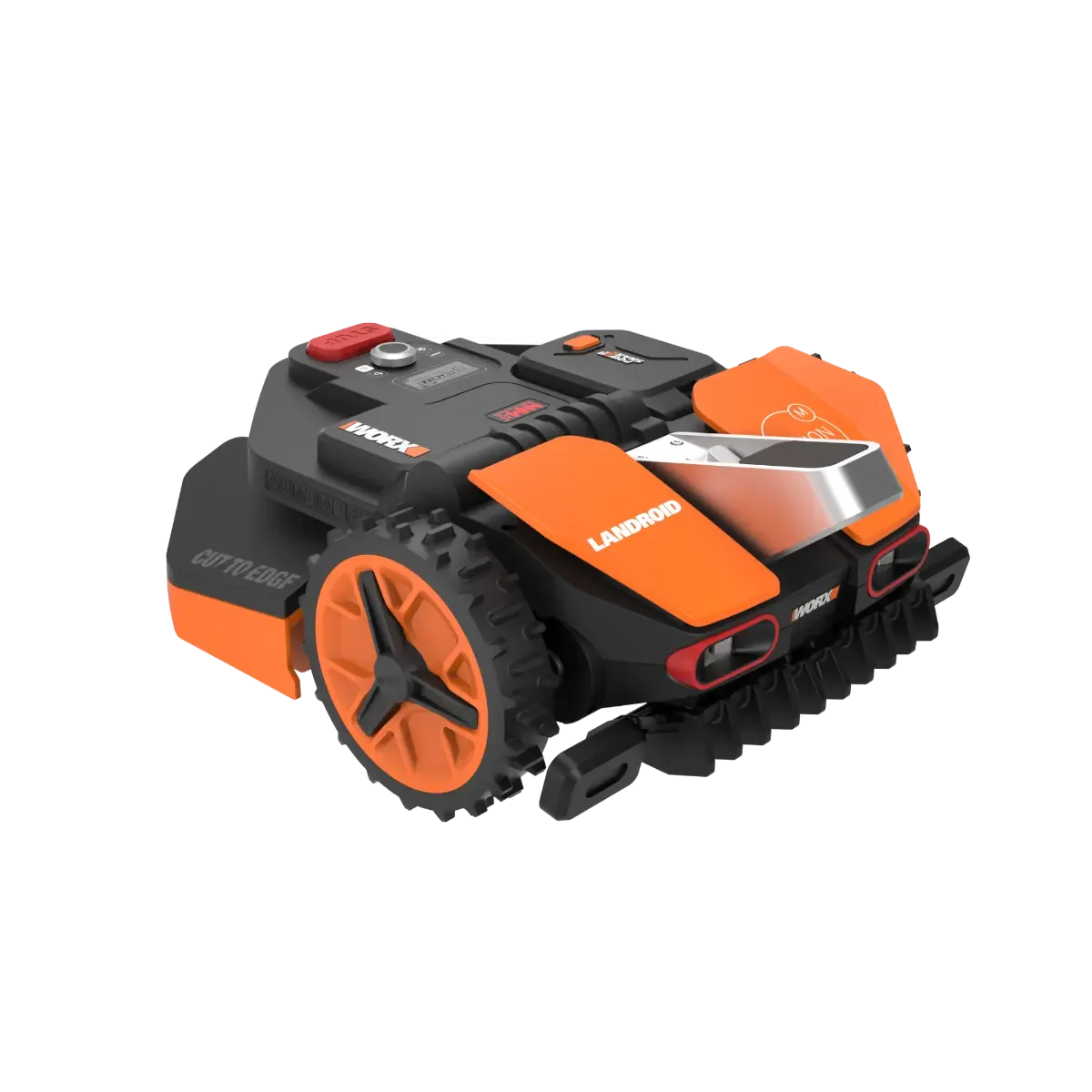
Landroid Vision is Worx's answer to the boundary-wire chore: no wire, no RTK antenna, no mapping drive. You set the dock on the grass, press go, and a 140-degree HDR camera with an onboard neural net decides what is lawn and what is not, treating the edge of the grass as the boundary. The 1/5-acre WR208 is the entry model; the WR210 is the same 33 lb machine rated for a quarter acre at $1,999.99 list. Pricing is all over the place: Worx lists the WR208 at $1,599.99, Amazon has it around $1,350, and Target and Worx have run it at $799.99. In use it is quiet at 59 dB, cuts to the edge with an offset blade, and will stop for pets, toys and hoses lying on the ground. Reviewers found the downward-pointing camera misses things above its sightline (a parked trailer, a playground slide) and that it needs a visible edge: where lawn meets mulch or a neighbor's grass without a curb, you stake down the included magnetic strip. Separate lawns need RFID tags and usually a carry between them. Versus an Eufy E15 or Segway Navimow i105 at similar money this is simpler to install but less precise and it mows in a random pattern; versus Worx's newer Landroid Vision Cloud (RTK plus camera, $1,799.99) it gives up mapping and systematic rows. Best for small, well-defined lawns where nobody wants to bury wire or plant an antenna.
Best for Small lawns with clear edges whose owner wants a set-it-down-and-go install and will accept random-pattern mowing.
TerraMow
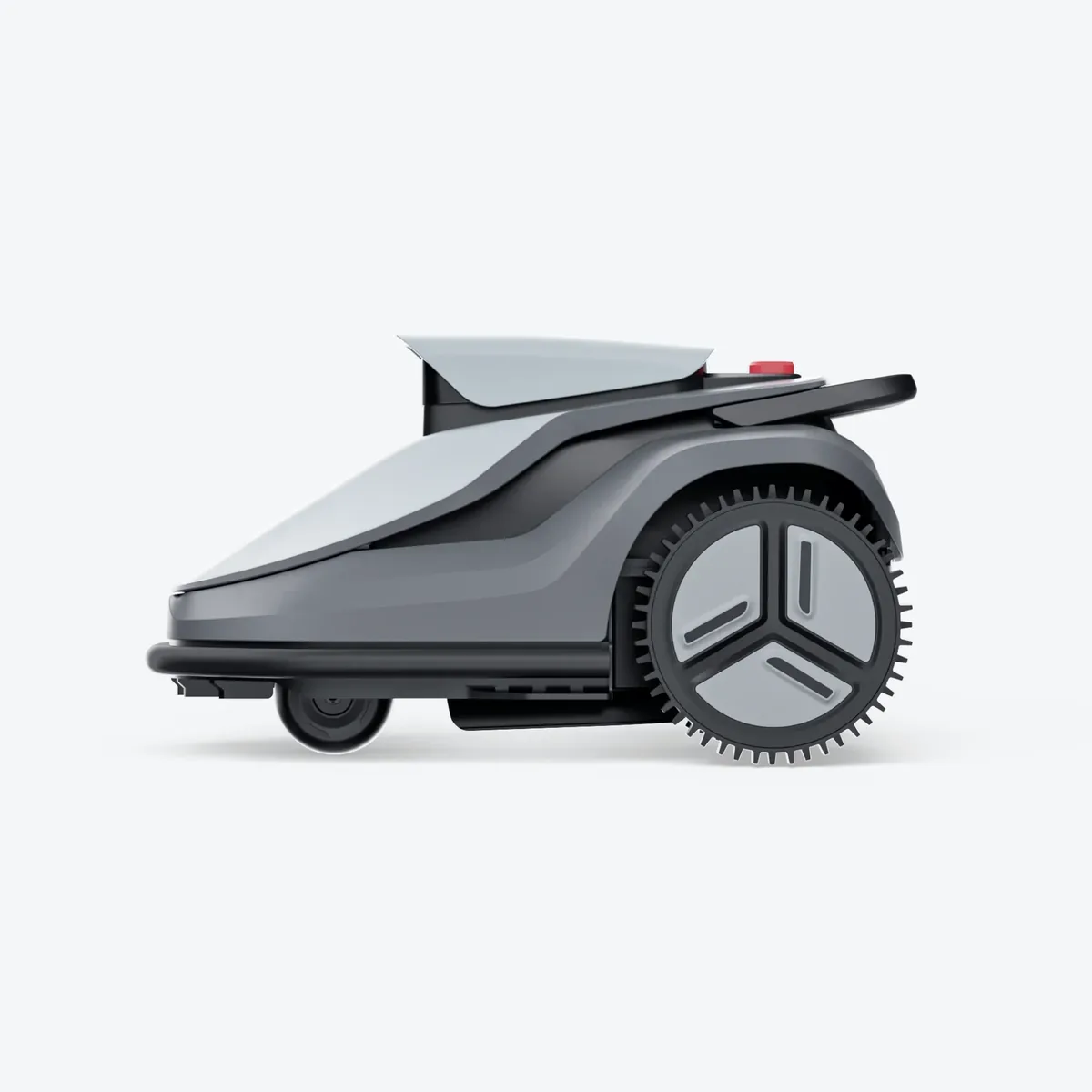
TerraMow V1000
TerraMow is a vision-only brand that built a strong following in Europe first and now sells in the US mainly through Amazon and a couple of dealers, since the US variant on its own store is often sold out. The V1000 is the sweet spot of the range: it maps a lawn up to about 1,200 square meters (0.3 acre) by itself using three cameras and a 3D vision system, with no wire, no RTK antenna and no beacons, and the map lives on the mower so it keeps working if your Wi-Fi drops. It is small at 26 pounds, very quiet at under 54 dB, and cuts an 8-inch swath from 1 to 3 inches, with an edge mode, 20 zones and a 4G module whose first year of data is included. Owners on TerraMow's site, including a US buyer with a 5,500 square foot shared front lawn, talk about auto-mapping working on the first try and using virtual fences to keep it off the neighbors' grass; the recurring gripe is wanting more manual map editing for awkward corners. Limits: a 33 percent slope rating, a 4.5 Ah battery that covers only 160-300 square meters per charge, and a vision system that needs daylight, so no night mowing. Against the Eufy E15 or Worx Landroid Vision it is cheaper, quieter and handles complex layouts well; against a Segway Navimow i105 you give up RTK precision for a truly no-antenna setup.
Best for Small, complex suburban lawns up to 0.3 acre with beds, paths and shared borders where an RTK antenna is a hassle.