Yarbo
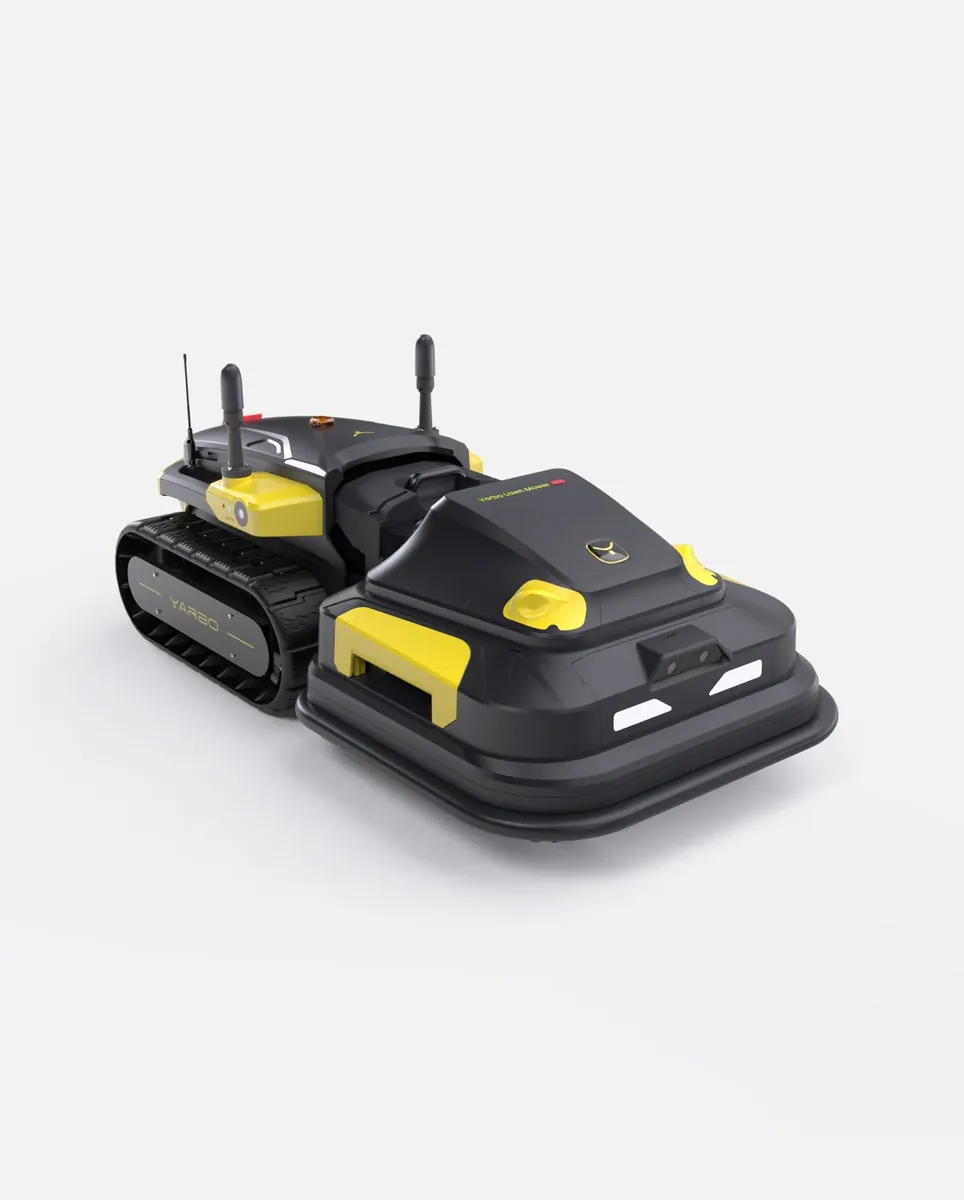
Yarbo Lawn Mower Pro
Yarbo is not really a robot mower; it is a tracked yard robot (the Y40 Core) that you bolt attachments onto, and the Lawn Mower Pro module is the mowing one. The Core climbs a 70 percent grade, carries a 1.38 kWh battery, and can tow 500 pounds; swap the module and the same robot blows snow or clears leaves. The Pro module, which replaced the original 150 W mower in Yarbo's store, spins two 300 W motors under a 20-inch deck with straight blades, cuts down to 0.8 inch, runs about two hours per 90-minute charge, and is rated for up to 6 acres. At $5,999 for Core plus module it is the most expensive consumer mower here, and Reviewed's tester spent about eight hours on setup, including placing the RTK Data Center antenna and mapping. Owners on Yarbo's site love the cut and how quiet the Pro is, and several say it finally mulches leaves under big maples, but the same threads include a season lost to troubleshooting and repairs, and the 70-pound module is a genuine two-person lift. Compared with a Mammotion Luba 2 AWD 5000 at about half the price, you are paying for the modular platform and the snow blower, not better mowing. Best for big, open, rural lots that also get snow; wrong for a tight suburban yard, where an Ecovacs GOAT A3000 or Luba does the job with far less setup.
We may earn a commission. Price and availability on Amazon may differ.
Specifications
How it navigates
Dual-antenna RTK from the included Data Center base station (or Yarbo NetRTK subscription) fused with stereo vision, IMU and odometry; you remote-drive the perimeter to map zones; no wire.
Highlights
Pros
- ✓Biggest cut here: 20 in width with real 300 W motors that owners say mulch wet leaves under mature trees
- ✓70 percent slope rating on tracks, 500 lb towing capacity and a 1.38 kWh battery
- ✓Owners describe the Pro module as surprisingly quiet, with the same daily coverage despite higher draw
- ✓One Core runs snow blower, blower and trimmer modules, so it earns its keep year round
- ✓Live camera, patrol and follow-me modes turn it into a yard camera when it is not mowing
Cons
- ✗$5,999 for Core plus module, roughly double a Luba 2 AWD 5000 for similar mowing coverage
- ✗Reviewed's setup took about eight hours including the RTK Data Center antenna and firmware updates
- ✗Sensors over-detect driveway cracks and it struggles in tight corners and narrow strips
- ✗Some owners report a season dominated by troubleshooting, warranty swaps and downtime
- ✗70 lb module is a two-person lift; full remote features need the paid 4G plan
Owner Insightssummarized from owner forums and retailer reviews
The Yarbo Lawn Mower Pro is the mowing attachment for Yarbo's tracked yard robot, and owners judge it as two different products. On big, open, hilly ground it is the best-cutting machine many of them have owned: 99 percent clean stripes, tall wet grass handled without complaint, and hours of riding-mower time given back every week. In a yard with a cracked driveway, stepping stones, narrow strips and beds, the same machine becomes a troubleshooting hobby. The realistic owner arc, in the words of one long-term reviewer, is frustration followed by appreciation.
Expect a full day of setup. The Core arrives in pieces, the Data Center RTK antenna has to be placed carefully (move it later and you remap everything), and firmware updates and mapping consumed most of a reviewer's eight hours. Navigation on open turf is precise and the pattern options are genuinely fun, but the vision system over-detects: driveway cracks, uncut lanes and phantom obstacles stop it, sometimes before it has left the dock, and a flat soccer field produced wobbly lines until the owner switched to bumper-only mode. The Pro module has a known lockup where it reports it is adjusting the blade and never moves; resets do not fix it and replacements take weeks. Support is the sore point across owner threads and review sites: two-week waits, a replacement request matched to the wrong order, tickets closed unresolved, and owners leaning on each other in the forum instead.
It is right for a large, mostly open rural lot - two acres and up, hills welcome - that also gets real snow, because the snow blower module is what makes the $5,999 pay off. For pure mowing, a Mammotion Luba 2 AWD 5000 covers similar ground for about half the money and a Lymow One Plus climbs just as well for less than half. Deal-breakers: a tight suburban yard with landscaping, a low tolerance for slow support, or wanting something that works on day one.
What owners like
- +Cut quality on open ground is the best thing about it - owners describe about 99 percent clean with barely an uncut blade, and the app draws true stripes, checkerboards and diamond patterns
- +The 300 W twin motors chew through two weeks of growth and wet grass: owners who upgraded from the standard 150 W module say the Pro handles tall, damp grass and leaves that stalled the original
- +Serious time savings on acreage - owners report 4.5 hours of mowing cut to 3.5, 4 to 6 hours of hilly mowing cut to about 2, and one tallied 253 hours saved in ten months
- +The tracked Core climbs real hills and recovers on its own; one hilly-lot owner said it bumped into things and carried on without him touching it
- +One robot for the whole year - the same Core runs the snow blower, which a long-term reviewer called the strongest module, plus the blower and trimmer
- +Owners say the Pro module is surprisingly quiet for the power it has, and coverage per charge stayed the same despite the bigger motors
- +Replacement parts ship without argument once a case gets attention, the warranty replacement policy is generous, and biweekly updates keep adding features
Common complaints
- −Setup is a project: a reviewer spent about eight hours including three hours of assembly, base station placement is critical and a bad spot means a full remap, and owners booked multiple support appointments to get through it
- −Vision false positives are the top complaint - it reads driveway cracks, uncut grass lanes and 'imaginary obstacles' as barriers, sometimes will not leave the dock on its own, and wandered in wide loops on a flat soccer field
- −The 'Yarbo is adjusting the blade' lockup on the Pro module: at least six owners had the height motors stick at maximum, resets and battery pulls did not fix it, and replacements took weeks
- −Support is slow and error-prone - two-week waits for diagnostics, a replacement order matched to the wrong product, tickets closed unresolved, language and time-zone barriers, and one owner emailing the CEO to get attention
- −Tight areas suffer: multi-point turns press grass flat, it tore turf at driveway transitions, no-go zones get a huge buffer you cannot shrink, it will not mow close to structures, and it ignores defined pathways
- −Reliability is uneven - owners on their third Core, persistent signal drops, updates that fix one thing and break another, grass wrapping around blade screws until blades rotate inward, and monthly blade sharpening
Common Questions
How long does Yarbo setup really take?
Is the Pro module worth it over the standard mower module?
Why does it stop for driveway cracks or refuse to leave the dock?
What is the 'Yarbo is adjusting the blade' error?
How is Yarbo support?
Does the mowing justify $5,999?
Yarbo Lawn Mower Pro, head-to-head
Mowers people look at alongside it
Segway
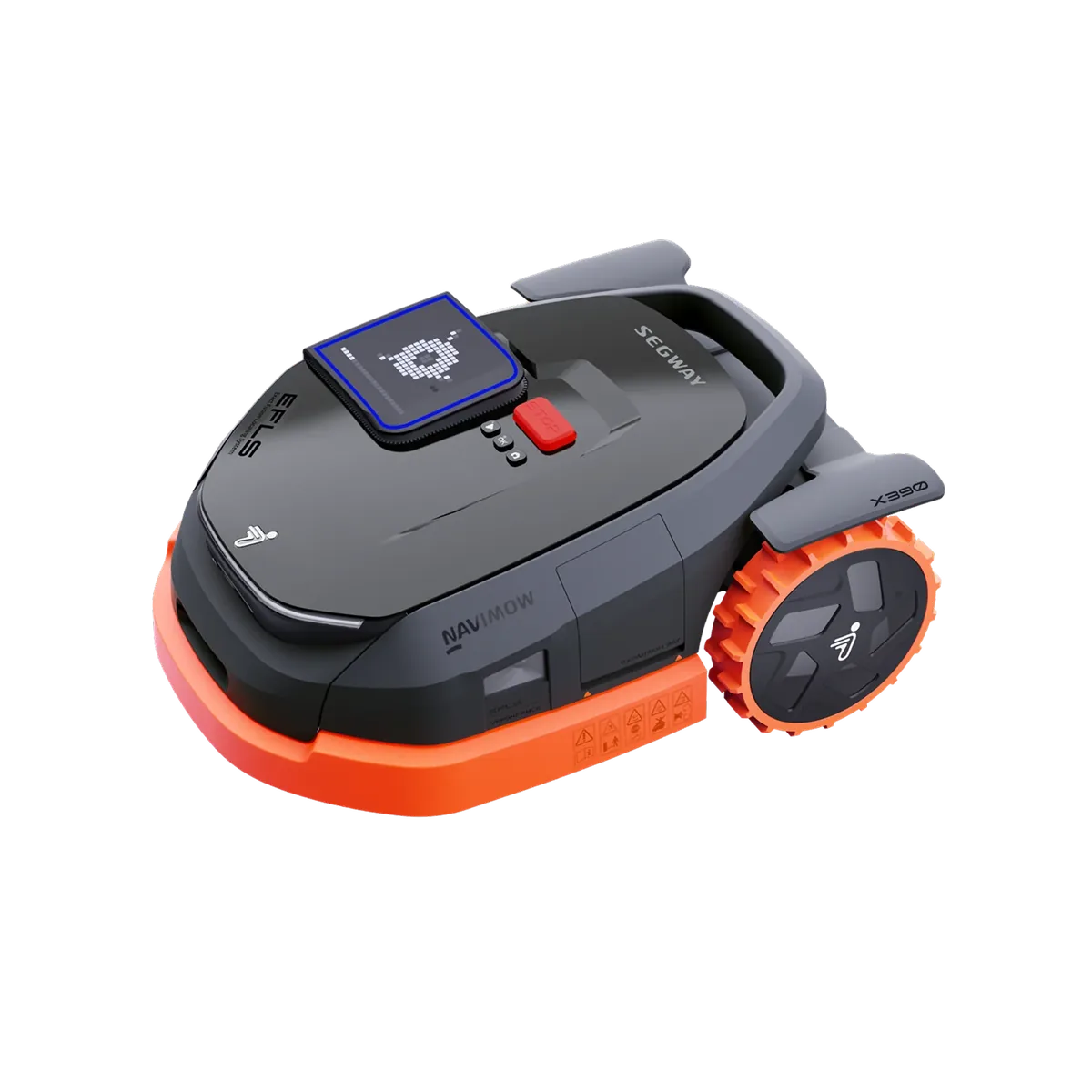
Segway Navimow X390
The X390 is the flagship of the X3 series and the one Pro Tool Reviews ran on a multi-acre property with four zones linked by tunnels: it covered 3,300 sq ft on 16% of its 12.8Ah battery, which works out to roughly four hours of mowing and a 2.5 acre rating, with a 100 minute recharge. Everything else matches its siblings - 9.3 in cut, 2 to 4 inch heights, 60 dB, EFLS 3.0 RTK fused with three-camera visual SLAM that keeps working under trees, 300-degree obstacle recognition with night vision, and a 43.9 lb body on 10 inch wheels. Segway bundles five years of 4G service, the longest in the lineup, before the $32.90 a year renewal. At $4,499 (down from $4,999) it is expensive for a two-wheel-drive mower: the Mammotion Luba 2 AWD 10000 covers the same area with all-wheel drive and 80% slope capability for less, and the X3's 50% rating only holds up on straight climbs. Testers also note there is no physical rain sensor, the single 9.3 in disc is narrow for 2.5 acres so full cycles take days, and edges need the optional Trimmer attachment. In its favor: faster and more precise stripes than the Luba, gentler on turf, a cleaner app, and the Doodle feature for mowing patterns into the lawn. Choose it for a large, flat-to-rolling estate lawn with tree cover where positioning reliability matters more than hill climbing.
Best for Estate lawns up to 2.5 acres with tree cover and mild grades, where you want one DIY-installed mower instead of a dealer fleet.
Lymow
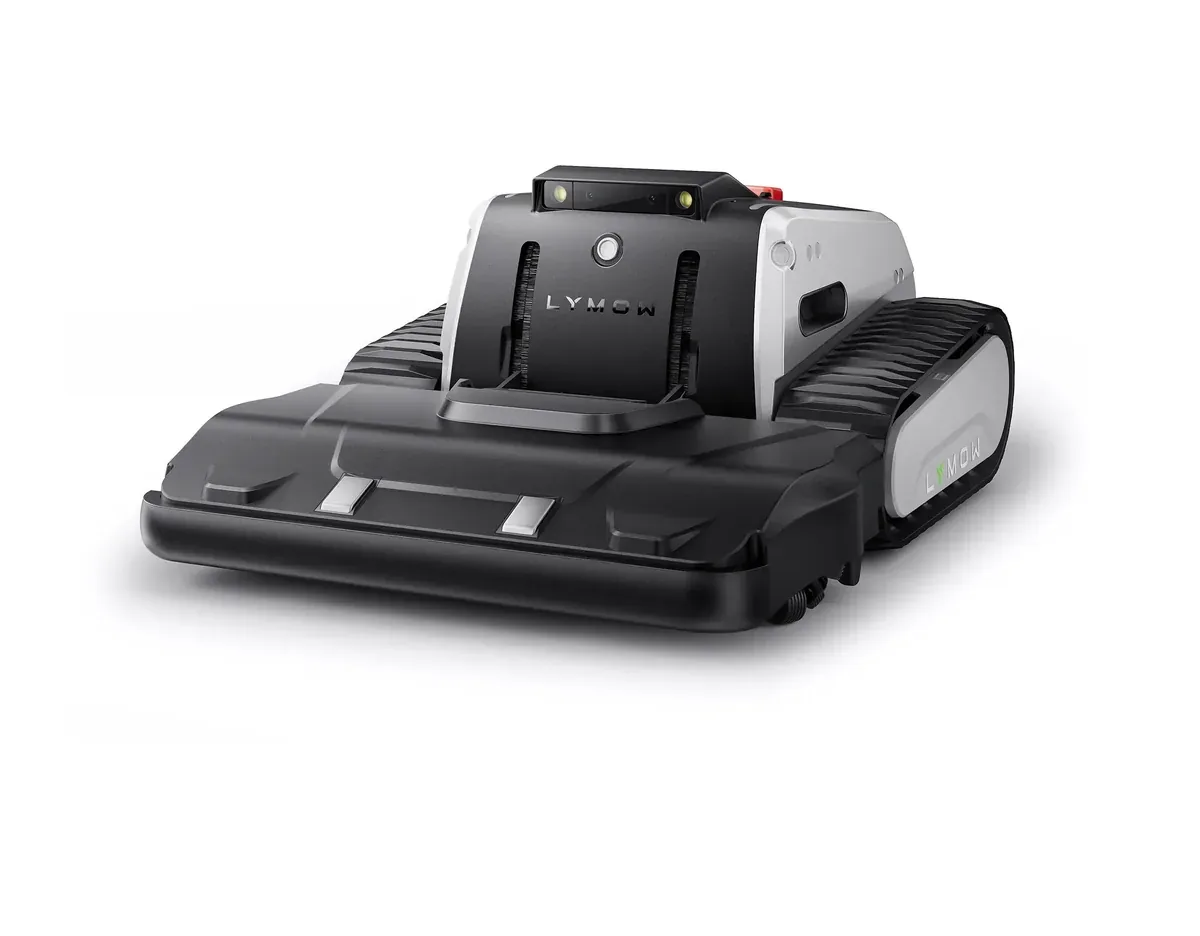
Lymow One Plus
The Lymow One Plus is the tank of the robot mower world: it rides on rubber tracks instead of wheels, weighs almost 80 pounds, and swings two SK5 steel rotary blades across a 16-inch deck at up to 6,000 rpm. That combination is why it climbs a rated 45-degree (100 percent) slope and chews through tall, thick grass and fall leaves that stall a disc-blade mower like the Mammotion Luba 2 or a Segway Navimow. It replaced the original Lymow One in 2026 with about 50 percent more cutting power, a 528 Wh LiFePO4 battery good for roughly three hours, and a 90-minute fast charger on the 10A kit (the cheaper 5A kit takes about 150 minutes). Navigation is RTK plus VSLAM cameras, so the included RTK antenna needs open sky, then you drive the perimeter in the app to build up to 80 zones. The trade-offs are real: it is louder than a typical robot (about 62 dB in standard mode, 74 dB in turbo), it is not built for tight, fussy edges, and owners on Lymow's own site mention occasional offline drops and RTK hiccups that firmware updates have been chipping away at. If you have an acre or more of rough, hilly ground and were about to buy a small riding mower, this is the robot to look at. If your lot is a flat quarter acre full of beds, a lighter wheeled mower does the job for less.
Best for Large, hilly or rough lots of one to two acres where a wheeled robot would slip, stall or bog down.
Sunseeker
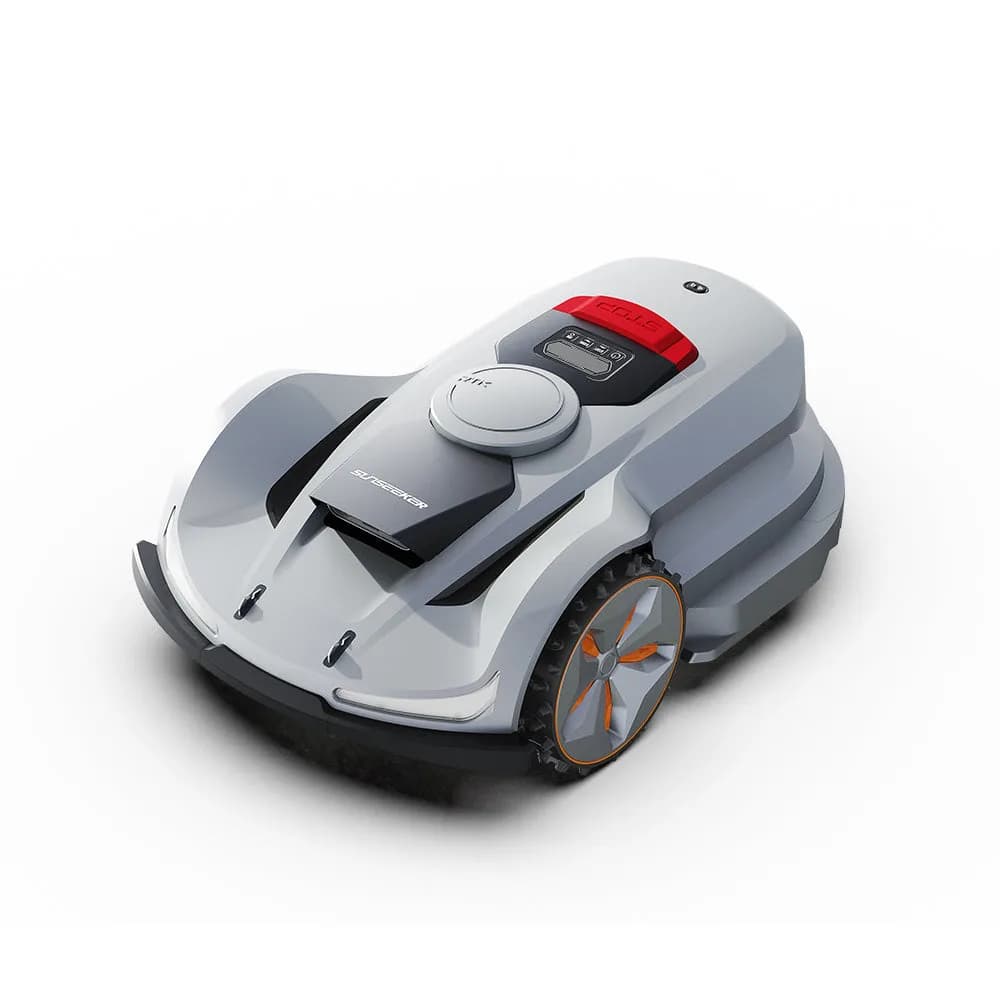
Sunseeker X7 Plus
The X7 Plus is the long-range version of Sunseeker's AWD X7: same 14 in dual-disc deck, same 70% slope rating, same RTK-plus-camera AONavi navigation, but a higher-capacity battery that lets it schedule 1.5 acres instead of 0.75. List is $2,999.99 at Sunseeker (frequently sold out) and dealers such as Robotic Mower Services sell a Gen 2 at $2,799.99; the Amazon listing has been unavailable for a while. That undercuts a Mammotion Luba 2 AWD 5000 by several hundred dollars for similar coverage and traction. In practice it is a systematic-row mower with 100 zones, virtual walls and no-go areas, edge trimming to about 1.2 in, a rain sensor, and 4G tracking with a geofence lockout. Reviewers who ran the standard X7 praised the AWD on lumpy, sloped ground and the way the twin cameras learn the yard over a few passes, and criticized the app (a single joystick for mapping, thin documentation, schedules that are easier to leave in auto mode). Obstacle avoidance is good for people, pets and toys, but small low objects like a softball can be run over, and like every RTK mower the reference station needs open sky. At 60 dB it is quiet for a 31 lb machine with two spinning discs. Best for hilly 1 to 1.5 acre properties where AWD matters and the buyer is fine trading Mammotion's app polish for a lower price.
Best for Large, hilly properties up to 1.5 acres where all-wheel traction and wire-free RTK mapping matter more than app polish.
Segway
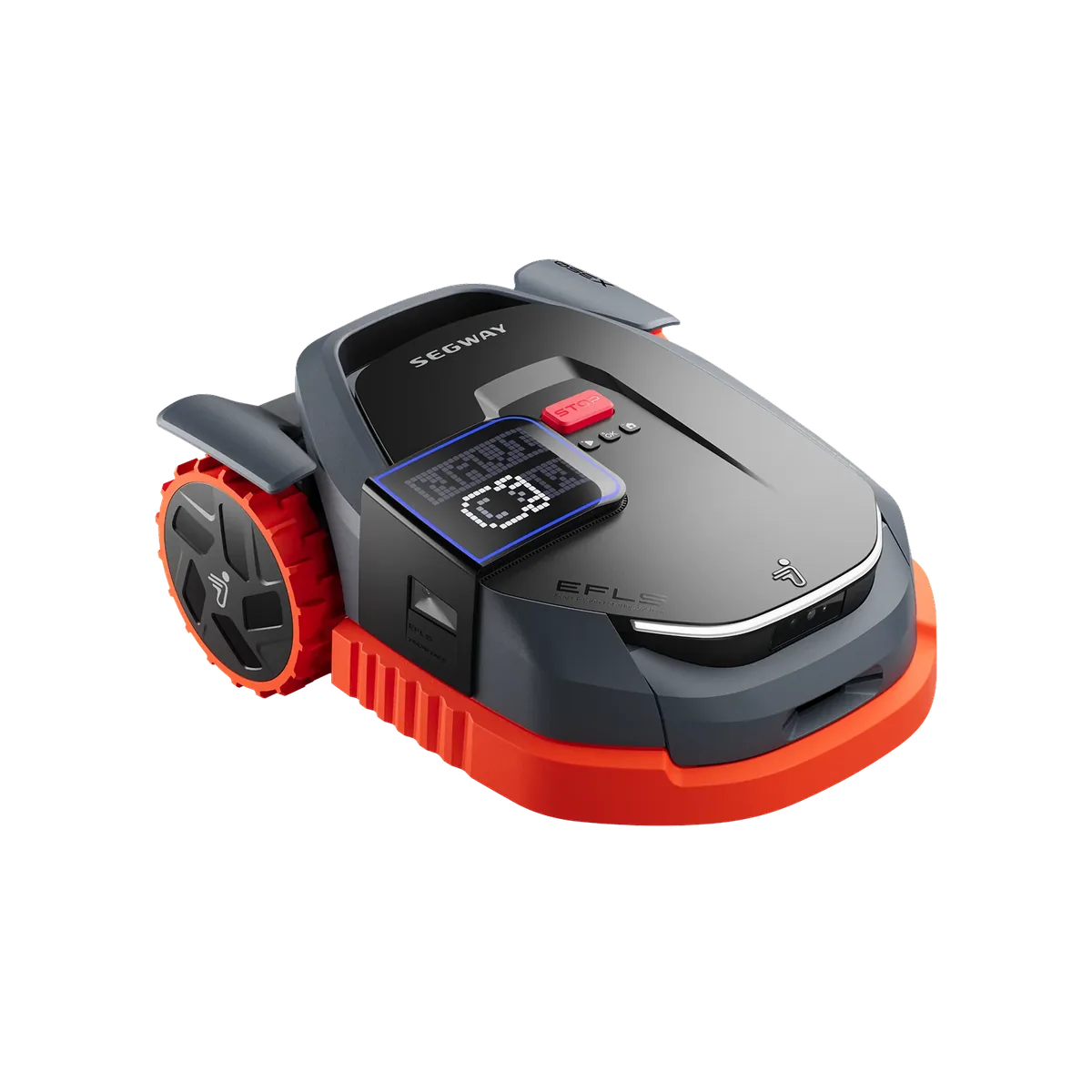
Segway Navimow X350
The X350 buys you battery, not a different mower: it shares the X330's 43.7 lb chassis, 9.3 in cut, 2 to 4 inch height range, EFLS 3.0 RTK-plus-vision positioning and 300-degree camera array, but carries a 10Ah pack for about 200 minutes per charge (80 minute recharge) and a 1.5 acre rating. Segway lists it at $2,799, down from $3,499 at launch, and it includes three years of 4G before the roughly $33 a year renewal. Residential Tech Today beta-tested this exact model for a season and found the standout traits were quiet 60 dB running that allowed night mowing, reliable obstacle recognition, and confident navigation on a tree-heavy lawn - RTK antenna placement still mattered, and moving it meant remapping. Early-spring patches of thin grass confused the VisionFence boundary logic until it was toggled off, and the optional Trimmer accessory occasionally hung up on rocks. As with all X3 mowers it is two-wheel drive, so the 50% slope rating assumes straight up-and-down runs, and there is no onboard rain sensor. Compared with a Husqvarna Automower 450X at roughly $4,000 installed, the X350 is a DIY afternoon and about a third cheaper; compared with the Mammotion Luba 2 AWD 5000 it gives up AWD hill-climbing for faster, straighter cutting. Best for 1 to 1.5 acres of mostly open, gently rolling lawn.
Best for Lawns of 1 to 1.5 acres with scattered trees and only gentle grades, for owners who want DIY setup instead of a dealer install.
Segway
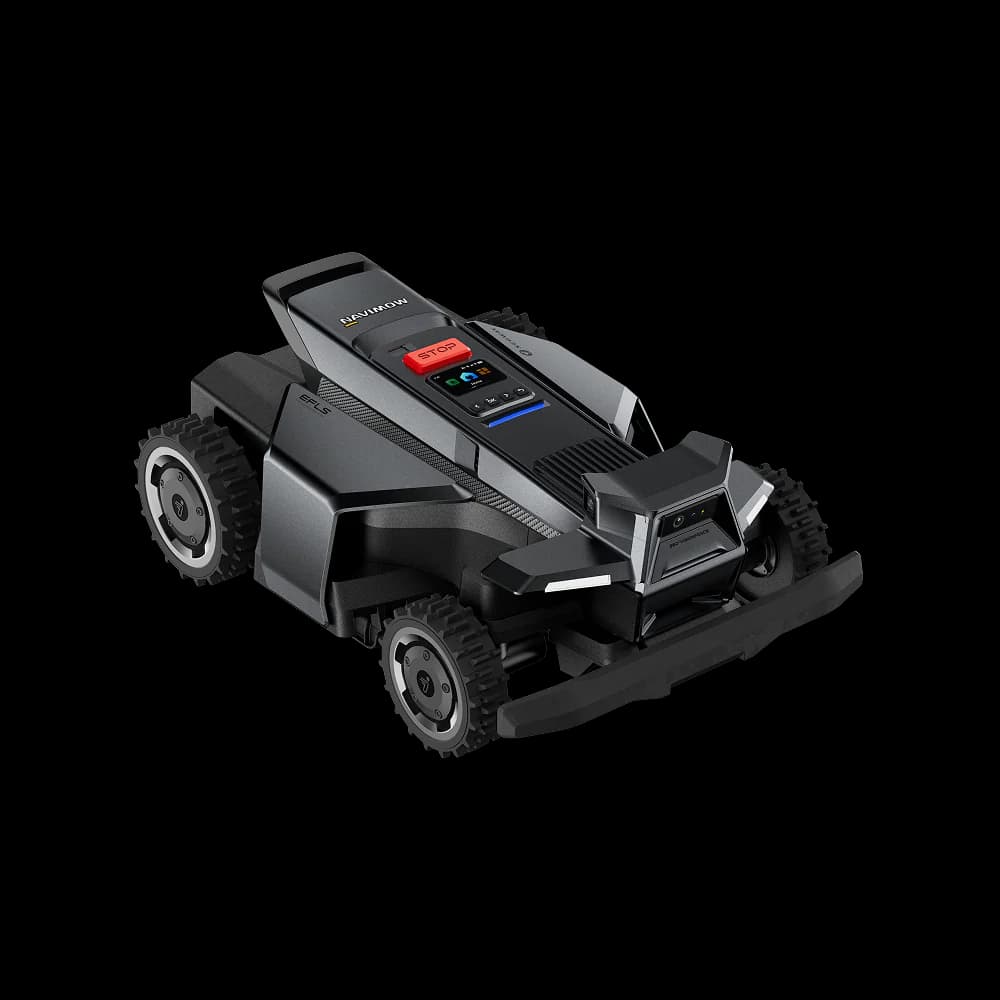
Segway Navimow X4
The X4 is the mower Segway built to answer the Luba: four hub motors with dual suspension, an 84% (40 degree) slope rating, and a 17 in dual-disc deck driven by two 180 W motors, all on a 64 lb body that can step over 2.8 in obstacles. It comes as the X430 (1 acre, 10.2Ah, $2,499) and the X450 (1.5 acres, 12.8Ah, $2,999), both charging in about 90 minutes at 224 W. The big change from the X3 series is that positioning uses tri-frequency Network RTK delivered over the built-in 4G, so most yards need no antenna at all, and the front wheels steer independently so it turns like a car instead of pivoting and scuffing turf. How-To Geek gave it an Editor's Choice after a season: auto mapping finished a backyard in ten minutes, EdgeSense cut within 2 in of fences, and it ran quietly at night, but the dock still had to be moved twice to find sky, the first pass looked choppy until a second run, and it drove up onto a raised patio and scuffed the coating. 9to5Toys found it handled soggy, uneven ground but chewed turf when wet and missed dog waste hidden in tall grass. Against the Mammotion Luba 3 AWD 3000 at $2,109 the X430 costs more and rates 4% less slope, but cuts an inch wider, goes down to 0.75 in for warm-season turf, and its Ackermann steering is gentler on grass.
Best for Hilly, rutted or rough-terrain lawns of 1 to 1.5 acres where an AWD mower with a wide deck beats the two-wheel-drive X3.
Segway
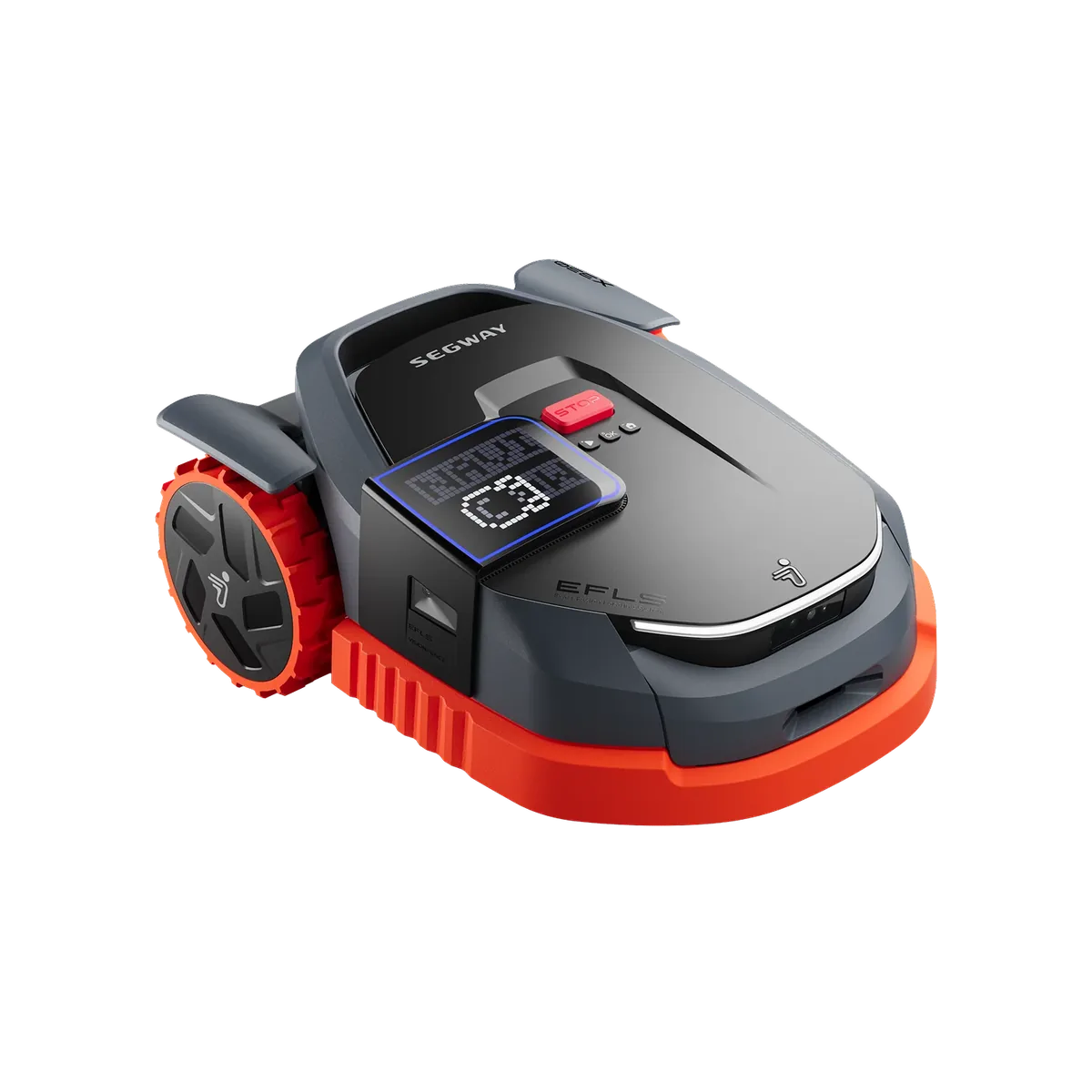
Segway Navimow X330
The X330 is the X3 model most people should look at: a one-acre rating, 8Ah battery for about 160 minutes of mowing with a 65 minute recharge, and it sits at $2,299 on Segway's site after a $500 cut from launch pricing. Like the rest of the X3 line it runs EFLS 3.0 - RTK fused with three cameras doing visual SLAM - so it holds position under tree canopy where the older H series and most budget RTK mowers lose lock, and its 300-degree camera plus ToF array recognizes 200+ obstacles with night vision. It mows fast (about 3.3 ft/s) in tidy parallel stripes, cuts 2 to 4 inches, runs at 60 dB, and includes two years of 4G with GPS tracking before the roughly $33 a year Connect+ renewal. Pro Tool Reviews and Robot Review Desk both call the X3 the most polished wire-free mower for flat-to-moderate suburban lots. Where it falls short: two-wheel drive makes the 50% slope rating shaky on side-hills, there is no physical rain sensor (it relies on forecasts), the centered 9.3 in disc leaves a few inches uncut along walls unless you buy the Trimmer accessory, and 43.7 lb is a lot to lift over a curb. Against the Mammotion Luba 2 AWD 3000, the X330 is quicker and gentler on turf but the Luba climbs 80% grades. For a one-acre yard with trees and gentle slopes, this is the sweet spot of the range.
Best for One-acre suburban lawns with tree cover and gentle slopes where fast, precise striping matters more than hill-climbing.