Best RTK + Vision Robot Mowers
The current flagship formula: RTK GPS for centimeter positioning in the open, fused with cameras that recognize grass edges, obstacles, and landmarks so the mower keeps working where the satellite fix gets thin. In practice that means a machine that can cross a shaded strip along the house, mow under a modest tree line, and stop for a dog or a garden hose, while still cutting the straight passes RTK is known for. These are the most expensive mowers in the catalog and the ones with the most capability per acre, and their vision systems keep improving over the air. The honest limits: heavy canopy still defeats them, cameras need daylight for the vision half to contribute, and the price tags start where boundary-wire mowers top out.
MowerRanker tracks 19 RTK + vision mowers from 10 brands, priced $699 to $5,999. The highest-rated of them is the Mammotion Yuka mini at 4.76★, and the most affordable is the Anthbot Genie at ~$699. Compare them all below.
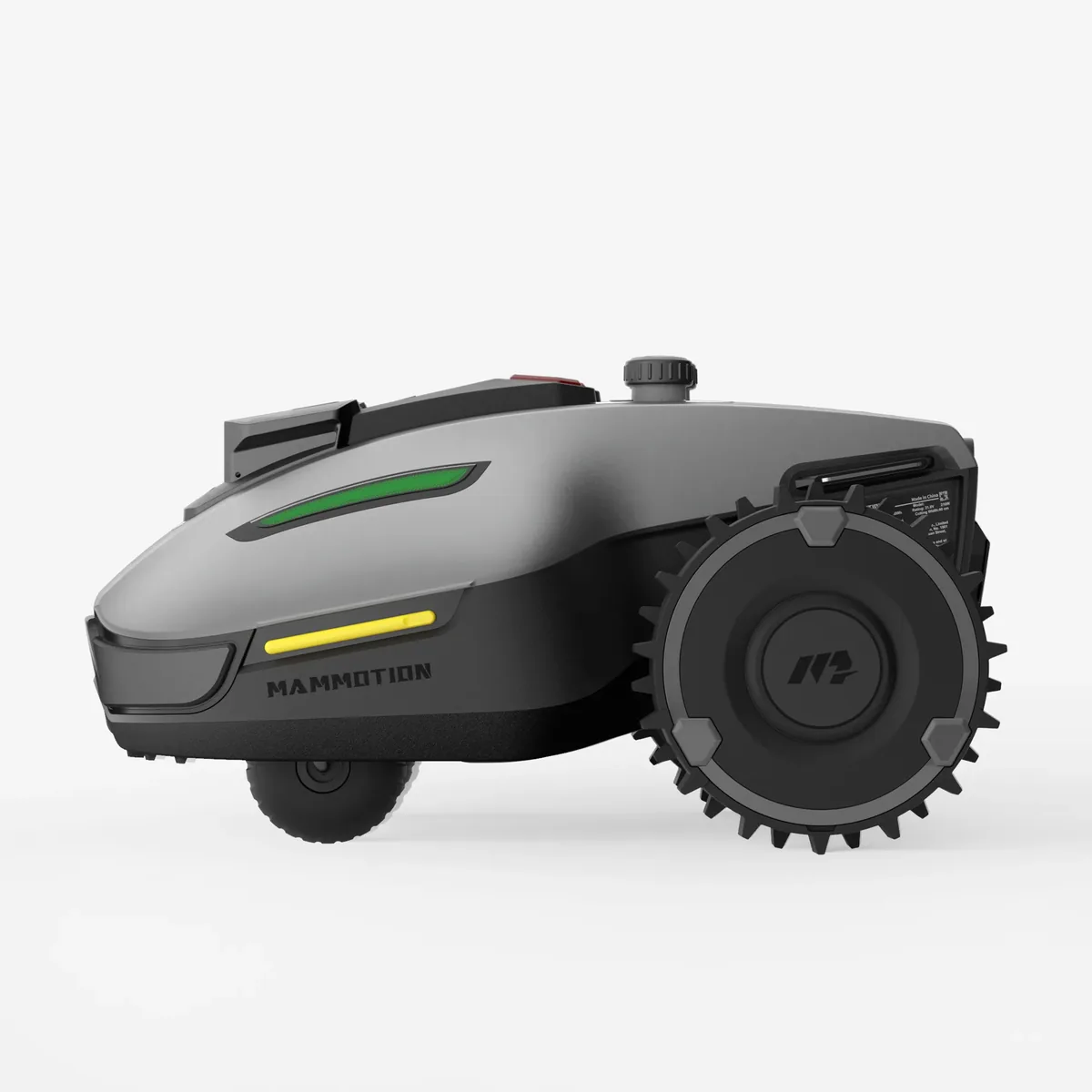
Mammotion
Mammotion Yuka mini
The Yuka mini is the cheapest way into a wire-free, station-free robot mower from a brand with a real support desk, and at $749 for the 600H (or about $949 for the 800H at Home Depot) it undercuts the Navimow i105 while still carrying a 3-year warranty. There is no RTK antenna: it pulls free NetRTK corrections over your Wi-Fi and leans on two front cameras to track the grass edge, which is why it auto-maps a small yard in ten minutes. It is a 23 pound, rear-drive machine with a 7.5 inch disc and a 2.0 to 3.5 inch cut, rated for 50 percent slopes, though owners with bumpy or sloped yards say the front caster and lift sensor trip constantly and they end up rescuing it. On flat lawns under a fifth of an acre owners are happy: quiet, tidy stripes, and they like that it stays in bounds even where GPS is weak. Weak points are an app that lacks polish, cautious behavior around tree trunks that leaves rings of long grass, no built-in 4G (a $129 module adds it) and a 2 inch minimum height that rules out a tight cut. Mammotion has since released the LiDAR Yuka mini 2 at $1,399, so this is the value play. Best for flat, simple yards up to 0.2 acres and first-time robot owners.
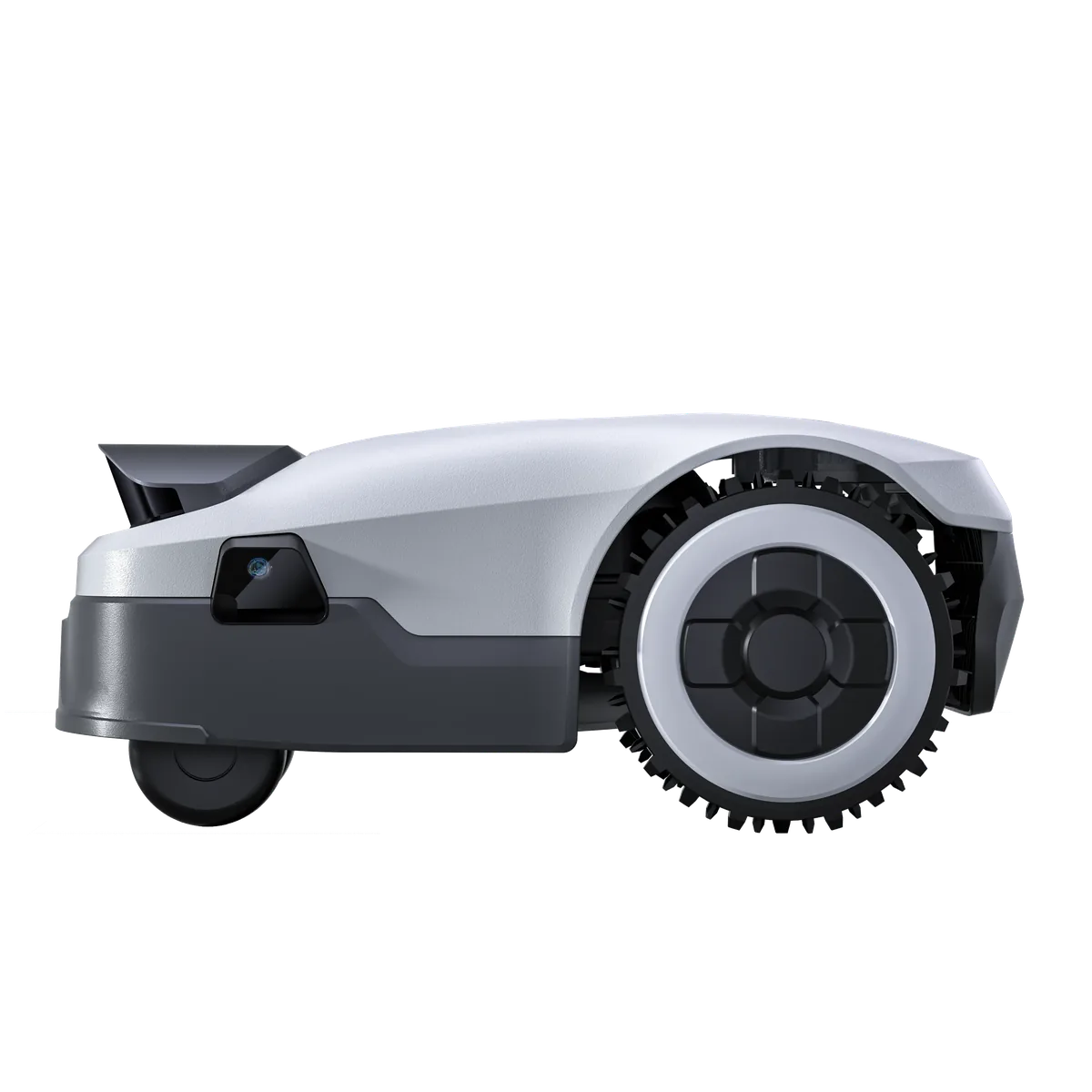
Anthbot
Anthbot Genie
The Anthbot Genie started as a Kickstarter in 2024 and has settled into the role of the budget RTK mower that actually works on a plain lawn. In fall 2026 Anthbot sells the 600e for $699, the 1000 for $799 and the 3000 for $899 direct, which is less than half of what Mammotion or Roborock charge for similar coverage, and the 3000 is rated for up to 0.89 acres. The hardware is modest: a 7.9 inch disc, 1.2 to 2.8 inch app-set height, rear-wheel drive and a 45 percent slope rating, but the 10 Ah battery in the 3000 runs about four hours, it is one of the quietest mowers at 58 dB, and an included RTK antenna plus four cameras handle positioning and obstacles. Owners who set the antenna in open sky say mapping was easy, the stripes look professional and it handles multiple zones well; the negative reviews are the flip side, describing RTK dropouts near houses, a stubborn firmware update at first setup, over-cautious stops for leaves, and a unit that degraded badly in its second season with slow support. The narrow deck means a large yard takes two passes to look finished. It competes with the Navimow i105 on price while covering far more ground, and the Yuka mini beats it on setup simplicity. Best for budget buyers with flat, open lawns up to three-quarters of an acre.
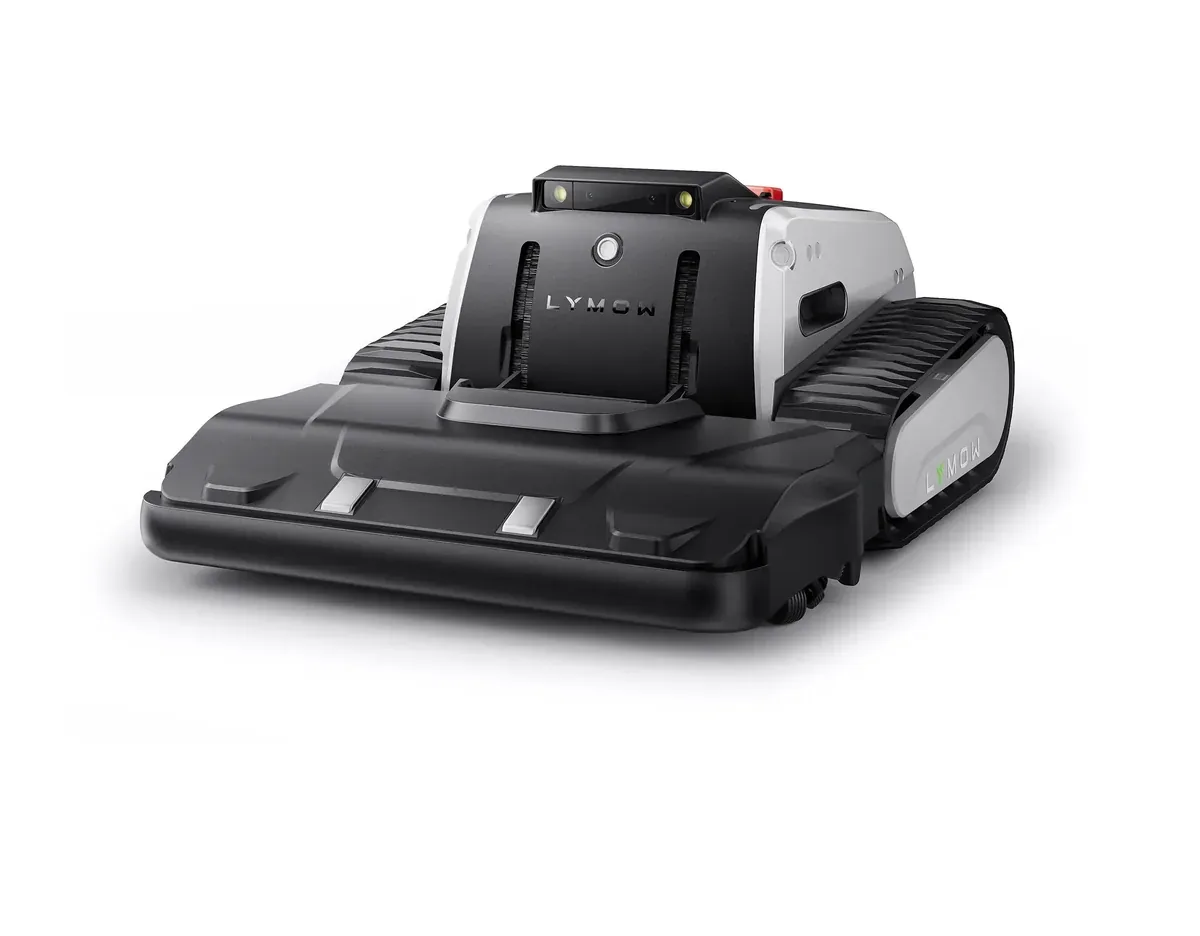
Lymow
Lymow One Plus
The Lymow One Plus is the tank of the robot mower world: it rides on rubber tracks instead of wheels, weighs almost 80 pounds, and swings two SK5 steel rotary blades across a 16-inch deck at up to 6,000 rpm. That combination is why it climbs a rated 45-degree (100 percent) slope and chews through tall, thick grass and fall leaves that stall a disc-blade mower like the Mammotion Luba 2 or a Segway Navimow. It replaced the original Lymow One in 2026 with about 50 percent more cutting power, a 528 Wh LiFePO4 battery good for roughly three hours, and a 90-minute fast charger on the 10A kit (the cheaper 5A kit takes about 150 minutes). Navigation is RTK plus VSLAM cameras, so the included RTK antenna needs open sky, then you drive the perimeter in the app to build up to 80 zones. The trade-offs are real: it is louder than a typical robot (about 62 dB in standard mode, 74 dB in turbo), it is not built for tight, fussy edges, and owners on Lymow's own site mention occasional offline drops and RTK hiccups that firmware updates have been chipping away at. If you have an acre or more of rough, hilly ground and were about to buy a small riding mower, this is the robot to look at. If your lot is a flat quarter acre full of beds, a lighter wheeled mower does the job for less.
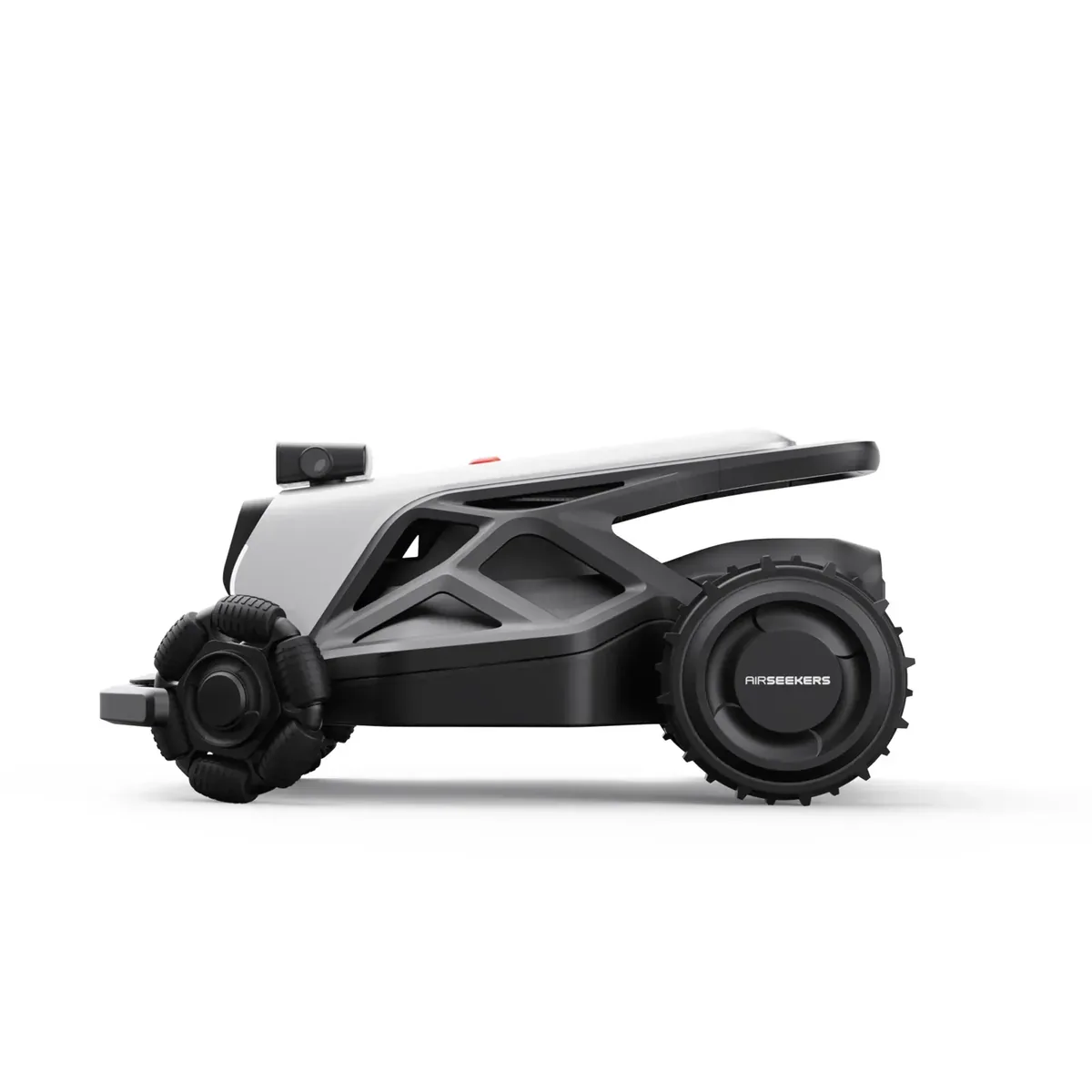
Airseekers
Airseekers Tron
Airseekers came out of a 2024 Kickstarter with a genuinely different idea: instead of a bare disc of razor blades, the Tron uses a six-blade FlowCut deck that pulls grass upright with airflow, cuts it, and mulches it again before spreading it back onto the lawn. Reviewers at Android Authority and The Gadgeteer agreed the cut and mulch quality are excellent and that the 65 percent slope rating is real. It is also one of the cheaper wire-free mowers with 4G built in: the base Tron is regularly $1,299 for 0.59 acre a day, the Tron Plus is $2,099 for a full acre and adds LED headlights, and both share a swappable 15 Ah battery that runs about three hours, with an optional wider 11.8-inch blade disc. The weak spots are just as well documented. The toed-in front wheels can leave wavy tracks and scuff turf on tight turns, small objects below the bumper (sticks, bricks, hose) get run over, and owners on Airseekers' own site describe RTK signal fiddling, 4G that took weeks to activate, and a mower that digs itself in on dry, sandy soil. Firmware updates have smoothed navigation, but this is still a mower for open, fairly tidy lawns rather than obstacle courses. Compared with a Eufy E15 at a similar price, the Tron cuts and climbs better but needs more babysitting; a Mammotion Luba 2 costs more and forgives more.
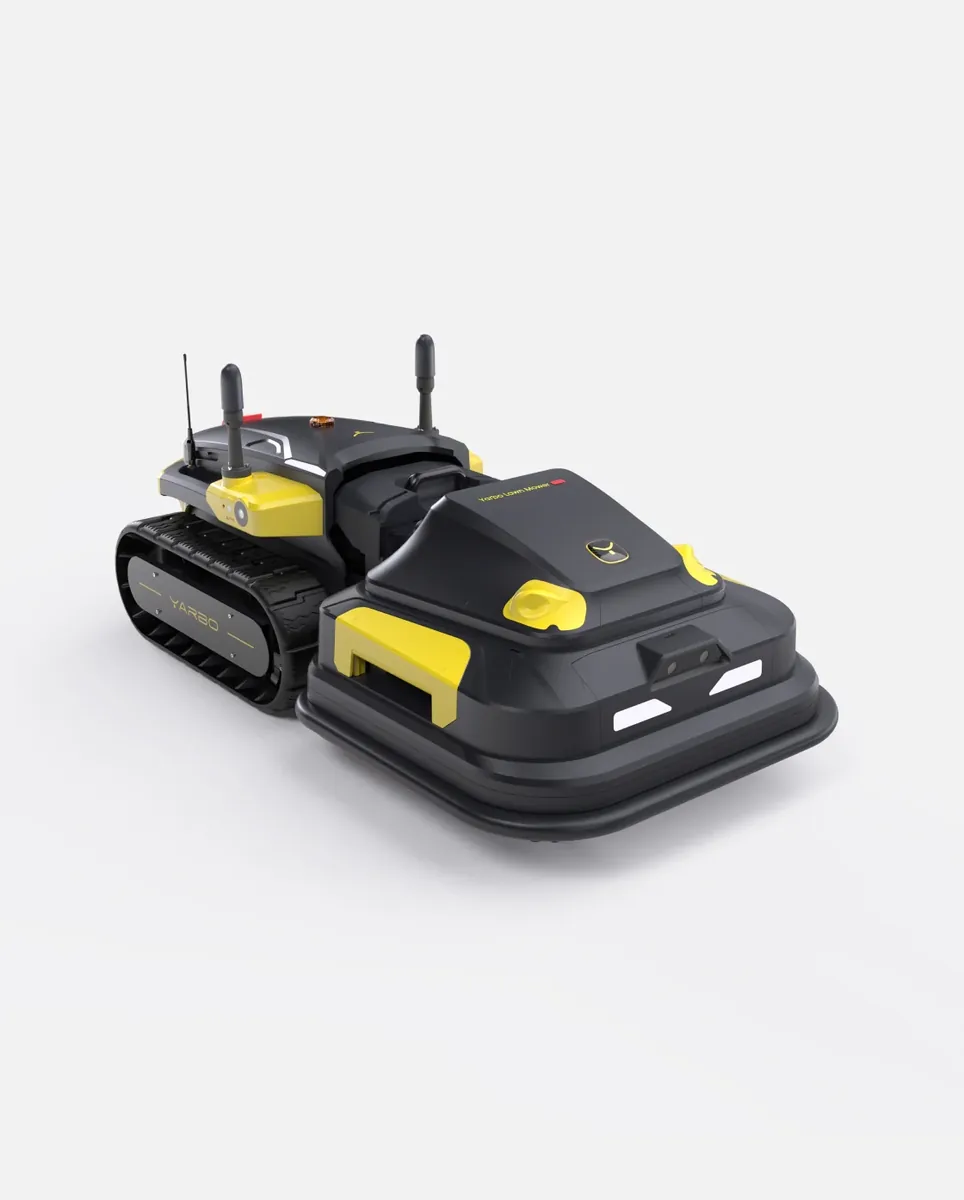
Yarbo
Yarbo Lawn Mower Pro
Yarbo is not really a robot mower; it is a tracked yard robot (the Y40 Core) that you bolt attachments onto, and the Lawn Mower Pro module is the mowing one. The Core climbs a 70 percent grade, carries a 1.38 kWh battery, and can tow 500 pounds; swap the module and the same robot blows snow or clears leaves. The Pro module, which replaced the original 150 W mower in Yarbo's store, spins two 300 W motors under a 20-inch deck with straight blades, cuts down to 0.8 inch, runs about two hours per 90-minute charge, and is rated for up to 6 acres. At $5,999 for Core plus module it is the most expensive consumer mower here, and Reviewed's tester spent about eight hours on setup, including placing the RTK Data Center antenna and mapping. Owners on Yarbo's site love the cut and how quiet the Pro is, and several say it finally mulches leaves under big maples, but the same threads include a season lost to troubleshooting and repairs, and the 70-pound module is a genuine two-person lift. Compared with a Mammotion Luba 2 AWD 5000 at about half the price, you are paying for the modular platform and the snow blower, not better mowing. Best for big, open, rural lots that also get snow; wrong for a tight suburban yard, where an Ecovacs GOAT A3000 or Luba does the job with far less setup.
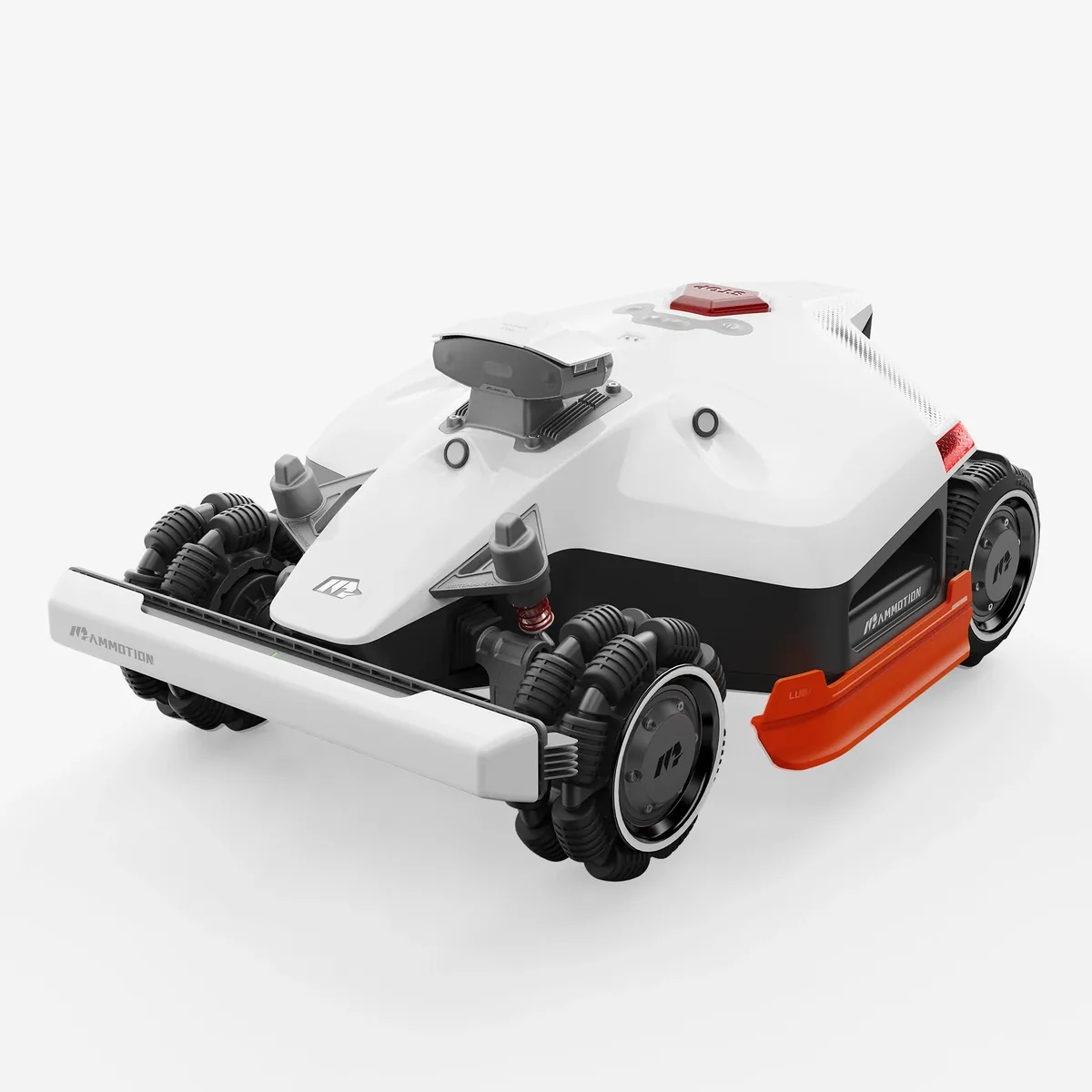
Mammotion
Mammotion Luba 2 AWD X
The Luba 2 AWD X is the mower that made Mammotion a household name in the US, and in fall 2026 it is a clearance buy: Mammotion's own store shows every trim out of stock with a banner pointing at the Luba 3, but Home Depot and Best Buy still have units, with the 3000X down from $2,599 to about $1,999. What you get is the same all-wheel-drive body that climbs 80 percent grades, a 15.7 inch dual-disc deck that clears a big yard fast, and a 2025 X refresh that added the UltraSense AI camera so it keeps its bearings when the RTK station loses sky. The catch is that RTK station: it must be mounted high with an open view, and most owner complaints trace back to a poorly placed antenna. The X version cuts 1.0 to 2.7 inches, so northern cool-season lawns should look for the HX (2.2 to 4.0 inches) instead. Versus the newer Luba 3 you give up LiDAR and free NetRTK, which matters if your lawn is ringed by trees; versus a Segway Navimow X3 you gain real AWD and a wider deck. Best for hilly half-acre to 2.5 acre properties with decent sky, bought on discount.
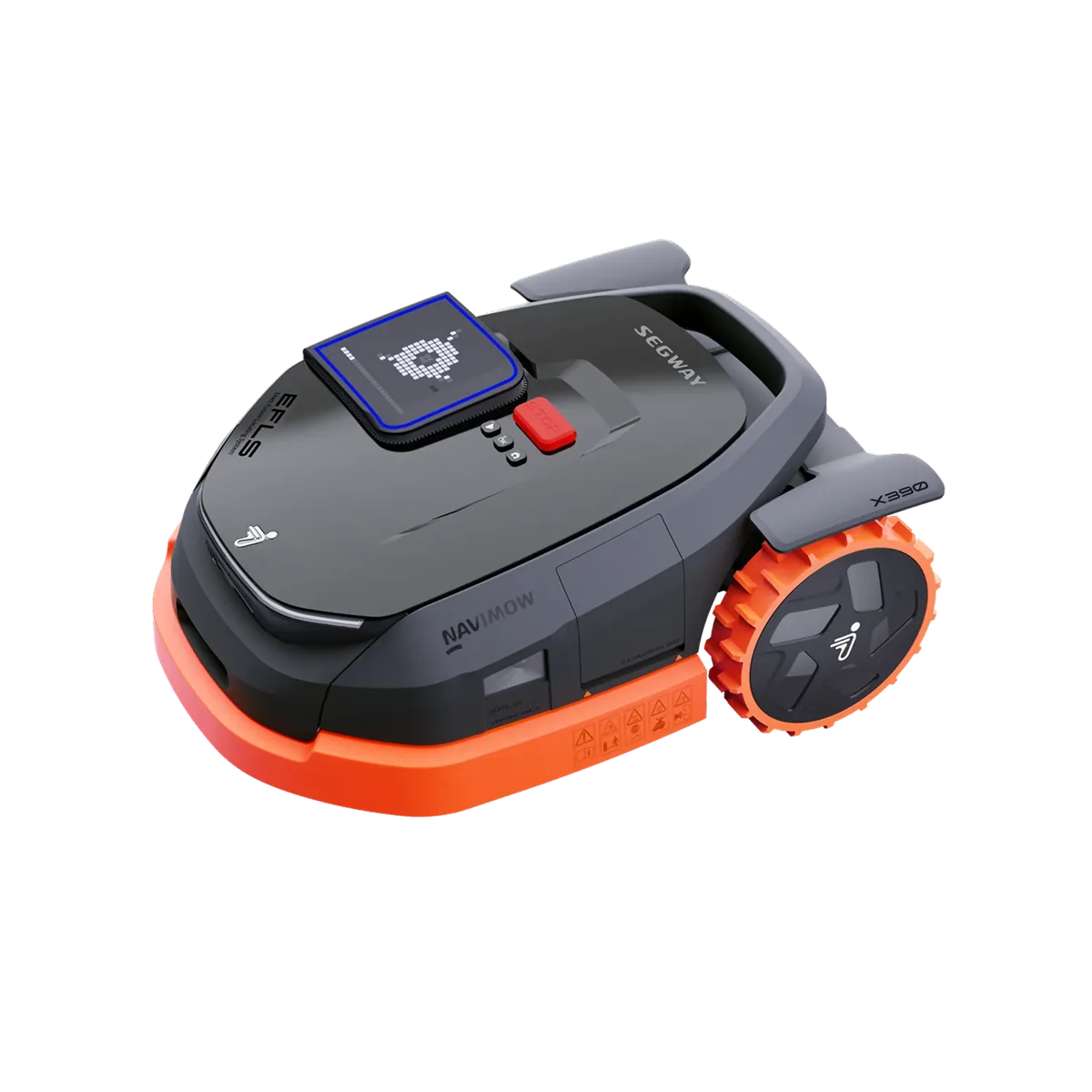
Segway
Segway Navimow X390
The X390 is the flagship of the X3 series and the one Pro Tool Reviews ran on a multi-acre property with four zones linked by tunnels: it covered 3,300 sq ft on 16% of its 12.8Ah battery, which works out to roughly four hours of mowing and a 2.5 acre rating, with a 100 minute recharge. Everything else matches its siblings - 9.3 in cut, 2 to 4 inch heights, 60 dB, EFLS 3.0 RTK fused with three-camera visual SLAM that keeps working under trees, 300-degree obstacle recognition with night vision, and a 43.9 lb body on 10 inch wheels. Segway bundles five years of 4G service, the longest in the lineup, before the $32.90 a year renewal. At $4,499 (down from $4,999) it is expensive for a two-wheel-drive mower: the Mammotion Luba 2 AWD 10000 covers the same area with all-wheel drive and 80% slope capability for less, and the X3's 50% rating only holds up on straight climbs. Testers also note there is no physical rain sensor, the single 9.3 in disc is narrow for 2.5 acres so full cycles take days, and edges need the optional Trimmer attachment. In its favor: faster and more precise stripes than the Luba, gentler on turf, a cleaner app, and the Doodle feature for mowing patterns into the lawn. Choose it for a large, flat-to-rolling estate lawn with tree cover where positioning reliability matters more than hill climbing.
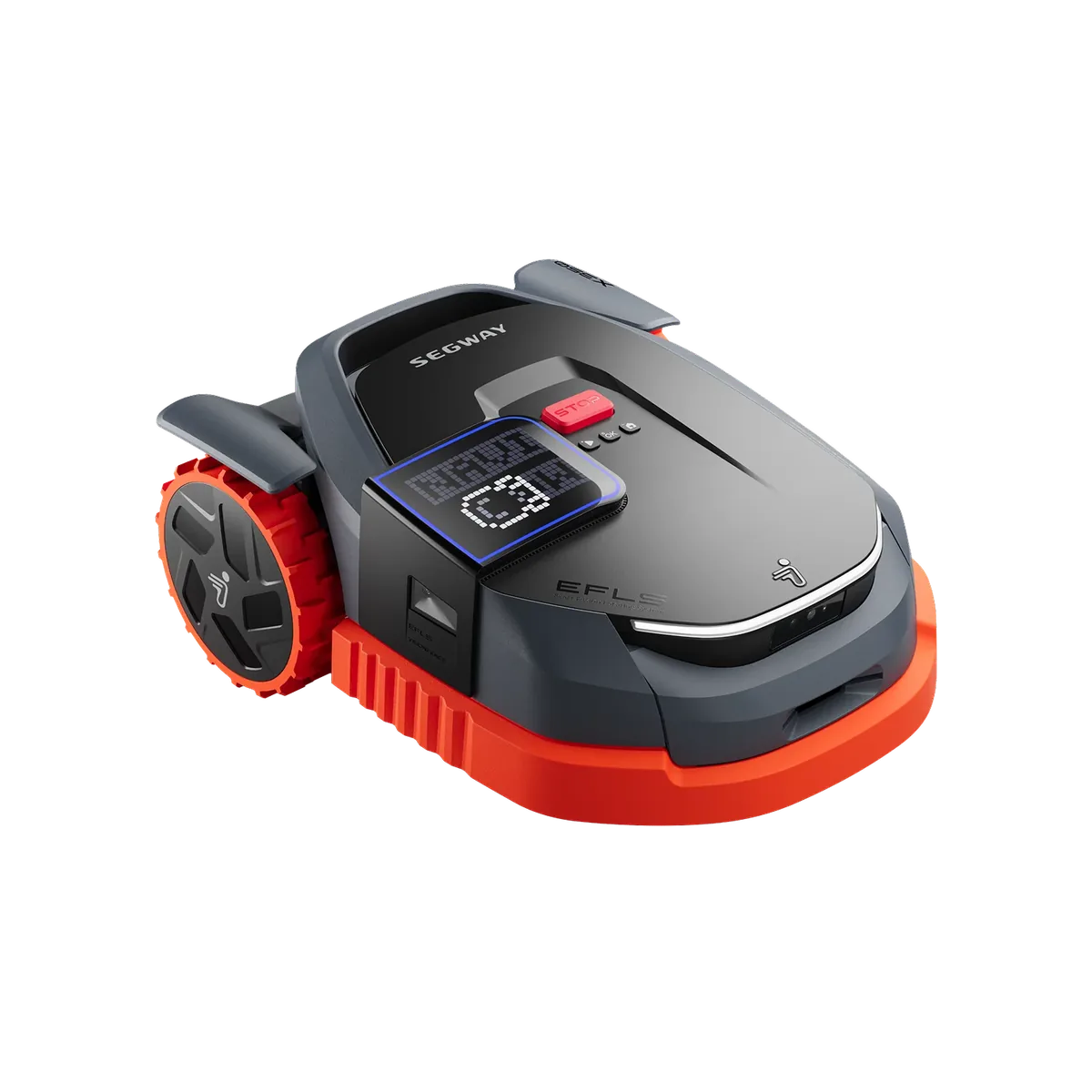
Segway
Segway Navimow X350
The X350 buys you battery, not a different mower: it shares the X330's 43.7 lb chassis, 9.3 in cut, 2 to 4 inch height range, EFLS 3.0 RTK-plus-vision positioning and 300-degree camera array, but carries a 10Ah pack for about 200 minutes per charge (80 minute recharge) and a 1.5 acre rating. Segway lists it at $2,799, down from $3,499 at launch, and it includes three years of 4G before the roughly $33 a year renewal. Residential Tech Today beta-tested this exact model for a season and found the standout traits were quiet 60 dB running that allowed night mowing, reliable obstacle recognition, and confident navigation on a tree-heavy lawn - RTK antenna placement still mattered, and moving it meant remapping. Early-spring patches of thin grass confused the VisionFence boundary logic until it was toggled off, and the optional Trimmer accessory occasionally hung up on rocks. As with all X3 mowers it is two-wheel drive, so the 50% slope rating assumes straight up-and-down runs, and there is no onboard rain sensor. Compared with a Husqvarna Automower 450X at roughly $4,000 installed, the X350 is a DIY afternoon and about a third cheaper; compared with the Mammotion Luba 2 AWD 5000 it gives up AWD hill-climbing for faster, straighter cutting. Best for 1 to 1.5 acres of mostly open, gently rolling lawn.
Sunseeker
Sunseeker X7 Plus
The X7 Plus is the long-range version of Sunseeker's AWD X7: same 14 in dual-disc deck, same 70% slope rating, same RTK-plus-camera AONavi navigation, but a higher-capacity battery that lets it schedule 1.5 acres instead of 0.75. List is $2,999.99 at Sunseeker (frequently sold out) and dealers such as Robotic Mower Services sell a Gen 2 at $2,799.99; the Amazon listing has been unavailable for a while. That undercuts a Mammotion Luba 2 AWD 5000 by several hundred dollars for similar coverage and traction. In practice it is a systematic-row mower with 100 zones, virtual walls and no-go areas, edge trimming to about 1.2 in, a rain sensor, and 4G tracking with a geofence lockout. Reviewers who ran the standard X7 praised the AWD on lumpy, sloped ground and the way the twin cameras learn the yard over a few passes, and criticized the app (a single joystick for mapping, thin documentation, schedules that are easier to leave in auto mode). Obstacle avoidance is good for people, pets and toys, but small low objects like a softball can be run over, and like every RTK mower the reference station needs open sky. At 60 dB it is quiet for a 31 lb machine with two spinning discs. Best for hilly 1 to 1.5 acre properties where AWD matters and the buyer is fine trading Mammotion's app polish for a lower price.
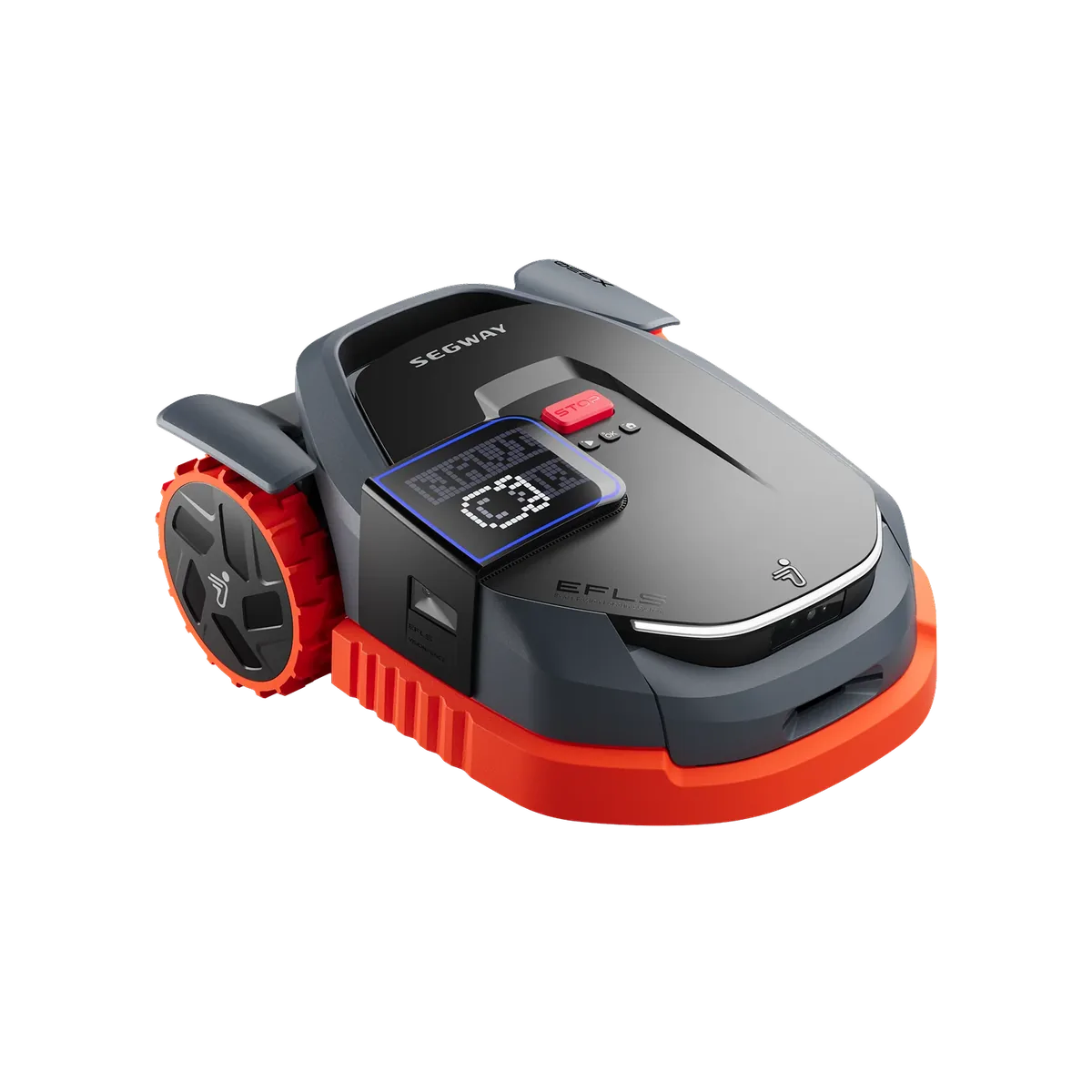
Segway
Segway Navimow X330
The X330 is the X3 model most people should look at: a one-acre rating, 8Ah battery for about 160 minutes of mowing with a 65 minute recharge, and it sits at $2,299 on Segway's site after a $500 cut from launch pricing. Like the rest of the X3 line it runs EFLS 3.0 - RTK fused with three cameras doing visual SLAM - so it holds position under tree canopy where the older H series and most budget RTK mowers lose lock, and its 300-degree camera plus ToF array recognizes 200+ obstacles with night vision. It mows fast (about 3.3 ft/s) in tidy parallel stripes, cuts 2 to 4 inches, runs at 60 dB, and includes two years of 4G with GPS tracking before the roughly $33 a year Connect+ renewal. Pro Tool Reviews and Robot Review Desk both call the X3 the most polished wire-free mower for flat-to-moderate suburban lots. Where it falls short: two-wheel drive makes the 50% slope rating shaky on side-hills, there is no physical rain sensor (it relies on forecasts), the centered 9.3 in disc leaves a few inches uncut along walls unless you buy the Trimmer accessory, and 43.7 lb is a lot to lift over a curb. Against the Mammotion Luba 2 AWD 3000, the X330 is quicker and gentler on turf but the Luba climbs 80% grades. For a one-acre yard with trees and gentle slopes, this is the sweet spot of the range.
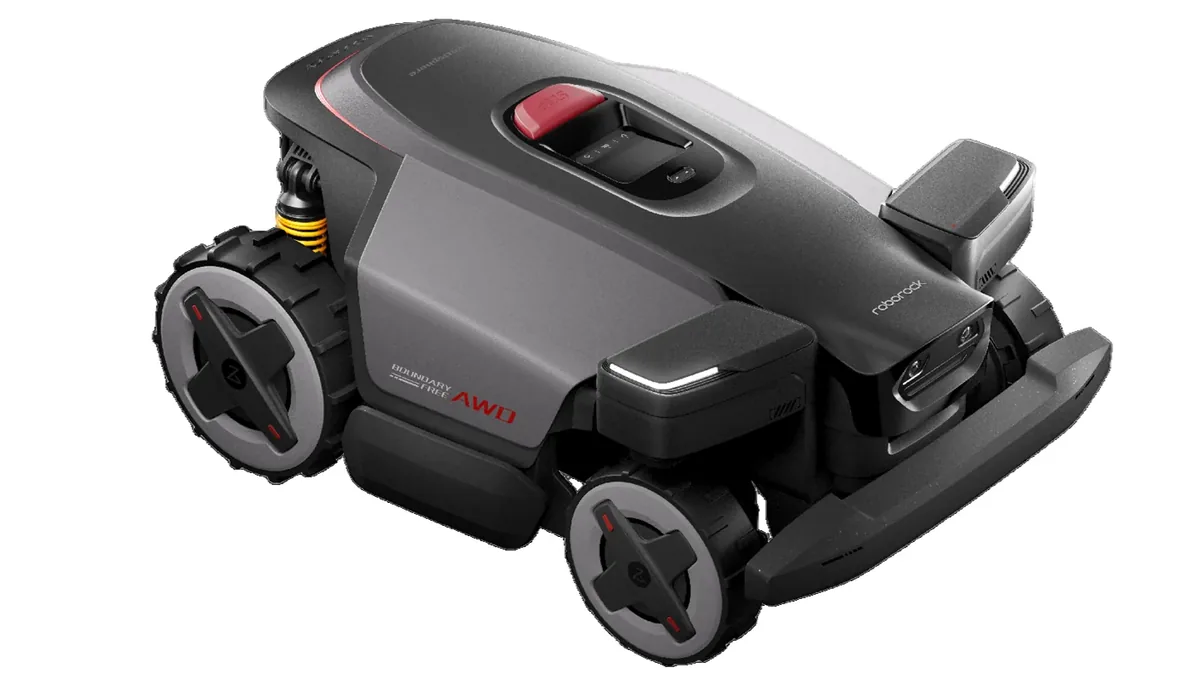
Roborock
Roborock RockMow X1
Roborock's first lawn mower landed in the US in March 2026 as the RockMow X1 (it is the Z1 everywhere else), and it is built like the robot vacuums that made the brand: overbuilt, quiet and very good at driving. Four hub motors, active front steering and dynamic suspension let it climb 80 percent grades and roll over 3 inch bumps without tearing turf, and owners say the first thing they notice is how silent it is. Positioning is full-band RTK from an included antenna plus four cameras, with a headlight so it can finish after dark. The X115H covers 0.37 acres and the X130H is rated to an acre per charge; both share a 9.5 inch deck and a 1.6 to 3.5 inch app-set height. Early owners like the mapping and app but call the software a work in progress: obstacle avoidance detours widely, zone passages need more room than the stated 2.6 feet, and the PreciEdge module that gets within 1.2 inches of borders is a $150 add-on. Amazon is the main US retailer, and the X115H has already dipped to $1,500 from $2,299. Against the Mammotion Luba 3 you trade a wider deck and LiDAR for a heavier chassis with better steering; against the Navimow X3 you gain AWD. Best for hilly, rutted yards up to an acre where traction matters more than edge precision.
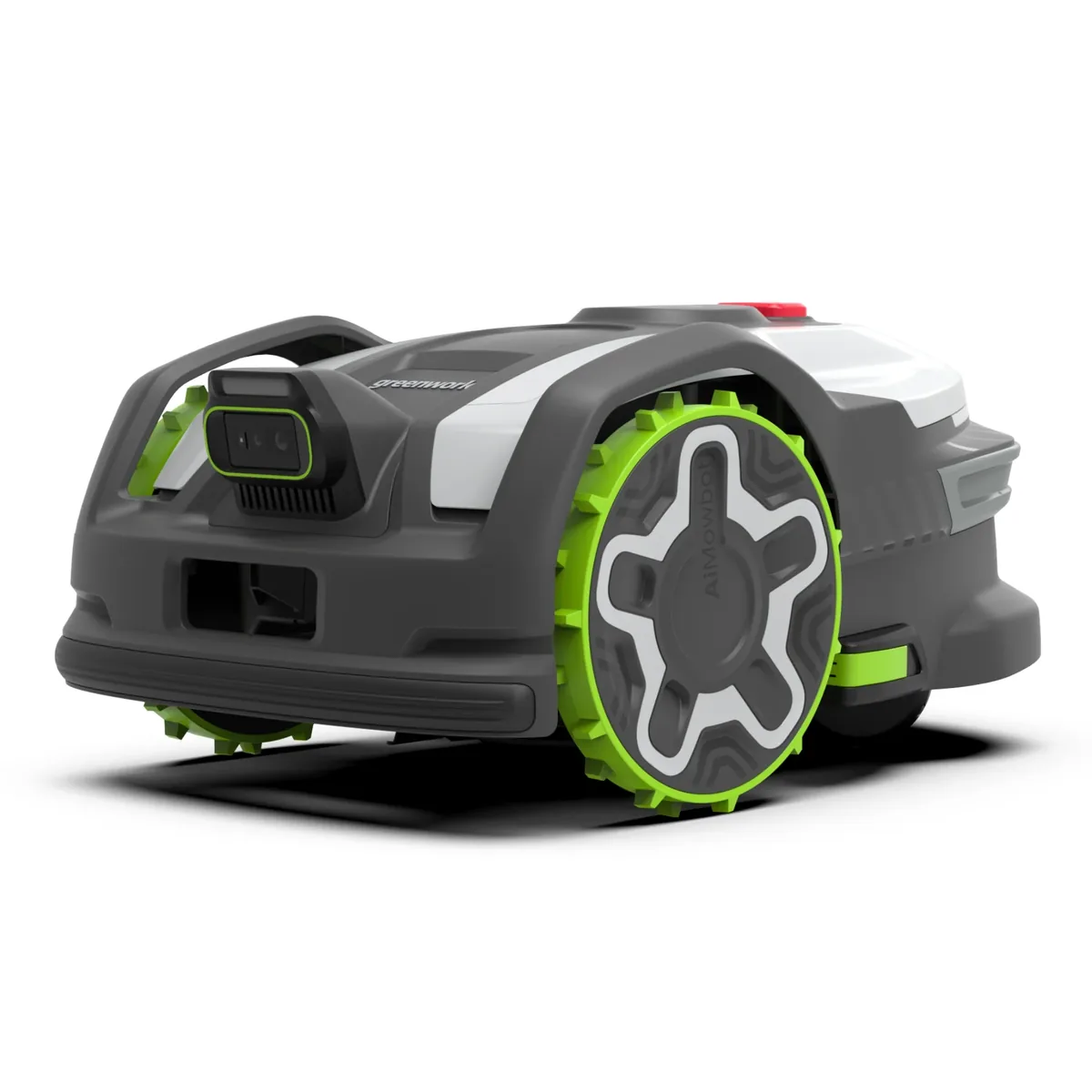
Greenworks
Greenworks AiMowbot C30Z
Greenworks retired the wired Optimow line for consumers in 2026 and replaced it with AiMowbot, and the C30Z is the 3/4-acre model in the front-wheel-drive C series. It uses what Greenworks calls RTKVision 2.0: an RTK reference antenna kit in the box for roughly 1 in positioning, with cameras and night-vision sensors that help it hold its line under trees and spot 200-plus obstacle types. Mowing zones, paths and no-go areas are drawn in the app; there is no wire to bury. The spec sheet is strong for $1,599.99: 45% (24 degree) slopes, an electric height adjuster from 0.75 to 3.5 in, a 54 dB noise rating, IPX6 washdown, LED headlights and a 50-minute charge. It is a front-wheel-drive three-wheeler, so it is not a Luba-style AWD climber, and the 8 in cut is narrower than a Mammotion Yuka's. Two things to weigh before buying: 4G and anti-theft tracking need a subscription Greenworks has not priced publicly, and edge cutting is rated at 4 in from the border, so keep the string trimmer. The 1/2-acre C20 ($999.99) and 1-acre C40 ($1,499.99) are the siblings and the G series adds AWD. It is a 2026 launch with no owner track record yet, which is worth remembering given how much grief the old Optimow app caused. Best for 1/2- to 3/4-acre yards with moderate slopes and a buyer who wants a 3-year warranty behind a wire-free mower.
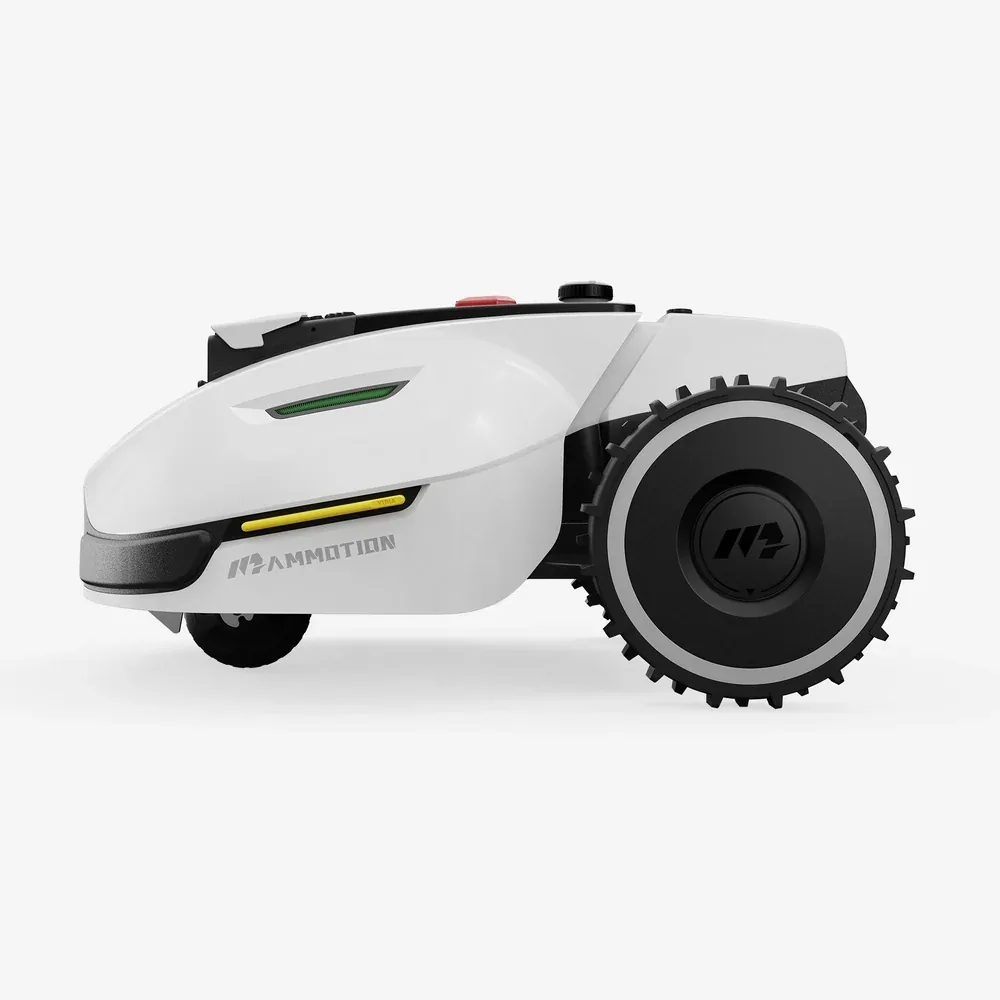
Mammotion
Mammotion Yuka
The Yuka is Mammotion's two-wheel-drive mower with a party trick nobody else has: an optional $700 sweeper cart that collects clippings and leaves, then dumps them at spots you pick in the app. The 12.6 inch dual-disc deck is nearly as wide as a Luba's, the 1.2 to 4.0 inch height range suits any US grass, and the 2025 lineup runs 1000, 2000 and 3000 square meters (a quarter to three-quarter acre). Positioning is an included RTK station plus a front AI camera; owners with open lawns love it, while a vocal minority in tree-heavy neighborhoods say it simply cannot hold position without clear sky, so this is not the pick for a wooded lot. Rear-wheel drive also means it bogs on rough or soggy ground, and the sweeper, while clever, gets stuck now and then. Mammotion's US store no longer lists the Yuka (the LiDAR-based Yuka mini 2 is its future), but Home Depot and Best Buy still stock it, with the 3000 around $1,449 on sale. If you want an AWD alternative at similar money look at the Luba 2 AWD X clearance; if you want a station-free RWD mower for a small yard, the Yuka mini 2. Best for flat, open lawns up to 3/4 acre with heavy leaf drop.
Ecovacs
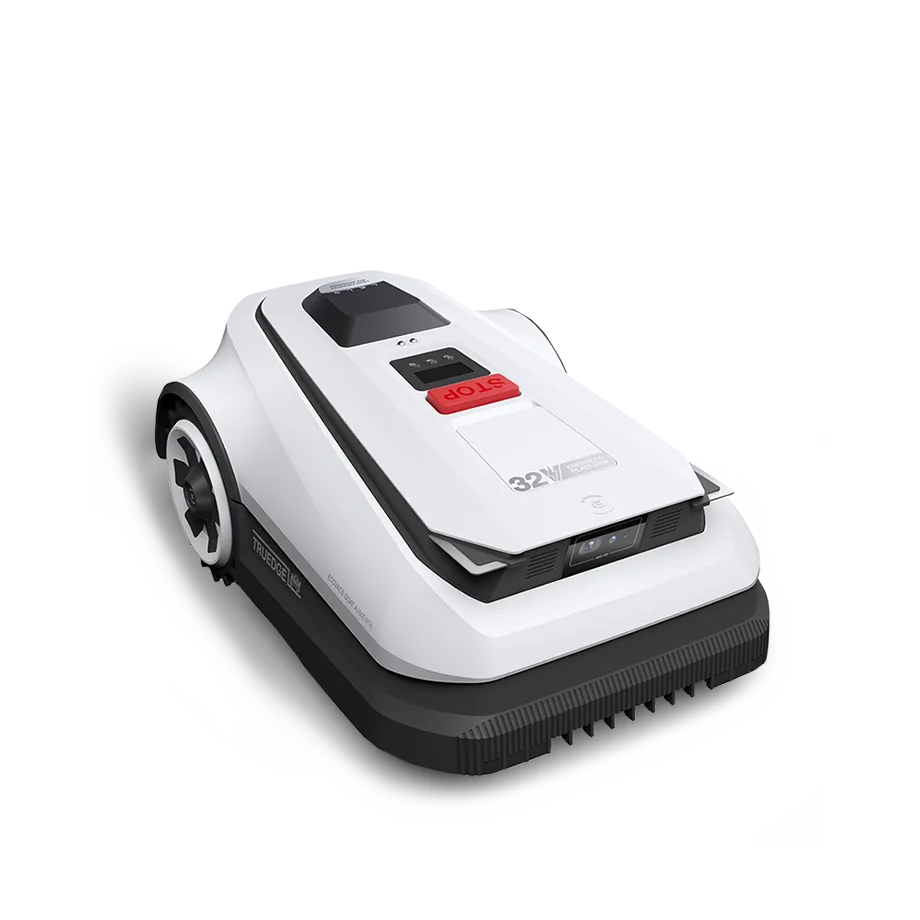
Ecovacs GOAT A2500 RTK
The GOAT A2500 RTK was Ecovacs' 2025 flagship and it is now the value play in the range: the list price is still $1,999.99 but Amazon has sold it between $1,500 and $1,750 for most of 2026. You get the 32V dual-disc deck with a 12.99-inch cut, 50% slope capability, and a LELS RTK antenna backed by a 3D ToF sensor and AI camera so it keeps its bearings under moderate tree cover. The 3 Ah battery charges in about 45 minutes, which matters because runtime is only about 64 minutes; Ecovacs' own math is 5,382 sq ft per charge. Owners are split. Happy ones describe mowing three separate yards every couple of days, a useful live map, and a mower that frees itself when stuck. The unhappy ones (and the Amazon average sits in the low 3s) report RTK dropouts, hectic spot-turns that dig into turf, edge passes that back off when plants overhang a bed, and nagging app pop-ups. Notebookcheck's verdict of 'fast, but not flawless' is about right. Compared with the Segway Navimow X330 it is quicker across open ground but less refined at edges, and unlike the newer A2000 LiDAR Pro it has no string trimmer. It suits open half-acre lawns with a good view of the sky where you want speed and can tolerate some fiddling; heavy shade or lots of narrow beds point you toward the LiDAR models.
Segway
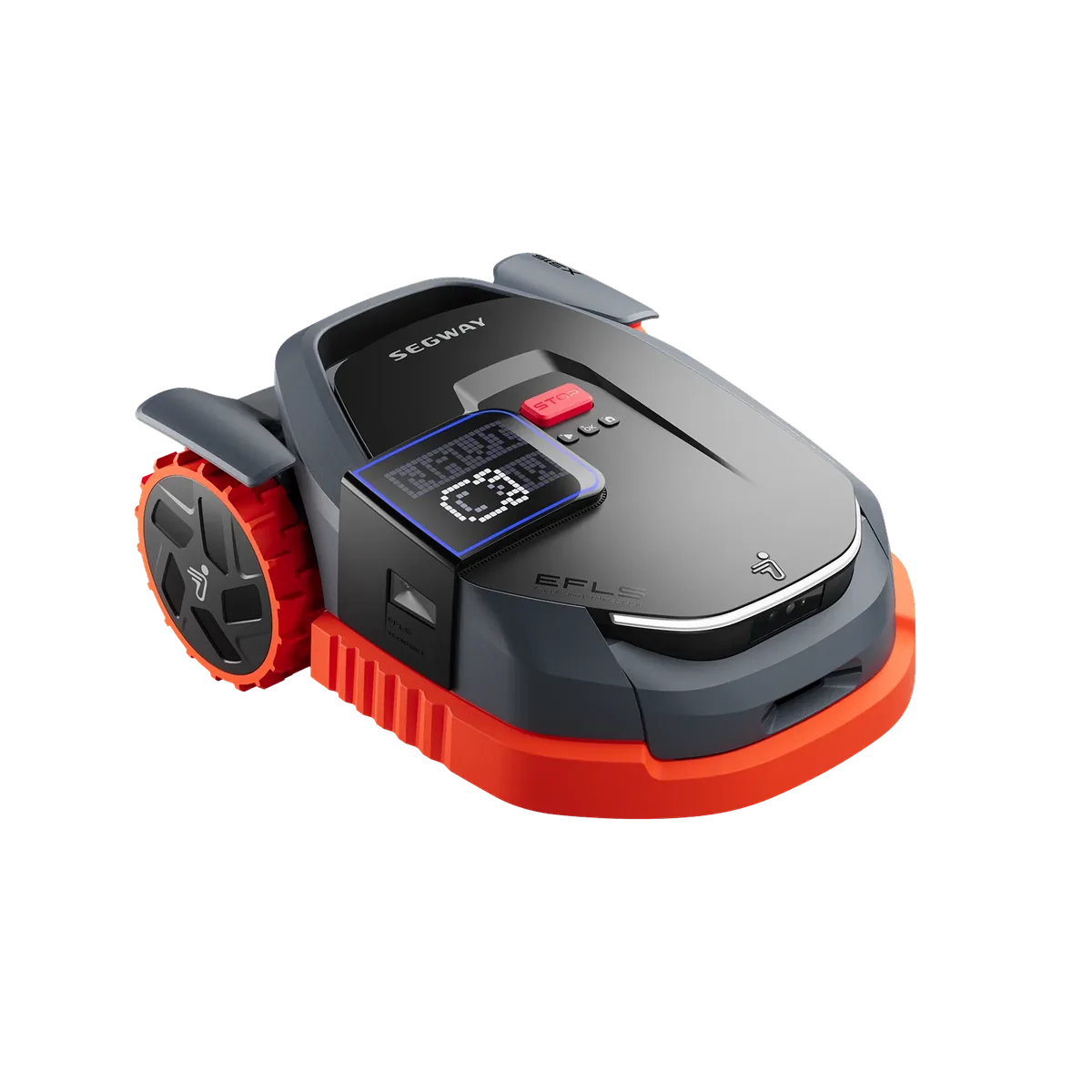
Segway Navimow X315
The X315 is the entry to Segway's X3 line: the same 43 lb chassis, 9.3 in cutting deck, 2 to 4 inch height range and EFLS 3.0 positioning as the $4,499 X390, just with a 6Ah battery good for about two hours and a half-acre rating. EFLS 3.0 fuses RTK with three cameras doing visual SLAM and odometry, which is why testers at Notebookcheck and TechRadar found it kept mowing straight under trees where RTK-only mowers stall. Obstacle avoidance uses a 300-degree camera array with a ToF sensor and recognizes 200+ objects including pets, with night vision so it can run after dark at 60 dB. Setup is about 30 minutes and truly wire-free, though you still mount an RTK antenna. Segway has pulled it from its own store (listed at $1,999 but unavailable) while Home Depot, Acme Tools and Abt still sell it, and it is the only X3 that does not get multiple years of 4G included - one year, then about $33 a year. Reviewers' knocks: it is two-wheel drive so the 50% slope rating is optimistic on side-hills, there is no onboard rain sensor (it relies on forecasts), the single 9.3 in disc leaves about 3.5 in uncut at edges without the optional Trimmer accessory, and standby power draw is high. Versus the Mammotion Yuka at $1,399 the X315 costs more but is faster and better under trees; if you are near 0.5 acre, the X330 is often only $300 more.
Segway
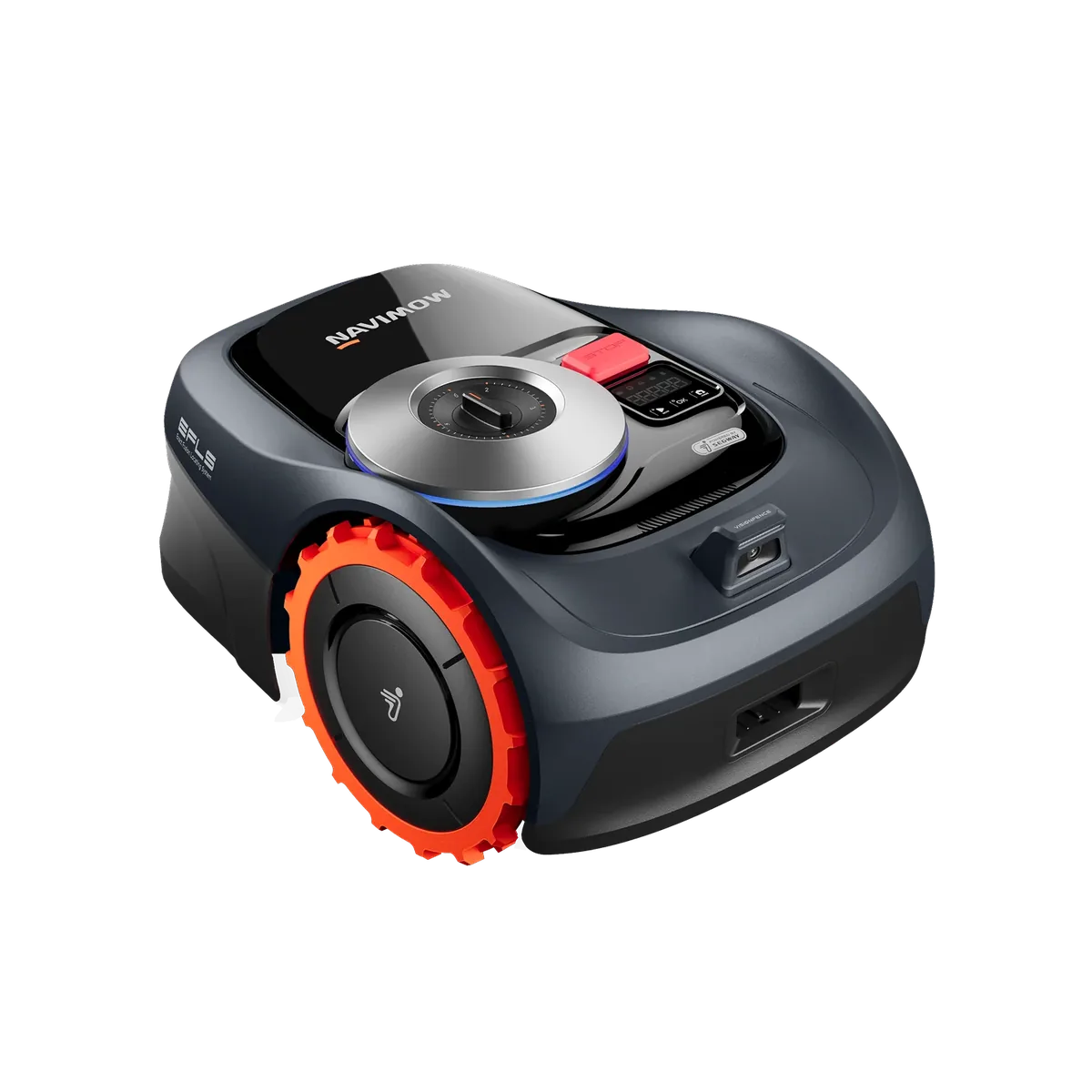
Segway Navimow i110N
The i110N is the same 7.1 in body as the i105N with double the battery (5.1Ah, about 120 minutes per charge) so it can cover a quarter acre, and it won Tom's Guide's Editor's Choice for cut consistency at a price that has slid from $1,299 at launch to a $929 list and frequent sub-$800 sales. It uses Segway's EFLS 2.0 RTK plus a front VisionFence camera, so when the satellite fix wobbles under trees it can hold the boundary visually for a while instead of wandering off. Reviewers consistently praise the straight, overlapping stripes with no missed patches and the near-silent 58 dB operation that makes night mowing realistic. The complaints are the flip side of the budget price: it is slow (Tom's Guide clocked roughly three times the time of push mowing), the 30% slope rating and front-wheel drive mean it spins out on real hills, PCWorld's unit repeatedly drove off curbs because there is no drop-off detection, and GPS anti-theft needs the $120 Access+ 4G module. Segway has pulled it from its own store in favor of the i210 AWD, but Home Depot still stocks it. For a flat quarter-acre suburban lot it remains one of the cheapest dependable wire-free options; if your yard has slopes or a parking strip, look at the i210 AWD or a Luba Mini instead.
Roborock
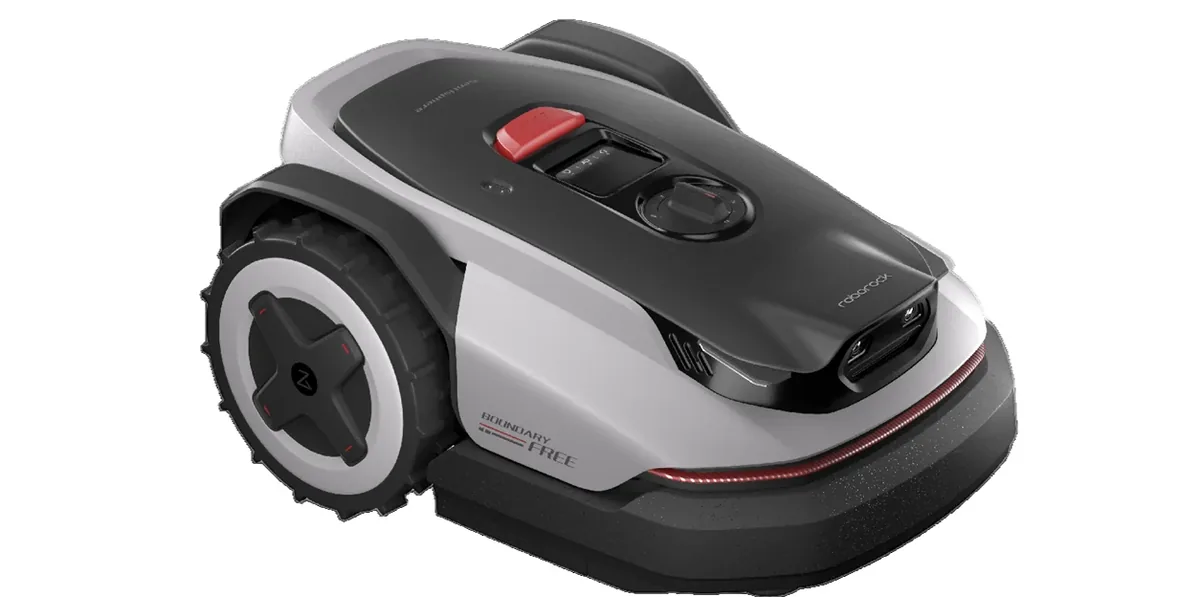
Roborock RockNeo Q1
The RockNeo Q1 (Q110H in the US) is Roborock's entry mower: a 27 pound, rear-wheel-drive machine for quarter-acre lawns that lists at $1,299 but has been selling on Amazon for $800 to $1,000 most of the summer. It uses the same full-band RTK antenna plus camera VSLAM as the RockMow, and Roborock later pushed a network RTK mode so you can skip the antenna if you have decent cell coverage. Owners describe it as whisper quiet, good at systematic back-and-forth mowing of open lawn, and nicer to map than Segway's app, and they like the headlights for evening runs. They are also blunt that it is for simple, flat, easy yards: the plain wheels get stuck if it wanders onto rock beds or sand, it struggles on real slopes despite the 45 percent rating, and it needs a wide-open view of the sky to hold position. Cutting height is a manual dial from 1.6 to 3.1 inches, edge cutting needs the $90 PreciEdge module, and even with it the software keeps a cautious margin around anything hanging over the lawn. Compared with a Navimow i105 it is quieter and maps better; compared with a Mammotion Yuka mini it needs an antenna but climbs about the same. Best for flat, open quarter-acre lots where price and quiet matter most.
Ecovacs
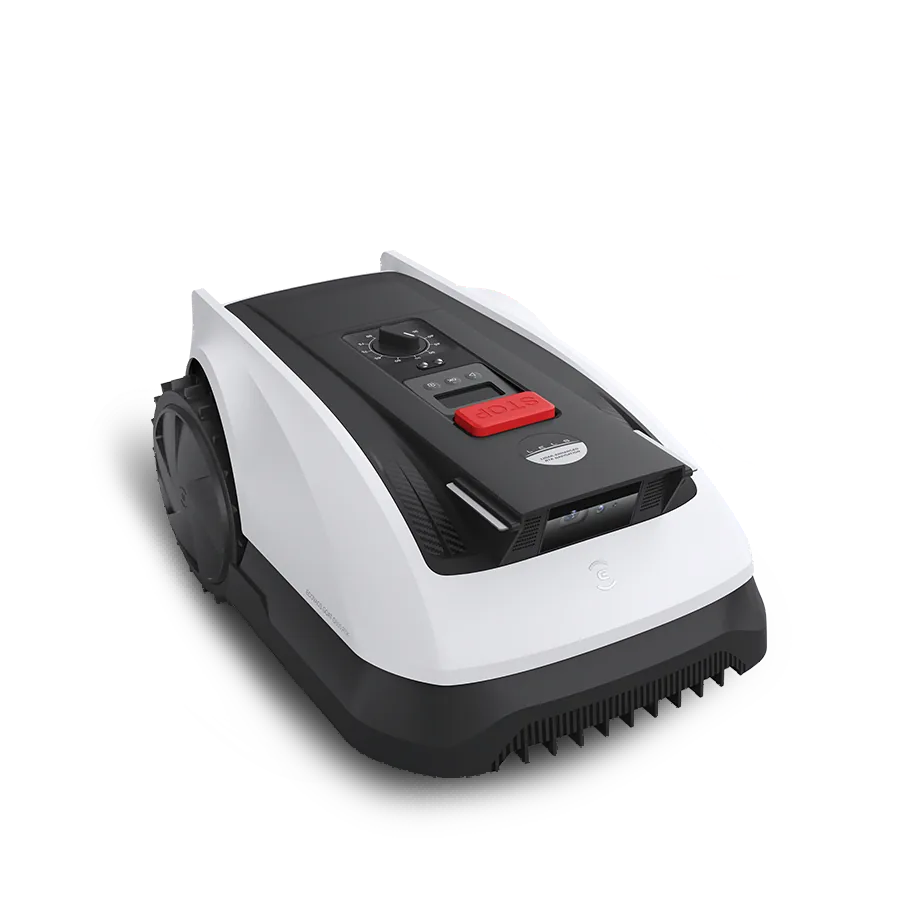
Ecovacs GOAT O1000 RTK
The GOAT O1000 RTK is the cheapest way into a properly mapped, wire-free robot mower from a big brand, and at $999.99 it undercuts the Segway Navimow i110N while doing most of the same job. You mount the included RTK antenna somewhere with open sky, let the mower auto-map, and then carve the map into zones and no-go areas in the Ecovacs Home app. A front camera and 3D ToF sensor handle obstacle avoidance and help it hold position when the satellite view gets patchy under trees. Owners on Amazon like the narrow 1.31-foot body for side yards and the TruEdge pass that gets close to fences, and several say it tamed rough, unmanicured rural lawns. The catches are a slow pace and a small 4 Ah battery: about 65 minutes of mowing, then 100 minutes on the dock, so a full 1/4 acre is an all-day affair. Owners also complain that the manual and app walkthrough are thin, and rural users have hit RTK signal drops that needed a support call. Getting mapping this cheap means you give up the string trimmer of the newer O1000 LiDAR Pro and settle for 45% slopes. For a flat-to-rolling suburban lot under about 8,600 sq ft with a decent view of the sky, it is a strong value pick.
Segway
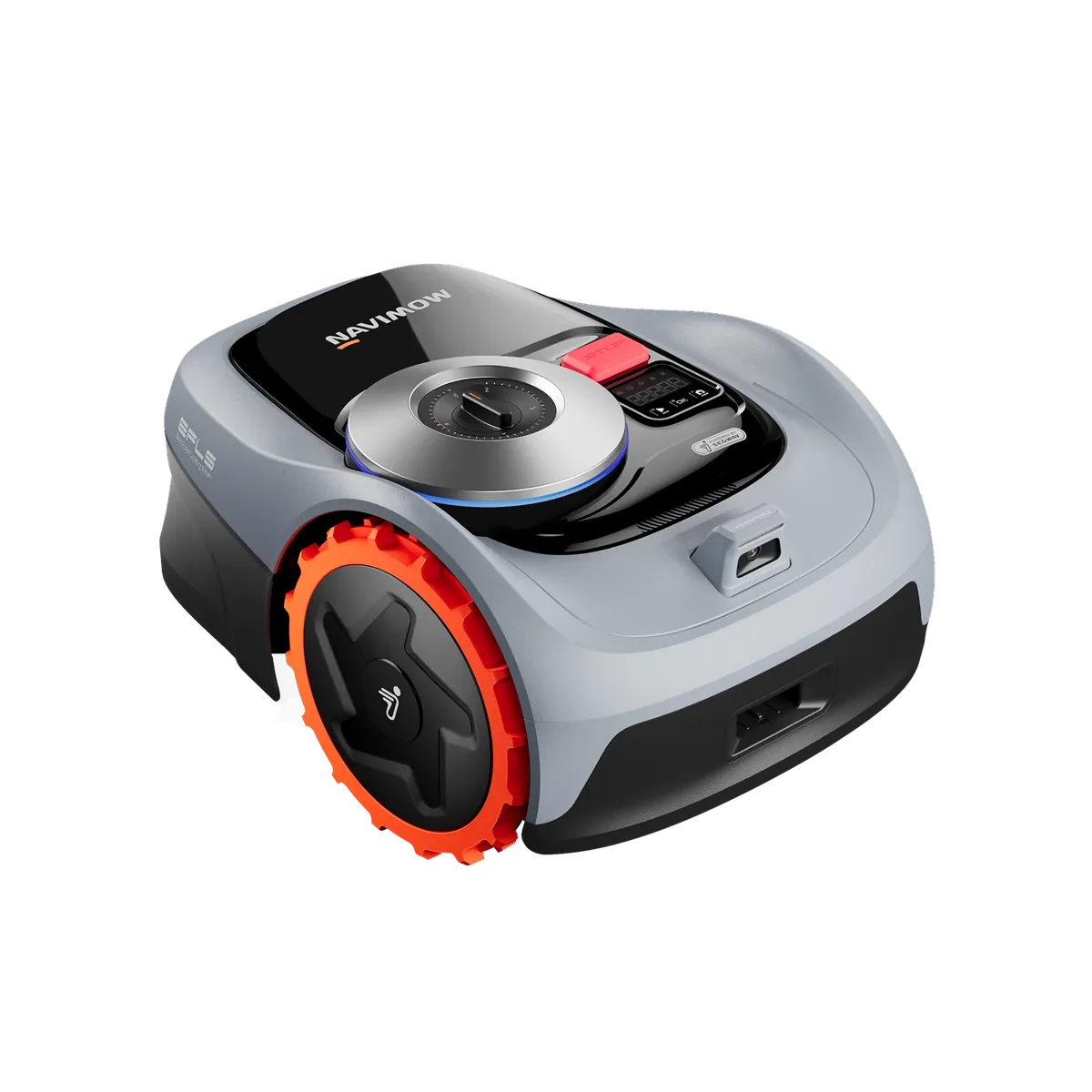
Segway Navimow i105N
The i105N is the mower that made wire-free RTK cheap. Segway cut it from $999 to $799 in 2026 and it regularly dips to $669-699, which puts it in Worx Landroid Vision territory while still using a proper RTK antenna for centimeter-level positioning. It is small - 7.1 in cutting width, 24 lb, a 2.55Ah battery good for about an hour - so the rated 1/8 acre is honest; Amazon owners with a typical city lot say a full cut takes around 2.5 hours across two or three charge cycles. Setup is genuinely DIY: mount the antenna somewhere with open sky, drive the mower around the perimeter with your phone, and let AI Assist Mapping snap to the lawn edges. Owners like the quiet 58 dB motor, the straight-line stripes, and that it pays for itself in a season versus a lawn service. The knocks are consistent too: getting stuck on flat ground and in dips, mapping frustration when trees hang over the antenna, a manual cutting-height dial, and a few units dying after a few months with slow email-only support. The 30% slope limit and front-wheel drive rule out anything hilly. Compared with the Mammotion Yuka Mini, the i105N is cheaper and simpler but has no vision-only mode when RTK is hopeless; step up to the i110N if you have more than about 5,000 sq ft.